


This article was automatically translated from the original Turkish version.
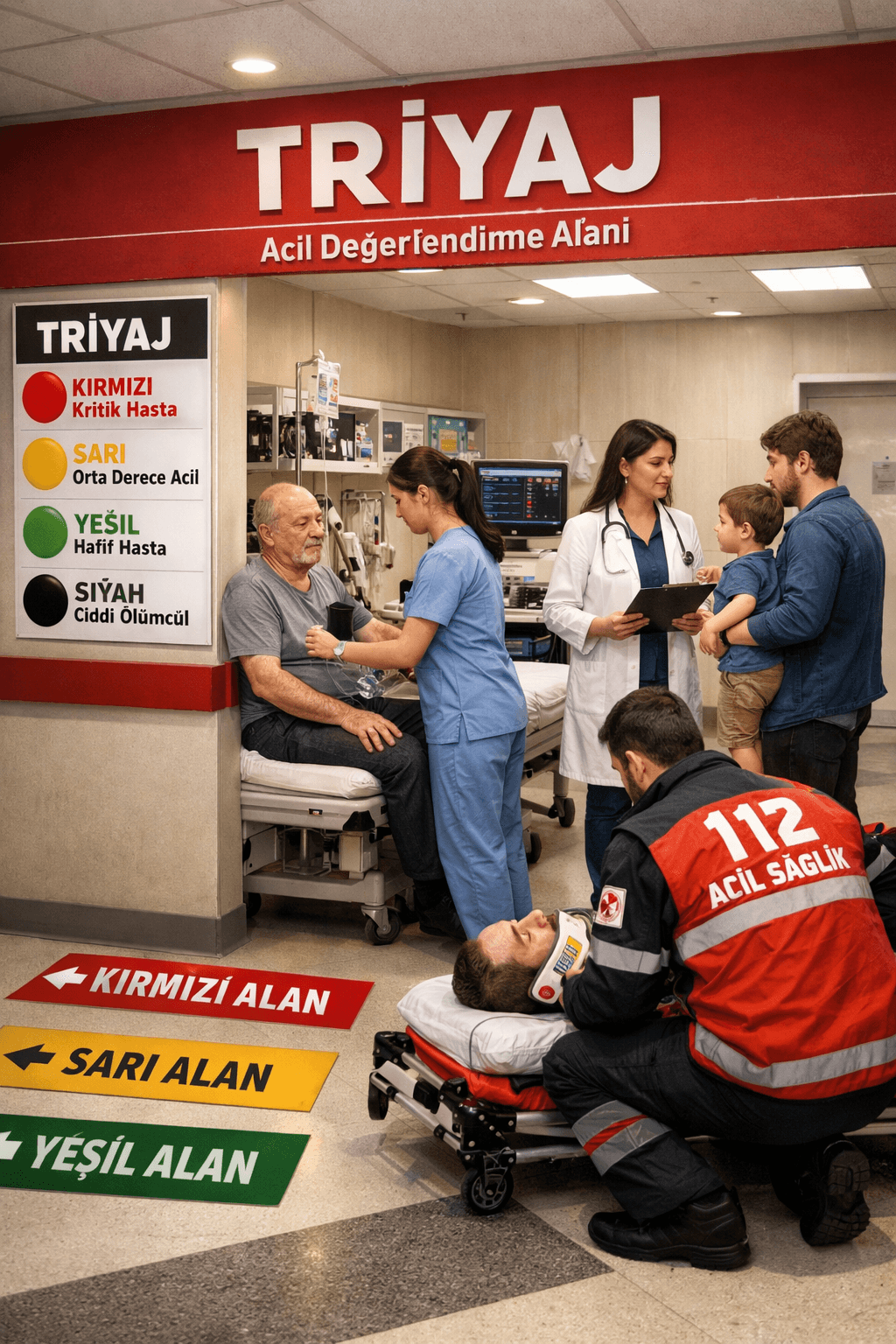
(Generated by Artificial Intelligence)
Triage
Definition | Evaluation of patients according to priority order in emergency situations | ||||||||
|---|---|---|---|---|---|---|---|---|---|
Purpose | Ensuring the fastest intervention for the most urgent patient | ||||||||
Historical Origins | The 1790s – Modern triage practices emerged during the Napoleonic Wars | ||||||||
Field of Use | Emergency services and disaster situations | ||||||||
Triage, is the systematic assessment, classification, and prioritization of patients presenting to emergency services or disaster areas based on the severity and urgency of their clinical condition. The primary objective of triage is to ensure that the maximum number of patients receive appropriate medical care at the optimal time by using available healthcare resources—personnel, time, equipment, and space—in the most efficient manner. The term derives from the French verb “trier”, meaning “to sort” or “to classify.” In healthcare, the concept of triage is used as a method to standardize and accelerate medical decision-making, particularly in emergency medicine and disaster medicine contexts.
In modern emergency service practices, triage does not merely mean queuing patients; it is regarded as a dynamic process encompassing the identification of life-threatening conditions, rapid clinical evaluation, risk stratification, and the determination of care priority. During this process, the patient’s current complaint, vital signs, level of consciousness, and potential risk of clinical deterioration are taken into account. Although triage practices may vary depending on the conditions under which healthcare is delivered, they are generally structured around the following common principles:
In this context, triage plays a critical role both in individual patient safety and in the functioning of the healthcare system. Today, in many countries triage is implemented through evidence-based, scaled, and category-based systems, which are recognized as essential tools for managing emergency department workload.
On Triage Systems (Ministry of Health of the Turkish Republic of Northern Cyprus)
The historical development of triage is directly linked to wartime conditions and mass casualties. The concept emerged in its modern form during the late 18th and early 19th centuries within military medical practices. In situations where the number of wounded soldiers far exceeded available medical resources, it became necessary to classify casualties according to specific criteria.
The systematic application of triage is associated with French surgeon Dominique Jean Larrey, who served in the French army during the Napoleonic Wars. Larrey advocated that wounded soldiers be assessed not by rank or social status but by the severity of their injuries and the likelihood of benefit from treatment; this approach was decisive in shaping the fundamental ethical and functional principles of triage. The practices developed during this period marked a turning point in rapid decision-making and prioritization of care on the battlefield.
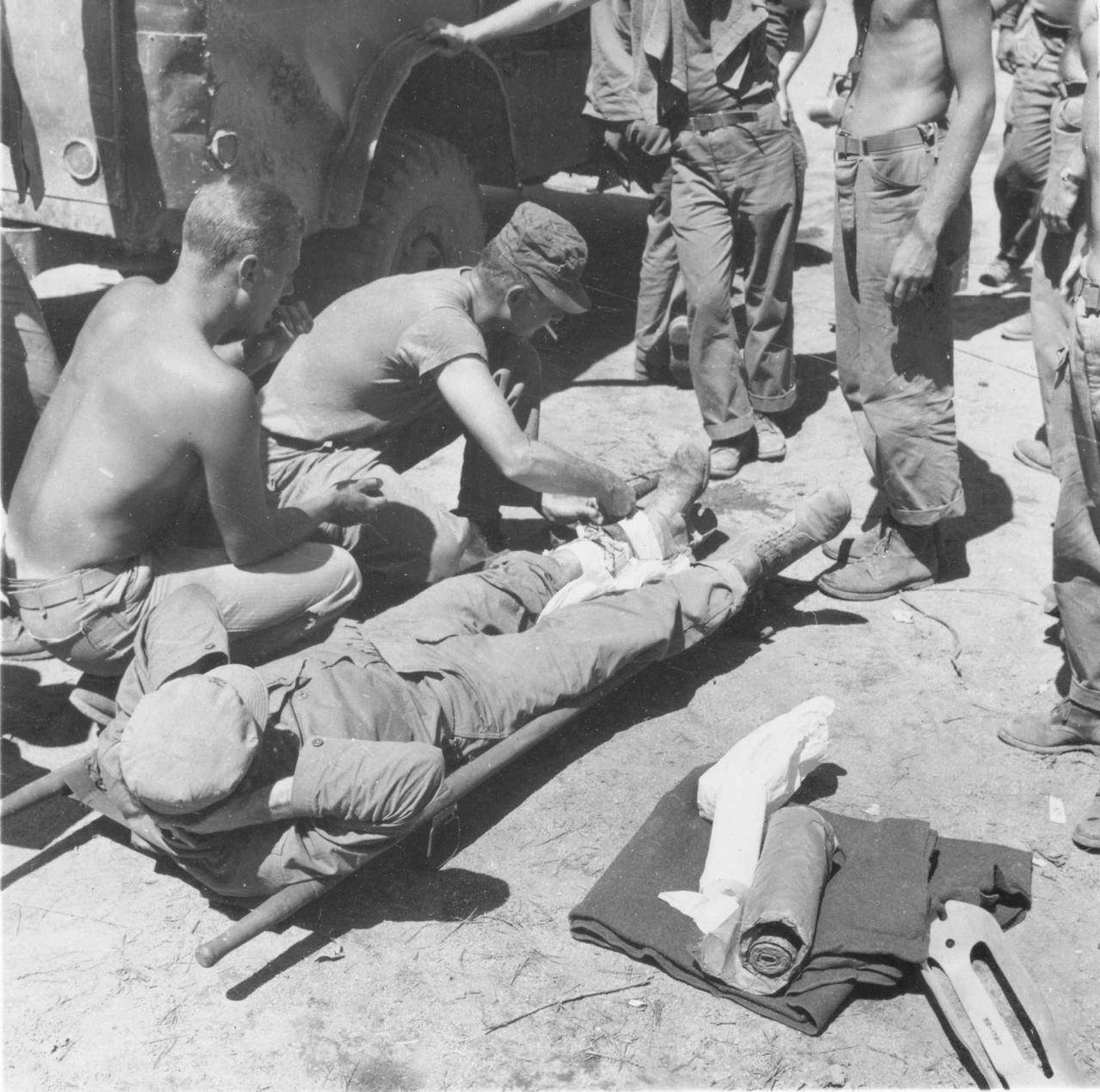
Triage Application on a Marine – 1952 (Flickr)
By the 20th century, particularly during World War I and World War II, triage practices were further refined. During this period, criteria such as transportability, likelihood of survival, and effectiveness of treatment were incorporated into the evaluation process alongside urgency. The military medical experience gained during these conflicts was later transferred to civilian healthcare systems.
The widespread adoption of triage in civilian healthcare paralleled the institutionalization of emergency services. Beginning in the 1960s, the increasing number of patients presenting to hospital emergency departments created a clear need for standardized triage systems. During this time, national and regional triage models began to be developed in various countries.
In the 1990s and beyond, as emergency medicine emerged as an independent specialty, triage practices evolved into scientifically grounded, multi-categorical, and scaled systems. Structured systems such as the Manchester Triage System, the Canadian Triage and Acuity Scale, and the Emergency Severity Index were developed; triage came to be recognized not only in disaster and wartime settings but as an integral component of routine emergency care.
Today, triage continues to serve as a fundamental practice, drawing on the accumulated military and civilian experience from its historical development, and remains essential for patient safety, service quality, and the sustainability of healthcare systems.
The primary objective of triage is to ensure the most effective and equitable delivery of healthcare in settings characterized by high patient volume and limited resources, such as emergency departments and disaster environments. In this context, triage is not merely a process for ordering patients; it is recognized as the first and most critical step in the clinical decision-making process. The main objectives of triage can be summarized as follows:
Triage practices are guided by specific principles. While these principles may vary across different systems and models, they are generally evaluated within a common framework.
Triage is primarily based on urgency. Patients are assessed not according to the order of arrival but according to the severity of their clinical condition and the risk of deterioration. This approach aims to ensure that patients with life-threatening conditions receive immediate intervention.
Another fundamental principle is the use of standardized and objective criteria. Triage decisions must be made independently of personal judgment, based on predefined clinical criteria, to enhance the reliability and reproducibility of assessments. Parameters such as vital signs, level of consciousness, pain intensity, and chief complaint are prioritized in this context.
It is also a key principle that triage is a dynamic process. Since a patient’s clinical condition may change over time, triage is not a one-time evaluation but a continuous process that may require reassessment (re-triage) as needed.
Ethical considerations are integral to triage practices. Decision-making must avoid discrimination; patients must be evaluated without regard to age, gender, socioeconomic status, or social standing.
Finally, triage is an application that simultaneously addresses patient safety and healthcare worker safety. Appropriate triage ensures that patients receive timely and appropriate care while also helping the healthcare system maintain functionality under excessive load.
Triage practices are categorized into different types based on the setting, purpose, and patient profile. Each type of triage employs evaluation criteria and application methods tailored to specific conditions. This diversity enables triage to adapt flexibly to various clinical and operational needs.
Emergency department triage is applied to classify patients arriving at hospital emergency departments according to the level of urgency. This type of triage typically involves a brief clinical assessment conducted immediately after the patient’s arrival. During the evaluation, vital signs, level of consciousness, chief complaint, and potential life-threatening risks are considered.
The primary goal of emergency department triage is to ensure that patients with life-threatening conditions receive immediate intervention while directing those with lower urgency to appropriate waiting times. For this purpose, multi-categorical and scaled triage systems are widely used.
Disaster and mass casualty triage is a type of triage designed to rapidly assess large numbers of casualties in situations such as natural disasters, major accidents, terrorist incidents, or war-like conditions. In such scenarios, the primary priority is to save the greatest number of lives with limited resources.
In this type of triage, the assessment process is faster and more simplified compared to emergency department triage. Patients are typically classified using color codes or basic clinical indicators, taking into account the need for advanced treatment and likelihood of survival. Disaster triage requires frequent reassessment due to dynamic conditions.
Field and military triage is applied in environments such as battlefields and conflict zones where standard hospital-based healthcare services are unavailable. This type of triage has played a foundational role in the historical development of the triage concept.
In military triage, the goal is to classify wounded personnel based on factors such as transportability, priority for intervention, and preservation of operational capacity. In this context, prioritizing those most likely to benefit from treatment is a fundamental approach.
Field triage is not limited to military contexts; today it is also used within emergency medical services and incident management. In particular, it plays a critical role in pre-hospital emergency care by guiding patients to appropriate healthcare facilities.
These differences among triage types demonstrate that triage is not a uniform practice but rather a flexible, multi-dimensional evaluation process adaptable to varying conditions.
Triage systems are structured models developed to determine the urgency level of patients presenting to emergency departments using standardized, reproducible, and objective criteria. These systems aim to support clinical decision-making, enhance patient safety, and regulate emergency department operations. Today, widely used triage systems typically classify patients using a five-level scale.
Color-coded triage is a rapid and practical classification method widely used in disaster and mass casualty situations. In this system, patients are categorized into groups indicated by specific colors based on the severity of their clinical condition. The most commonly used colors are red, yellow, green, and black.
The most important advantage of color-coded systems is their facilitation of rapid decision-making. However, because these systems offer limited capacity for detailed clinical assessment, they are typically used alongside or as complements to more comprehensive scaled systems in routine emergency department settings.
Among the most commonly used models in emergency department triage today are the Manchester Triage System (MTS), the Canadian Triage and Acuity Scale (CTAS), and the Emergency Severity Index (ESI). Although developed in different countries, these systems are structured around similar objectives.
The Manchester Triage System (MTS) adopts a symptom-based approach and evaluates patients through algorithms defined by their presenting complaints. The system classifies patients into five levels of urgency and defines maximum waiting times for each level. In this way, MTS presents a model that integrates clinical prioritization with time management.
The Canadian Triage and Acuity Scale (CTAS) is a detailed system that classifies patients into five levels of clinical urgency, supported by comprehensive definitions and examples. CTAS considers parameters such as vital signs, symptom severity, and the patient’s overall condition in its assessments. The system provides a robust framework particularly in terms of patient safety and standardization.
The Emergency Severity Index (ESI) is a model that incorporates not only clinical urgency but also resource needs into the triage decision. In ESI, patients are classified according to both their clinical risk status and the resources required for diagnosis and treatment. This feature demonstrates that ESI offers a distinct approach to predicting and managing emergency department workload.
These triage systems are implemented in various countries and healthcare systems, but their common goals are early risk identification, accurate prioritization, and efficient resource use. Comparative studies have shown that each system has specific advantages and limitations; the choice of system should be based on institutional needs, patient profiles, and healthcare delivery conditions.
Triage practices, by their nature, involve medical decision-making processes that carry ethical and legal responsibilities. The necessity of serving a large number of patients with limited resources in emergency situations compels healthcare providers to make prioritization-based decisions, transforming triage into not only a clinical but also an ethical practice.
The ethical dimension of triage is evaluated primarily within the framework of justice, beneficence, non-maleficence, and equity. The principle that patients must be assessed solely based on their clinical needs, without regard to age, gender, social status, economic condition, or other individual characteristics, is considered a fundamental condition of ethical triage. This approach aligns with the foundational understanding developed throughout triage’s historical evolution. Particularly in disaster and mass casualty situations, triage decisions are made with a perspective that prioritizes societal benefit over individual benefit. In such contexts, the goal is to save the greatest number of lives possible with available resources; decisions made in pursuit of this goal may raise ethical considerations distinct from those in routine clinical practice.
From a legal standpoint, triage practices are evaluated within the scope of medical standards and professional responsibilities as part of healthcare delivery. The use of triage decisions based on scientifically accepted and institutionally endorsed systems constitutes a critical criterion in assessing healthcare providers’ liability in potential legal disputes.
The use of standardized triage systems contributes to uniformity in practice and ensures that decisions are grounded in objective foundations. This enables evaluations made during the triage process to be reviewed and justified retrospectively. Moreover, proper documentation of triage is considered a critical element from a legal liability perspective.
Another important aspect of the ethical and legal dimensions of triage concerns competence and training. Healthcare personnel performing triage must receive adequate training on relevant systems to support ethically sound decision-making and reduce legal risks.
In conclusion, triage is not merely a clinical prioritization process; it is a comprehensive practice requiring adherence to ethical principles and awareness of legal responsibilities. Neglecting these dimensions can lead to adverse consequences for patient safety and the quality of healthcare services.
Triage plays a fundamental role in modern healthcare systems, particularly in enabling emergency departments to operate effectively, safely, and sustainably. The increasing number of patients presenting to emergency departments, the diversification of presenting complaints, and limited resources have made triage an indispensable component of healthcare delivery.
Effective implementation of triage in emergency departments organizes patient flow. Classifying patients according to clinical urgency allows for more efficient use of treatment areas and healthcare personnel. This enables timely intervention for patients with life-threatening conditions and ensures appropriate evaluation of lower-acuity patients through planned scheduling.
Triage directly contributes to improved patient safety. Early identification of high-risk patients is recognized as a decisive factor in reducing complications and preventable mortality due to delays. Standardized triage systems reduce the margin for error in assessment and enhance the consistency of clinical decisions.
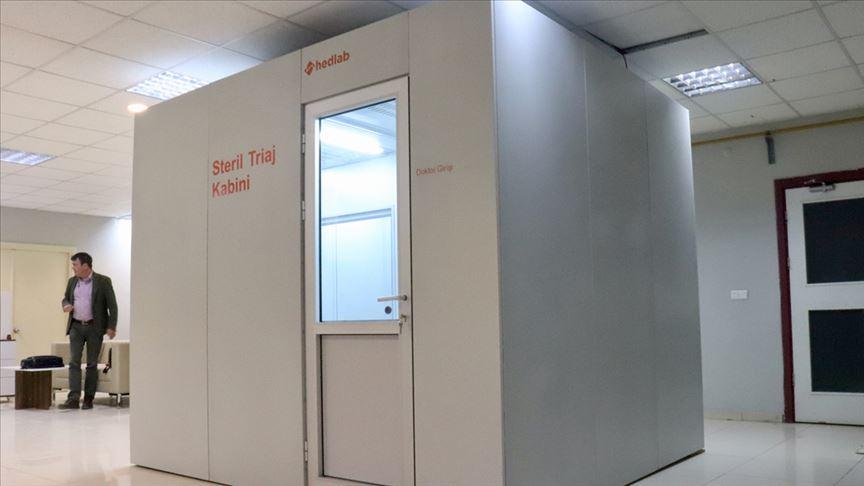
Sterile Triage Cabin Application in Türkiye (Anadolu Agency)
From the perspective of the entire healthcare system, triage also has a strategic function in resource management. Preventing unnecessary congestion in emergency departments, ensuring efficient use of bed capacity, and directing advanced diagnostic and treatment resources to the appropriate patients are among triage’s indirect but significant outcomes. In this sense, triage is not merely an internal emergency department practice but a process that affects the overall functioning of the hospital.
Moreover, triage is linked to quality and performance indicators in healthcare services. Metrics such as waiting times, time to intervention, and patient satisfaction are closely connected to the effectiveness of triage practices. For this reason, many healthcare systems consider triage processes as focal points for quality improvement initiatives.
In disasters and extraordinary situations, triage is one of the fundamental elements determining the healthcare system’s capacity to respond to crises. Accurate and rapid triage practices help maintain continuity of healthcare services, prevent system collapse, and contribute to public health security. In this context, triage holds critical importance not only for individual patient care but also for the efficiency, equity, and sustainability of the healthcare system.
Acil Servis Akademisi. "Triaj." Accessed January 13, 2026.https://www.acilservisakademisi.com/triaj.
Ankara Üniversitesi Tıp Fakültesi. *Triyaj II. Sempozyum Bildiri Kitabı*. Ankara: Ankara Üniversitesi Tıp Fakültesi, 2019. Accessed January 13, 2026.https://aciltip.medicine.ankara.edu.tr/wp-content/uploads/sites/818/2019/05/Triyaj_II_Sempozyum_Bildiri_Kitabi.pdf
Açık, Deniz. "Doktorları Kovid-19'dan korumak için yerli 'steril triyaj kabini' ürettiler." *Anadolu Ajansı*, April 18, 2020. Accessed January 13, 2026.https://www.aa.com.tr/tr/saglik/doktorlari-kovid-19dan-korumak-icin-yerli-steril-triyaj-kabini-urettiler/1809465
Beydilli, Halil. "Acil Serviste Triaj ve Çalışan Güvenliği." ATUDER (Acil Tıp Uzmanları Derneği). Accessed January 13, 2026.http://file.atuder.org.tr/_atuder.org/fileUpload/KkLAPMUxQlZh.pdf
Birhekimoğlu, Tolga. "START Triaj Modeli." Accessed January 13, 2026.https://md.teyit.org/file/1587755970636-start-triaj.pdf
Değirmenci, Soner. “Acil Tıp Anabilim Dalında Oluşturulan Ulusal Triyaj Projesi ‘Acil Servis Triyaj Karar Destek Sistemi – Ankütiryaj’ın Kanada Triyaj Aciliyet Sistemi ve Manchester Triyaj Sistemi ile Karşılaştırılması.” Master's thesis,Ankara Üniversitesi, 2020. Accessed January 13, 2026.https://tez.yok.gov.tr/UlusalTezMerkezi/tezDetay.jsp?id=F3_7hfXsO78XkN2vnAExCA&no=PHu1WPP2SGK6fjWxKszNlA
Kaya, Kadirhan. "Ege Üniversitesi Tıp Fakültesi Acil Servisine Başvuran Hastalarda Manchester Triyaj Sistemi (MTS), Kanada Triyaj ve Akut Skalası (CTAS), Acil Durum Önem İndeksi (ESI) Performanslarının Karşılaştırılması." Master's thesis, Ege Üniversitesi, 2023. Accessed January 13, 2026.https://tez.yok.gov.tr/UlusalTezMerkezi/TezGoster?key=S2eMu1TIwY_v4mYv58xAr-iOOCccecCsEdVezd69XsaD0Cz1Cxolm6FRRDfD8SeT
Kekreli Göylüsün, Hande, and Gül Özlem Yıldırım. "Kitlesel Olaylarda Kullanılan Saha Triyaj Sistemleri." *Acil Hemşireliği Dergisi* 1, no. 1 (2024): 38–44. Accessed January 13, 2026.https://dergipark.org.tr/tr/download/article-file/4120831
Ministry of Health of the Turkish Republic of Northern Cyprus. "Triaj Sistemi." YouTube video. Accessed January 13, 2026.https://www.youtube.com/watch?v=cDbAAhqSe_k.
USMC Archives. "Forward Triage." y. 1952. Flickr. Accessed January 13, 2026.
İşlekdemir, Burcu. "Acil Serviste Triaj." ATUDER (Acil Tıp Uzmanları Derneği). Accessed January 13, 2026.http://file.atuder.org.tr/_atuder.org/fileUpload/SkEX1EQeNlcb.pdf

(Generated by Artificial Intelligence)
Triage
Definition | Evaluation of patients according to priority order in emergency situations | ||||||||
|---|---|---|---|---|---|---|---|---|---|
Purpose | Ensuring the fastest intervention for the most urgent patient | ||||||||
Historical Origins | The 1790s – Modern triage practices emerged during the Napoleonic Wars | ||||||||
Field of Use | Emergency services and disaster situations | ||||||||
History
Objectives and Principles of Triage
Types of Triage
Emergency Department Triage
Disaster and Mass Casualty Triage
Field and Military Triage
Triage Systems and Models
Color-Coded Triage Systems
Internationally Widely Used Triage Models
Ethical and Legal Dimensions of Triage
Importance of Triage in the Healthcare System