


This article was automatically translated from the original Turkish version.
+2 More
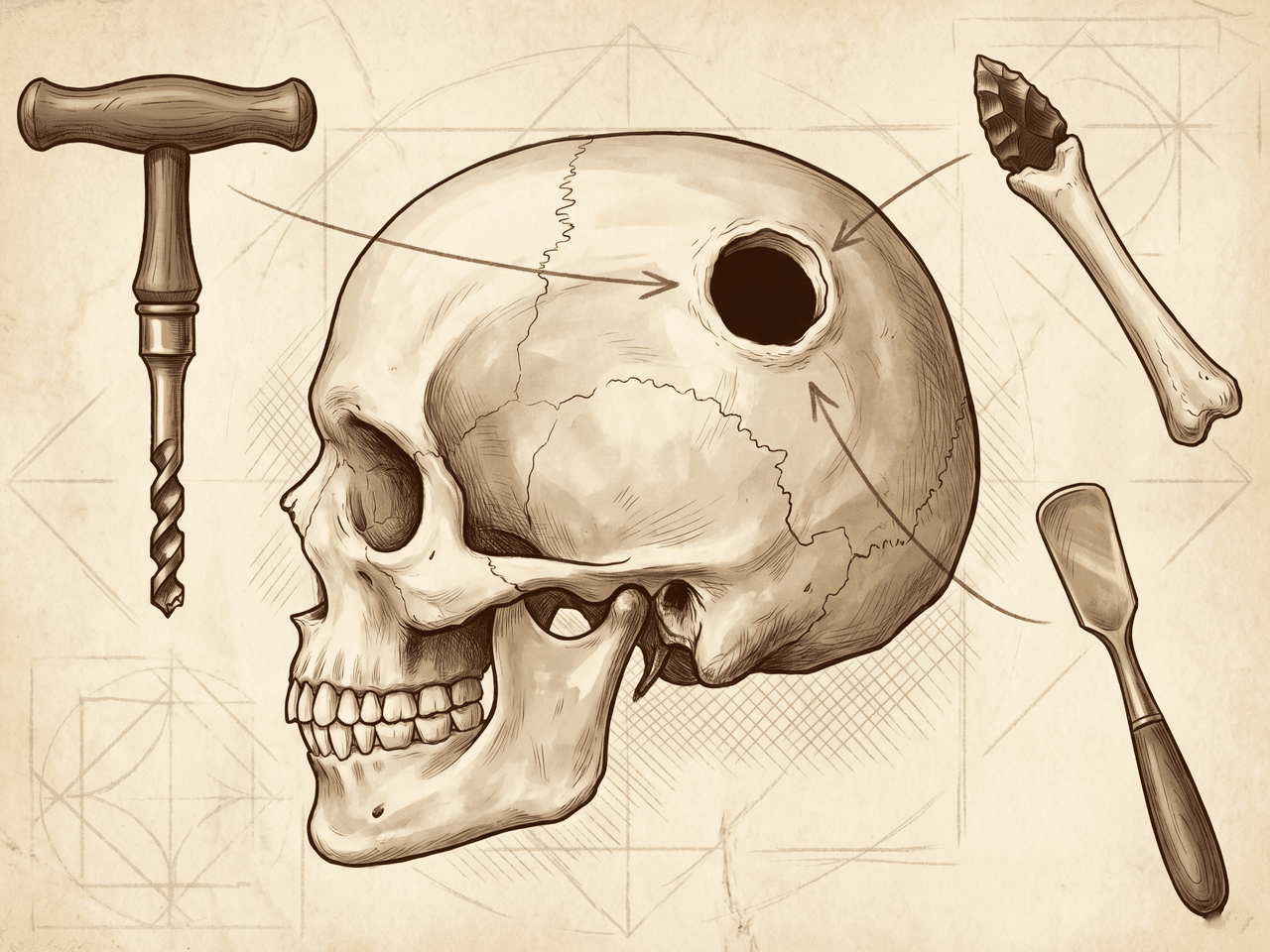
(Generated with Artificial Intelligence.)
Trepanation
Evidence of Survival | Healing signs on the skull | ||||||||
|---|---|---|---|---|---|---|---|---|---|
Modern Purpose | To reduce intracranial pressure | ||||||||
Modern Instruments | Automatic cranial perforators | ||||||||
Neurological Complication | Trephination Syndrome | ||||||||
Demography | More frequently identified in male individuals | ||||||||
Ancient Techniques | Drilling Cutting Scraping | ||||||||
Ancient Purpose | Ritual Pressure reduction Therapeutic practice | ||||||||
Modern Counterparts | Burr Hole Craniotomy | ||||||||
Definition | Creation of a surgical opening in the skull | ||||||||
Oldest Evidence | Neolithic Period Çayönü Tepesi (in Anatolia) | ||||||||
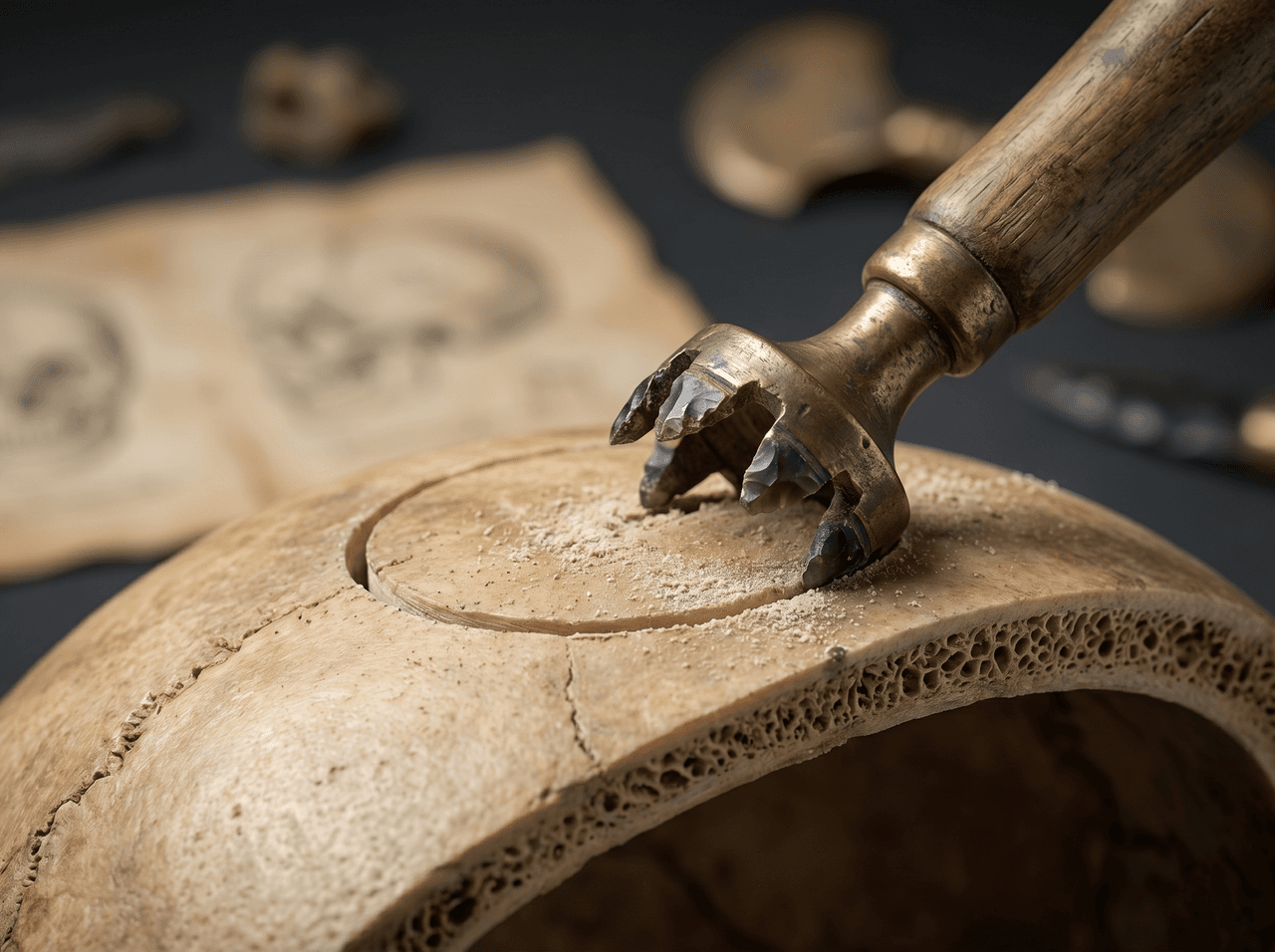
Ancient Trepanation Instrument and Skull (Generated by Artificial Intelligence.)
Trepanation is the surgical procedure of creating a hole in the human skull or removing a piece of bone for a specific purpose. This practice, with a history extending from ancient times to modern medicine, was performed in prehistoric periods using various tools and is today carried out within the framework of modern surgical procedures.
The oldest known examples of trepanation date to the Neolithic period. The earliest trepanation case identified in Anatolia was found at the Çayönü Tepesi settlement within the boundaries of Diyarbakır and belongs to the Pre-Pottery Neolithic period, approximately 10,000 years ago.【1】
Examinations of skulls from the Neolithic period to the present indicate that this practice generally falls into two main categories: surgical interventions performed while the individual was alive and procedures carried out after death. Some postmortem procedures have been identified as being conducted to produce amulets from the removed skull fragments.【2】
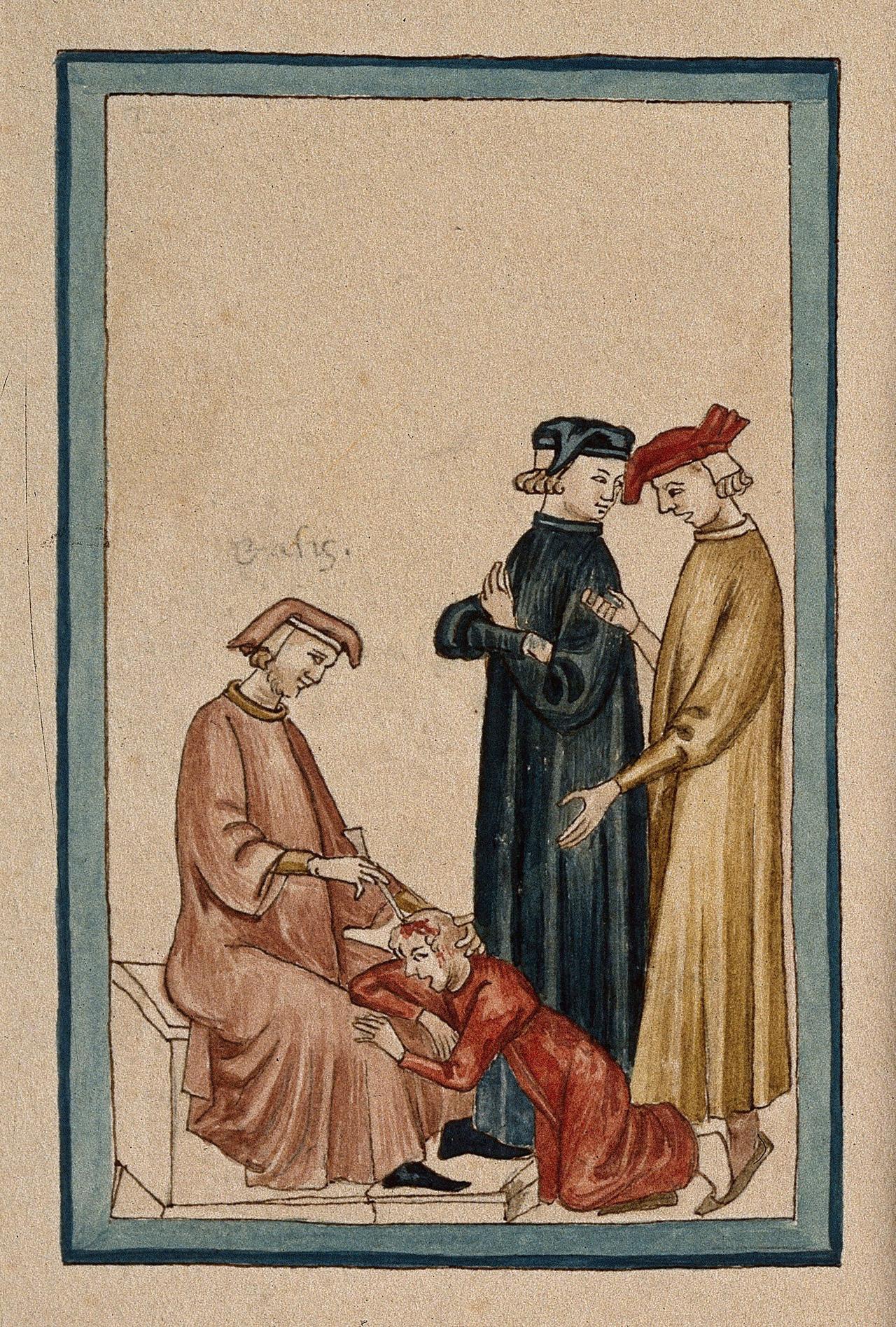
Two individuals consulting while a physician performs trepanation on another man’s skull. (Wellcome Collection)
In prehistoric and ancient times, trepanation was applied for ritualistic, magical and therapeutic purposes. It was intended to relieve intracranial pressure or expel evil spirits in cases of skull fractures due to trauma, severe headaches and various neurological conditions. Three primary techniques were used during the procedure: scraping, cutting (grooving) and direct drilling.【3】
In medieval Islamic medicine, the management of head trauma was approached in a more systematic and surgical manner. Medical records dating to the 11th century detail the necessity of trepanation in cases of skull fractures and associated complications.【4】In particular, when a depressed skull fracture occurred and bone fragments pressed against the brain, it was specified that the skull must be drilled and the depressed bone removed surgically to eliminate the pressure.
The fundamental physiological basis of trepanation, from prehistoric times to modern surgery, lies in controlling intracranial pressure and cerebral blood flow. The human skull is a rigid structure of fixed volume composed of bone with no elasticity. In cases of head trauma, intracranial hemorrhages (hematomas) or tissue swelling (edema) due to various medical conditions, the volume of mass within the skull increases. This volume increase physiologically raises intracranial pressure. The elevated pressure physically compresses the brain tissue within the closed cranial cavity, obstructing cerebral blood flow and causing cellular hypoxia. Creating a surgical opening in the skull—by removing a bone fragment or drilling a hole—allows pressure release and provides additional space for the brain to expand outward, which is the primary mechanism used to prevent this physiological threat.【5】
Creating a hole in the skull through surgical or traumatic means disrupts tissue integrity and activates the body’s cellular repair mechanisms. This physiological healing process in bone tissue occurs in four main stages: formation of a hematoma, development of granulation tissue at the cellular level, production of temporary bone tissue known as callus, and finally, remodeling of the bone into a permanent lamellar structure.【6】
Immediately after the procedure, immune and repair cells accumulate around the opening. Osteoblasts, bone-forming cells, begin constructing a new cellular matrix from the edges of the defect toward the center. Specific proteins such as Bone Morphogenetic Protein-2 (BMP-2) are among the key molecules initiating this cellular differentiation and new bone formation (osteogenesis).【7】The newly formed bone tissue, initially disorganized and of a woven structure, gradually acquires its final strength and transforms into permanent lamellar bone over time. The presence of callus (bone healing and smoothing) along the edges of trepanated skulls recovered from archaeological excavations serves as biological evidence that the procedure was performed while the individual was alive and that patients survived the operation and underwent the healing process.【8】
The procedure historically termed trepanation has evolved in modern neurosurgical practice into medical procedures such as craniotomy, craniectomy and burr hole drilling. These interventions are performed based on specific quantitative medical indications, primarily to reduce intracranial pressure and eliminate physical pressure on brain tissue following head trauma.
Accumulation of blood (hematoma) between the skull and the dura mater or between the meninges and brain tissue following head trauma constitutes a medical condition requiring surgical opening of the skull. In epidural hematoma cases, emergency surgical evacuation is performed immediately if the hematoma volume exceeds 30 cm³ regardless of the patient’s neurological assessment score. In cases where the hematoma volume is less than 30 cm³, the hematoma thickness is less than 15 mm and the midline shift (lateral displacement of brain tissue) is less than 5 mm, surgical intervention may be delayed in favor of physiological monitoring.【9】
Decisions regarding surgical intervention in acute subdural hematomas are similarly based on volumetric and millimeter measurements. Surgical treatment is indicated when the hematoma thickness exceeds 10 mm or the midline shift exceeds 5 mm.【10】Additionally, in cases of depressed skull fractures caused by trauma, surgical repair is indicated when the amount of depressed bone exceeds the thickness of the surrounding intact skull bone, in order to restore the bone to its normal level and relieve pressure on the dura mater.【11】
In the surgical treatment of chronic subdural hematomas, which can develop insidiously over time following mild head trauma, one or two small holes (burr holes) are drilled into the skull to drain the liquefied blood. Following this procedure, a closed external drainage system is inserted through the cranial opening to reduce the rate of fluid reaccumulation and lower the risk of postoperative recurrence.【12】
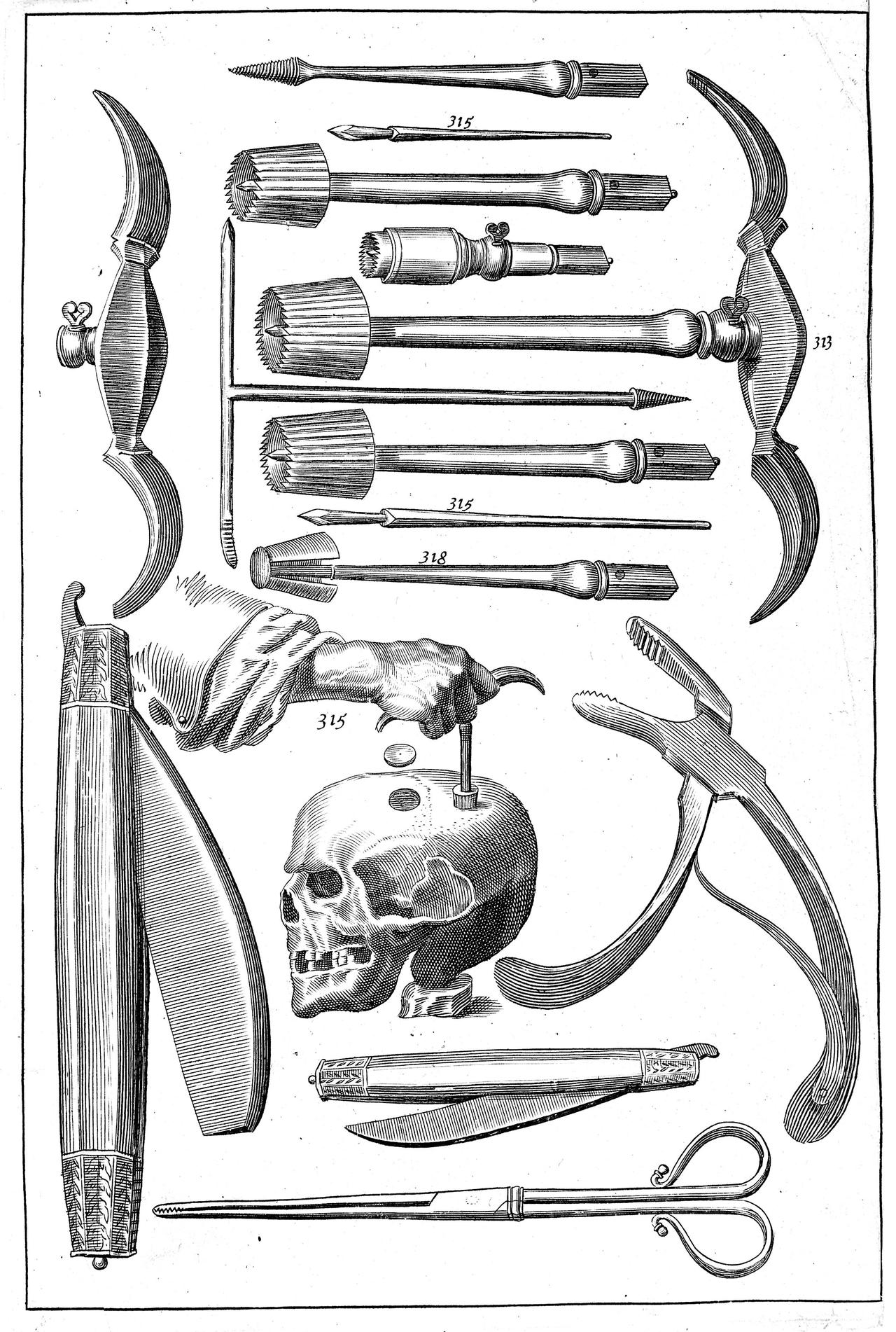
Trepanation Instruments and Surgical Set Designed by John Woodall (Wellcome Collection)
Stone or metal scraping tools used in ancient times for trepanation have been replaced in modern medicine by cranial perforators and medical drills equipped with automatic safety mechanisms. These modern devices are designed to create standard access holes (burr holes) with diameters of 7 mm to 11 mm in the skull, tailored to the patient’s age group and bone thickness.【13】The mechanical design of these instruments is such that they automatically stop when a loss of resistance is detected upon complete penetration of the skull bone. This mechanism prevents physical damage to the underlying dura mater and brain tissue during drilling.
In surgical cases where large bone fragments are removed from the skull and the bone flap is not immediately replaced, a specific clinical condition known as Syndrome of the Trephined may develop in some patients. This condition arises from direct exposure of the brain tissue to atmospheric pressure and altered intracranial pressure dynamics, manifesting clinically as motor function deficits, cognitive decline and speech disturbances. Evidence indicates that these neurological impairments are largely reversible following cranial reconstruction (cranioplasty).【14】
In modern surgery, leaving small-diameter holes (burr holes) open after the procedure may lead to cosmetic depressions beneath the scalp and long-term tissue integrity issues. To prevent this, reconstruction—the closure of the created opening—is performed at the end of surgery. For cranial integrity restoration, special closures made of titanium plates, hydroxyapatite (HA), and polyether ether ketone (PEEK) materials, which are biologically compatible with human tissue, are used.【15】
When examining the historical demographic distribution of trepanation, it is evident that the procedure was more frequently performed on male individuals. Osteoarchaeological studies covering a 10,000-year period from the Neolithic to the Late Ottoman period in Anatolia, involving 40 trepanned individuals from 23 different settlements, found that the vast majority were male. According to the same data, most of these individuals had a single hole in the skull, with only four individuals showing multiple trepanation procedures.【16】
The survival rates of patients following these ancient surgical interventions can be assessed through signs of bone healing in skull remains. The presence of callus formation along the edges of holes in skulls indicates that patients survived the operation and underwent the healing process. The young adult skull fragment from Çayönü with an 8 mm hole and other Neolithic skull fragments serve as biological evidence of this historical healing process.【17】
A Sitting Physician Is Trepanning Another Man's Head While Two Others Consult. Watercolour drawing. Wellcome Collection. Accessed April 16, 2026.
Aciduman, Ahmet, Berna Arda, Fatma G. Özaktürk, and Ümit F. Telatar. "What does Al-Qanun Fi Al-Tibb (the Canon of Medicine) say on head injuries?" *Neurosurgical Review* 32, no. 3 (2009): 255-263. Accessed April 15, 2026.https://doi.org/10.1007/s10143-009-0205-5.
Ashayeri, Kimberly, Eric M. Jackson, Judy Huang, Henry Brem, and Chad R. Gordon. "Syndrome of the Trephined: A Systematic Review." *Neurosurgery* 79, no. 4 (2016): 525–534. Accessed April 15, 2026.https://doi.org/10.1227/NEU.0000000000001366.
Aster, Jon C., Vinay Kumar, Abul K. Abbas, Jayanta Debnath, and Abhijit Das. Robbins, Cotran, & Kumar Pathologic Basis of Disease. 11th ed. Elsevier, 2024.
Broca, Paul. "Sur la trépanation du crâne et les amulettes crâniennes à l'époque néolithique." *Bulletin de l'Académie de Médecine* (Paris, 1877). Accessed April 15, 2026.https://gallica.bnf.fr/ark:/12148/bpt6k67992v/f7.item.
Bullock, M. Ross, Randall Chesnut, Jamshid Ghajar, David Gordon, Roger Hartl, David W. Newell, Franco Servadei, Beverly C. Walters, and Jack E. Wilberger. "Surgical Management of Acute Epidural Hematomas." *Neurosurgery* 58, no. 3 (2006): S2-7-S2-15. Accessed April 15, 2026.https://doi.org/10.1227/01.NEU.0000210363.91172.A8.
Bullock, M. Ross, Randall Chesnut, Jamshid Ghajar, David Gordon, Roger Hartl, David W. Newell, Franco Servadei, Beverly C. Walters, and Jack E. Wilberger. "Surgical Management of Acute Subdural Hematomas." *Neurosurgery* 58, no. 3 (2006): S2-16-S2-24. Accessed April 15, 2026.https://doi.org/10.1227/01.NEU.0000210364.29290.C9.
Bullock, M. Ross, Randall Chesnut, Jamshid Ghajar, David Gordon, Roger Hartl, David W. Newell, Franco Servadei, Beverly C. Walters, and Jack E. Wilberger. "Surgical Management of Depressed Cranial Fractures." *Neurosurgery* 58, no. 3 (2006): S2-56-S2-60. Accessed April 15, 2026.https://doi.org/10.1227/01.NEU.0000210367.14043.0E.
Erdal, Yılmaz Selim, and Ömür Dilek Erdal. "A review of trepanations in Anatolia with new cases." *International Journal of Osteoarchaeology* 21, no. 5 (2011): 505-534. Accessed April 15, 2026.https://doi.org/10.1002/oa.1154.
Hall, John E. – Hall, Michael E. Guyton and Hall Textbook of Medical Physiology. 14th ed. Elsevier, 2021.
Halloran, Daniel, Hilary W. Durbano, and Anja Nohe. "Bone Morphogenetic Protein-2 in Development and Bone Homeostasis." *Journal of Developmental Biology* 8, no. 3 (2020): 19. Accessed April 15, 2026.https://doi.org/10.3390/jdb8030019.
Hemphill, J. Claude, Edilberto Amorim, and Wade S. Smith. "Intracerebral Hemorrhage." In Harrison’s Principles of Internal Medicine, 22nd ed., 3452-3457. McGraw Hill, 2022
Nassar, Aref, Joy Naba, and Joe Demian. "Burr Hole Reconstruction Techniques: A Systematic Review of Materials and Outcomes." *World Neurosurgery* 194 (2025): 123628. Accessed April 15, 2026.https://doi.org/10.1016/j.wneu.2024.123628
Peng, D., and Y. Zhu. "External drains versus no drains after burr-hole evacuation for the treatment of chronic subdural haematoma in adults." *The Cochrane Database of Systematic Reviews* 2016, no. 8 (2016): CD011402. Accessed April 15, 2026.https://doi.org/10.1002/14651858.CD011402.pub2.
Set of Trephination Instruments, Including the Trephine Designed by John Woodall. Wellcome Collection. Accessed April 16, 2026.https://wellcomecollection.org/works/kw75znq3/images?id=m2ypm9h3&resultPosition=6.
Sheen, Jonathon R., Ahmed Mabrouk, and Vishnu V. Garla. "Fracture Healing Overview." In *StatPearls*. Treasure Island (FL): StatPearls Publishing, 2023. Accessed April 15, 2026.https://www.ncbi.nlm.nih.gov/books/NBK551678/
U.S. Food and Drug Administration. “510(k) Premarket Notification Summary: Cranial Perforators and Manual Cranial Drills.” K082010, 2008. Accessed April 15, 2026.
Çelik, Meltem. "Antik Çağlarda Bir Kraniyotomi Uygulama Yöntemi: Trepanasyon." *Farabi Tıp Dergisi* 3, no. 4 (2024): 149-154. Accessed April 15, 2026.https://doi.org/10.59518/farabimedj.1551680
Özbek, Metin. "Çayönü’nde kafatası delgi operasyonu." *Hacettepe Üniversitesi Edebiyat Fakültesi Dergisi* 15 (1998). Accessed April 15, 2026.https://izlik.org/JA44LP44BK.
[1]
Metin Özbek, "Çayönü’nde kafatası delgi operasyonu," *Hacettepe Üniversitesi Edebiyat Fakültesi Dergisi* 15 (1998), Accessed April 15, 2026,https://izlik.org/JA44LP44BK; Yılmaz Selim Erdal and Ömür Dilek Erdal, "A review of trepanations in Anatolia with new cases," *International Journal of Osteoarchaeology* 21, no. 5 (2011): 505–534, Accessed April 15, 2026,https://doi.org/10.1002/oa.1154.
[2]
Paul Broca, "Sur la trépanation du crâne et les amulettes crâniennes à l'époque néolithique," *Bulletin de l'Académie de Médecine* (Paris, 1877), Accessed April 15, 2026,https://gallica.bnf.fr/ark:/12148/bpt6k67992v/f7.item; M. Çelik, "Antik Çağlarda Bir Kraniyotomi Uygulama Yöntemi: Trepanasyon," *Farabi Tıp Dergisi* 3, no. 4 (2024): 149–154, Accessed April 15, 2026,https://doi.org/10.59518/farabimedj.1551680.
[3]
Çelik, "Antik Çağlarda Bir Kraniyotomi," 149–154; Erdal and Erdal, "A review of trepanations in Anatolia," 505–534.
[4]
A. Aciduman et al., "What does Al-Qanun Fi Al-Tibb (the Canon of Medicine) say on head injuries?" *Neurosurgical Review* 32, no. 3 (2009): 255-263. Accessed April 15, 2026.https://doi.org/10.1007/s10143-009-0205-5
[5]
John E. Hall and Michael E. Hall, *Guyton and Hall Textbook of Medical Physiology*, 14th ed. (Elsevier, 2021), 777–784; J. Claude Hemphill, Edilberto Amorim, and Wade S. Smith, "Intracerebral Hemorrhage," in *Harrison’s Principles of Internal Medicine*, 22nd ed. (McGraw Hill), 3452–3457.
[6]
Jonathon R. Sheen, Ahmed Mabrouk, and Vishnu V. Garla, "Fracture Healing Overview," in *StatPearls* (StatPearls Publishing, 2023), Accessed April 15, 2026,https://www.ncbi.nlm.nih.gov/books/NBK551678/; Jon C. Aster et al., *Robbins, Cotran, & Kumar Pathologic Basis of Disease*, 11th ed. (Elsevier), 64–99, 1063–1105.
[7]
Daniel Halloran, Hilary W. Durbano, and Anja Nohe, "Bone Morphogenetic Protein-2 in Development and Bone Homeostasis," *Journal of Developmental Biology* 8, no. 3 (2020): 19, Accessed April 15, 2026,https://doi.org/10.3390/jdb8030019.
[8]
Broca, "Sur la trépanation du crâne"; Erdal and Erdal, "A review of trepanations in Anatolia," 505–534.
[9]
M. Ross Bullock et al. "Surgical Management of Acute Epidural Hematomas." *Neurosurgery* 58, no. 3 (2006): S2-7, Accessed April 15, 2026.https://doi.org/10.1227/01.NEU.0000210363.91172.A8.
[10]
M. Ross Bullock et al. "Surgical Management of Acute Subdural Hematomas." *Neurosurgery* 58, no. 3 (2006): S2-16. Accessed April 15, 2026.https://doi.org/10.1227/01.NEU.0000210364.29290.C9
[11]
M. Ross Bullock et al. "Surgical Management of Depressed Cranial Fractures." *Neurosurgery* 58, no. 3 (2006): S2-56, Accessed April 15, 2026.https://doi.org/10.1227/01.NEU.0000210367.14043.0E.
[12]
D. Peng and Y. Zhu, "External drains versus no drains after burr-hole evacuation for the treatment of chronic subdural haematoma in adults," *The Cochrane Database of Systematic Reviews* 2016, no. 8 (2016): CD011402, Accessed April 15, 2026.
[13]
U.S. Food and Drug Administration (FDA), "510(k) Premarket Notification Summary: Cranial Perforators and Manual Cranial Drills," K082010 (2008): 1-5, Accessed April 15, 2026,https://www.accessdata.fda.gov/cdrh_docs/pdf8/K082010.pdf.
[14]
Kimberly Ashayeri et al. "Syndrome of the Trephined: A Systematic Review." *Neurosurgery* 79, no. 4 (2016): 525-534. Accessed April 15, 2026.https://doi.org/10.1227/NEU.0000000000001366.
[15]
Aref Nassar, Joy Naba, and Joe Demian, "Burr Hole Reconstruction Techniques: A Systematic Review of Materials and Outcomes," *World Neurosurgery* 194 (2025): 123628, Accessed April 15, 2026,https://doi.org/10.1016/j.wneu.2024.123628.
[16]
Erdal and Erdal, "A review of trepanations in Anatolia," 505–534.
[17]
Özbek, "Skull Trepanation at Çayönü"; Broca, "Sur la trépanation du crâne".

(Generated with Artificial Intelligence.)
Trepanation
Evidence of Survival | Healing signs on the skull | ||||||||
|---|---|---|---|---|---|---|---|---|---|
Modern Purpose | To reduce intracranial pressure | ||||||||
Modern Instruments | Automatic cranial perforators | ||||||||
Neurological Complication | Trephination Syndrome | ||||||||
Demography | More frequently identified in male individuals | ||||||||
Ancient Techniques | Drilling Cutting Scraping | ||||||||
Ancient Purpose | Ritual Pressure reduction Therapeutic practice | ||||||||
Modern Counterparts | Burr Hole Craniotomy | ||||||||
Definition | Creation of a surgical opening in the skull | ||||||||
Oldest Evidence | Neolithic Period Çayönü Tepesi (in Anatolia) | ||||||||
Historical Origins and Archaeological Findings
Purpose and Techniques
Trepanation in Medieval and Islamic Medicine
Intracranial Pressure and Physiological Dynamics
Healing Process and Bone Regeneration
Modern Medical Applications and Surgical Indications
Traumatic Brain Injuries and Hemorrhage Management
Treatment of Chronic Subdural Hematoma
Modern Medical Instruments and Technological Advancements
Postoperative Complications and Reconstruction
Demographic Data and Archaeological Survival Rates