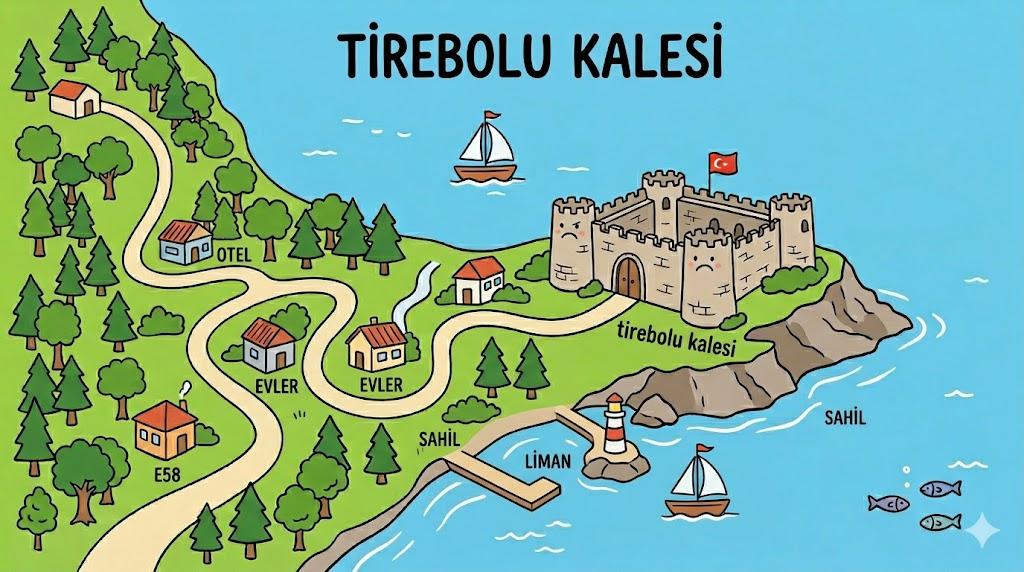
Tirebolu Castle
A historic structure located on a small peninsula extending toward the blue waters of the Black Sea. This fortress, situated in the Tirebolu district center of Giresun, appears as if it rises directly from the sea. Would you like to take a walk along the shore, exploring a fortress built upon high cliffs?
Where is Tirebolu Fortress?
This fortress is built on a peninsula jutting northward into the sea from Tirebolu district. It was formerly known as Saint Jean (Sent Jan) Fortress. The structure was constructed to perfectly conform to the natural shape of the peninsula.
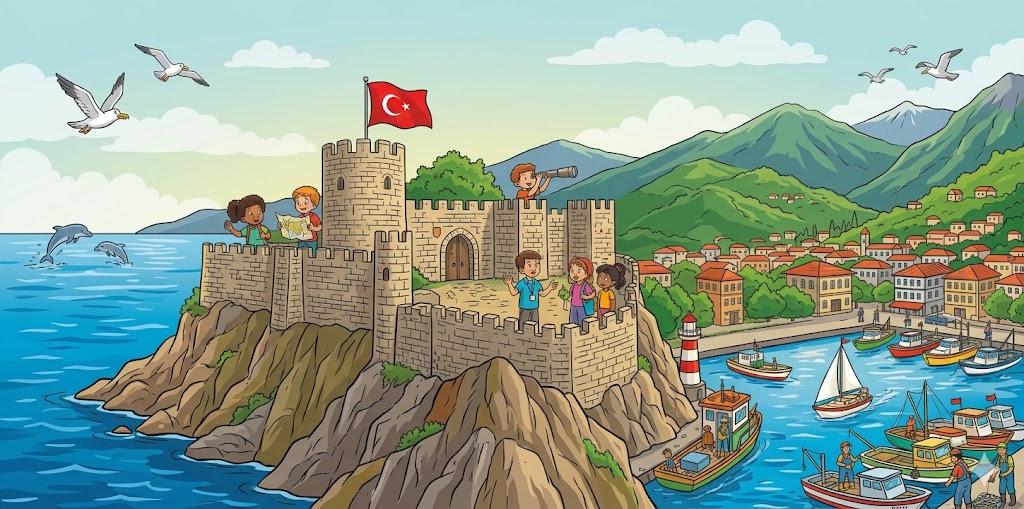
Tirebolu Fortress (generated by artificial intelligence)
Structure of the Fortress and What It Contains?
Access to the fortress is via a steep staircase on its southern side. The walls are constructed of irregular stones known as rubble stone. The main entrance is a low-arched opening facing the town.
Inside the fortress, several fascinating remnants from the past can be found:
- Chapel of the Virgin Mary, a small place of worship, survives in ruins.
- Remains of a former mosque where prayers were once offered.
- Numerous carved gravestones from the Ottoman period are displayed within the fortress.
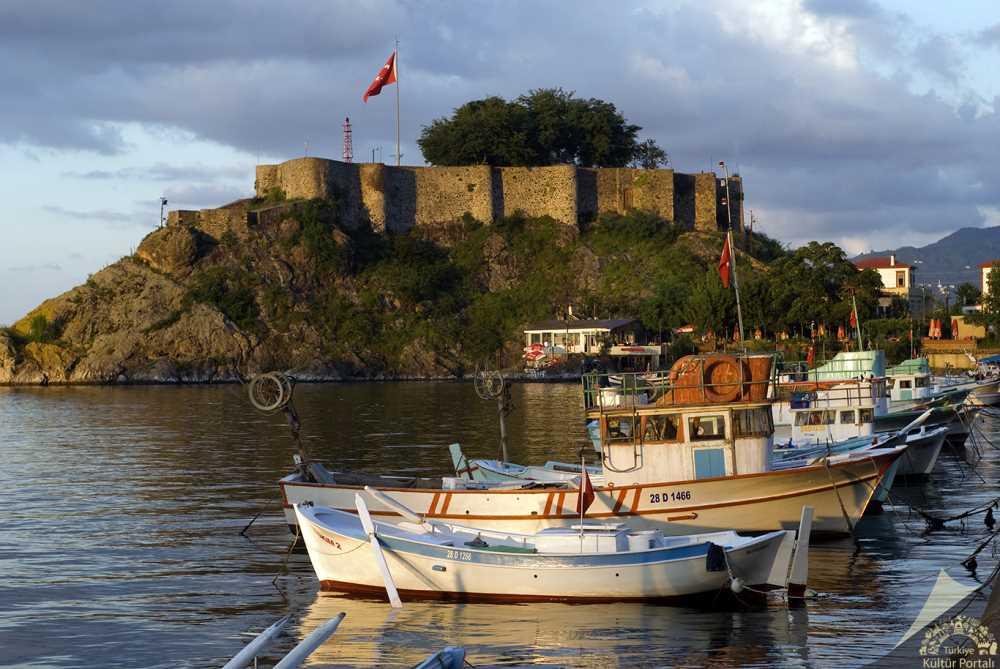
Tirebolu Fortress (Kültür Portali)
Defensive Features of the Fortress
The fortress walls are reinforced with external buttresses. Their thickness ranges between 1.25 and 1.50 meters. Inside, there were once storage rooms for weapons, food, and water, as well as cisterns.
A Journey Through Time
Long ago, in 1351, members of the royal family fleeing unrest in Trabzon sought refuge in this fortress, believing it to be secure. The fortress served as a military center during both the Byzantine and Ottoman periods due to its strategic location.
History of the Fortress
Although the exact date of its initial construction is unknown, it is believed to have been built during the Hellenistic or Roman periods. It was later renovated during the Pontic Kingdom era, acquiring the appearance of a typical medieval fortress. Its current form dates to the 19th century.