


This article was automatically translated from the original Turkish version.
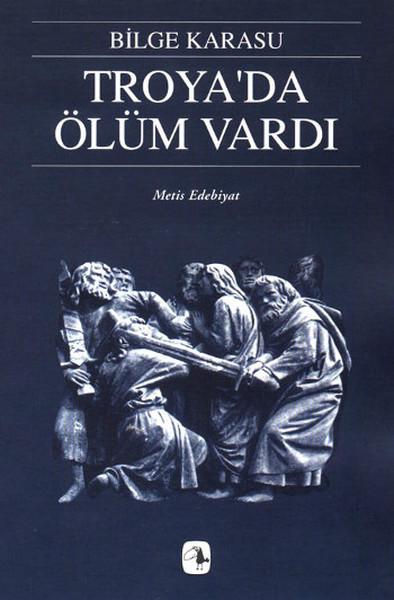
There Was Death in Troy
There Was Death in Troy
Author | Bilge Karasu | ||||||||
|---|---|---|---|---|---|---|---|---|---|
First Publication Year | 1963 | ||||||||
Movement | Modernism/Existentialism | ||||||||
Main Theme | Death, fear, loneliness, homosexuality | ||||||||
Type | Story | ||||||||
There Was Death in Troy is a work by Bilge Karasu, recognized in Turkish literature as an original synthesis of modern and postmodern narrative techniques. The book has been the subject of extensive literary and academic scrutiny due to its structure that challenges the boundaries of classical storytelling and its theoretical depth.
Structurally, the work features a multilayered narrative that defies the traditional setup-climax-resolution pattern. Karasu places the technique of the “unreliable narrator” at the center of this work. The narrator’s presentation of events as incomplete, distorted, or misleading compels the reader to question the truth of what is being told. The continuous blurring of narrative identities and the dissolution of temporal perception detach the narrative from a linear trajectory, transforming it into a circular and indeterminate structure. These techniques employed by Karasu transform the reader from a passive recipient into an active participant who deciphers the text like a puzzle. Furthermore, the poetic language of the text and the intertextual references between its sections emerge as essential elements reinforcing the work’s polyphonic character.
In academic literature, There Was Death in Troy serves as a significant reference point, particularly within gender studies and queer theory. The work delves deeply into themes such as the construction of masculinity, hegemonic masculine values, and the loss of these identities amid various crises. The text addresses, in parallel with its complex narrative structure, the impact of socially constructed masculine roles on the individual and the points at which these roles unravel. In this context, the phenomenon of “the loss of masculinity” is interpreted as a reflection of the crises individuals experience through the loss of social legitimacy and status.
Bilge Karasu’s work is regarded as one of the pioneering texts in Turkish literature that expands the possibilities of language to articulate the inner conflicts and identity quests of the modern individual. The narrative, built on principles of ambiguity and multiplicity, opens up an epistemological space for questioning how truth is constructed. The work’s theoretical impact continues to retain its relevance in contemporary critical masculinity studies and queer scholarship.
Damak, Fatma. "Erkekliğin Yitiminden Queerin Bitimine Troya'da Ölüm Vardı." *Toplum ve Bilim*, no. 144 (2018). Accessed June 10, 2026.
Karasu, Bilge. Troya'da Ölüm Vardı. İstanbul: Metis Yayınları, 2022.
Şahin, Hanife. 2025. "Bilge Karasu'nun Troya'da Ölüm Vardı Eserinde Güvenilmez Anlatıcı: Belirsizlik ve Çok Katmanlı Anlatım." *Akademik Dil ve Edebiyat Dergisi* 9, no. 3: 1796–1811.

There Was Death in Troy
There Was Death in Troy
Author | Bilge Karasu | ||||||||
|---|---|---|---|---|---|---|---|---|---|
First Publication Year | 1963 | ||||||||
Movement | Modernism/Existentialism | ||||||||
Main Theme | Death, fear, loneliness, homosexuality | ||||||||
Type | Story | ||||||||
No Discussion Added Yet
Start discussion for "There Was Death in Troy (Book)" article
Narrative Structure and Technical Features
Thematic Traces and Theoretical Approaches
Literary and Critical Legacy