


This article was automatically translated from the original Turkish version.
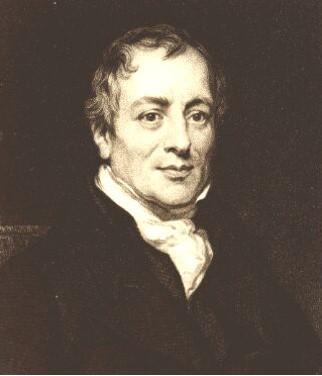
Proposed by David Ricardo in his 1817 work The Principles of Political Economy and Taxation, this theory was developed to address the limitations of the absolute advantage theory in explaining international trade. According to Ricardo, absolute advantages are a special case of comparative advantages, and whenever absolute advantages exist, comparative advantages are already present. However, comparative advantages can exist even when absolute advantages are not present. The Theory of Comparative Advantage continues to form the foundation of international trade today because it more accurately reflects international economic relationships. For example, when examining trade between a developed country and a less developed country, the developed country may possess absolute advantages in both goods. Yet trade remains possible because each country specializes according to its relative production advantages, leading to more efficient trade.
There are two primary reasons why countries engage in international trade:
David Ricardo noted that even if a country has absolute advantages in both goods, trade between countries can still occur. What matters is not absolute advantage but the relative production advantages of each country. That is, instead of absolute advantage, differences in production efficiency and opportunity costs are evaluated. The key principle is the optimal allocation of scarce resources.
According to the Theory of Comparative Advantage, a country should specialize in producing the goods in which it has a higher relative advantage compared to other countries.
For example, assume Türkiye and Germany produce wheat and automobiles:
Although Germany can produce both goods more efficiently, Türkiye has a comparative advantage in wheat production because the opportunity cost of producing wheat is lower for Türkiye than for Germany. Therefore, if Türkiye specializes in wheat production and Germany in automobile production, both countries benefit from increased output.
In conclusion, specialization determined by comparative advantage enhances the efficiency of international trade and enables countries to use their resources more effectively.
Ricardo, David. On the Principles of Political Economy and Taxation. London: John Murray, 1817
Yazıcıoğlu, İbrahim Ethem. "Uluslararası Ticaret Teorilerinden Mutlak, Karşılaştırmalı ve Rekabetçi Üstünlükler Teorilerine Yönelik Bir Değerlendirme." Uluslararası Ticaret ve Ekonomi Araştırmaları Dergisi 6, no. 2 (2023): 28-42.
Ünsal, Erdal M. İktisada Giriş. 13th ed. Ankara: İmaj Yayınevi, 2017.

No Discussion Added Yet
Start discussion for "Theory of Comparative Advantages" article