


This article was automatically translated from the original Turkish version.
+2 More

The Seven Bridges of Königsberg Problem
Person who solves the problem | Leonard Euler | ||||||||
|---|---|---|---|---|---|---|---|---|---|
Year | 1736 | ||||||||
Related Fields | Topology, Graph Theory, Mathematics | ||||||||
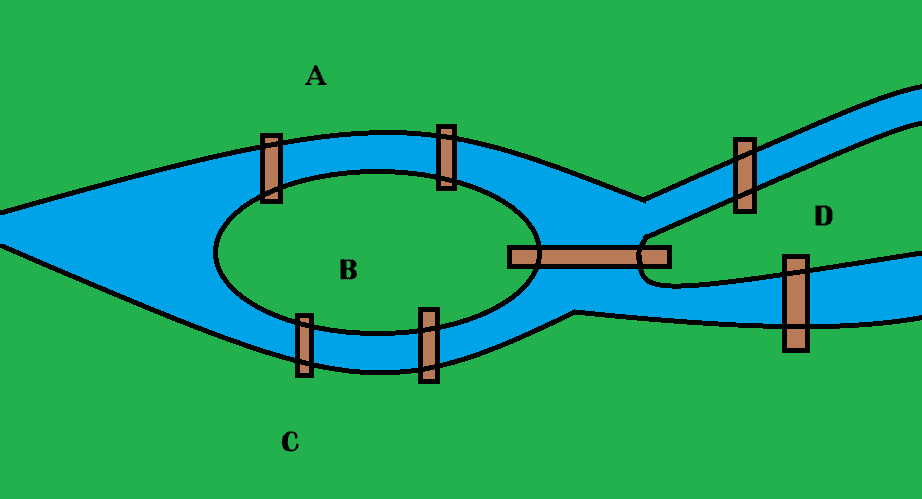
In the early 18th century, in the city of Königsberg in Prussia (now Kaliningrad), a problem was discussed among the people. Königsberg was divided into four landmasses by the Pregel River flowing through its center, and a total of seven bridges connected these landmasses. The city dwellers wondered whether it was possible to take a walk crossing each bridge exactly once. The striking feature of the problem was that no specific starting or ending point was specified, yet the condition required using each bridge only once.
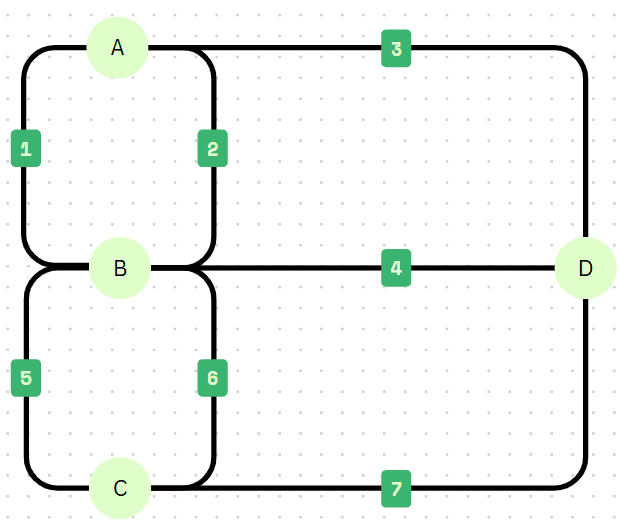
In 1736, the Swiss mathematician Leonhard Euler began working on this problem. To solve it, he developed a model independent of the physical map. Euler represented the four landmasses of the city as nodes and the bridges as lines connecting these nodes. Using this structure, he arrived at a solution.
class=\
class=\
class=\
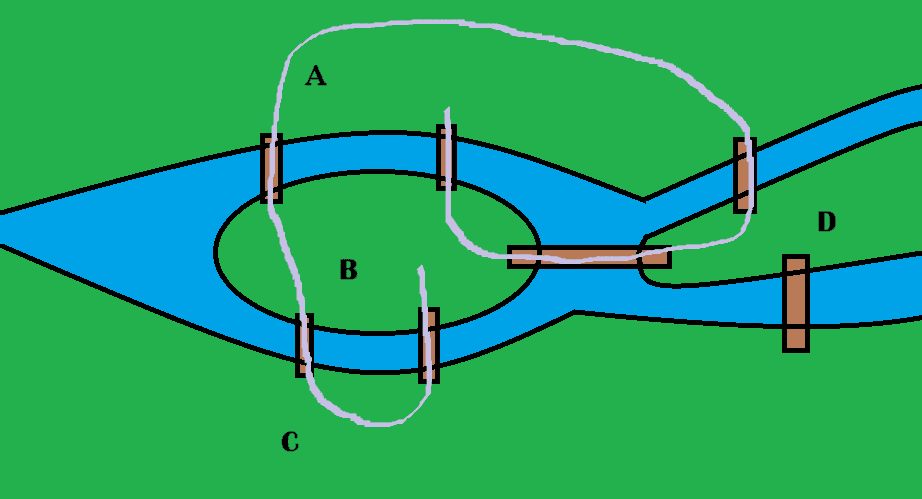
If one begins by crossing a bridge out of a region and must return to the same region at the end, all bridges connecting other regions must be traversed, and the journey must conclude in the starting region. Therefore, every region must have an even degree.
class=\
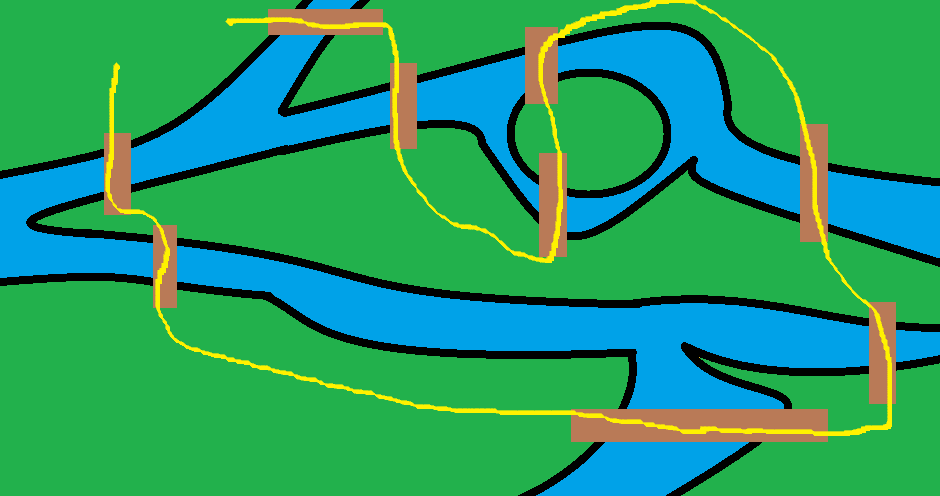
class=\
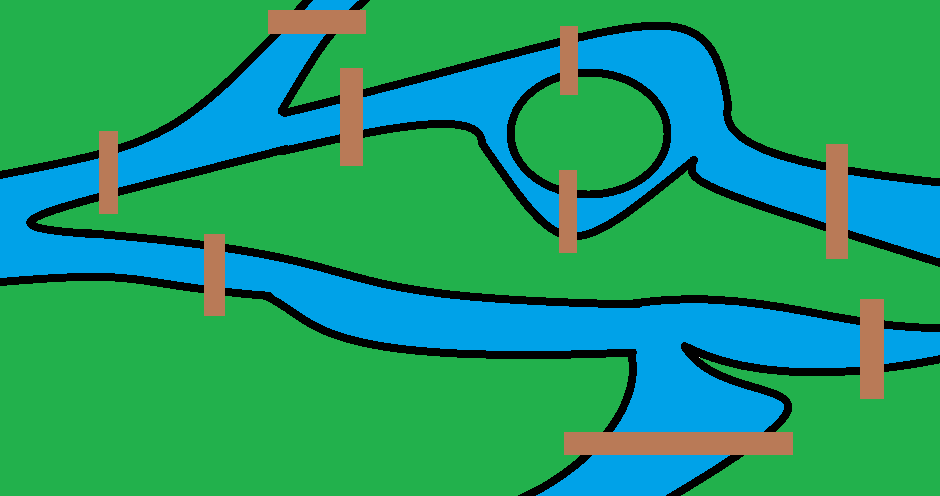
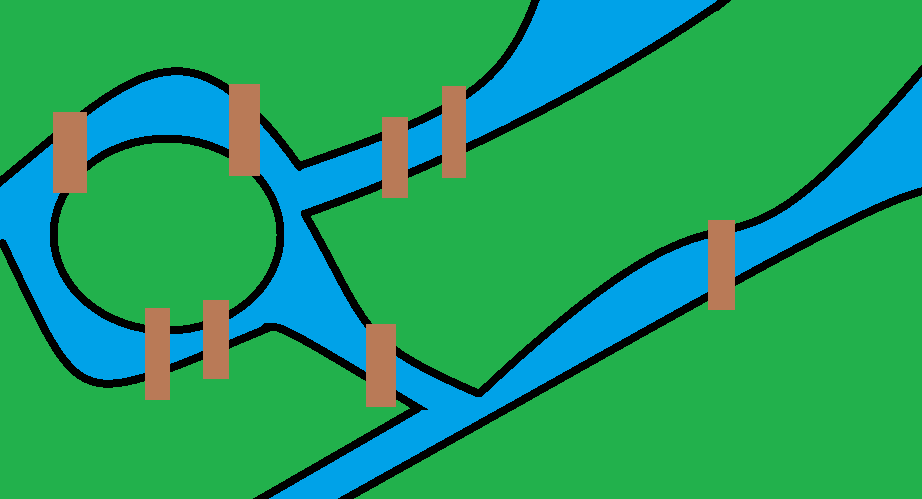
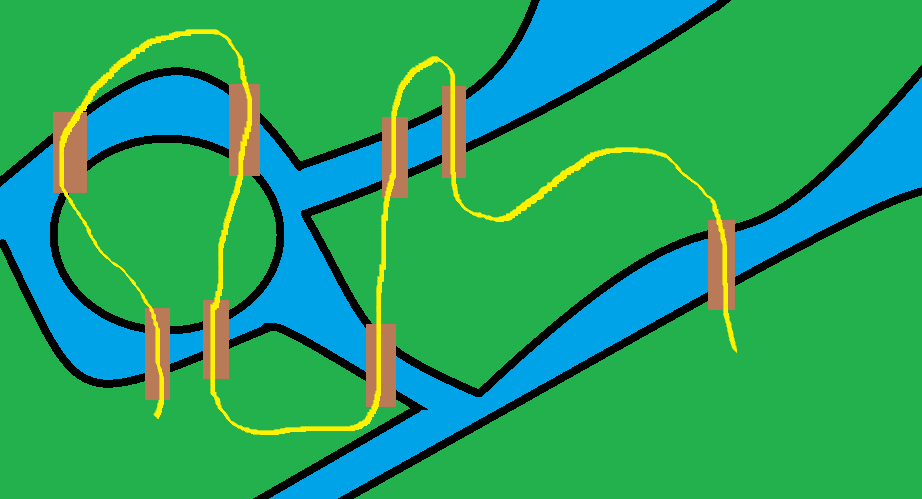
At least one of the starting or ending regions must have an odd degree, while all other nodes must have an even degree. From this, it follows that in problems where the start and end points differ, there can be at most two nodes with an odd degree.
class=\
class=\
In conclusion the people of Königsberg were right in being unable to find such a path, because the regions separated by the Königsberg bridges contain more than two regions with an odd number of bridges. Therefore, it is impossible to cross each bridge exactly once.
The methods Euler developed to solve this problem laid the foundations for a mathematical field later known as “Graph Theory.” This field is now applied in numerous areas, from computer science to social network analysis. “We can define nodes as cities and the edges connecting them as major road links between cities. In a chemical molecule, nodes represent atoms and edges represent chemical bonds between them. A sociologist can represent the behaviors and interactions of a group of people using a graph. Highway maps, heating and water systems, shapes of certain elements, family trees, blood circulation, electrical circuits, computer applications and modeling, genetics, environmental science, archaeology, art, music, and others also involve such structures.”【1】
Eroğlu, Hüseyin Hilmi. "GRAF TEORİNİN CEBİRSEL YAPILARI". Nevşehir Hacı Bektaş Veli Üniversitesi Fen Bilimleri Enstitüsü, February 2015, 3.
Seyhanlı, S.S. "Graf Teorinin İlköğretim 8. sınıf Olasılık Konusunun Öğretiminde Öğrenci Başarısına Etkisi". Balıkesir Üniversitesi Fen Bilimleri Enstitüsü, 2007, pp. 13-15.
Theobald, D. M. (2001) "Understanding Topology and Shapefiles". ArcUser Journal, 2001.

The Seven Bridges of Königsberg Problem
Person who solves the problem | Leonard Euler | ||||||||
|---|---|---|---|---|---|---|---|---|---|
Year | 1736 | ||||||||
Related Fields | Topology, Graph Theory, Mathematics | ||||||||
No Discussion Added Yet
Start discussion for "The Seven Bridges of Königsberg" article
Origin of the Problem
Solution
If the starting and ending point are the same:
If the starting and ending point are different:
Some applications