


This article was automatically translated from the original Turkish version.
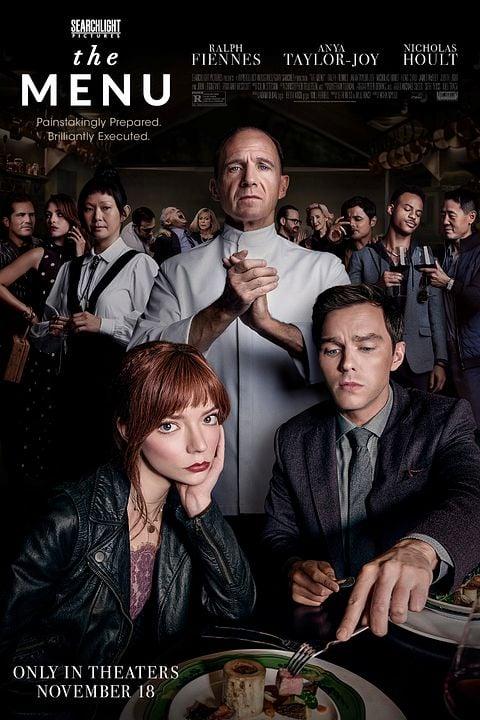
The Menu
Door | Black Comedy, Thriller, Psychological Drama | ||||||||
|---|---|---|---|---|---|---|---|---|---|
Director(s) | Mark Mylod | ||||||||
Screenwriter(s) | Seth Reiss Will Tracy | ||||||||
Language(s) | English | ||||||||
Duration | 106 minutes | ||||||||
Production Company | Searchlight Pictures | ||||||||
Filming Location | Savannah, Georgia, USA | ||||||||
Music(s) | Colin Stetson | ||||||||
IMDb Rating | 7.2/10 | ||||||||
Production Year | 2022 | ||||||||
The Menu is a 2022 satirical thriller film directed by Mark Mylod. It stars Ralph Fiennes (Chef Julian Slowik), Anya Taylor-Joy (Margot), and Nicholas Hoult (Tyler). Produced by Searchlight Pictures and written by Seth Reiss and Will Tracy, The Menu centers on a select group of guests invited to an isolated and luxurious restaurant on an island called Hawthorn, where they are subjected to a curated experiential menu designed by Chef Slowik. Each dish presented by the chef carries a narrative and symbolic layer, offering multi-dimensional meanings on ethical, aesthetic, and spiritual levels. Initially believing they are experiencing a gastronomic journey, the guests gradually realize it has transformed into a ritual of confrontation and punishment.
The Menu film trailer (YouTube)
The Hawthorn restaurant is physically elegant and disciplined in its structure. However, beginning after the third course, it undergoes a dramatic rupture, shifting away from the refined dining experience into an unsettling theatrical performance. The narrative evolves into a scene shaped by emotional and cognitive impacts.
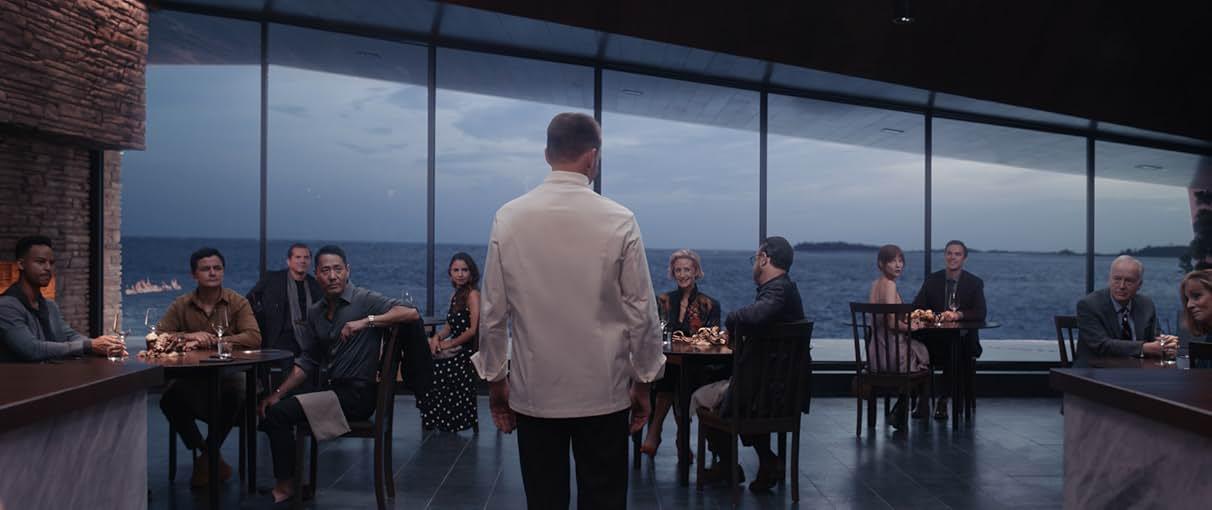
A scene from the film IMDb)
The film’s characters represent individuals from various socio-economic strata. Critics, investors, artists, and wealthy patrons are portrayed as figures symbolizing class corruption through the symbolic menu crafted by the chef. The character of Margot exists outside this system and embodies the ordinary person. Her request for a cheeseburger becomes a pivotal rupture—an act that defies the elite order and triggers the chef’s inner emotions.
Each dish in the film is not merely a sensory experience but a narrative component laden with symbolic meaning. Dishes such as “Island”, “Breadless Bread Plate”, “Memorial”, and “Chaos” are directly tied to the characters’ histories, transgressions, and personalities. Chef Slowik’s storytelling adds a narrative layer to each course. Within this framework, the dining experience attains both aesthetic and ethical dimensions.
Religious and ritualistic symbols are especially concentrated in the final scene. With the dessert “S’more”, the restaurant transforms into a kind of sacrificial ceremony involving both staff and guests. The dining hall is reimagined as a “brazier”; the guests are adorned with marshmallow and chocolate “mantles”, and the chef departs, leaving the central fire to consume the space. This sequence transforms the experience into a ritual of purification and confrontation.
The film develops a critical commentary on elitism, consumer culture, performance pressure, class division, and toxic hierarchies within the gastronomy industry. The meaning assigned by Chef Slowik to each dish is treated similarly to how a work of art functions on a symbolic and interpretive level. In this context, the film transmutes the phenomenon of gastronomy into a cinematic instrument of critique.
The film treats the act of eating not merely as a consumption practice but as a performance and moral confrontation. In this sense, it relates to “eating out” theory. The chef’s selection—where the chef determines the menu and overrides guest choice—becomes a new component of the decision-making process. Throughout the film, the viewer is presented with the pre-experience (expectation), the experience itself (perception), and the post-experience (evaluation) of gastronomy in dramatic form.

The Menu
Door | Black Comedy, Thriller, Psychological Drama | ||||||||
|---|---|---|---|---|---|---|---|---|---|
Director(s) | Mark Mylod | ||||||||
Screenwriter(s) | Seth Reiss Will Tracy | ||||||||
Language(s) | English | ||||||||
Duration | 106 minutes | ||||||||
Production Company | Searchlight Pictures | ||||||||
Filming Location | Savannah, Georgia, USA | ||||||||
Music(s) | Colin Stetson | ||||||||
IMDb Rating | 7.2/10 | ||||||||
Production Year | 2022 | ||||||||
Space and Atmosphere
Characters and Class Representations
Cast
Narrative Elements
Religious and Ritual Elements
Critical Themes
The Film in the Context of “Eating Out” Theory