


This article was automatically translated from the original Turkish version.
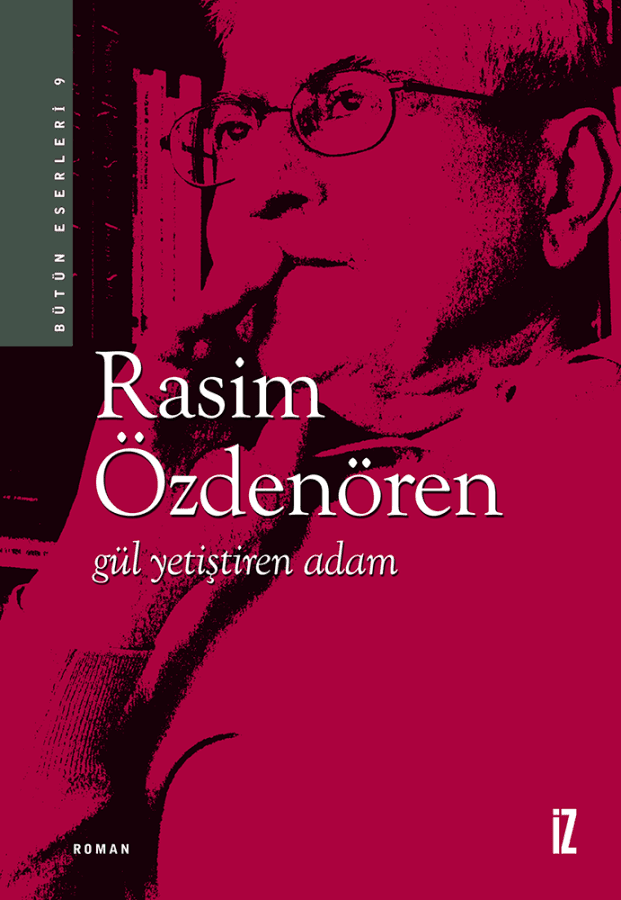
The Man Who Grows Roses
The Man Who Grew Roses
Author(s) | Rasim Özdenören | ||||||||
|---|---|---|---|---|---|---|---|---|---|
First Edition | 1979 | ||||||||
Publisher(s) | İz Yayıncılık | ||||||||
The Man Who Grew Roses is a 1979 work by Rasim Özdenören. Work, according to some, is a short story while others classify it as long. novel, Structure portrays the cultural fracture experienced by Türkiye during its modernization process and the impact of this fracture on individual through two opposing character: the traditional values represented by “the man who grew roses” and the Westernized life style embodied by Sitare. In this way, the work lays bare the values struggle in Republican-era Türkiye in a literary manner.
The novel interweaves two separate event narratives. One follows an elderly man who fought in the War of Independence and, after the war, witnesses the abandonment of the very values he once defended. For forty to fifty years, he withdraws into his home in protest, spending his days in prayer and cultivating roses. The other narrative explores the lives of modernized and secularized individuals—chiefly Sitare—whose existence is defined by superficial relationships and moral collapse.
The novel centers on the clash between the traditional structure of East and the secular values of West. The lifestyle of Sitare and the characters around her exemplifies the identity crisis brought about by Westernization. Foreign words, revealing clothing, gambling and alcohol like serve as symbols of this decline.
The man who grew roses bases his protest on inaction, reflecting the dream fracture experienced in post-war Türkiye. His withdrawal from society is both an inward turn and a silent resistance against the moral decay of the outside world. However, this passivity is also criticized in later sections of the novel; the old man comes to realize that his stance amounts to nothing more than passive thing.
The novel emphasizes how modernization causes individuals to lose their sense of together. Sitare is portrayed as a person who has lost her sense of self and moral direction, while the man who grew roses is depicted as a figure clinging tightly to the past and unable to adapt to the new world.
The most prominent metaphor in the work is the rose. In Islamic culture, the rose symbolizes love for Hz. Prophet and the values he represents. Cultivating roses is an effort to sustain beauty and spirituality. The man who grew roses, after whom the novel is named, is the guardian of these values.
The novel draws attention through its intricate structure, with transitions between different time periods. Sitare’s story unfolds according to the chronological flow of modern time, while the tale of the man who grew roses is shaped through recollection, dreams, and interior monologues. This narrative design underscores the difference between traditional and modern conceptions of time.
In The Man Who Grew Roses, the conflict between traditional values and modern lifestyles forms the central axis of the novel. The work carries the character of a warning against the identity crisis and value erosion brought by Westernization. With both symbolic and sociological depth, it holds a Turkish place in original literature.
Accessed November 26, 2025.
Erol, Kemal, and Emin Emrullah Erol. “THE CRITICAL APPROACH AGAINST THE CULTURAL ALIENATION IN GÜL YETİŞTİREN ADAM OF RASİM ÖZDENÖREN.” Journal of Turkology 27, no. 2 (December 2017): 119–34. https://dergipark.org.tr/tr/pub/iuturkiyat/issue/33239/370063
Karaaslan, Faruk. "‘Gül Yetiştiren Adam’ Romanı Üzerine Sosyolojik Bir Değerlendirme." İlmi Düşünce Mektebi. Accessed March 20, 2025.
Özdenören, Rasim. Gül Yetiştiren Adam. İstanbul: İz Yayıncılık, 2021.

The Man Who Grows Roses
The Man Who Grew Roses
Author(s) | Rasim Özdenören | ||||||||
|---|---|---|---|---|---|---|---|---|---|
First Edition | 1979 | ||||||||
Publisher(s) | İz Yayıncılık | ||||||||
No Discussion Added Yet
Start discussion for "The Man Who Grew Roses (Book)" article
Subject and Structure
Themes
East-West Conflict and Cultural Alienation
Silent Protest and Resistance
Identity and Belonging Crisis
Symbols and Metaphors
Narrative and Structural Features