


This article was automatically translated from the original Turkish version.
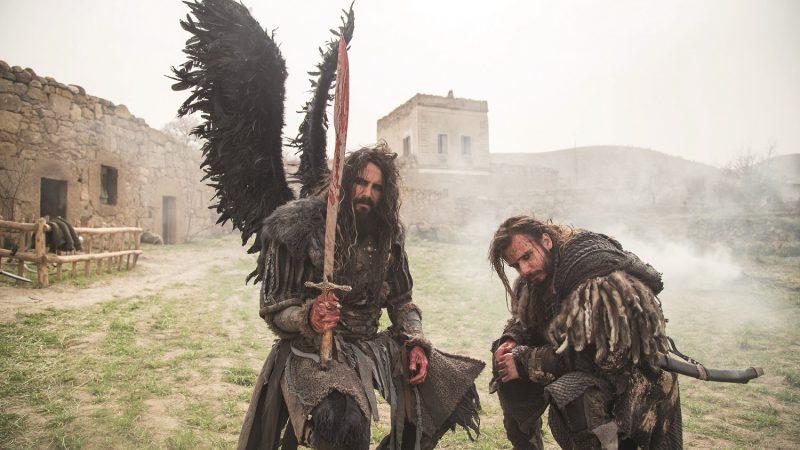
Type | Fantastik Historical Action | ||||||||
|---|---|---|---|---|---|---|---|---|---|
Director | Osman Kaya | ||||||||
Actor | Serhat Şahin Kamil Güler Namık Rüstem Khanlı Gülşah Şahin Demet Tuncer Nur Fettahoğlu Rüzgar Aksoy Yetkin Dikinciler Erkan Petekkaya Batın Uçan Cem Uçan (Gök Kurt) Baran Öztürk Mehmet Pala Mehmet Ali Karakuş | ||||||||
Screenplay | Mustafa Burak Doğu Ibrahim Ethem Arslan Esra Vesu Özçelik | ||||||||
Shooting Location | Aksaray, Türkiye | ||||||||
Production Duration | Approximately 2 years | ||||||||
Delilers: Fatih’s Decree is a historical-fantasy Turkish film centered on the Delilers Ocağı, one of the lesser-known elements of Ottoman history. The film was directed by Osman Kaya. Its preparation took approximately two years and filming was conducted in Aksaray. The cast includes Cem Uçan, Erkan Petekkaya, Yetkin Dikinciler, Rüzgar Aksoy, Nur Fettahoğlu, Demet Tuncer, Gülşah Şahin, Batın Uçan, Namık Rüstem Khanlı, Kamil Güler, Serhat Şahin, Mehmet Ali Karakuş, Mehmet Pala and Baran Öztürk, among others.
Film stands out for its action sequences and its integration of mystical and cultural elements. The senaryo revolves around a campaign ordered by Fatih Sultan Mehmet against Vlad Tepeş (Vlad the Impaler), while the narrative draws heavily on ancient Turkish beliefs.
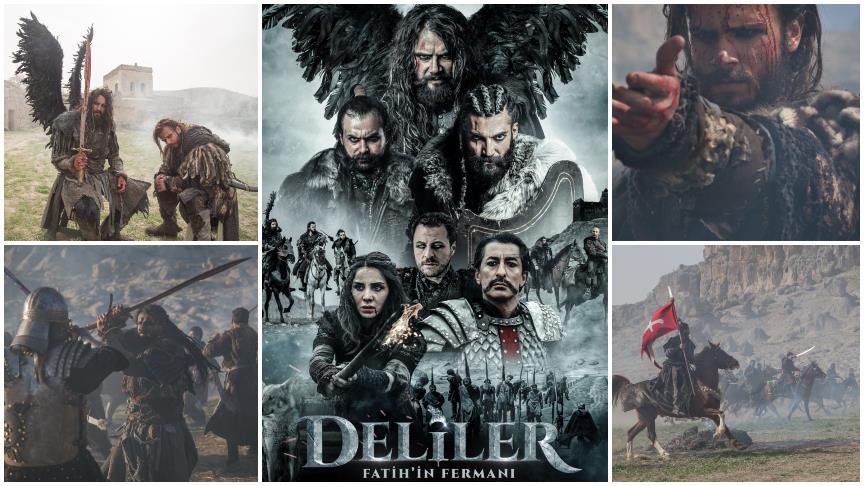
Poster and scenes from the film - (Anadolu Ajansı)
The story begins with the execution of an Ottoman envoy by Vlad Tepeş, Prince of Eflak. In response, Fatih Sultan Mehmet forms a special unit composed of elite warriors known as the Delilers and tasks them with punishing Vlad the Impaler. The Delilers set out under the spiritual guidance of Baba Sultan. Throughout the film, historical events are reimagined through a fictional lens, while shamanistic symbols and rituals are deeply woven into the narrative.
The Delilers Ocağı consisted of light süvari units serving primarily along the Ottoman frontiers. They were known for their bravery, flamboyant attire and frenzied behavior on the battlefield. Their clothing featured striking details such as animal pelts, eagle feathers and pointed-toe boots. These elements are accurately reflected in the film.
One of the film’s distinguishing features is its intensive use of shamanistic elements. These are not merely decorative but form a symbolic yapı at the heart of the storytelling. Key elements include:
The Character of Baba Sultan: He embodies both an Islamic saint and a shamanic figure. His headdress made of eagle feathers, his garment crafted from tree bark, the mirror in his hand and his solitary retreat atop a mountain reflect core shamanic symbols. This character is inspired by the historical Kademli Baba Sultan.
The Cult of the Eagle: In Turkish mythology, the eagle symbolizes the kutsal spirit. The eagle motif appears prominently in the Delilers’ attire and in Baba Sultan’s scenes.
The Mirror: In shamanism, the mirror is defined as a tool for divination and communication with spirits. The mirror given by Baba Sultan to Kuman serves as a sign of metaphysical connection.
Shamanic Rituals: Scenes throughout the film are adorned with ritual elements such as the shaman drum, throat singing (höömey), and reverence for trees and mountains.
The Cult of the Moon and Sun: The personified depiction of the Ay and Güneş in the film presents an extension of shamanic nature mythology.
Every detail in the film carries a specific mythological or cultural background. The Bozkurt figure appears at the most critical moment of battle to guide the Gök Kurt. Like in the Oğuz Kağan Destanı, this figure assumes the role of a guide. The eagle, symbolizing spiritual protection, constantly hovers above the Delilers under Baba Sultan’s watch.
The film should not be viewed merely as an action production. It also serves as an example of local culture’s struggle against globalized culture. The screenplay combines özgün cultural elements with modern cinematic aesthetics to appeal to both local and international audiences.
According to Hasan Kızıldağ’s detailed analysis, the film was meticulously crafted in terms of screenplay, sahne design, kostüm and visual symbols. The shamanistic elements do not merely serve aesthetics; they are structurally integral to character development and narrative logic.
The film Delilers: Fatih’s Decree was granted an +18 age rating in Almanya due to its violent content and nationalist elements, but received an +16 rating in five other European countries. Cem Uçan, the film’s lead actor and producer, found the decision tragicomic and affirmed his determination to ensure the film reaches Turkish communities in Germany.
Uçan said: “We are the true children of the homeland. We are telling the story of our ancestors exactly as it happened. We are not inventing heroic tales. There are over four million Turkish citizens in Europe who work abroad, far from their homeland. Watching this film is as much their right as it is for those in Türkiye. While films like ‘Braveheart’, ‘Conan the Barbarian’ and ‘300 Spartans’ are rated +12 and shown in all cinemas, our film is banned with an +18 rating because it might be a bad example for youth, contains violence and exhibits extreme Turkish nationalism. This is tragicomic.”【1】
Anadolu Ajansı. "Deliler Her Şeye Rağmen Almanya’ya Gidecek." Accessed April 16, 2025.https://www.aa.com.tr/tr/kultur-sanat/deliler-her-seye-ragmen-almanyaya-gidecek/1329995
Kızıldağ, Hasan. "Deliler: Fatih’in Fermanı Filminde Şamanizm ve Kurgusal İşlevi." The Journal of Academic Social Science Studies 13, no. 82 (2020): 277–292.
[1]
Anadolu Ajansı, "Deliler Her Şeye Rağmen Almanya’ya Gidecek," Anadolu Ajansı, Son Erişim: 16.4.2025 https://www.aa.com.tr/tr/kultur-sanat/deliler-her-seye-ragmen-almanyaya-gidecek/1329995.

Type | Fantastik Historical Action | ||||||||
|---|---|---|---|---|---|---|---|---|---|
Director | Osman Kaya | ||||||||
Actor | Serhat Şahin Kamil Güler Namık Rüstem Khanlı Gülşah Şahin Demet Tuncer Nur Fettahoğlu Rüzgar Aksoy Yetkin Dikinciler Erkan Petekkaya Batın Uçan Cem Uçan (Gök Kurt) Baran Öztürk Mehmet Pala Mehmet Ali Karakuş | ||||||||
Screenplay | Mustafa Burak Doğu Ibrahim Ethem Arslan Esra Vesu Özçelik | ||||||||
Shooting Location | Aksaray, Türkiye | ||||||||
Production Duration | Approximately 2 years | ||||||||
No Discussion Added Yet
Start discussion for "The Madmen's Fatih's Decree (Film)" article
Plot
Delilers Ocağı
The Role of Shamanism in the Narrative
Symbolic Narrative
Cultural Critique and Globalization
Delilers in Europe