


This article was automatically translated from the original Turkish version.
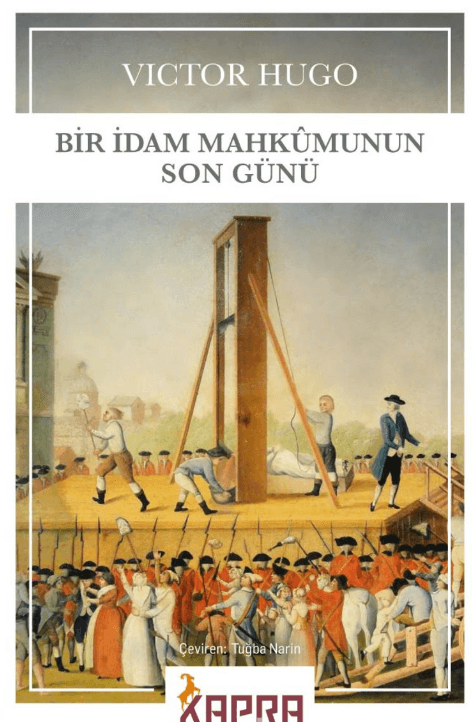
Victor Hugo’s The Last Day of a Condemned Man is a striking novel in 19th-century Europe literature that deeply explores social criticism and human emotion. First published in 1829, the work narrates the psychological conflicts and societal reckoning experienced by a condemned prisoner on his final day. Through this novel, Hugo articulates his opposition to the death penalty while critically examining concepts such as justice, human rights, and the value of life. The novel offers a powerful interrogation of societal indifference and the human dimension of the justice system through the lens of an individual tragedy.
class=\
The novel lays bare the intense emotional fluctuations the prisoner endures from the moment he learns of his death sentence. The character oscillates between fear, despair, anger, and acceptance as he confronts the inevitability of his impending death. Hugo meticulously portrays this intense emotional journey, drawing the reader into the prisoner’s inner world. The prisoner’s reflections on life and humanity deepen the psychological richness of the work and compel the reader to contemplate the meaning of life.
Beginning with the story of one individual, the novel critiques society’s attitude toward the death penalty and the distortions within the justice system. The prisoner’s perception by the public as a kind of “spectacle” reflects societal insensitivity and a lack of compassion. Hugo, while questioning society’s conception of justice, vividly describes the inhuman dimensions of capital punishment. The novel prompts deep reflection by examining the destructive impact of the justice system on the individual.
The prisoner’s emotional experience of severing ties with his family during his final days intensifies the novel’s emotional depth. His love for his daughter and his terror at being unable to say goodbye to her deepen his inner conflicts. Hugo emphasizes that when facing death, the individual turns most intensely toward family and loved ones, underscoring the central place of these bonds in human life.
In the final moments of his life, the prisoner contemplates the weight of losing his freedom and how human dignity is rendered meaningless. Hugo portrays the death penalty not merely as the deprivation of life but as the stripping away of dignity. The prisoner’s longing for freedom and his struggle to preserve his honor are explored in detail throughout the novel.
At the novel’s conclusion, the prisoner confronts death and is forced to accept this inevitable end. He recognizes death as a uniquely human experience and an opportunity to understand the value of life. Hugo uses this process as a metaphor for the individual’s search for meaning in life. The prisoner’s existential questioning encourages the reader to reflect on the connection between death and life.
Victor Hugo. Bir İdam Mahkumunun Son Günü. Çevirmen: Tuğba Narin, Kapra Yayıncılık, 2020

No Discussion Added Yet
Start discussion for "The Last Day of a Death Row Inmate (Book)" article
Content of the Book
The Prisoner’s Psychological State
Critique of Society and Justice
Family and Human Relationships
Freedom and Human Dignity
Confronting Death and Acceptance