


This article was automatically translated from the original Turkish version.
+1 More
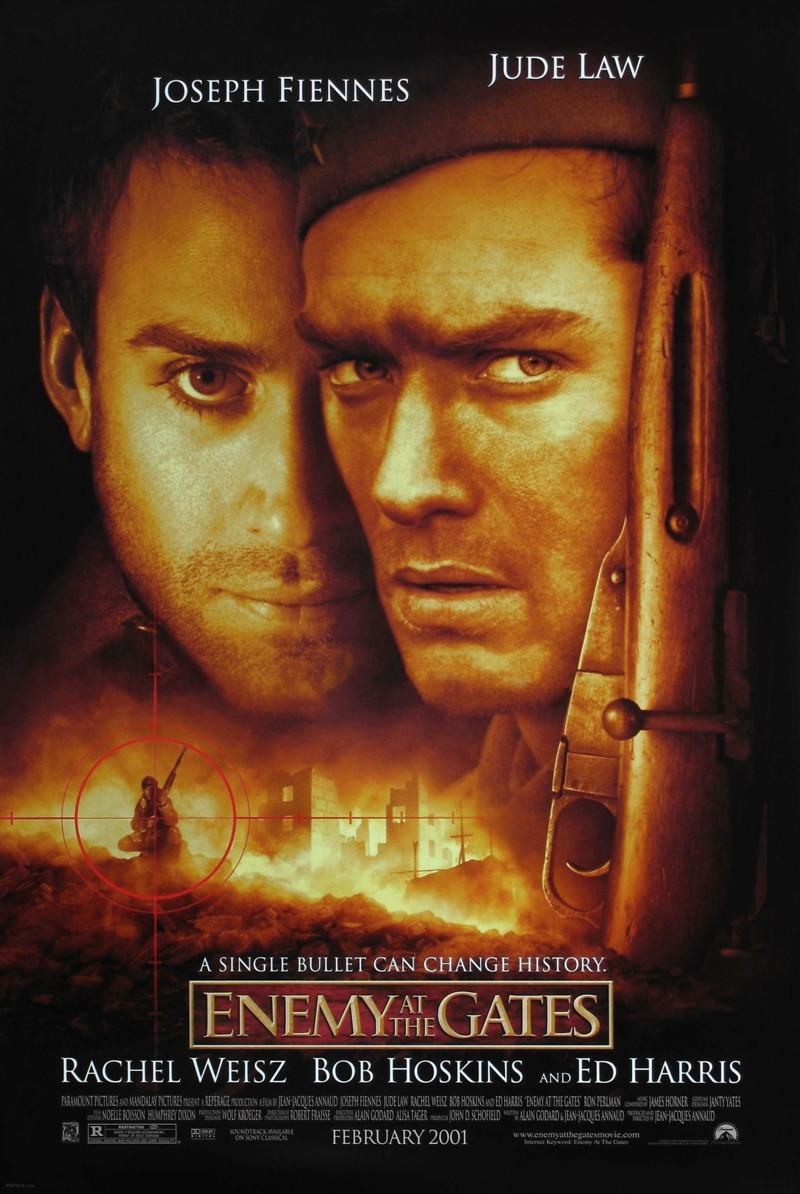
Poster of the Film "Düşman" at the Gate
Director | Jean-Jacques Annaud | ||||||||
|---|---|---|---|---|---|---|---|---|---|
Original Title | Enemy at the Gates | ||||||||
Production Year | 2001 | ||||||||
Screenplay | Jean-Jacques Annaud Alain Godard | ||||||||
Cinematographer | Robert Fraisse | ||||||||
Editing | Noëlle Boisson | ||||||||
Music | James Horner | ||||||||
Main Cast | Joseph Fiennes (Danilov) Jude Law (Vasili Zaytsev) Ed Harris (Erwin König) Rachel Weisz (Tania Chernova) | ||||||||
Duration | 131 minutes | ||||||||
Budget | 68 million dollars | ||||||||
Box Office | 97 million dollars | ||||||||
Enemy at the Gates (Kapıdaki Düşman) is a 2001 war film directed and co-written by Jean-Jacques Annaud. The film dramatizes events during the Battle of Stalingrad, one of the turning points of World War II.
Inspired by the true story of Soviet sniper Vasili Zaytsev, the film explores themes such as individual heroism, propaganda, and the psychological dimensions of war.
Enemy at the Gates was directed by French filmmaker Jean-Jacques Annaud, with the screenplay co-written by Annaud and Alain Godard. Jean-Jacques Annaud and Alain Goldman are among the producers, while Robert Fraisse served as the director of photography.
Noëlle Boisson edited the film, and the score was composed by James Horner. The film is a co-production of Mandalay Pictures, Studio Babelsberg, and Paramount Pictures. Shot in English, it has a runtime of 131 minutes and was released in the United States on 16 March 2001.
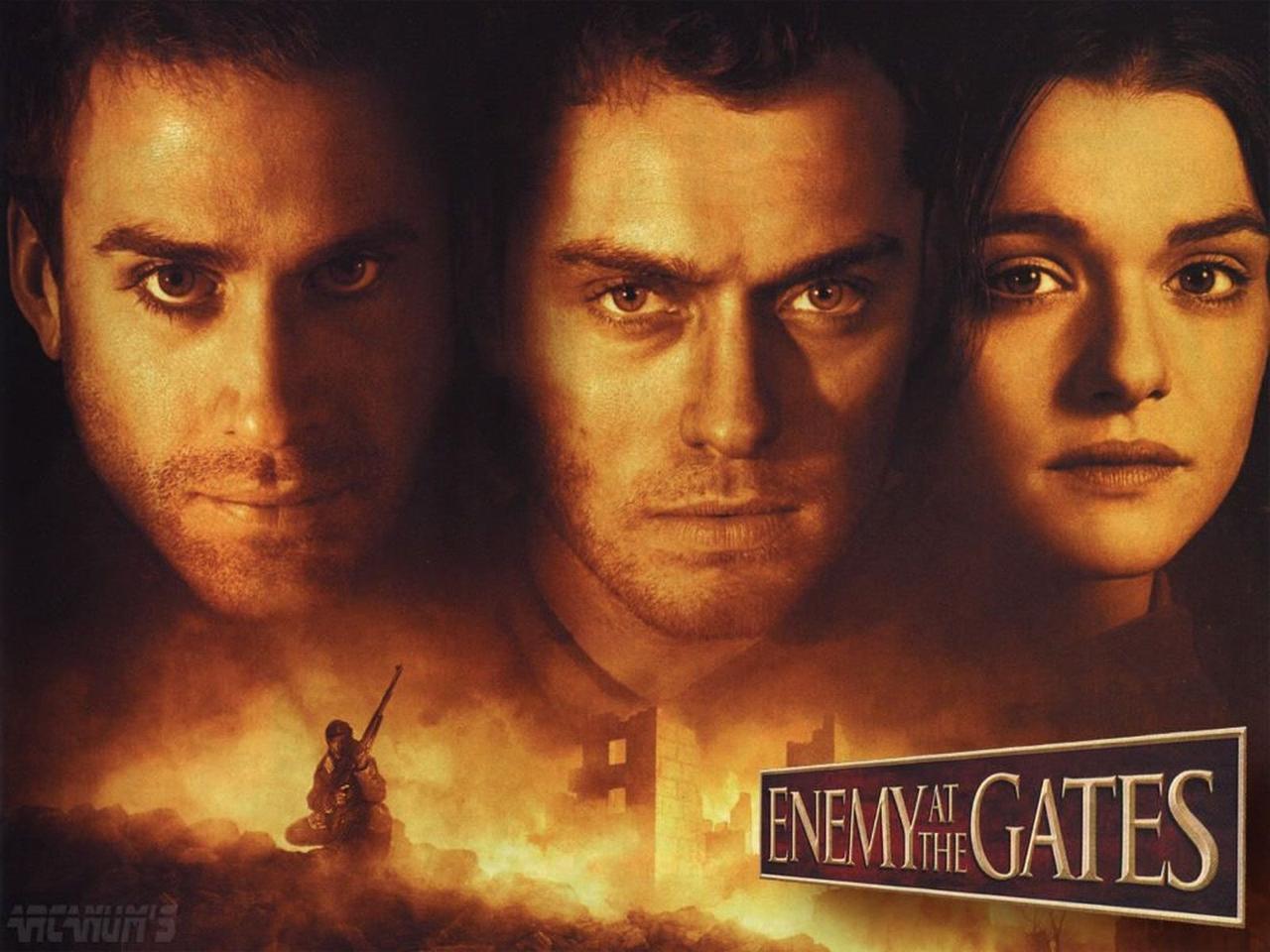
Enemy at the Gates (Kapıdaki Düşman) (IMDb)
The film is set during the Battle of Stalingrad in 1942, when Nazi Germany invaded the Soviet Union. The protagonist, Vasili Zaytsev (Jude Law), is a Soviet soldier renowned for his skill as a sniper. His successes are heavily exploited by the Soviet propaganda machine, transforming him into a national hero.
However, this fame prompts the German army to act. To neutralize Zaytsev, they send their most elite sniper, Major Erwin König (Ed Harris), to Stalingrad. A psychological and physical duel ensues between the two snipers.
The narrative also gains a human dimension through Tania Chernova (Rachel Weisz), who becomes entangled in a romantic triangle with Zaytsev and his friend and political commissar, Danilov (Joseph Fiennes).
The film’s central themes include:
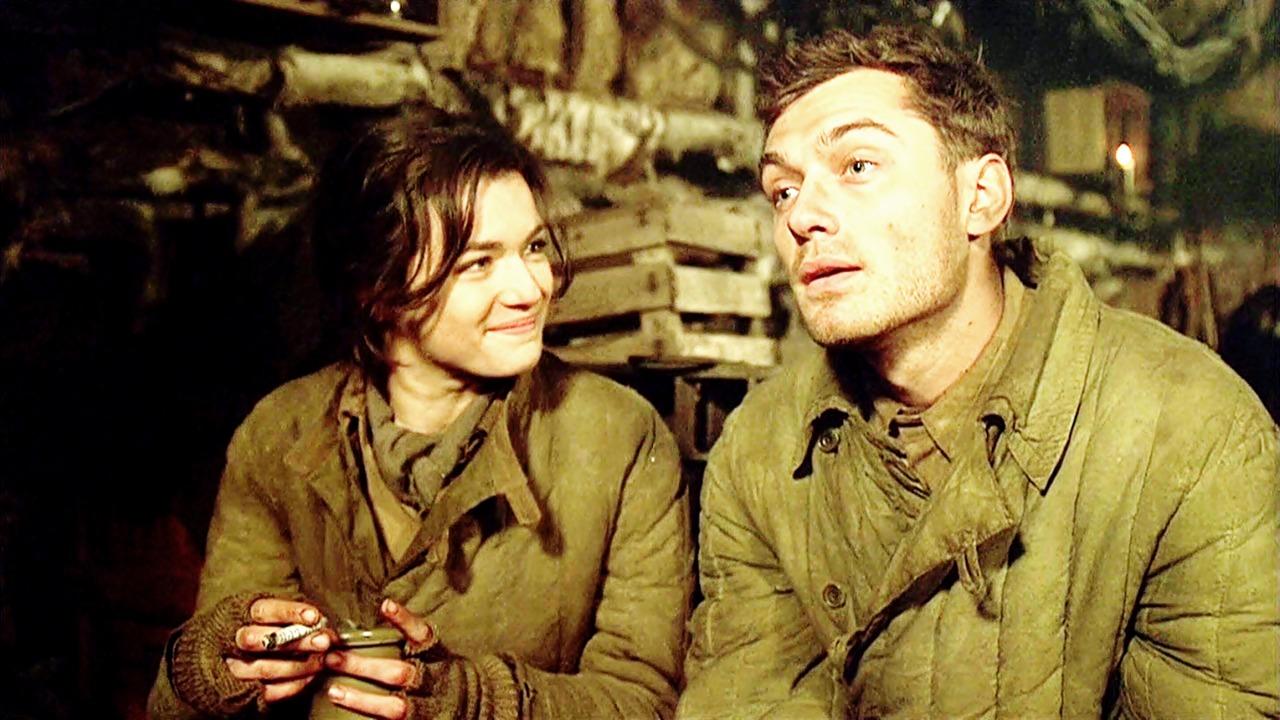
Tania and Zaytsev (IMDb)
The film is inspired by the real-life story of Soviet sniper Vasili Zaytsev, who is credited with killing approximately 225 enemy soldiers during the Battle of Stalingrad. However, the historical existence of König is disputed. Some sources argue that the duel between Zaytsev and König never occurred, and no definitive evidence of König’s existence has been found in Soviet archives.
Critics generally praised the film’s cinematography and performances. However, it has been criticized for its lack of historical fidelity, including Soviet soldiers speaking English and excessive dramatization of events. Some historians have also noted that although the film presents the war from the Soviet perspective, its narrative structure follows Western cinematic conventions.
The film was shot primarily at the Babelsberg Studios near Berlin, Germany, with additional scenes filmed in Poland. A special set covering 19,000 square meters was constructed to recreate Stalingrad.
Director Annaud employed large-scale crowd scenes, explosive effects, and realistic sets to powerfully convey the destruction and atmosphere of the battle.
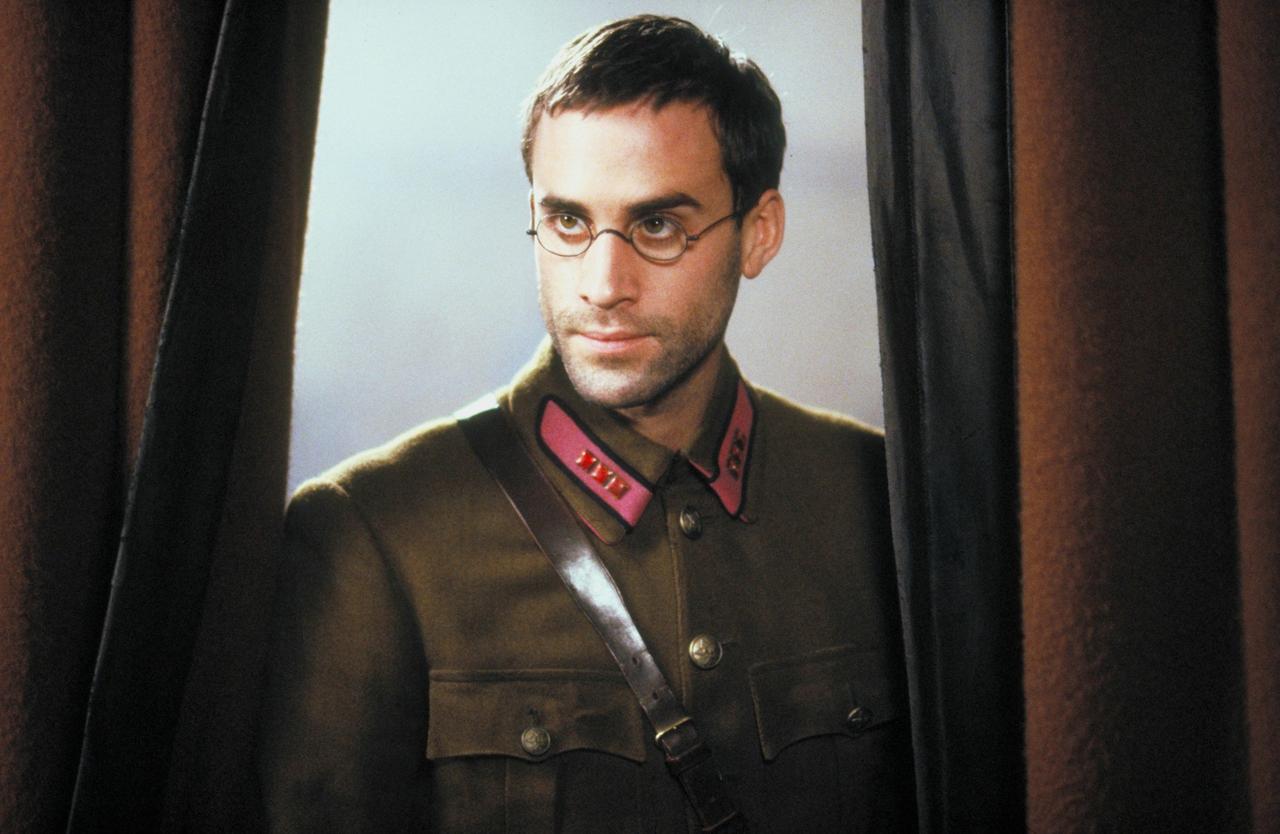
Commissar Danilov: Joseph Fiennes (IMDb)
The film’s score was composed by James Horner. His emotional and dramatic music aims to underscore the human dimension of war.
Although the film received mixed reviews, it was widely recognized for its battle sequences, atmospheric storytelling, and strong performances.
Enemy at the Gates is a film that places the story of individual heroism at the heart of a historical conflict, foregrounding the psychological dimensions of war. While inspired by real events, its narrative is shaped by dramatic fiction. Despite its contested historical accuracy, the film holds an important place in war cinema for its technical quality and compelling atmosphere.
Beyazperde. "Enemy at the Gates." Accessed April 4, 2025.
Box Office Türkiye. "Kapıdaki Düşman." Accessed April 4, 2025.
Ebert, Roger. "Enemy at the Gates." RogerEbert.com, March 16, 2001. Accessed April 4, 2025.
IMDb. Enemy at the Gates (2001). Accessed April 4, 2025.
Letterboxd. "Enemy at the Gates (2001)." Accessed April 4, 2025.
Sinefil. "Kapıdaki Düşman." Accessed April 4, 2025.

Poster of the Film "Düşman" at the Gate
Director | Jean-Jacques Annaud | ||||||||
|---|---|---|---|---|---|---|---|---|---|
Original Title | Enemy at the Gates | ||||||||
Production Year | 2001 | ||||||||
Screenplay | Jean-Jacques Annaud Alain Godard | ||||||||
Cinematographer | Robert Fraisse | ||||||||
Editing | Noëlle Boisson | ||||||||
Music | James Horner | ||||||||
Main Cast | Joseph Fiennes (Danilov) Jude Law (Vasili Zaytsev) Ed Harris (Erwin König) Rachel Weisz (Tania Chernova) | ||||||||
Duration | 131 minutes | ||||||||
Budget | 68 million dollars | ||||||||
Box Office | 97 million dollars | ||||||||
No Discussion Added Yet
Start discussion for "The Enemy at the Gate" article
Production Information
Plot Summary
Characters and Cast
Themes and Narrative
Historical Accuracy and Criticism
Production and Filming
Music
Reception and Achievements