

This article was automatically translated from the original Turkish version.
+1 More
Location | Shaanxi Province / China Lintong - near Xi'an | ||||||||
|---|---|---|---|---|---|---|---|---|---|
Date(s) | Approximately 210 BC | ||||||||
Area(s) | 56.25 km² (mausoleum complex) | ||||||||
UNESCO World Heritage | Adopted in 1987 | ||||||||
Criteria | (vi) association with the first unification of China (iv) reflection of the Xianyang plan (iii) testimony to military organization (i) technical and artistic value | ||||||||
Associated Structure | Mausoleum of Qin Shi Huang | ||||||||
Figure Types | Horses and bird figures Civil officials Senior officers Charioteers Cavalry Kneeling archers Standing archers Infantry | ||||||||
Material(s) | Burnt clay (terracotta) | ||||||||
Discovery Date | 29 March 1974 | ||||||||
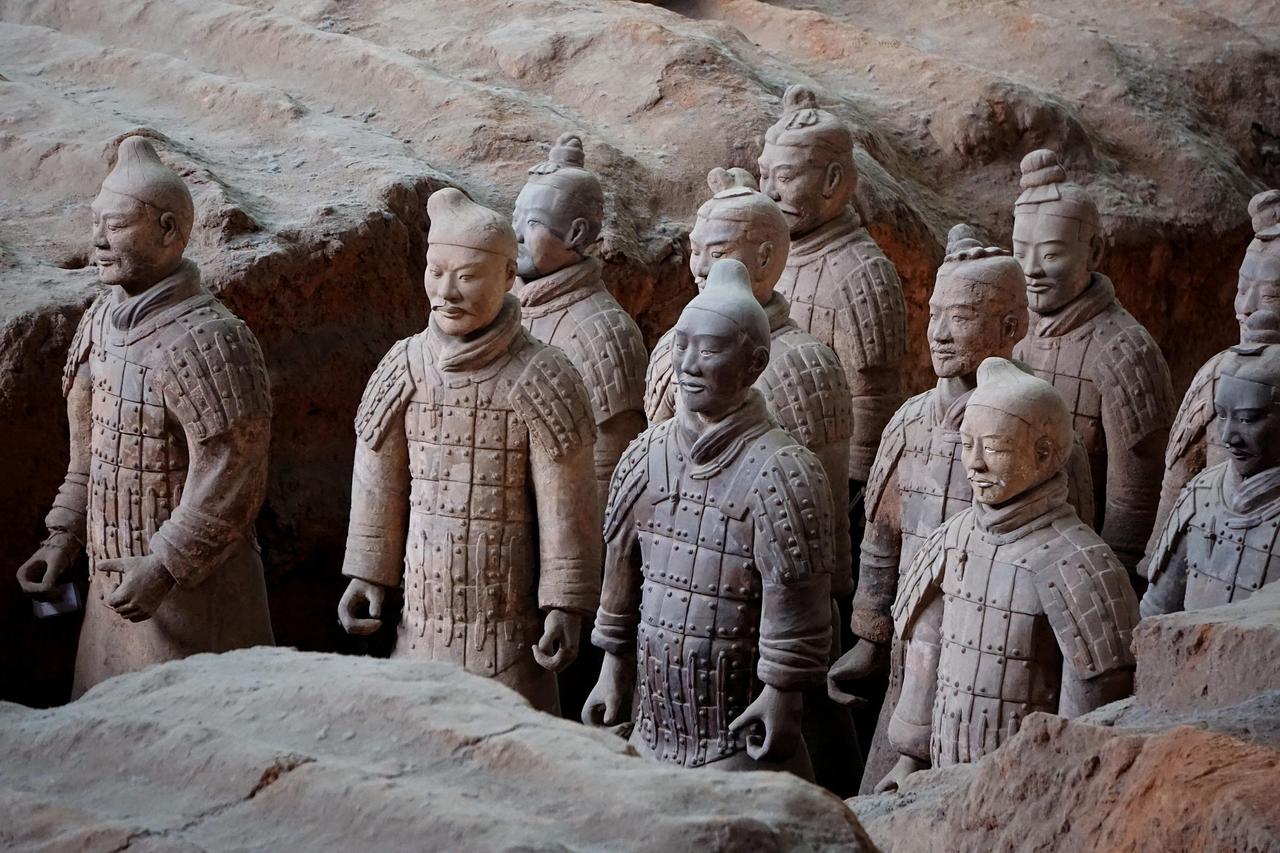
Terracotta Army (also known as Terracotta Warriors) is a collection of life-sized figures made of fired clay depicting soldiers, officers, generals, horses, and war chariots located within the mausoleum complex of China’s first emperor, Qin Shi Huang. These figures were arranged in military formation within underground pits surrounding the emperor’s tomb. Dating to approximately 210 BCE, this ensemble was designed as part of a system intended to ensure the emperor’s protection and service in the afterlife. It was accidentally discovered by farmers on 29 March 1974.
The army is situated within a vast area surrounding the tumulus containing Qin Shi Huang’s tomb as part of his mausoleum complex. This complex was designed to reflect the layout of the imperial capital Xianyang and includes numerous structures, pits, and burial sites representing the imperial structure.
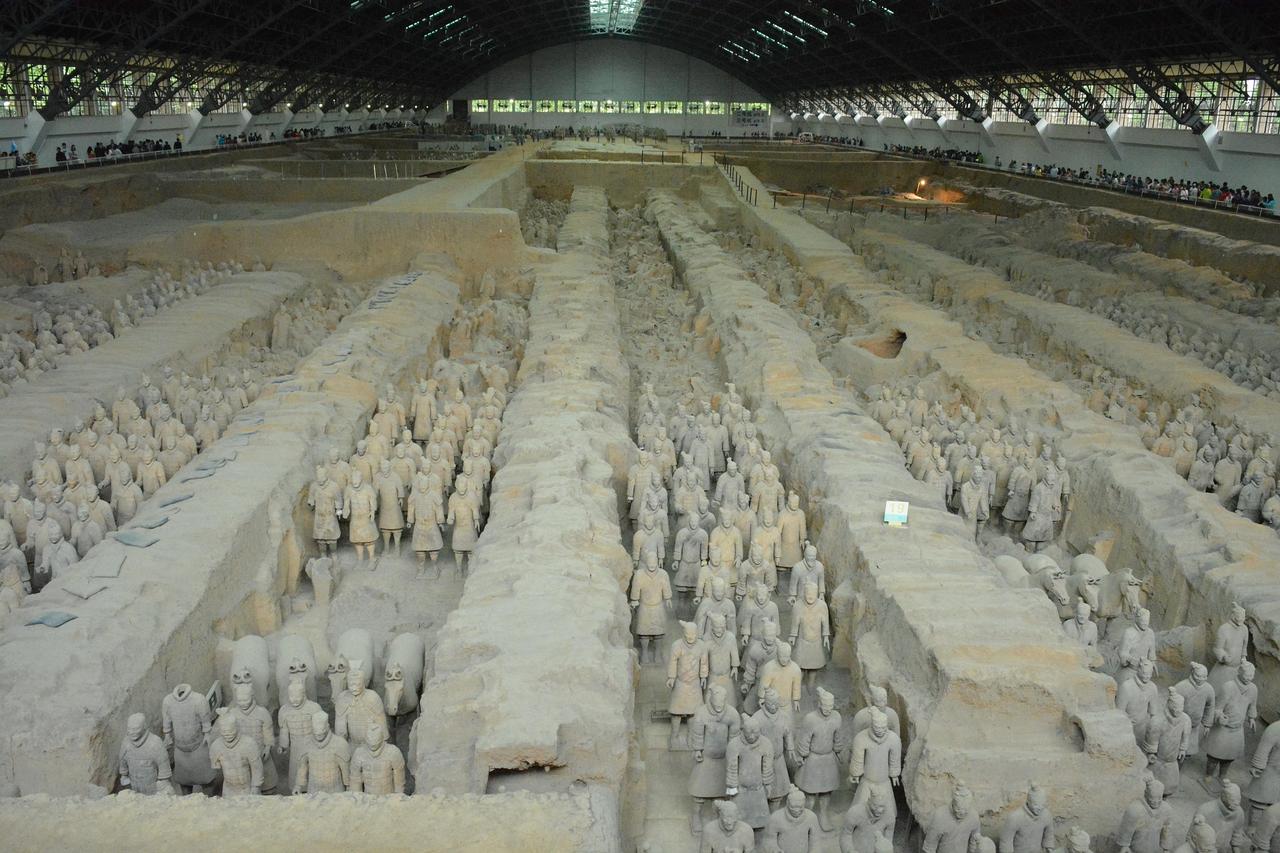
Terracotta Army (pixabay)
The Terracotta Army is linked to the political and military processes that occurred during the reign of Ying Zheng, known as Qin Shi Huang. Born in 259 BCE, Ying Zheng became king of the Qin state at the age of 13.【1】 At this time, the Chinese landscape was divided among seven major states engaged in constant warfare. The Qin state conquered the others using advanced weaponry, technology, and military strategies, achieving political unification. Following this, Ying Zheng proclaimed himself Qin Shi Huangdi, the “First Divine Emperor.”【2】
Qin Shi Huang implemented various reforms to organize his empire. Standardized systems of weight and measurement were introduced, a common currency and writing system were adopted. He attempted to unify the walls of conquered states into a single defensive barrier and constructed roads and canals. Numerous palaces were built in the capital Xianyang.
The emperor’s mausoleum complex was planned as a reflection of this centralized and unified imperial structure. Construction began in 246 BCE when Ying Zheng ascended the throne as a young man and continued until his death. Thousands of laborers and artisans from across the empire were employed during the construction process.
The Terracotta Army was created as part of this mausoleum complex. The figures were placed within a system designed to ensure the emperor’s continued protection and service after death. The military formation reflects the organizational structure and warfare system of the Qin state. In this context, the Terracotta Army is directly associated with the Qin dynasty’s political unification, military power, and centralized governance.【3】
The Terracotta Army was accidentally discovered in 1974 by farmers digging a well in the Lintong region. During excavation, a terracotta head was uncovered, leading to extensive archaeological investigations.【4】
Before the discovery, the location of the emperor’s tomb tumulus was known; however, the existence of terracotta figures was not recorded in any written sources, and no similar examples had been found in other tombs. Consequently, the findings revealed a structure unlike any previously documented in archaeology.
Excavations uncovered thousands of soldier figures, horses, war chariots, and various artifacts. These discoveries revealed the vast scale and underground organization of the mausoleum complex.
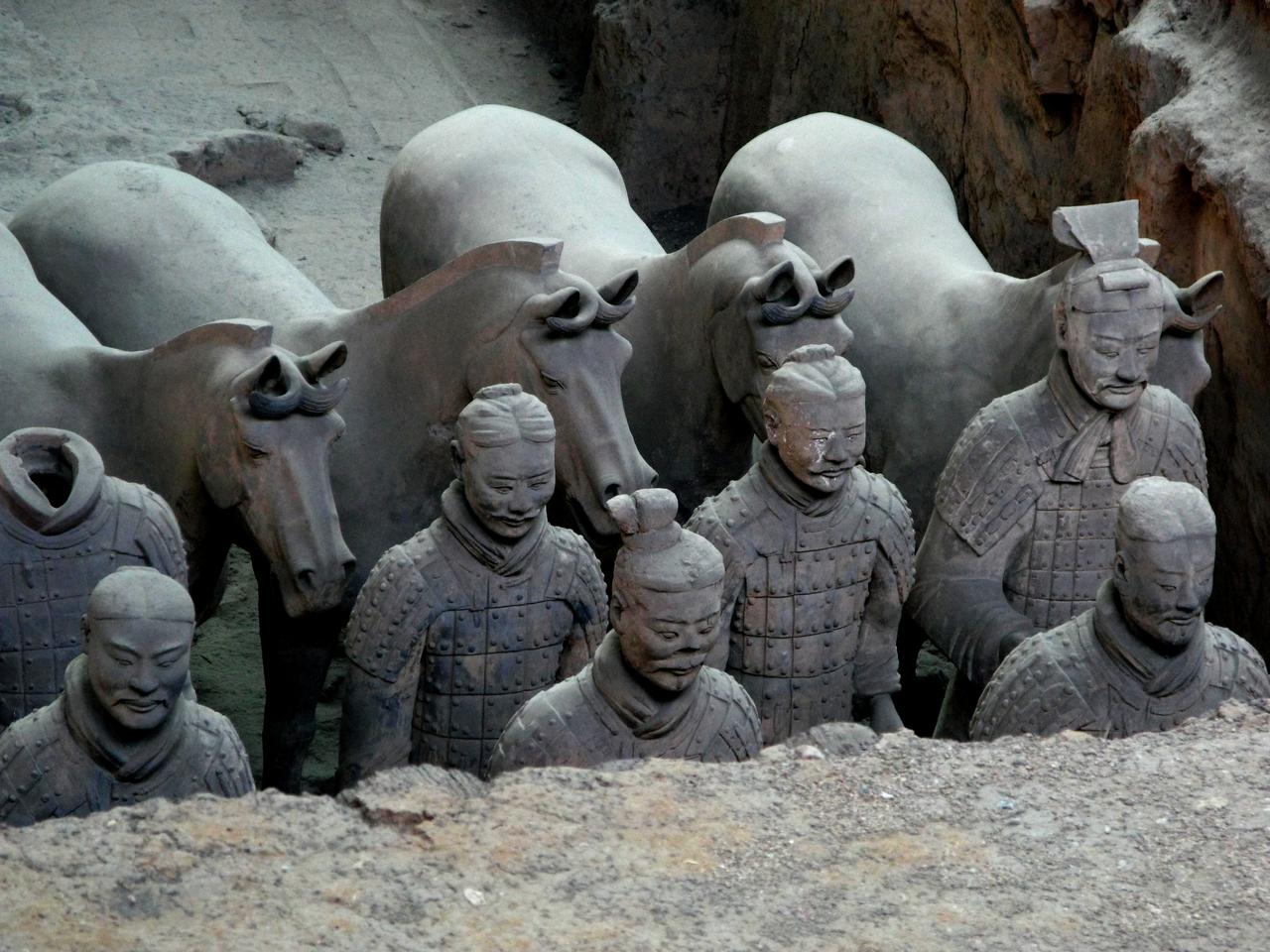
Terracotta Army (pixabay)
The excavation site of the Terracotta Army is part of the Qin Shi Huang mausoleum complex located in Shaanxi Province, China, approximately 35 kilometers northeast of Xi’an city and at the northern foot of Mount Lishan. This area lies within a vast necropolis surrounding the tomb tumulus and encompasses a settlement layout exceeding 56 square kilometers.
Within the excavation area, the emperor’s tomb tumulus is situated within a double-walled layout oriented north-south. The mausoleum complex includes numerous burial pits, architectural remains, and ritual structures in addition to the terracotta soldier pits. Over 600 archaeological sites have been identified within this area.
In addition to the terracotta soldiers, the site has yielded bronze war chariots, weapons, stone armor, musical instruments, animal figures, and various ceramic objects. Numerous pentagonal-section clay drainage pipes have also been discovered in this area.
The Terracotta Army is located in large underground areas, referred to by archaeologists as “pits,” situated outside Qin Shi Huang’s mausoleum complex. These pits are approximately 1.22 kilometers from the tomb tumulus and arranged according to a military formation plan. Four pits have been identified; three contain terracotta figures while the fourth remains unfinished.
The pits are wide excavations in the earth, reinforced with walls, covered with wooden beams, and sealed with soil. Internal spaces are divided into corridors by earthen partitions, and the figures are arranged within these corridors according to military formation.
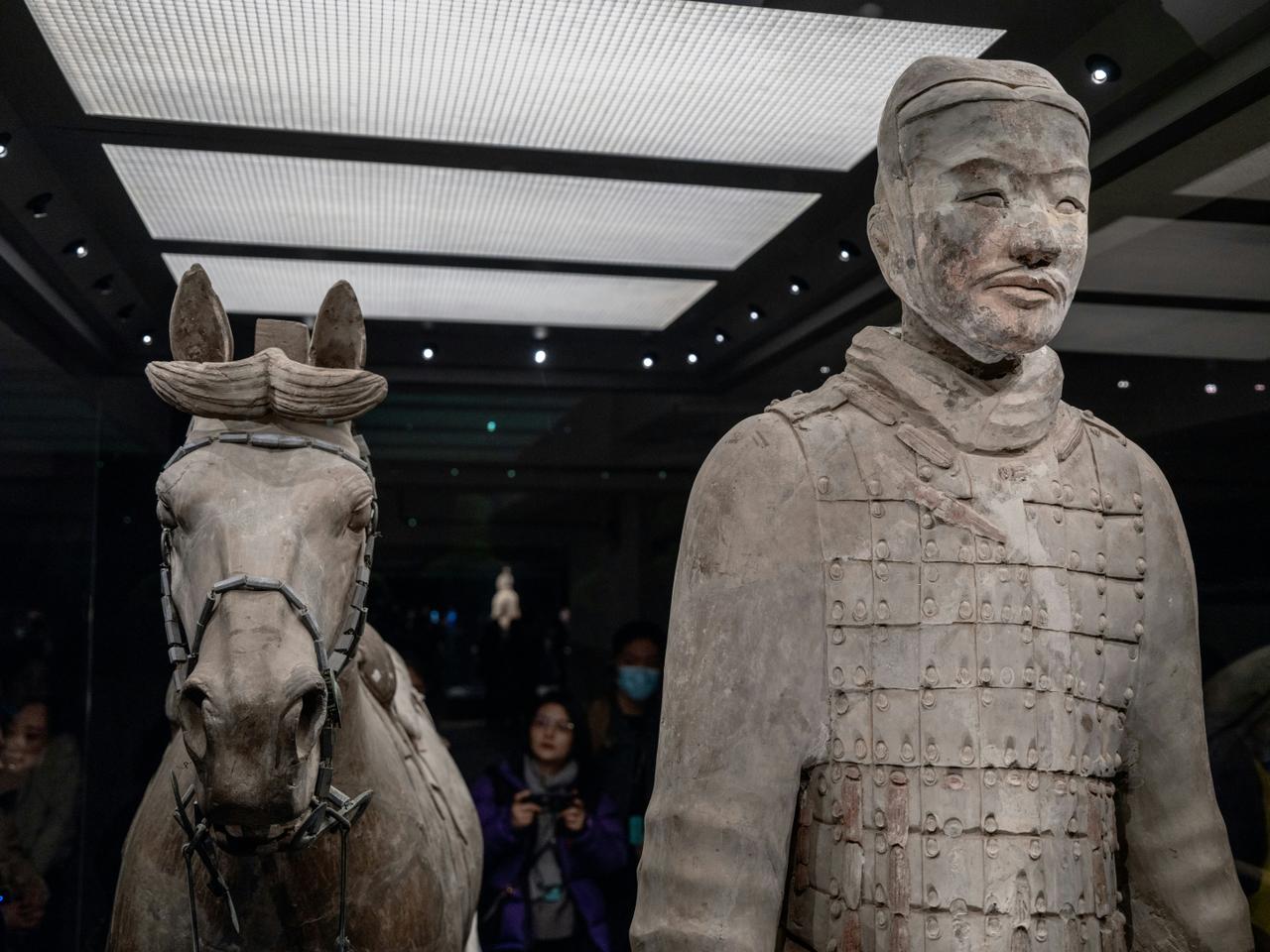
Pit 2, Infantry and Horses (unsplash)
Pit 1 is the largest of the pits. It measures approximately 230 meters in length, 62 meters in width, and 5 meters in depth. The interior is divided into 11 corridors by earthen partitions. Around 1,900 infantry soldiers are positioned in these corridors, accompanied by 22 wooden war chariots each drawn by four horses. It is estimated that approximately 6,000 figures are contained within this pit. This pit represents the main infantry forces of the army.
Pit 2 consists of four distinct sections and exhibits a mixed composition of different military units. The eastern section contains spearmen and standing and kneeling archers. The southern section holds a total of 64 war chariots, each drawn by four horses. Another section contains 19 war chariots, 264 infantry soldiers, and a small cavalry unit. The fourth section comprises 108 cavalrymen and their horses. This pit reflects a coordinated arrangement of diverse military units.
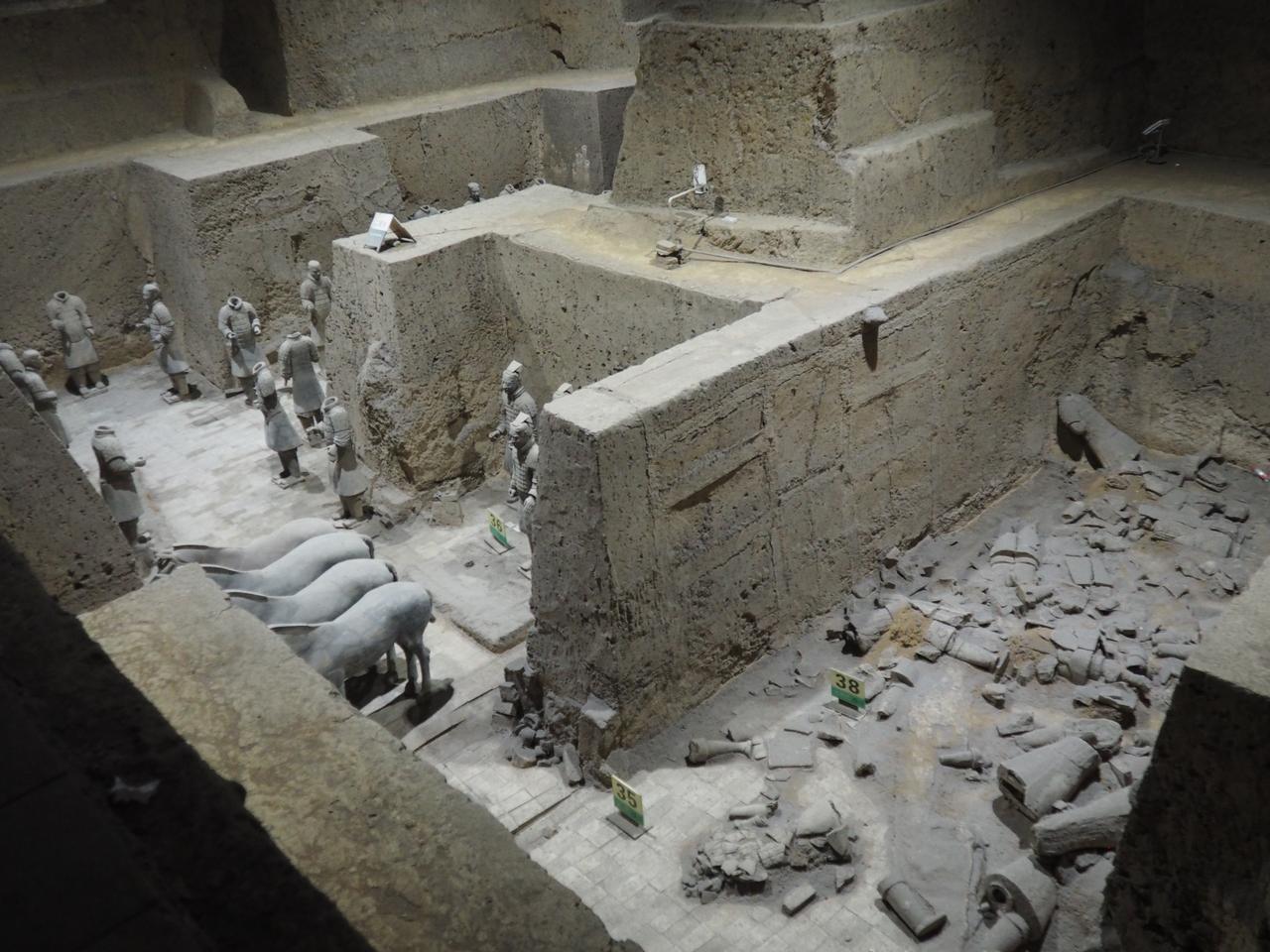
Pit 3 (flickr)
Pit 3 is the smallest and least densely populated of the pits. It has a U-shaped layout. Twenty-two armored soldiers are located in the northern section and 42 in the southern section. Unlike the other pits, the soldiers here face each other rather than eastward. In the central area, a decorated and domed war chariot believed to belong to a high-ranking commander is positioned. This arrangement indicates that this pit served as a command center.【5】
Pit 4 was excavated but contains no figures.
The figures within the Terracotta Army represent different types reflecting military and civilian roles. They are categorized by posture, attire, equipment, and function. Each figure possesses unique facial features, hairstyles, clothing details, and headgear.
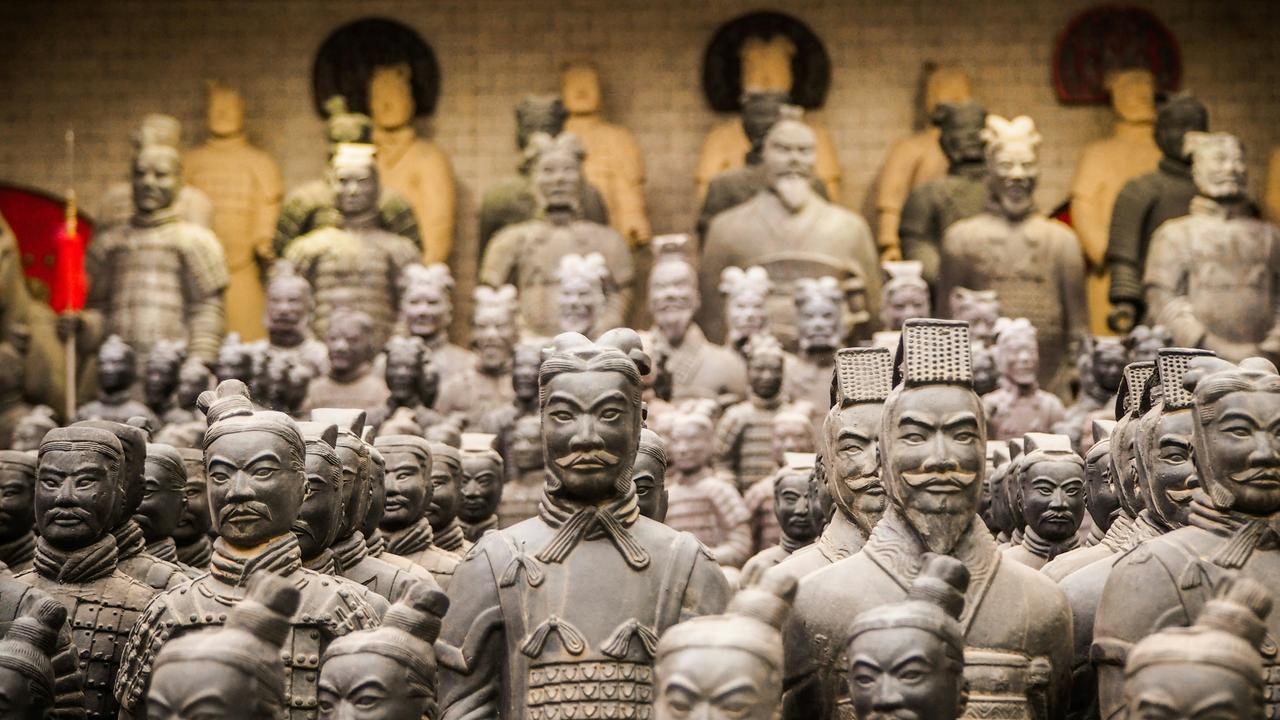
High-Ranking Officers (unsplash)
These figures do not carry weapons. Their hands are clasped together at waist level beneath long-sleeved garments. A knife and sharpening tool are found at the waist. These figures are believed to represent officials serving in the central administration.
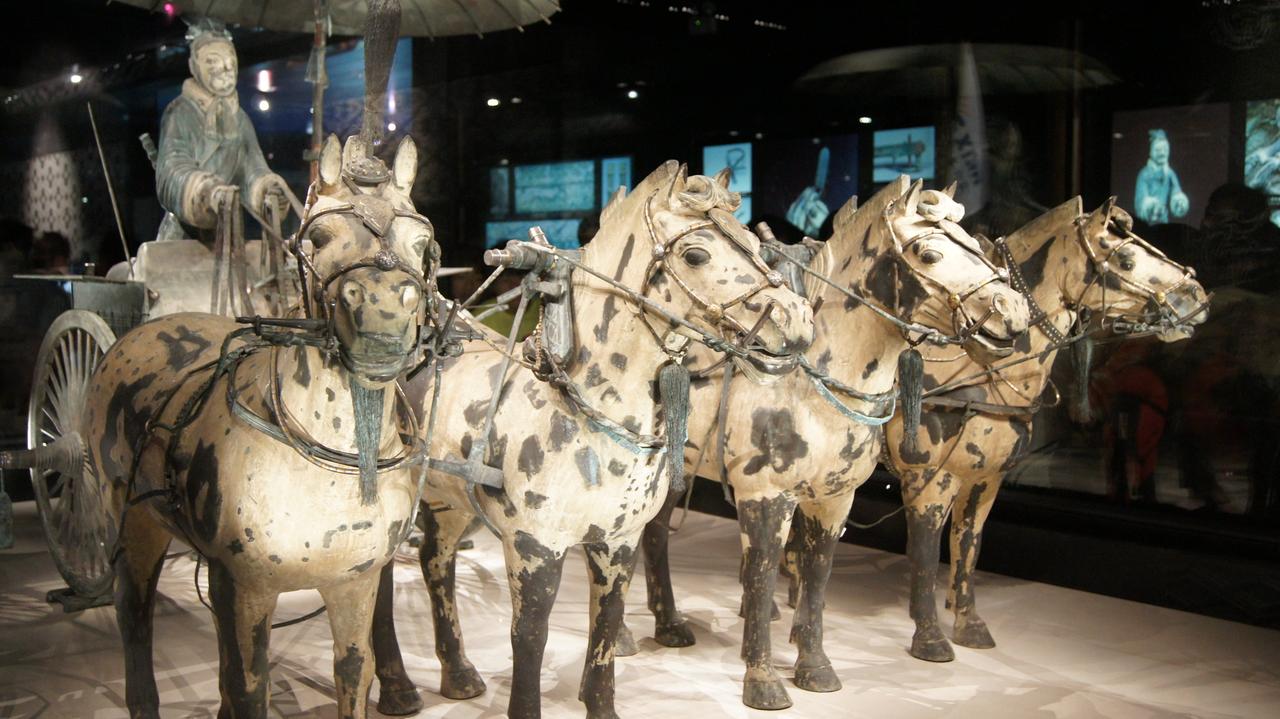
Horses (flickr)
The figures of the Terracotta Army were made using clay as the primary material. The clay used has a fine-grained structure containing mica. It is believed to have been sourced from extensive loess deposits in the region surrounding the mausoleum complex. The clay paste was treated with various additives to achieve specific properties.
The clay paste was mixed with sand in specific proportions. The sand facilitated shaping, regulated drying, and reduced cracking during firing. This sand is believed to have been obtained from alluvial deposits containing diverse mineral and rock fragments. In some samples, plant material was also added to the paste. These additives created porosity in the inner core structures and reduced overall weight.
The figures were not produced as single pieces. Components such as the torso, legs, arms, head, and hands were manufactured separately and then assembled. Legs were formed from cylindrical clay sections, while upper body parts were shaped using coiling and slab techniques.
Molding was a fundamental part of the production process. A limited number of mold types were used for feet, hands, torso, and faces. Heads, arms, and hands were molded and then attached to the torso. Facial details such as mustaches, eyebrows, and other fine features were added later, giving each figure individual characteristics.
The firing of the figures was carried out under controlled conditions. Evidence indicates that firing occurred in kilns at specific temperature ranges. Analyses show that the firing temperature ranged between approximately 750–850°C.【6】 This temperature range was sufficient to ensure the durability of the figures.
Controlled temperature increases during firing enabled thick-walled figures to harden without damage.
After firing, the figures were coated with lacquer and painted with various pigments. Colors used included malachite, cinnabar, azurite, and purple pigments. The figures originally had bright, vivid colors, but most of these pigments have largely deteriorated since excavation.【7】
Production was carried out using standardized molds and modular components. This method enabled the mass production of figures within a consistent framework. Stamps and inscriptions on the figures identify the workshops and artisans involved in their manufacture. This system functioned as part of quality control and production organization.
The Qin Shi Huang mausoleum complex and the Terracotta Army are managed as an archaeological site under state protection. The area is protected under the People’s Republic of China Law on the Protection of Cultural Relics. Within this framework, the mausoleum complex has been designated a national priority protection area.
In 2005, the Shaanxi Provincial People’s Congress adopted regulations for the protection of the mausoleum complex and established a dedicated preservation authority. In 2009, the Terra-Cotta Warriors and Horses Museum was restructured as the Qin Shi Huang Mausoleum Museum.
In 2010, a protection plan was implemented to mitigate pressures from urban development and tourism. This plan defined protection boundaries and development control zones around the mausoleum complex, limiting the impact of growth in the Lintong region.
The integrity of the site is highly preserved. The tomb tumulus, structures, burial pits, and ritual areas retain their original locations and structural characteristics. Artifacts uncovered during excavations maintain their original material, technical, and production qualities.
Carelli, Francesco. “The terracotta army.” London Journal of Primary Care 1, no. 1 (2008): 56-57. Accessed September 28, 2025. https://pmc.ncbi.nlm.nih.gov/articles/PMC4212753/
Edmundss, Scott. "View into pit 3”. Flickr. Accessed March 24, 2026. https://flic.kr/p/2gcpVqd
Emperor Qinshihuang's Mausoleum Site Museum. "Exhibitions." BMY. Accessed March 24, 2026. https://bmy.com.cn/jingtai/bmyweb/graphic.html#branch=416&collection=18
Kasirajan, Manoj Kumar. "grey statues lot.” Accessed March 24, 2026. https://unsplash.com/photos/grey-statues-lot-fAZEw6xPhz8
Martinón-Torres, Marcos, Xiuzhen Janice Li, Andrew Bevan, Yin Xia, Zhao Kun, and Thilo Rehren. “Making Weapons for the Terracotta Army.” Archaeology International 13, no. 14 (2009–2011): 65–75. Accessed March 24, 2026. https://journals.uclpress.co.uk/ai/article/1273/galley/13139/view/
Mason, Julian. "CHINA 12.04.11 to 26.04.11 (742)." Flickr. Accessed March 24, 2026. https://flic.kr/p/9EDgCW.
Nachescu, Alexandra. "The Terracotta Warriors.” Smarthistory. Accessed September 28, 2025. https://smarthistory.org/the-terracotta-warriors/
Quinn, Patrick Sean, Shangxin Zhang, Yin Xia, and Xiuzhen Li. “Building the Terracotta Army: Ceramic Craft Technology and Organisation of Production at Qin Shihuang’s Mausoleum Complex”. Antiquity 91, no. 358 (2017): 966–979. Accessed September 28, 2025. https://doi.org/10.15184/aqy.2017.126.
Stormydog101. "Terracotta savaşçıları, Çin, Turizm görseli". Pixabay. Accessed September 28, 2025. https://pixabay.com/tr/photos/terracotta-sava%c5%9f%c3%a7%c4%b1lar%c4%b1-%c3%a7in-turizm-1525133/
UNESCO. "Mausoleum of the First Qin Emperor." Accessed September 28, 2025. https://whc.unesco.org/en/list/441/.
Wang, Neon. "A statue of a man and a horse in front of a crowd". Accessed March 24, 2026. https://unsplash.com/photos/a-statue-of-a-man-and-a-horse-in-front-of-a-crowd-q_M4r0QILrY
foursummers. "Terracotta ordusu, Terracotta savaşçıları, Pişmiş toprak görseli”. Pixabay. Accessed September 28, 2025. https://pixabay.com/tr/photos/terracotta-ordusu-2969680/
pixa1958. "Çin, Terracotta ordusu, Kazıp görseli". Pixabay. Accessed September 28, 2025. https://pixabay.com/tr/photos/%C3%A7in-terracotta-ordusu-kaz%C4%B1p-at-4855072/
[1]
Francesco Carelli, “The terracotta army,” London journal of primary care 1, no. 1 (2008): 56, https://pmc.ncbi.nlm.nih.gov/articles/PMC4212753/
[2]
Francesco, “The terracotta army,” 56.
[3]
Alexandra Nachescu, "The Terracotta Warriors,” Smarthistory, Last accessed: 28 September 2025, https://smarthistory.org/the-terracotta-warriors/
[4]
Alexandra Nachescu, "The Terracotta Warriors,” Smarthistory, Last accessed: 28 September 2025, https://smarthistory.org/the-terracotta-warriors/
[5]
Alexandra Nachescu, "The Terracotta Warriors,” Smarthistory, Last accessed: 28 September 2025, https://smarthistory.org/the-terracotta-warriors/
[6]
Quinn, Patrick Sean, Shangxin Zhang, Yin Xia, and Xiuzhen Li, “Building the Terracotta Army: Ceramic Craft Technology and Organisation of Production at Qin Shihuang’s Mausoleum Complex,” Antiquity 91, no. 358 (2017): 973, https://doi.org/10.15184/aqy.2017.126
[7]
Alexandra Nachescu, "The Terracotta Warriors,” Smarthistory, Last accessed: 28 September 2025, https://smarthistory.org/the-terracotta-warriors/

Location | Shaanxi Province / China Lintong - near Xi'an | ||||||||
|---|---|---|---|---|---|---|---|---|---|
Date(s) | Approximately 210 BC | ||||||||
Area(s) | 56.25 km² (mausoleum complex) | ||||||||
UNESCO World Heritage | Adopted in 1987 | ||||||||
Criteria | (vi) association with the first unification of China (iv) reflection of the Xianyang plan (iii) testimony to military organization (i) technical and artistic value | ||||||||
Associated Structure | Mausoleum of Qin Shi Huang | ||||||||
Figure Types | Horses and bird figures Civil officials Senior officers Charioteers Cavalry Kneeling archers Standing archers Infantry | ||||||||
Material(s) | Burnt clay (terracotta) | ||||||||
Discovery Date | 29 March 1974 | ||||||||
Historical Context
Discovery of the Army
Excavation Site
Pits of the Army
Pit 1
Pit 2
Pit 3
Pit 4
Figure Typology
Military Figures
Civilian Figures
Animal Figures
Production Technology
Raw Materials and Clay Preparation
Shaping Techniques
Firing Process
Painting
Production Structure and Technical Consistency
Preservation and Current Status