This article was automatically translated from the original Turkish version.
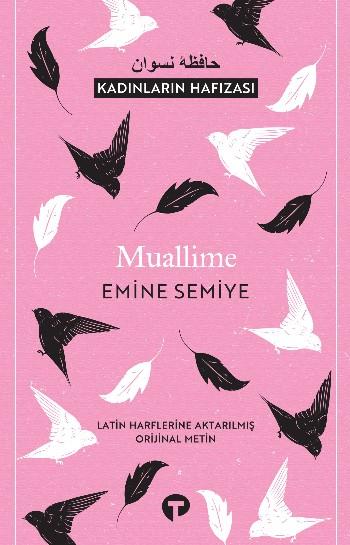
Muallime is a serialized novel written by Emine Semiye. The work was published in installments between 3 March 1898 and 2 May 1901 in Hanım Kızlara Mahsus, a supplement to Hanımlara Mahsus Gazete, and was later published as a book after the author’s death.
The protagonist of the novel, Bihbûde (Muallime), is drawn into a web of intrigues and complex relationships upon her arrival at the mansion as a governess. The novel explores familial conflicts, friendships and rivalries among female characters, and the clash between Westernized and traditional ways of life. Through Bihbûde’s character, the novel conveys messages on education, morality, and the upbringing of women, portraying her as the ideal Ottoman woman. Alongside Bihbûde’s own past, the stories of other characters such as Saadet, Muhassal Bey, Refah, and Meşhude are interwoven into the narrative.
The novel is divided into three parts: the first part describes Muallime’s entry into the mansion and her relationships within the family; the second part uses flashbacks to reveal Muallime’s and her family’s past; and the third part unfolds the events chronologically. In this way, the novel possesses a multi-layered structure.
The novel provides a detailed portrayal of Muallime’s teaching methods. The protagonist is not merely a figure who delivers lessons but is depicted as an educator who contributes to her students’ moral development, reminds them of their religious duties, teaches empathy, and helps resolve domestic problems.
These characteristics offer insights into the pedagogical outlook of the period. The novel also emphasizes the educational role of literature.
Muallime was published in installments as a product of the serialized novel tradition. In the preface, the author defines the novel as a “national and moral” tale, asserting that the novel genre does not corrupt the morals of young people but rather serves an educational and morally enriching function.
The novel is one of the examples in Ottoman women’s literature where female identity and the concept of education are explored fictionally. It reflects Emine Semiye’s own experiences as a teacher and her views on the social position of women. At the same time, it brings to the fore issues such as relationships among women, modernization, and the conflict between tradition and change.
Akdik, Hazel Melek. “Anlatıda Cinsiyet ve Kadın Öznelliğinin İnşası: Muallime Üzerine Feminist Anlatıbilimsel Bir Okuma Denemesi.” *Zemin*, no. 2 (2021): 6–26. https://zemindergi.com/index.php/pub/article/view/14/14
Emine Semiye. Muallime. Turkuvaz Kitap. 2021.
Karaca, Şahika. "Fatma Aliye ve Emine Semiye'nin Kadının Toplumsal Kimliğinin Kazandırılmasında Öncü Fikirleri." *The Journal of Academic Social Science Studies* Volume 6, no. 2 (February 2013): 1481-1499. Bağlantı
Kaymaz, Kadriye. *İlk Türk Kadın Yazarlarından Emine Semiye Hanım, Hayatı ve Eserleri*. Master's thesis, Marmara Üniversitesi, Türkiyat Araştırmaları Enstitüsü, Istanbul, 2008. https://www.proquest.com/openview/928eec6a4a61b1b64f92dc70fcc17d11/1?pq-origsite=gscholar&cbl=2026366&diss=y

Subject and Structure
Concept of Education
Publication and Reception
Place in Turkish Literature