


This article was automatically translated from the original Turkish version.
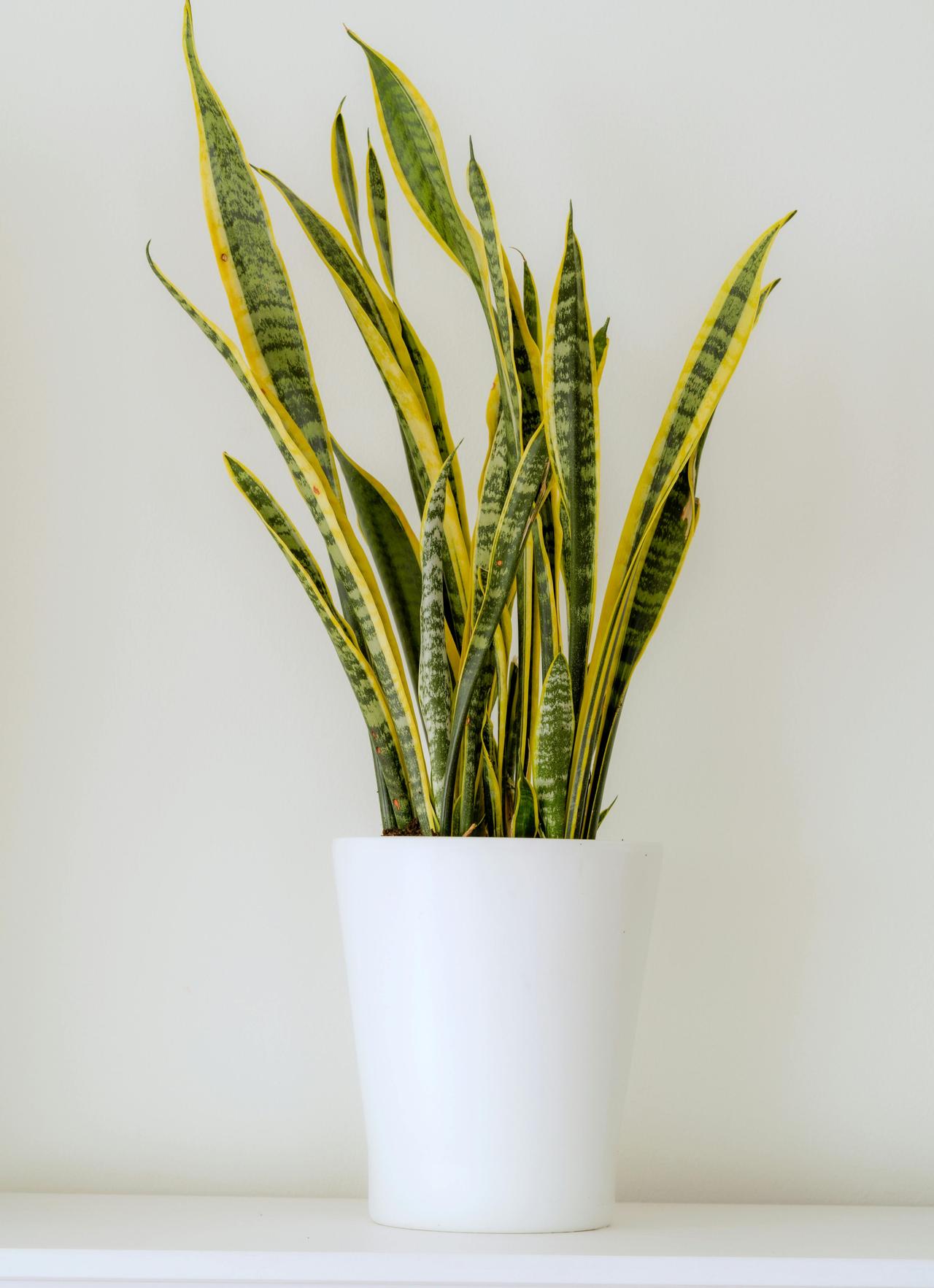
Sword Lily (Sansevieria trifasciata)
Family | Asparagaceae | ||||||||
|---|---|---|---|---|---|---|---|---|---|
Distribution | West Africa | ||||||||
Type | Perennial Herbaceous Plant | ||||||||
Light | Partial Shade – Bright Light | ||||||||
Reproduction | Rhizome, Leaf Cutting, Side Shoot | ||||||||
Alternative Names | Pasha's Sword, Mother-in-Law's Tongue, Snake Plant | ||||||||
Snake Plant (Sansevieria trifasciata) is a perennial herbaceous ornamental plant belonging to the Asparagaceae (asparagaceae) family, known for its distinctive leaves. Native to West Africa, this plant is widely cultivated worldwide due to its low maintenance requirements and its ability to improve indoor air quality. It is also known by various common names such as “sword of the pasha,” “mother-in-law’s tongue,” or “snake plant.”
As a plant utilizing Crassulacean Acid Metabolism (CAM) photosynthesis, snake plant absorbs carbon dioxide at night and uses it during the day; this characteristic makes it one of the rare species that produce oxygen at night, making it ideal for indoor environments.
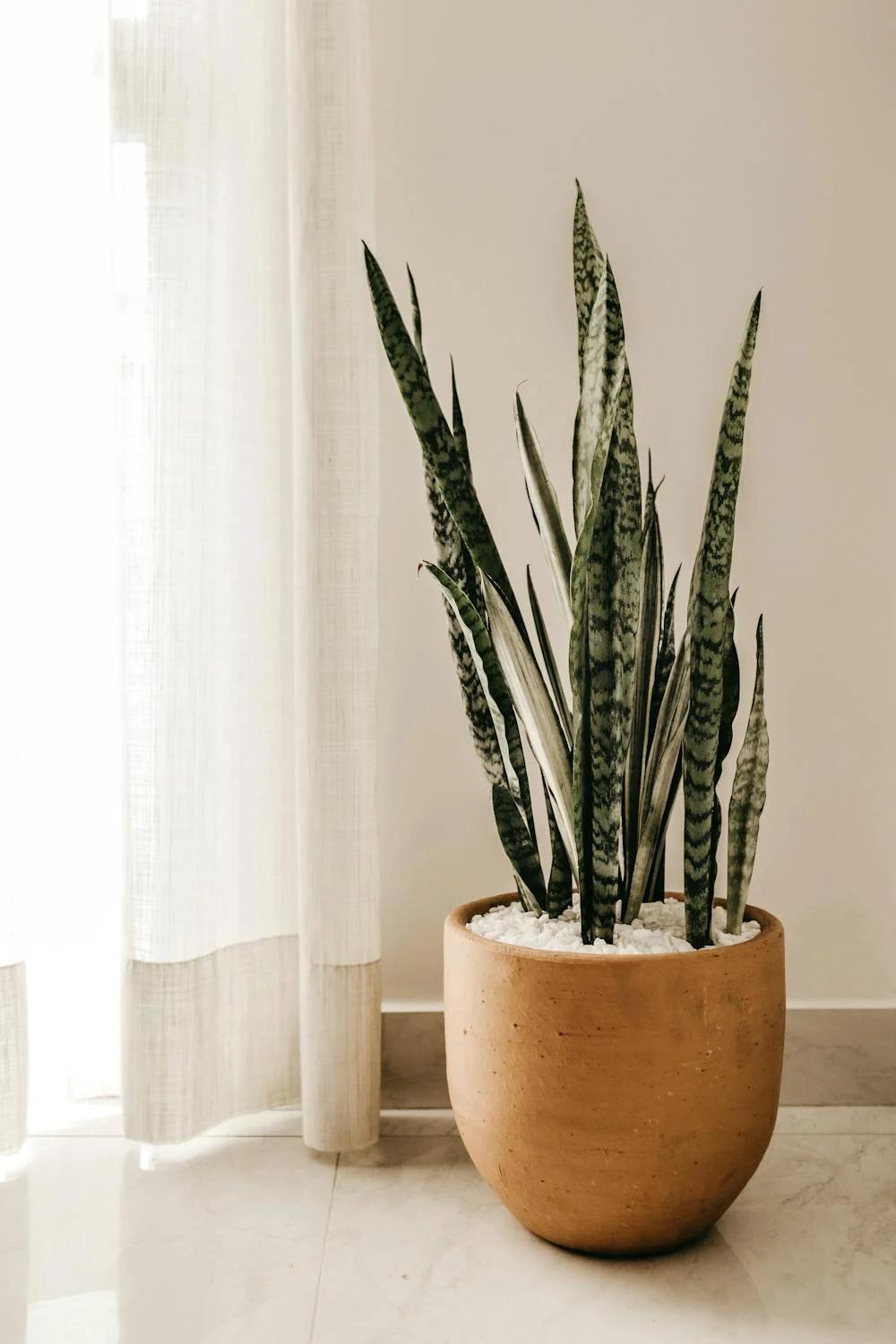
Kılıç Çiçeği (pexels)
Sansevieria trifasciata is a species that grows to a height of 30–120 cm, with stiff, thick, fleshy, and upright leaves. The leaves are typically patterned with light green horizontal stripes on a dark green background. Some varieties exhibit yellow edges, such as S. trifasciata 'Laurentii'. The root system is rhizomatous and spreads underground. Flowering is rare; when it occurs, the flowers are small, whitish-green, and fragrant. Flowering is usually triggered by stress.
The snake plant can thrive in a wide range of light conditions, from direct sunlight to shade. It performs best under bright, indirect light. Direct sunlight may cause leaf scorching, while low light slows growth, though the plant can still survive. This adaptability makes it suitable for dim indoor spaces.
As a xerophytic (drought-tolerant) plant, it is sensitive to overwatering. Water only after the soil has dried completely. During winter months, reduce watering frequency and avoid keeping the soil moist for extended periods. Overwatering can lead to root rot.
Well-draining, slightly sandy, and porous soils are preferred. Commercial cactus and succulent potting mixes are suitable for snake plants. It grows well in slightly acidic to neutral soils with a pH between 6.0 and 7.0.
The optimal growth temperature range is 18–29 °C. Temperatures below 10 °C can cause damage; the plant is highly sensitive to frost. It should be protected from cold drafts.
It tolerates moderate humidity but adapts easily to dry indoor air. Wiping the leaves occasionally helps reduce dust accumulation.
During spring and summer, apply a balanced liquid fertilizer (e.g., NPK 10-10-10) once a month. Fertilization should be avoided during winter. Overfertilization can cause leaf deformities and salt buildup.
The snake plant can be propagated through three main methods:
Repotting is generally required every 2–3 years. The new pot should be 1–2 cm wider than the previous one. This is typically done in spring.
Sansevieria trifasciata is generally a hardy plant. However, under certain conditions, it may be affected by the following pests and diseases:
The snake plant is widely used as an indoor ornamental plant. In addition to its aesthetic leaf form, a study conducted by NASA demonstrated its ability to filter volatile organic compounds such as formaldehyde, benzene, and trichloroethylene from indoor air. It is also preferred in bedrooms due to its ability to produce oxygen at night.
Kasmawati, Henny, Ruslin Ruslin, Arfan Arfan, Nurramadhani A. Sida, Dimas Isnu Saputra, Eli Halimah, and Resmi Mustarichie. 2023. "Antibacterial Potency of an Active Compound from *Sansevieria trifasciata* Prain: An Integrated In Vitro and In Silico Study." *Molecules* 28, no. 16: 6096. Accessed May 28, 2025.https://www.mdpi.com/1420-3049/28/16/6096
Permana, Bayu Hadi, Sucheewin Krobthong, Yodying Yingchutrakul, Paitip Thiravetyan, and Chairat Treesubsuntorn. "Sansevieria trifasciata's Specific Metabolite Improves Tolerance and Efficiency for Particulate Matter and Volatile Organic Compound Removal." *Environmental Pollution* 355 (2024): 124199. Accessed May 28, 2025.https://www.sciencedirect.com/science/article/pii/S0269749124009138
Pexels. "Dekorasyon süsleme bitki JPG." Accessed May 28, 2025.https://www.pexels.com/tr-tr/fotograf/dekorasyon-susleme-bitki-ortusu-beyaz-kap-22863428/
Pexels. "Yeşil Bitkiler JPG." Accessed May 28, 2025.https://www.pexels.com/tr-tr/fotograf/yesil-bitkiler-2922353/

Sword Lily (Sansevieria trifasciata)
Family | Asparagaceae | ||||||||
|---|---|---|---|---|---|---|---|---|---|
Distribution | West Africa | ||||||||
Type | Perennial Herbaceous Plant | ||||||||
Light | Partial Shade – Bright Light | ||||||||
Reproduction | Rhizome, Leaf Cutting, Side Shoot | ||||||||
Alternative Names | Pasha's Sword, Mother-in-Law's Tongue, Snake Plant | ||||||||
No Discussion Added Yet
Start discussion for "Sword Lily (Sansevieria trifasciata)" article
Physical Characteristics
Growing Conditions
Light
Watering
Soil
Temperature
Humidity
Fertilization
Propagation and Repotting
Pests and Diseases
Uses and Benefits