


This article was automatically translated from the original Turkish version.
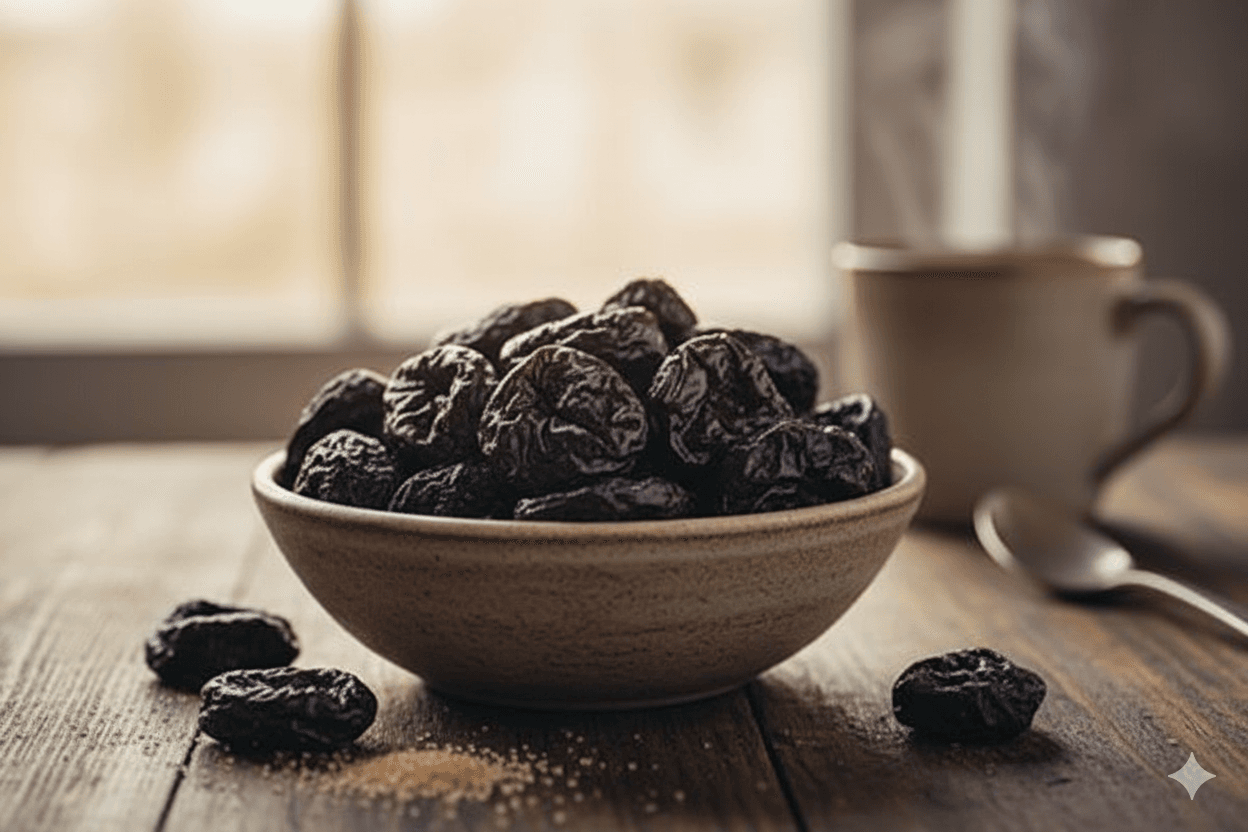
Suska Sechlońska (Generated with Artificial Intelligence)
Type(s) | Protected Geographical Indication (PGI) | ||||||||
|---|---|---|---|---|---|---|---|---|---|
Product Type | Food (Dried Plum - Code 0813 20) | ||||||||
Country | Poland | ||||||||
Status | Registered | ||||||||
File Number | PGI-PL-0600 | ||||||||
Application Date | 23/04/2007 | ||||||||
Registration Date | 09/10/2010 | ||||||||
Suska sechlońska is a protected geographical indication (PGI) plum produced in the Małopolskie Voivodeship (Województwo małopolskie) in southern Poland using traditional smoking and drying techniques by local producers. The product was granted PGI status by the European Commission on 9 October 2010, recognizing its unique link to its geographical origin.
The product’s name, Suska sechlońska, provides direct information about its geographical origin and production methodology. The term “Suska” refers to a dried and smoked plum. The term “Sechlońska” derives from the village of Sechna in southern Poland, where this specific drying tradition originated. It is believed that the name Sechna itself comes from the Polish word “suszenie,” meaning “drying,” underscoring the deep connection between the region and this culinary tradition.
Although the exact historical origins of this practice are not documented, a local legend holds that a local clergyman introduced the method of smoking plums to the area and encouraged his congregation to adopt the practice by sharing his knowledge.
Concrete evidence of the product’s history lies in the fruit kilns scattered across the regional landscape. The oldest of these kilns are over 100 years old. Although no longer in active use, they share the same structure and characteristics as those used today, demonstrating that the production method has remained virtually unchanged for more than a century. A total of 677 kilns, all designed and constructed by local residents to suit the local terrain, exist in the region.
The tradition of drying and smoking has left a lasting imprint not only on the region’s landscape but also on its culture. Local poets and songwriters have drawn inspiration from these smoked plums. The lyrics of a local folk song describe the village where the tradition began as follows: “...Ah Sechna, black Sechna, / had it not been for your fruit kilns, you would have been the capital...”
This tradition is also celebrated annually since 2001 at the “Festival of Dried Plums” (Święto Suszonej Śliwki) held in the village of Dobrociesz. Visitors to the region can also follow the “Prune Tourist Trail,” a route that takes them through local plum orchards and fruit kilns.
In addition to its tourist appeal, Suska sechlońska PGI has received numerous awards over the years, including a prize in the 2000 Nasze Kulinarne Dziedzictwo (Our Culinary Heritage) competition, the Perła (Pearl) award in 2004 for best regional food product in Poland, and first place in the 2006 Małopolski Smak (Małopolskie Flavours) survey.
Suska sechlońska PGI is produced within the boundaries of four municipalities in the Małopolskie Voivodeship: Laskowa, Iwkowa, Łososina Dolna and Żegocina.
The fruits used in production are the European plum (Prunus domestica L. ssp. domestica) and specific varieties such as Promis, Tolar, Nektawit, Valjevka and Stanley. These varieties are considered ideal for drying and smoking due to their high sugar content and relatively low water content. Only high-quality fruit may be used; any plums showing signs of rot, damage or contamination are excluded from production.
After harvesting from orchards, the plums are transported to fruit kilns for drying and smoking. The kilns are built into the landscape, resting on brick foundations and covered with a gabled roof. Each kiln contains at least one chamber, though some have up to five. Chambers are approximately two metres wide and more than 3.5 metres long, divided into two sections by a wooden barrier.
Beneath each chamber is a hearth, upon which a wooden grid is placed. This grid consists of knot-free, closely fitted wooden slats, each four centimetres wide, three centimetres high and approximately one metre long. The slats are arranged to allow for the spontaneous circulation of smoke, enabling warm air to rise up to approximately 180 centimetres above the hearth.
The plums are spread in a layer 20 to 40 centimetres thick on the wooden grid. Producers turn over the drying mass once daily using a special shovel.
The drying and smoking process lasts between four and six days, depending on the thickness of the plum layer. Smoke rising from the fire in the hearth raises the internal temperature of the kiln to between 45°C and 60°C. The smoke both dries and preserves the fruit while imparting a unique smoky colour, aroma and flavour.
During drying, juice oozes from the plums and coats their surface. This natural process adds a sweet aftertaste to the final product. The finished product has a fleshy interior and a sticky, blue-black skin.
European Commission. "EUGI00000013923 (Suska sechlońska (PGI) Kaydı." *E-Ambrosia Geographical Indications Register*. Accessed October 24, 2025. https://ec.europa.eu/agriculture/eambrosia/geographical-indications-register/details/EUGI00000013923.
European Commission. "Suska Sechlońska PGI." Accessed October 24, 2025. https://agriculture.ec.europa.eu/farming/geographical-indications-and-quality-schemes/geographical-indications-food-and-drink/suska-sechlonska-pgi_en.

Suska Sechlońska (Generated with Artificial Intelligence)
Type(s) | Protected Geographical Indication (PGI) | ||||||||
|---|---|---|---|---|---|---|---|---|---|
Product Type | Food (Dried Plum - Code 0813 20) | ||||||||
Country | Poland | ||||||||
Status | Registered | ||||||||
File Number | PGI-PL-0600 | ||||||||
Application Date | 23/04/2007 | ||||||||
Registration Date | 09/10/2010 | ||||||||
Etimology and Historical Origins
Cultural Significance and Recognition
Production Area and Raw Materials
Production Methodology: Kiln Structure and Operation
Drying and Smoking Process