


This article was automatically translated from the original Turkish version.
+2 More
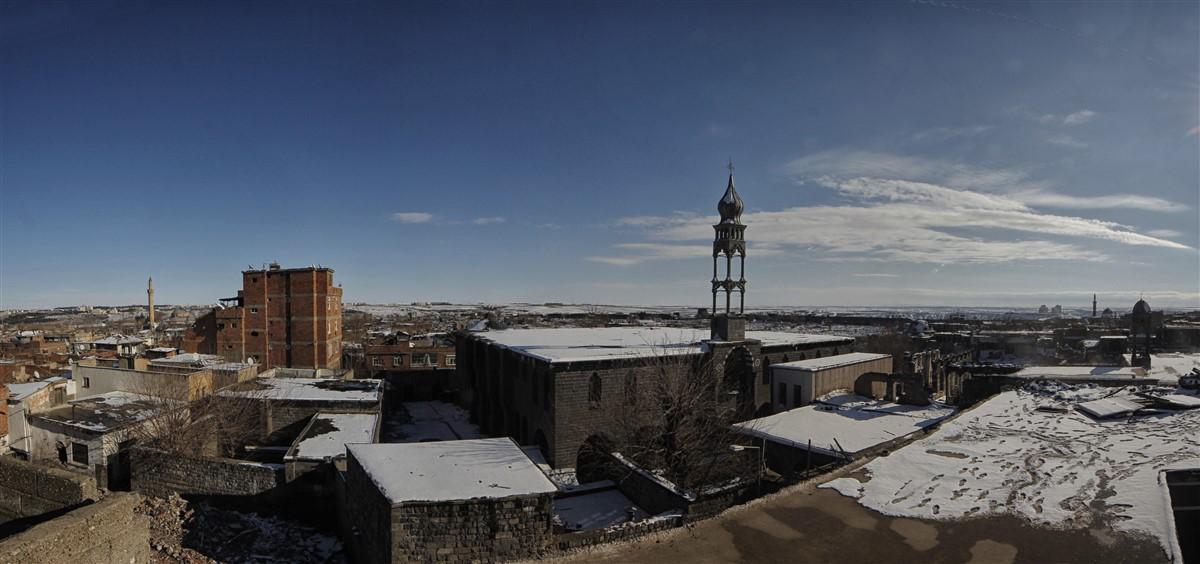
Surp Giragos Armenian Church
Name | Surp Giragos Armenian Church | ||||||||
|---|---|---|---|---|---|---|---|---|---|
Location | Özdemir Neighborhood Near Şeyh Matar Camii Diyarbakır Sur District | ||||||||
User | Orthodox Armenians | ||||||||
First Mention | 1610–1615 (from the travelogue of Polish Simeon) | ||||||||
Construction Date | 1515–1518 (exact date unknown according to inscriptions) | ||||||||
Important Event | 1914: The bell tower was destroyed by artillery fire 1916: The bell tower was completely demolished 1883: Rebuilt 1881: Completely destroyed in a major fire | ||||||||
Historical Use | Until 1960: Military storage German officers' headquarters during World War I Post-war fabric storage | ||||||||
Current Status | Opened for worship in 2022 A ceremony is held once a year | ||||||||
Significance | The largest Armenian church in the Middle East and an important work in Armenian architectural history | ||||||||
Surp Giragos Armenian Church is a historical Armenian church located in the Özdemir neighborhood of the Sur district in Diyarbakır, near the Şeyh Matar Camii. According to land registry records, this church was used by Orthodox Armenians and is regarded as one of the most important works in Armenian architectural history, holding the title of the largest Armenian church in the Middle East.
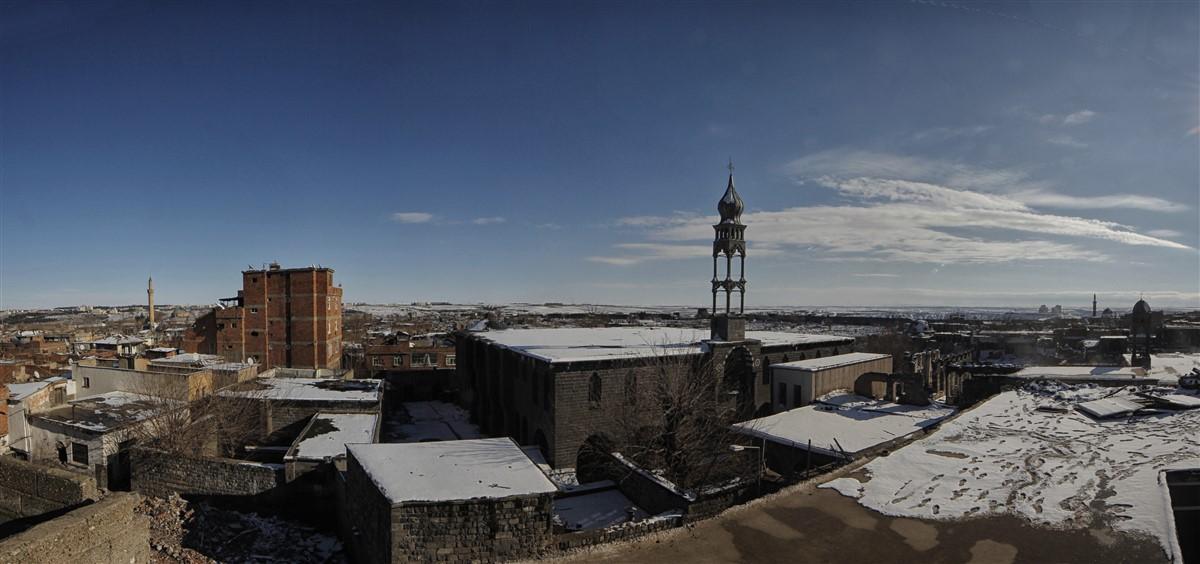
Surp Giragos Armenian Church (Diyarbakır Governorship)
Although the exact construction date of the church is unknown, inscriptions indicate it was built between 1515 and 1518. Its name first appears in the travelogue of the Polish traveler Simeon, dated between 1610 and 1615. The church was restored in 1722 by Patriarch Bedros Vartabet and later enlarged and rebuilt in 1729 by Armenian architects Şahin, Saruhan and Yarem. However, it was completely destroyed in a major fire on 10 June 1881 and subsequently reconstructed on the same site in 1883. Nine stone inscriptions on the church walls have preserved these historical details.
The structure has served various purposes over time. During World War I it was used as a headquarters by German officers and after the war as a fabric warehouse. Until 1960 the church was used for different functions such as a military depot, after which it was taken over by the Diyarbakır Armenian Community and partially restored to resume its original religious function. Most recently, with resources provided by the Ministry of Environment, Urbanization and Climate Change and under the supervision of the General Directorate of Foundations, the church was restored and reopened in 2022 in a ceremony attended by the Minister of Culture and Tourism. Additionally, it was opened for worship following restoration work completed by the Diyarbakır Metropolitan Municipality at the end of 2011.
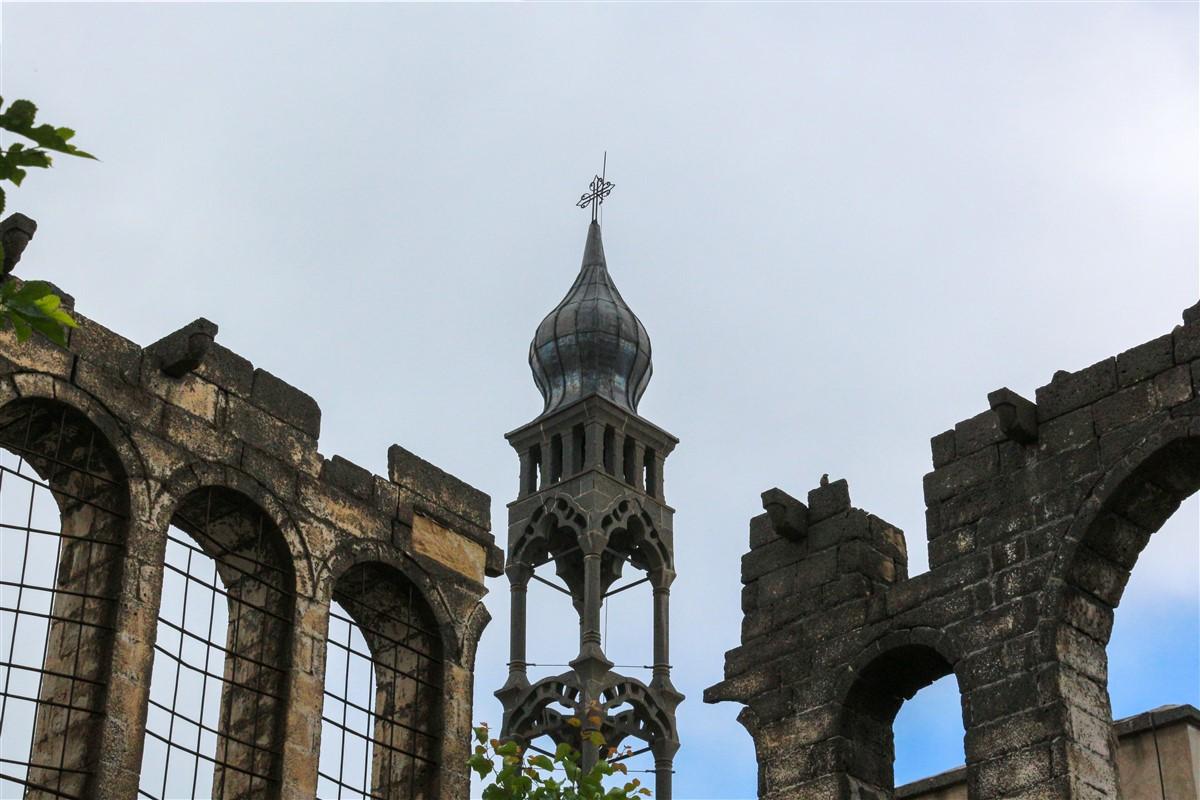
Surp Giragos Armenian Church (Diyarbakır Governorship)
Surp Giragos Armenian Church possesses an imposing architectural design and extends in an east-west orientation. Access to the building is from the west. The church consists of a narthex, naos, women’s gallery, apse, ancillary structures, and a bell tower that no longer exists. The church, with five naves and five apses, is notable for its two baptismal sections located on either side of the apse. Of the church’s large structure, five of its columns, arches and apses have survived to the present day; however, its earthen ceiling has collapsed.
The church’s bell tower holds a significant place in its history. After the original onion-shaped bell tower was destroyed by lightning, an Armenian stone mason constructed a new, more magnificent five-story Gothic-style tower 29 meters high. A bell cast by the famous Zilciyan family was installed on this tower, and a 3-meter-high 24-karat gold cross was placed at its summit. However, this bell tower was destroyed by artillery fire in 1914 and completely demolished in 1916.
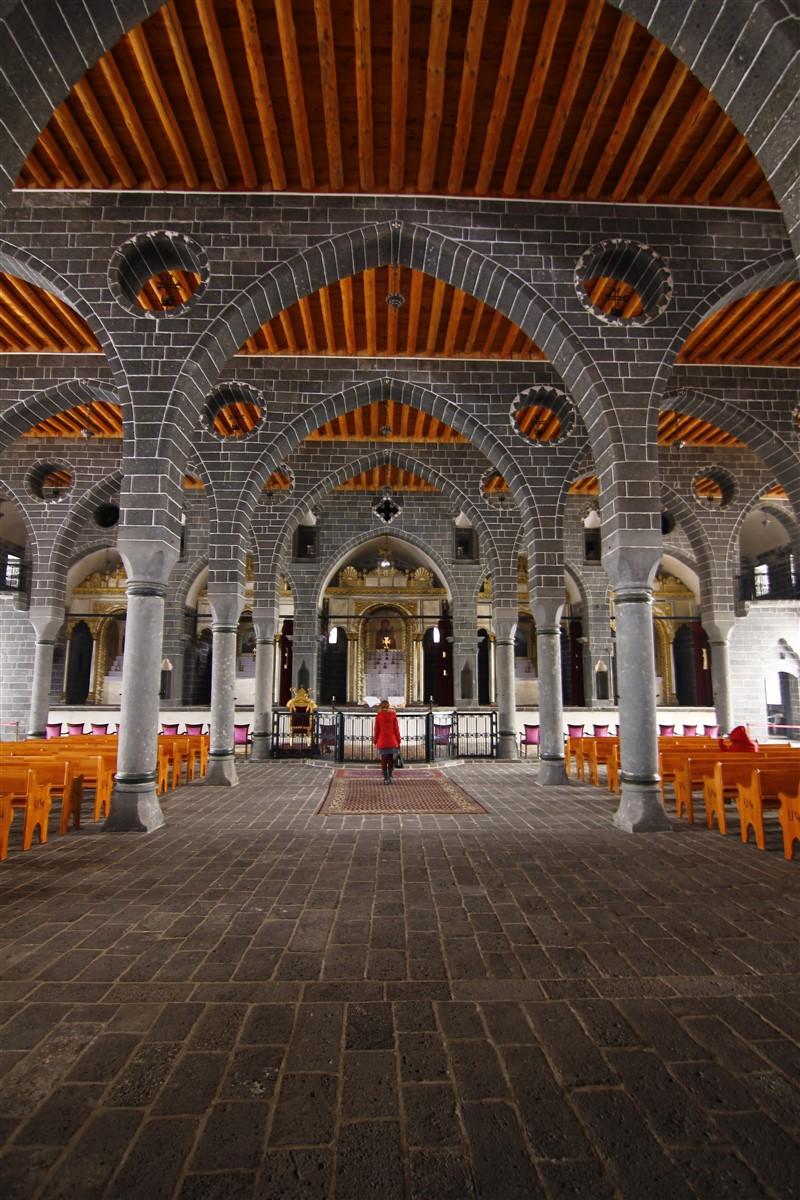
Surp Giragos Armenian Church (Diyarbakır Governorship)
Today, Surp Giragos Armenian Church serves as a place of worship where an annual liturgy is held, attended by Armenians residing in Diyarbakır as well as those from various regions of the world. This historic structure, which has undergone three restoration phases over time, continues to stand as an important symbol of Armenian cultural heritage.
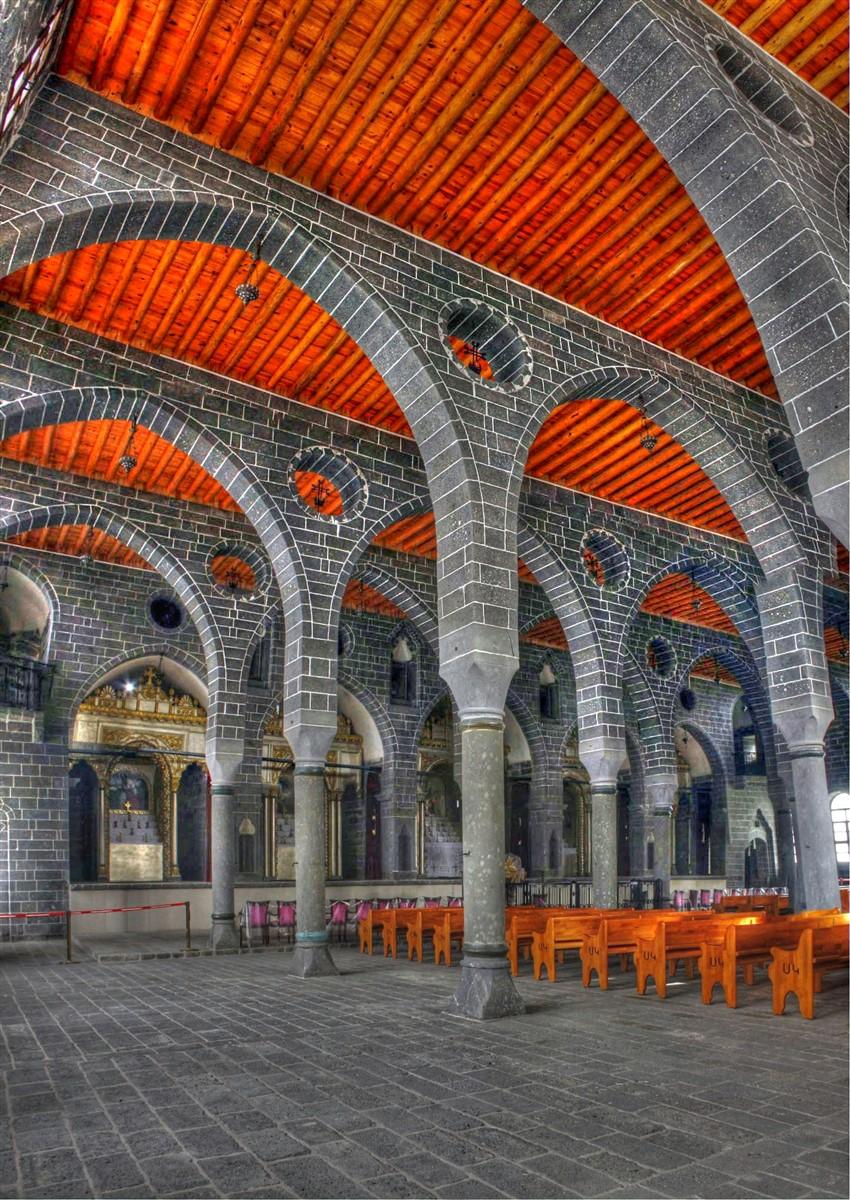
Surp Giragos Armenian Church (Diyarbakır Governorship)
“Surp Giragos Ermeni Kilisesi.” Diyarbakır Kültür Turizm. Accessed April 2, 2025.https://diyarbakirkulturturizm.org/Yapit/Details/KILISELER/21/Surp-Giragos-Ermeni-Kilisesi/214
“Surp Giragos Ermeni Kilisesi.” Diyarbakır Valiliği. Accessed April 2, 2025.http://www.diyarbakir.gov.tr/surp-giragos-ermeni-kilisesi
“Surp Giragos Ermeni Kilisesi.” T.C. Kültür ve Turizm Bakanlığı Kültür Portalı. Accessed April 2, 2025.https://www.kulturportali.gov.tr/turkiye/diyarbakir/gezilecekyer/surp-giregos-ermeni-kilisesi
Surp Giragos Armenian Church
Name | Surp Giragos Armenian Church | ||||||||
|---|---|---|---|---|---|---|---|---|---|
Location | Özdemir Neighborhood Near Şeyh Matar Camii Diyarbakır Sur District | ||||||||
User | Orthodox Armenians | ||||||||
First Mention | 1610–1615 (from the travelogue of Polish Simeon) | ||||||||
Construction Date | 1515–1518 (exact date unknown according to inscriptions) | ||||||||
Important Event | 1914: The bell tower was destroyed by artillery fire 1916: The bell tower was completely demolished 1883: Rebuilt 1881: Completely destroyed in a major fire | ||||||||
Historical Use | Until 1960: Military storage German officers' headquarters during World War I Post-war fabric storage | ||||||||
Current Status | Opened for worship in 2022 A ceremony is held once a year | ||||||||
Significance | The largest Armenian church in the Middle East and an important work in Armenian architectural history | ||||||||
No Discussion Added Yet
Start discussion for "Surp Giragos Armenian Church" article
History
Architectural Features
Current Status