


This article was automatically translated from the original Turkish version.
+1 More
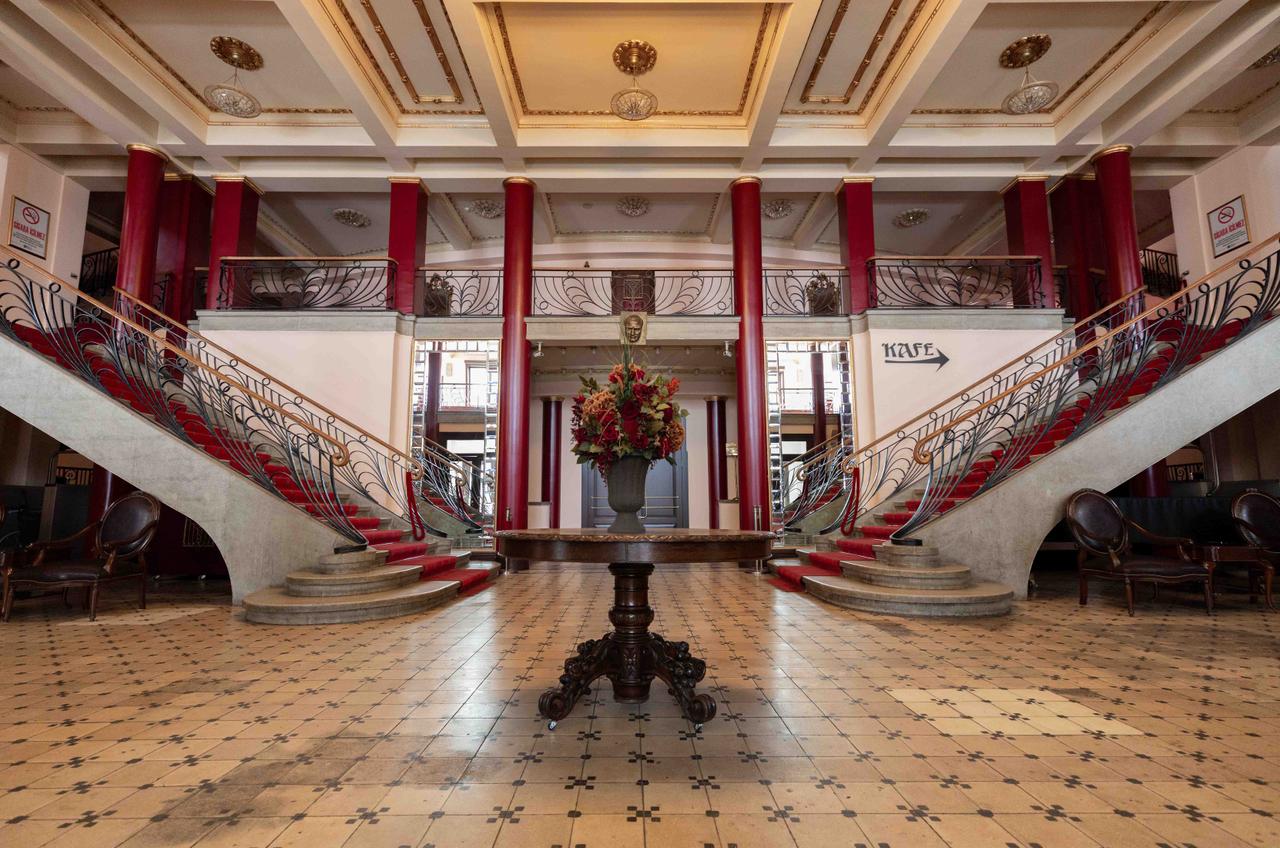
Süreyya Opera House
Location | Kadıköy - Istanbul / Türkiye | ||||||||
|---|---|---|---|---|---|---|---|---|---|
Founder | Süreyya İlmen Paşa | ||||||||
Construction Year | 1924 – 1927 | ||||||||
Architect | Kegham Kavafyan | ||||||||
Architectural Style | Art Deco, Neoclassical | ||||||||
Ceiling Decorations | Painter Naci Kalmukoğlu | ||||||||
Reopening | 27 October 2007 – with Yunus Emre Oratoryosu | ||||||||
Hall Capacity | 570-seat main hall 500-seat ballroom | ||||||||
Süreyya Operası is a historic opera house located on Bahariye Street in the Kadıköy district of Istanbul. Built in 1927 by Süreyya İlmen Paşa, it holds the distinction of being the first opera house on the Anatolian side of Istanbul. However, due to deficiencies in its stage and technical infrastructure, it was used for many years as a cinema hall.
Süreyya Operası, Tanıtım Videosu (T.C. İstanbul Valiliği)
The foundations of Süreyya Operası were laid when Süreyya İlmen Paşa, who served as a member of parliament for Istanbul in the 1920s, was inspired by the theaters and opera houses he encountered during his travels in Europe. Paşa recognized the absence of a similar cultural infrastructure in Istanbul and decided to construct a building in Kadıköy capable of hosting both artistic and social events.
Construction began in 1924 on Bahariye Street in Kadıköy, and the building opened on 6 March 1927 under the name “Süreyya Opereti.” However, due to the lack of adequate stage facilities and artist rooms, opera and operetta performances could not be staged; instead, the building primarily hosted theatrical plays and, from 1930 onward, cinema screenings. During this period, the poet Nazım Hikmet’s father, Hikmet Nâzım, became the first cinema manager.
In 1936, a summer cinema section was added to the building. In 1994, chairs imported from Spain were installed, and a three-dimensional projection screen and sound system were fitted. In 2003, technical equipment was upgraded, the machine room was repaired, and the curtain systems were renewed with electronic rails.
In 1950, Süreyya İlmen Paşa donated the building to the Darüşşafaka Society, but stipulated that he and his wife retain the right to benefit from its revenues during their lifetimes. Paşa passed away in 1955, and his wife Adalet İlmen in 1966. In subsequent years, the building was used for various purposes; the ballroom on the upper floor hosted weddings and theatrical events.
The architect of the building was Kegham Kavafyan. The foyer was designed in the Art Deco style, inspired by the Théâtre des Champs-Élysées in Paris, while the interior reflects the classical characteristics of German theaters. The ceiling frescoes were created by the Russian-born painter Naci Kalmukoğlu (Kalmukov) and restored to their original state. Walls and interior panels are adorned with gilded cartonnage. The relief sculptures on the stage and within the auditorium were crafted by İhsan Özsoy, one of Turkey’s first sculptors. The building, with its architectural details, reflects the European theater decoration sensibilities of its era.
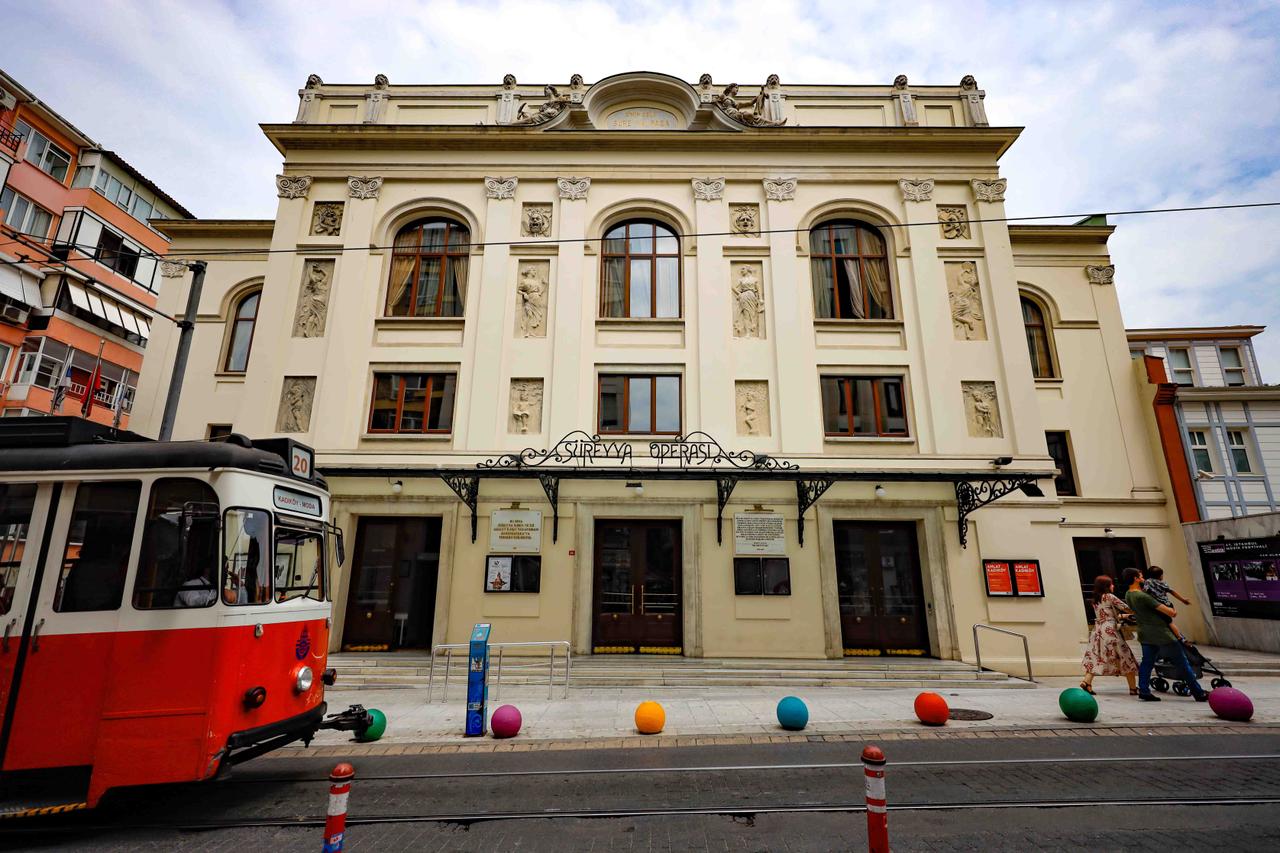
Süreyya Operası, Günümüz Görünümü (İstanbul Valiliği)
Art Deco is a design movement that gained popularity in the 1920s and 1930s, characterized by geometric forms, symmetry, and the use of luxurious materials. The architecture of Süreyya Operası clearly reflects the defining features of this movement:
Geometric Decorations: The building’s façade and interior feature geometric patterns and figurative reliefs characteristic of Art Deco.
Ceiling Frescoes and Gilded Cartonnage: The interior ceiling decorations are adorned with frescoes and gilded cartonnage that reflect the luxury aesthetics of the period.
Symmetry and Balance: The emphasis on symmetry in Art Deco is clearly evident in the overall design and interior layout of the building.
These features have made Süreyya Operası not only a cultural center but also an important architectural work reflecting the aesthetic sensibilities of its time.
In 2005, the Kadıköy Municipality leased the building from the Darüşşafaka Society for 40 years and initiated a comprehensive restoration. The restoration work was carried out according to a project prepared by architect Cafer Bozkurt, during which the building was reinforced against earthquakes and fire, an orchestra pit was added, and the stage technical infrastructure was completed. On 14 December 2007, Süreyya Operası reopened with a performance of Ahmet Adnan Saygun’s “Yunus Emre Oratorio” and has since served as the Anatolian side venue of the Istanbul State Opera and Ballet.
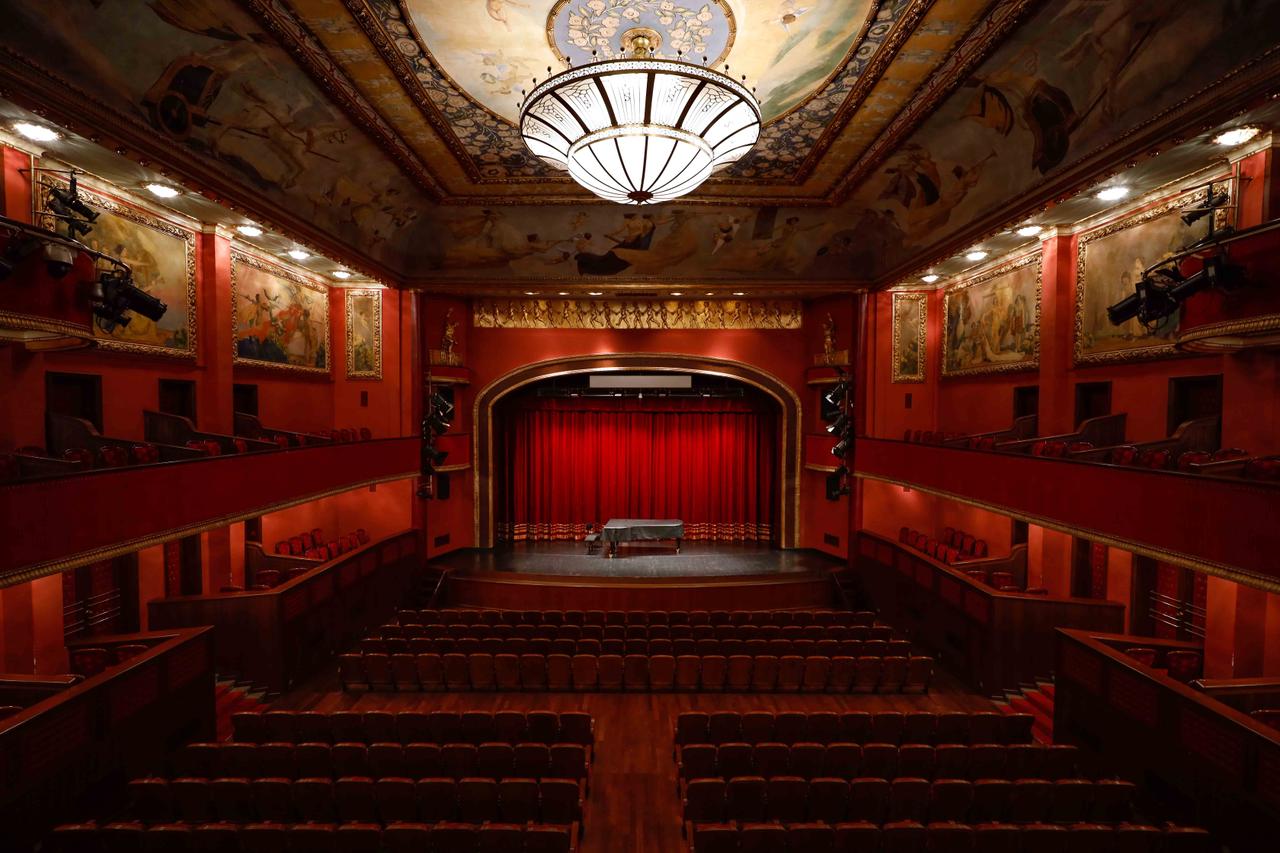
Süreyya Operası, Ana Salon (İstanbul Valiliği)
Today, with a seating capacity of 570, it hosts opera and ballet performances, concerts, and various cultural events. Additionally, the ballroom on the upper floor, with a capacity of 500, is used for special events.
Aydın, Seda Nur. “Sinema’dan Operaya Bir Kültür Mirası: Süreyya Operası.” GZT. Accessed May 11, 2025.https://www.gzt.com/arkitekt/sinemadan-operaya-bir-kultur-mirasi-sureyya-operasi-3563982
Kadıköy Belediyesi. "80 Yıl Aradan Sonra Kadıköy, Süreyya Operasına Kavuştu." Accessed May 11, 2025.https://sureyyaoperasi.kadikoy.bel.tr/tr/hakkimizda
T.C. İstanbul Valiliği. "Bir İstanbul Klasiği: Süreyya Operası." T.C. İstanbul Valiliği Web Sitesi. Accessed May 11, 2025.
T.C. İstanbul Valiliği. "Bir İstanbul Klasiği: Süreyya Operası." YouTube. Accessed May 11, 2025.https://www.youtube.com/watch?v=wM_EoxvL9Ng
Çoban, Çiğdem. "Süreyya Paşa Konser ve Opera Binası." *Arkitera*. Accessed May 11, 2025.https://www.arkitera.com/proje/sureyya-pasa-konser-ve-opera-binasi/
Süreyya Opera House
Location | Kadıköy - Istanbul / Türkiye | ||||||||
|---|---|---|---|---|---|---|---|---|---|
Founder | Süreyya İlmen Paşa | ||||||||
Construction Year | 1924 – 1927 | ||||||||
Architect | Kegham Kavafyan | ||||||||
Architectural Style | Art Deco, Neoclassical | ||||||||
Ceiling Decorations | Painter Naci Kalmukoğlu | ||||||||
Reopening | 27 October 2007 – with Yunus Emre Oratoryosu | ||||||||
Hall Capacity | 570-seat main hall 500-seat ballroom | ||||||||
No Discussion Added Yet
Start discussion for "Süreyya Opera House" article
History
Architectural Features
Art Deco Features
Restoration and Current Use