This article was automatically translated from the original Turkish version.
Scope | Ongoing armed conflicts between the Sudan Armed Forces (SAF) and the Rapid Support Forces (RSF) Began on 15 April 2023 | ||||||||
|---|---|---|---|---|---|---|---|---|---|
Location | Kordofan and Nile Valley regions Darfur Al-Jazira Republic of Sudan – particularly Khartoum | ||||||||
Side | Rapid Support Forces (RSF) – Commander: Mohamed Hamdan Dagalo (Hemedti) Sudan Armed Forces (SAF) – Commander: Abdel Fattah al-Burhan | ||||||||
Start Date | 15 April 2023 | ||||||||
Cause | Disputes over military hierarchy power sharing and security reform | ||||||||
Nature of the War | Conflict complicated by interventions from regional and international actors Internal conflict based on struggle for power Ethnic cleansing mass executions and humanitarian crisis elements | ||||||||
Key Developments | December 2024: Army forces recapturing Wad Madani October 2025: Alleged mass executions by RSF in Fasher (Yale University satellite analysis) Siege of Fasher May 2024: RSF advance in Darfur April 2023: Start of conflicts in Khartoum | ||||||||
Humanitarian Conditions | Twenty-five million people face food insecurity More than 13,000 civilian deaths 12 million displaced persons Seventy percent of the health system is non-functional | ||||||||
Peace Initiatives | Ankara Process (Türkiye mediation - 2025) Jeddah Talks (2023) Neighboring Countries Initiative (2024) African Union (AU) and IGAD Processes (2024–2025) | ||||||||
Current Situation (2025) | A lasting ceasefire has not been achieved Intense fighting in Fashir and El-Geneina Crisis at humanitarian disaster level across the country | ||||||||
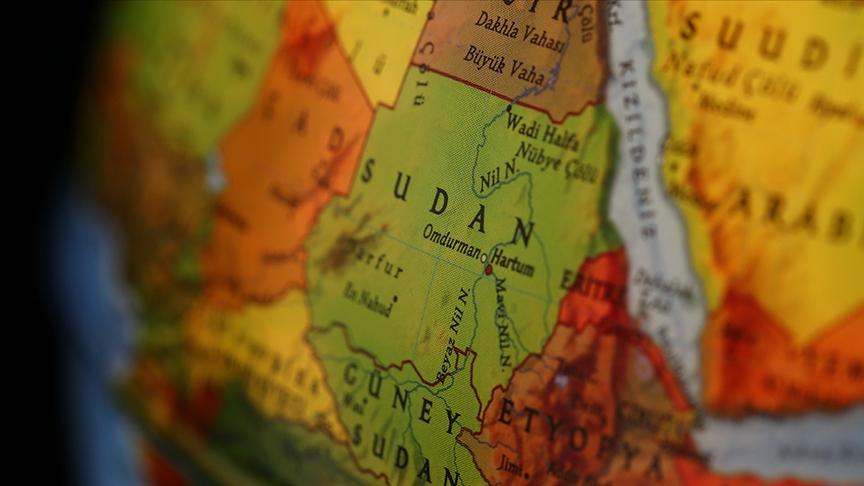
Sudan Civil War (2023–) is an armed conflict that began on 15 April 2023 between the Sudanese Armed Forces (SAF) and the Rapid Support Forces (RSF), resulting in widespread destruction across the country and a major humanitarian crisis. The conflict erupted with attacks by RSF units on military installations in the capital Khartoum and quickly spread to Darfur Kordofan the Nile Valley and El-Jazira states.
The warring parties are composed of armed groups led by Abdulfettah el-Burhan chairman of the Sovereignty Council and commander of the Sudanese Armed Forces and Muhammad Hamdan Dagalo Hemedti commander of the Rapid Support Forces. Disputes over power sharing military hierarchy and security reforms have escalated into a comprehensive civil war affecting the entire country.
The deepening of the war was decisively shaped by the power vacuum that emerged during the transitional administration established after the overthrow of Omar al-Bashir’s regime in 2019. Although both the army under Burhan and the RSF under Dagalo operated within the same administration they drew support from different interest groups leading to a dual-headed military structure in Sudan. Burhan insisted on integrating the RSF into the regular army while Dagalo defended the independence of his own structure. These conflicting objectives rapidly plunged the country into a destructive civil war.
The Sudan Civil War is also described as a process that has revived the country’s historical ethnic and economic fractures. The conflict has triggered renewed allegations of ethnic cleansing and mass executions particularly in western regions such as Darfur leading to the displacement of millions of civilians and forcing thousands to seek refuge in neighboring countries.
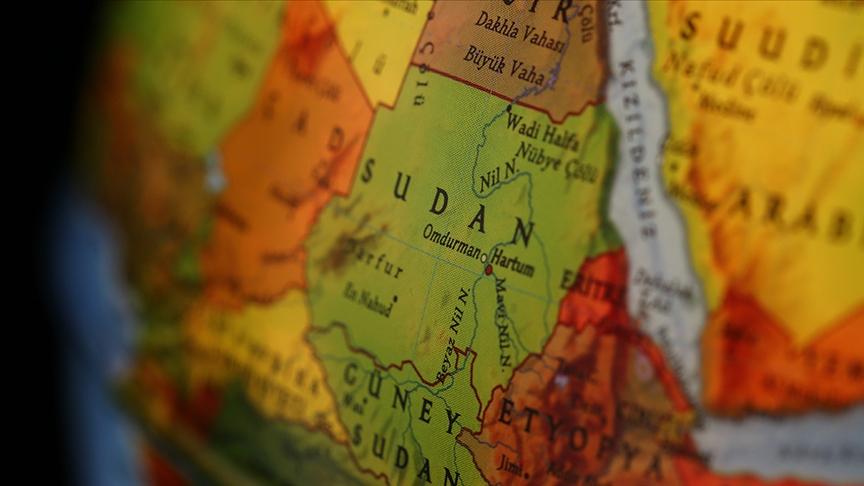
Geographical Location of Sudan - (Anadolu Ajansı)
The immediate cause of the Sudan Civil War that erupted in 2023 was the escalation of a long-standing authority dispute between the Sudanese Armed Forces (SAF) and the Rapid Support Forces (RSF) into an armed crisis. This crisis is linked to debates over the military-civilian balance that began during the transitional administration established after the fall of Omar al-Bashir’s regime in 2019. Abdulfettah el-Burhan chairman of the Sovereignty Council and Chief of Staff demanded the integration of the RSF into the regular army and its subordination to the military hierarchy while RSF commander Muhammad Hamdan Dagalo Hemedti insisted on preserving his organization’s independent status.
This disagreement turned into open armed conflict on the morning of 15 April 2023 when RSF units attacked SAF military installations in Khartoum. The incident triggered intense fighting in the capital and within days key sites including the airport presidential palace and radio and television buildings became battlefields. In the early days the army targeted RSF positions with air power while the RSF responded in urban areas with tanks and heavy weapons. This dynamic rapidly transformed Khartoum into a humanitarian crisis zone.
In the first weeks following the outbreak of fighting the cities of Khartoum Omdurman and Bahri were subjected to heavy bombardment and civilian infrastructure was largely destroyed. Electricity water and communication systems collapsed and thousands of buildings became unusable. According to United Nations UN data by the end of 2023 more than 13 000 people had lost their lives 6 million had been internally displaced and over 2 million had fled to neighboring countries.
After losing control of the capital the Sudanese army shifted the main focus of the war to El-Jazira state in central Sudan. The RSF on the other hand largely seized control of the Darfur region in the west. Throughout 2024 the RSF expanded its area of control to encompass all four states of South West Central and East Darfur as well as parts of Kordofan and Sennar. In contrast the Sudanese army managed to retain its presence only in the central city of Fasher in North Darfur.
By late 2024 Fasher which had become a focal point of intensified fighting gained critical strategic importance for both the army and the RSF. Fasher serves not only as the administrative center of Darfur but also as a vital hub for humanitarian aid delivery due to its airport and military bases. The RSF’s siege of Fasher beginning in May 2024 further worsened the humanitarian dimension of the war. During the siege food and medicine shortages emerged and clean water sources were destroyed. According to UN reports over 260 000 civilians including 130 000 children were facing risks of starvation and disease within the city.
As of 2025 the war has extended beyond the capital and Darfur axis to include eastern and southern regions of the country. The capital of El-Jazira state Wad Medani was recaptured by the army in December 2024 a development regarded as a critical turning point in the war’s trajectory. However despite the army’s advances the RSF’s continued dominance in western regions has prevented the war from ending.
Between 2023 and 2025 the civil war in Sudan has created the largest wave of displacement and humanitarian devastation in the country’s history. Agricultural lands industrial facilities and public buildings have been destroyed and the nation’s production capacity has nearly collapsed. Nearly ten million people have been forced to abandon their homes and millions of children have been deprived of education. The war has become not merely a struggle for military dominance but a catastrophe that has deeply shattered Sudan’s social fabric.
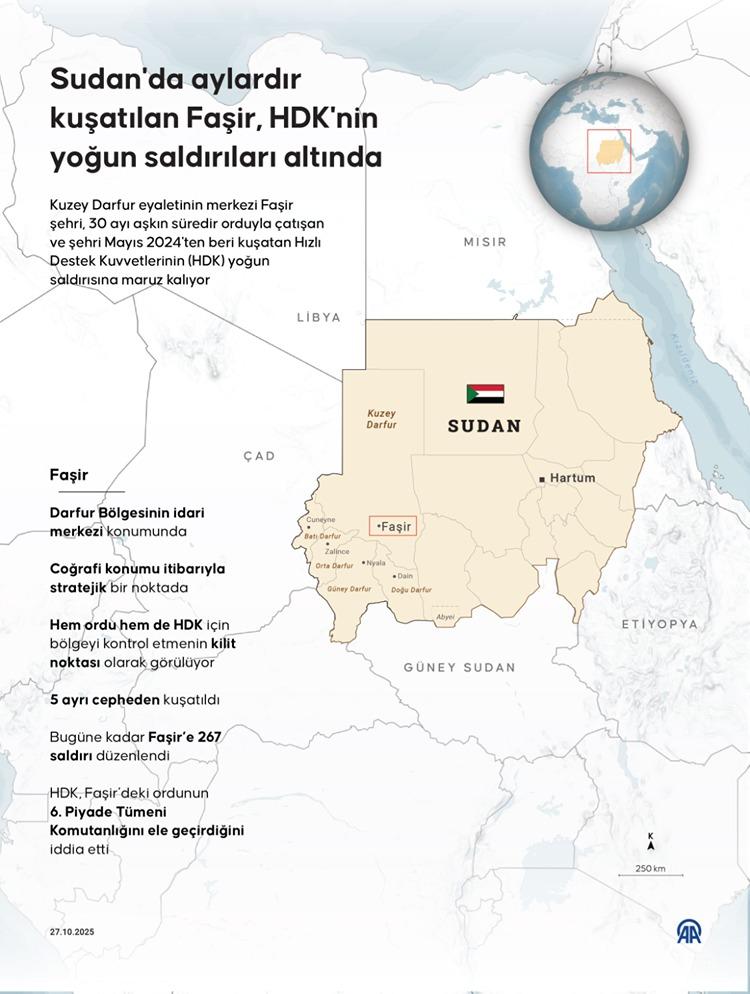
Map of Sudan – Siege of Fasher (RSF Attacks) - (Anadolu Ajansı)
The most severe destruction of the Sudan Civil War has occurred in the western region of Darfur. Historically marked by intense ethnic economic and environmental conflicts Darfur has reverted into a large-scale violence zone since the war began in 2023. This has triggered a new humanitarian disaster on a scale reminiscent of the Darfur War between 2003 and 2020. The region holds strategic importance for both the Sudanese army and the Rapid Support Forces as it provides access to land routes leading to Chad Libya and the Central African Republic.
From the second half of 2023 the RSF seized control over all four Darfur states South West Central and East Darfur. The weakness of army units in the region facilitated the RSF’s rapid advance. By the end of 2024 the RSF had taken control of all major settlements in the region except for Fasher the administrative center of North Darfur. The survival of Fasher has been viewed as the last stronghold of the Sudanese army in the region. The city also holds strategic and symbolic importance as it is the sole remaining hub for humanitarian aid delivery.
Fasher was fully besieged by the RSF in May 2024. The siege has paralyzed living conditions for the local population making access to food water and medicine nearly impossible. Most of the civilian population remaining in the city has resorted to feeding on animal feed and wild plants while hospitals and aid centers have become targets. The United Nations UN and the World Health Organization WHO have reported that thousands of civilians have died in the city due to starvation dehydration and disease. In October 2025 WHO Director-General Tedros Adhanom Ghebreyesus expressed being “shocked” by reports that over 460 patients and caregivers had been killed at the Saudi Hospital.
Anadolu Ajansı. "DSÖ: Sudan Suudi Hastanesinde Hasta ile Refakatçilerin Ölüm Haberleri Karşısında Dehşete Kapıldık." Anadolu Ajansı, 2025. Accessed October 30, 2025.https://www.aa.com.tr//tr/dunya/dso-sudan-suudi-hastanesinde-hasta-ile-refakatcilerin-olum-haberleri-karsisinda-dehsete-kapildik/3730053
Anadolu Ajansı. "Sudan İç Savaşında Türkiye Umudu." Anadolu Ajansı, 2025. Accessed October 30, 2025.https://www.aa.com.tr/tr/analiz/sudan-ic-savasinda-turkiye-umudu/3443634
Anadolu Ajansı. "Sudan’daki Yardım Kuruluşları Feci İnsani Duruma Acil Uluslararası Müdahale Çağrısı Yaptı." Anadolu Ajansı, 2025. Accessed October 30, 2025.https://www.aa.com.tr/tr/dunya/yardim-kuruluslari-sudandaki-feci-insani-duruma-acil-uluslararasi-mudahale-cagrisi-yapti/3730049
Anadolu Ajansı. “Dünyanın En Genç Ülkesi Güney Sudan’da Yeni Bir İç Savaş Tehlikesi.” Anadolu Ajansı, 2025. Accessed October 30, 2025.https://www.aa.com.tr/tr/dunya/dunyanin-en-genc-ulkesi-guney-sudanda-yeni-bir-ic-savas-tehlikesi/3516095
Anadolu Ajansı. “Dışişleri Bakanlığı: Sudan’ın Fasir Şehrindeki Sivillere Karşı Saldırıyı Şiddetle Kınadı.” Anadolu Ajansı, 2025. Accessed October 30, 2025.https://www.aa.com.tr//tr/gundem/disisleri-bakanligi-sudanin-fasir-sehrindeki-sivillere-karsi-saldiriyi-siddetle-kinadi/3729148
Anadolu Ajansı. “Sudan’da Aylardır Kuşatılan Fasir HDK’nin Yoğun Saldırıları Altında.” Anadolu Ajansı, 2025. Accessed October 30, 2025.https://www.aa.com.tr/tr/dunya/sudanda-aylardir-kusatilan-fasir-hdknin-yogun-saldirilari-altinda/3727624
Anadolu Ajansı. “Sudan’da HDK’nin Fasir’e Girmesinin Ardından Katliam İddiaları Gündeme Geldi.” Anadolu Ajansı, 2025. Accessed October 30, 2025.https://www.aa.com.tr//tr/dunya/sudanda-hdknin-fasire-girmesinin-ardindan-katliam-iddialari-gundeme-geldi/3728451
Anadolu Ajansı. “Yale Üniversitesi Uydu Görüntüleri: Sudan’ın Fasir Kentinde Toplu İnfaz Yapıldığını Gösterdi.” Anadolu Ajansı, 2025. Accessed October 30, 2025.https://www.aa.com.tr/tr/dunya/yale-universitesi-uydu-goruntuleri-sudanin-fasir-kentinde-toplu-infaz-yapildigini-gosterdi/3730173
Bozbaş, Gökhan. “Sudan’da Etnik Marjinalleşme ve Çatışma Dinamikleri: Kuramsal Bir Çerçevede Sürdürülebilir Barış Arayışları.” *İnsan ve Toplum* 15, no. 3 (2025): 40–70. Accessed October 30, 2025.https://doi.org/10.12658/M0769
Demirtaş, Tunç. *Sudan’da Bir Yılın Muhasebesi: Sudan İç Savaşının Dünü, Bugünü, Yarını ve Çözüm Önerileri.* SETA, 2024. Accessed October 30, 2025.https://media.setav.org/tr/dosya/2024/05/sudanda-bir-yilin-muhasebesi-sudan-ic-savasinin-dunu-bugunu-yarini-ve-cozum-onerileri.pdf
Demirtaş, Tunç. “Bir Yılın Ardından Sudan İç Savaşı: Yeni Bir Darfur Krizi mi Yaşanacak?” Kriter Dergi. Accessed October 30, 2025.https://kriterdergi.com/dis-politika/bir-yilin-ardindan-sudan-ic-savasi-yeni-bir-darfur-krizi-mi-yasanacak
Demirtaş, Tunç. “Sudan Krizi: Askerî Çatışmalar, Bölgesel Müdahaleler ve Barış Arayışı.” *Kriter Dergi.* Accessed October 30, 2025.https://kriterdergi.com/dis-politika/sudan-krizi-askeri-catismalar-bolgesel-mudahaleler-ve-baris-arayisi
Devecioğlu, Kaan. “Gölgede Kalan İç Savaş: Sudan.” ORSAM. Accessed October 30, 2025.
Devecioğlu, Kaan. “Sudan İç Savaşı: Türkiye’nin Ara Buluculuk ve Bölgesel İstikrar Politikası.” ORSAM. Accessed October 30, 2025.https://orsam.org.tr/yayinlar/sudan-ic-savasi-turkiyenin-ara-buluculuk-ve-bolgesel-istikrar-politikasi/
Fatoumatta, Sarr. “Güney Sudan’da İç Savaş ve Önündeki Zorluklar.” *The Journal of Academic Social Science* (2022). Accessed October 30, 2025.https://asosjournal.com/?mod=makale_tr_ozet&makale_id=56813#
Göktepe, Orhan. “İnsani Yardım Boyutuyla Güney Sudan İç Savaşı.” *Kastamonu Üniversitesi İktisadi ve İdari Bilimler Fakültesi Dergisi* 25, no. 2 (2023): 681–699. Accessed October 30, 2025.https://doi.org/10.21180/iibfdkastamonu.1263045
Gül, Hasan. “Üçüncü Dünya Bağlamında Sudan’ın Güvenlik Sorunu.” *The Journal of Academic Social Science* (2017). Accessed October 30, 2025.https://asosjournal.com/;528123?mod=makale_tr_ozet&makale_id=35300#
Tahir, Adnan Yahya Adam. “Sudan’da Darfur Bölgesindeki Savaş Sorunu Toplumsal Etkiler Bağlamında Bir İnceleme.” Master's thesis, Uludağ Üniversitesi, 2025. Accessed October 30, 2025.https://acikerisim.uludag.edu.tr/entities/publication/5041c961-2c33-4062-bd65-fad3aff10ea9
Çakaloğlu, Hazal. “Güncel Gelişmeler Işığında Sudan Ülke Analizi.” *Ulisa: Uluslararası Çalışmalar Dergisi* 7, no. 1 (2023): 55–70. Accessed October 30, 2025.https://dergipark.org.tr/en/pub/ulisa/issue/78310/1308028
Çelik Efşan, N., and Vedat Yılmaz. “Darfur Krizinin İklim Göçmenliği Bağlamında Değerlendirilmesi.” *Akademik Yaklaşımlar Dergisi* 14, no. 1 (2023): 370–399. Accessed October 30, 2025.https://doi.org/10.54688/ayd.1260416
Özdağ, Abdullah, and İlhan Aras. “Bağımsızlıktan Bölünmeye İki Ayrı Sudan: Güney Sudan’ın Self-Determinasyonu.” *Türk İdare Dergisi* 95, no. 501 (June 2025). Accessed October 30, 2025.https://www.researchgate.net/profile/Ilhan-Aras/publication/394460210_Bagimsizliktan_Bolunmeye_Iki_Ayri_Sudan_Guney_Sudan'in_Self-Determinasyonu/links/689c2c165920053657340861/Bagimsizliktan-Boeluenmeye-Iki-Ayri-Sudan-Gueney-Sudanin-Self-Determinasyonu.pdf

Scope | Ongoing armed conflicts between the Sudan Armed Forces (SAF) and the Rapid Support Forces (RSF) Began on 15 April 2023 | ||||||||
|---|---|---|---|---|---|---|---|---|---|
Location | Kordofan and Nile Valley regions Darfur Al-Jazira Republic of Sudan – particularly Khartoum | ||||||||
Side | Rapid Support Forces (RSF) – Commander: Mohamed Hamdan Dagalo (Hemedti) Sudan Armed Forces (SAF) – Commander: Abdel Fattah al-Burhan | ||||||||
Start Date | 15 April 2023 | ||||||||
Cause | Disputes over military hierarchy power sharing and security reform | ||||||||
Nature of the War | Conflict complicated by interventions from regional and international actors Internal conflict based on struggle for power Ethnic cleansing mass executions and humanitarian crisis elements | ||||||||
Key Developments | December 2024: Army forces recapturing Wad Madani October 2025: Alleged mass executions by RSF in Fasher (Yale University satellite analysis) Siege of Fasher May 2024: RSF advance in Darfur April 2023: Start of conflicts in Khartoum | ||||||||
Humanitarian Conditions | Twenty-five million people face food insecurity More than 13,000 civilian deaths 12 million displaced persons Seventy percent of the health system is non-functional | ||||||||
Peace Initiatives | Ankara Process (Türkiye mediation - 2025) Jeddah Talks (2023) Neighboring Countries Initiative (2024) African Union (AU) and IGAD Processes (2024–2025) | ||||||||
Current Situation (2025) | A lasting ceasefire has not been achieved Intense fighting in Fashir and El-Geneina Crisis at humanitarian disaster level across the country | ||||||||
No Discussion Added Yet
Start discussion for "Sudan Civil War (2023–)" article
Origins and Course of the War
Darfur and Fasher Crisis
RSF Advance in Darfur
Massacre Allegations and International Reactions</strong