


This article was automatically translated from the original Turkish version.
+2 More
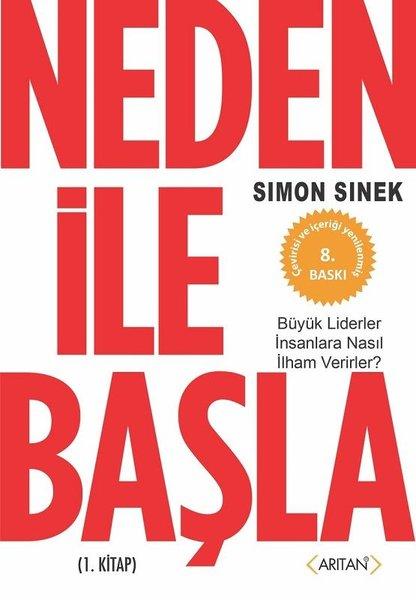
Start with Why
Author | Simon Sinek | ||||||||
|---|---|---|---|---|---|---|---|---|---|
Publisher | Arıtan Yayınevi | ||||||||
Number of Pages | 160 | ||||||||
First Publication Date | 2009 | ||||||||
Genre | Personal Development | ||||||||
Simon Sinek’s book Start With Why presents a meaning-based paradigm in the fields of leadership, organizational behavior, and motivation. Through the introduction of the so-called Golden Circle model, a new perspective on leadership is developed, emphasizing that individuals and organizations achieve more effective outcomes when people believe in why they do what they do.
At the same time, the book’s limited theoretical depth, lack of systematic scientific methodology, and use of normative language have drawn criticism from academic circles. Consequently, the book offers not a direct academic theory but rather a thought-provoking framework open to debate, and is widely regarded as a valuable resource for practitioners and leadership development programs.
Start With Why presents a theoretical framework advocating a meaning- and belief-based approach to leadership. Simon Sinek argues that individuals and organizations influence others not only by what they do or how they do it, but primarily by why they do it. This approach is explained through the Golden Circle model, which consists of three layers:
According to Sinek, most organizations communicate from the outside in (what → how → why), whereas successful and inspiring leaders adopt an inside-out approach (why → how → what). This creates an influence grounded not in rational persuasion alone but in the formation of emotional connections.
The author supports this argument by analyzing success stories of figures such as Apple, Martin Luther King Jr., and the Wright Brothers. These examples underpin the claim that people do not merely buy products or services but rather purchase beliefs and values.
The book cover image was generated by artificial intelligence.
Sinek’s approach is based not on empirical research but on observational analysis and case studies. The method employed in the book is qualitative and descriptive, lacking a foundation in systematic scientific research. The author emphasizes several principles that align with established leadership theories:
The book offers both theoretical and practical contributions to the fields of leadership and organizational behavior:
Although Start With Why aims to inspire practitioners, it faces several criticisms from a scientific standpoint:
Holmes, William T. "Start with Why: And Answer with Motivating Language." *Development and Learning in Organizations* 34, no. 2 (2020): 1–3.https://doi.org/10.1108/DLO-12-2019-0281
Hunter, Ekaete. "Start with Why by Simon Sinek." WordPress, February 12, 2023. Accessed April 2, 2025.https://ekaetehunter.wordpress.com/2023/02/12/start-with-why-by-simon-sinek/.
Kaoun, T. M. "Sinek's Start with Why – Starts the Conversation, Raises Questions in Practice." Journal of Leadership, Accountability and Ethics 16, no. 5 (2019): 76–79.
Schnell, Tatjana, and Thomas Höge. "Start with Why: The Transfer of Work Meaningfulness from Leaders to Followers." Journal of Organizational Behavior 43, no. 5 (2022): 846–861.
Sinek, Simon. Start with Why: How Great Leaders Inspire Everyone to Take Action. New York: Portfolio, 2009.
Smart Insights. "Start with Why: Creating a Value Proposition with the Golden Circle Model." Accessed April 2, 2025.https://www.smartinsights.com/digital-marketing-strategy/online-value-proposition/start-with-why-creating-a-value-proposition-with-the-golden-circle-model/.

Start with Why
Author | Simon Sinek | ||||||||
|---|---|---|---|---|---|---|---|---|---|
Publisher | Arıtan Yayınevi | ||||||||
Number of Pages | 160 | ||||||||
First Publication Date | 2009 | ||||||||
Genre | Personal Development | ||||||||
No Discussion Added Yet
Start discussion for "Start with Why (Book)" article
Subject and Summary of the Book
Theoretical Foundations and Method
Theoretical and Practical Contributions
Critical Evaluation