


This article was automatically translated from the original Turkish version.
+1 More
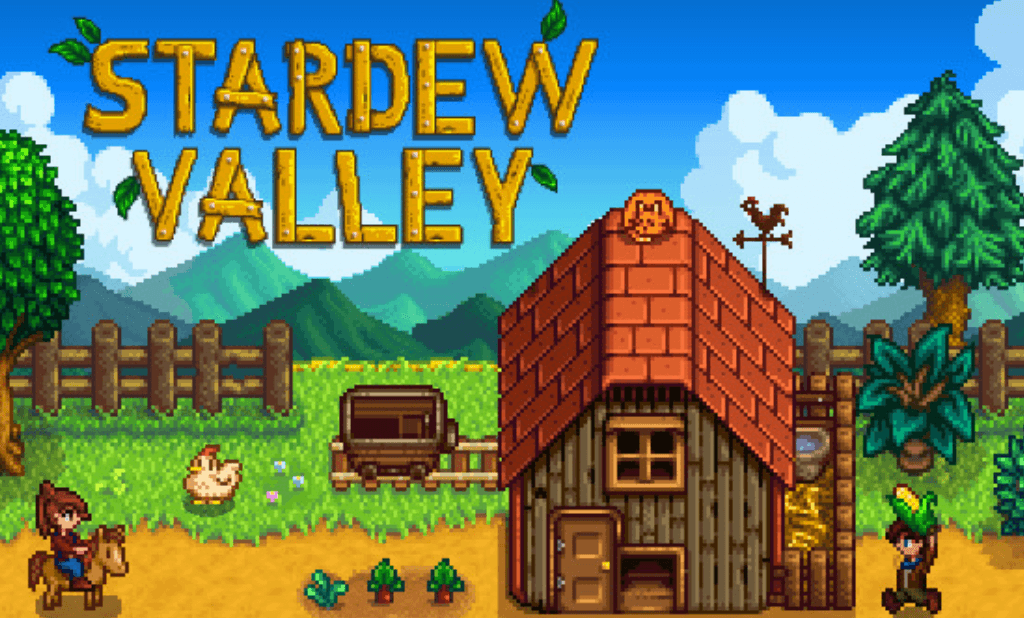
Stardew Valley
Developer | Eric Barone (ConcernedApe) | ||||||||
|---|---|---|---|---|---|---|---|---|---|
Publisher | Chucklefish (initially for PC version) | ||||||||
Initial Release Date | 26 Şubat 2016 | ||||||||
Platform | iOS Nintendo Switch Android Xbox One PlayStation 4 PC | ||||||||
Game Genre | Agriculture simulation, RPG, life simulation | ||||||||
Modes | Single-player, local multiplayer | ||||||||
The video game “Stardew Valley” initially presents the player with a simple situation: a neglected, weed-choked field inherited from a grandfather and a few coins in hand. Yet this simplicity is merely the surface of the game’s underlying structure. The player begins not only to rebuild a farm but also to reconstruct a way of life. While the game directly references classic farming simulations such as Harvest Moon, it transcends nostalgic imitation by reimagining the genre within a broader social and personal context.
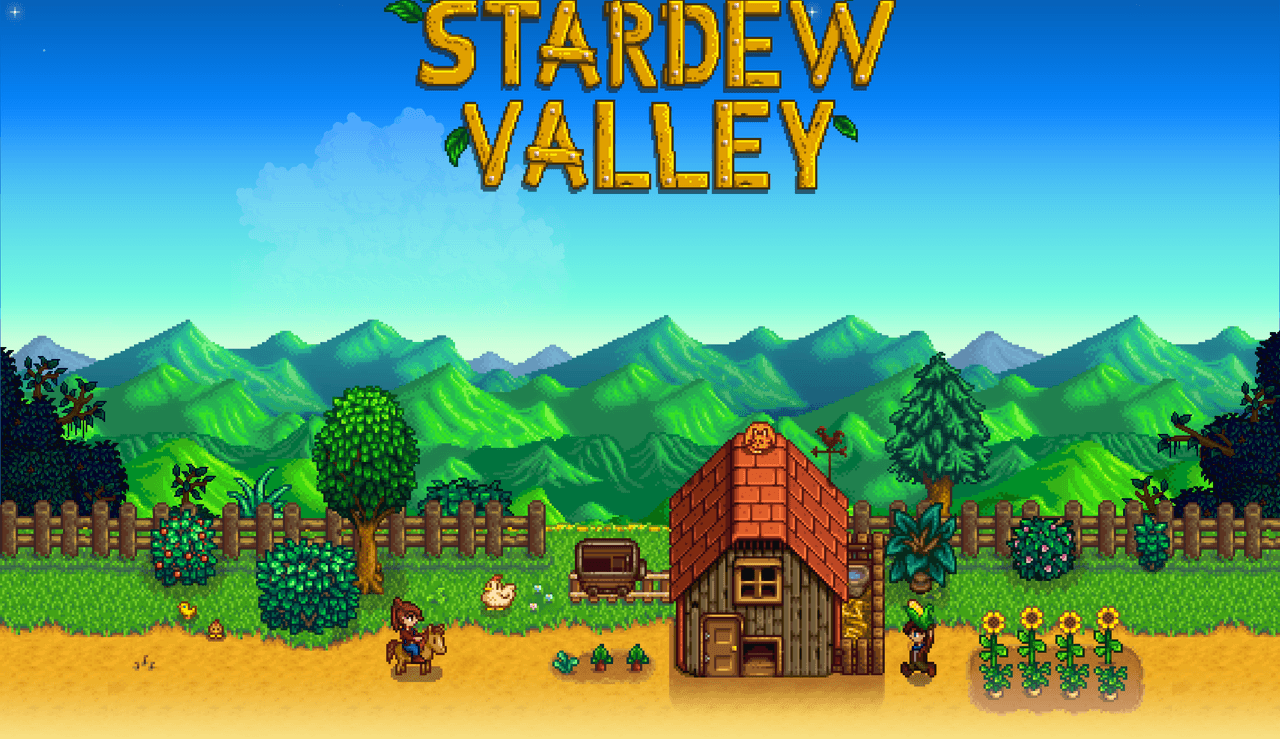
Stardew Valley (Stardew Valley)
The game’s narrative opening begins with a story of alienation from modern office life. The character, overwhelmed by the monotony of a desk job at the giant corporation Joja Corporation, reaches a breaking point and decides to return to the farm inherited from their grandfather. This opening does more than establish character motivation—it evokes a familiar emotional state for today’s players: the longing of an individual trapped in a production line for the earth, simplicity, and community.
In this sense, the game constructs a kind of escape from the city narrative. The player’s starting point is not merely a plot of land but the beginning of a process of self-reconstruction.
The fact that Barone developed the game alone formally parallels this opening theme with its production process. Barone lived in near isolation for seven years, creating every component of the game by himself. This solitude is palpable in the game’s early moments: the farmhouse is abandoned, the surroundings are disordered, and relationships in the town have yet to form. The player is left in a void—but this void is not a space to be filled, but a ground upon which the player can impose their own rhythm.
“Stardew Valley” does not offer a linear narrative from the outset. It does not progress through a fixed goal, an enemy, or a specific crisis to be resolved. Instead, it presents a life simulation that unfolds according to the player’s choices. This structure enables the player to construct their own meaning. As noted in the NPR article, the game can function as a data-driven management simulation for a user focused on economic efficiency, or as a pixel-based social drama for one focused on character relationships.
At the heart of “Stardew Valley” lies a prolonged process of learning and growth. The player begins on the first day with just a few basic tools; yet this starting point signals the patient construction of a sophisticated game architecture. The gameplay is built around both personal development and environmental transformation. Unlike classical game logic that rewards constant progression, this structure invites the player into an evolving world that unfolds through labor and time.
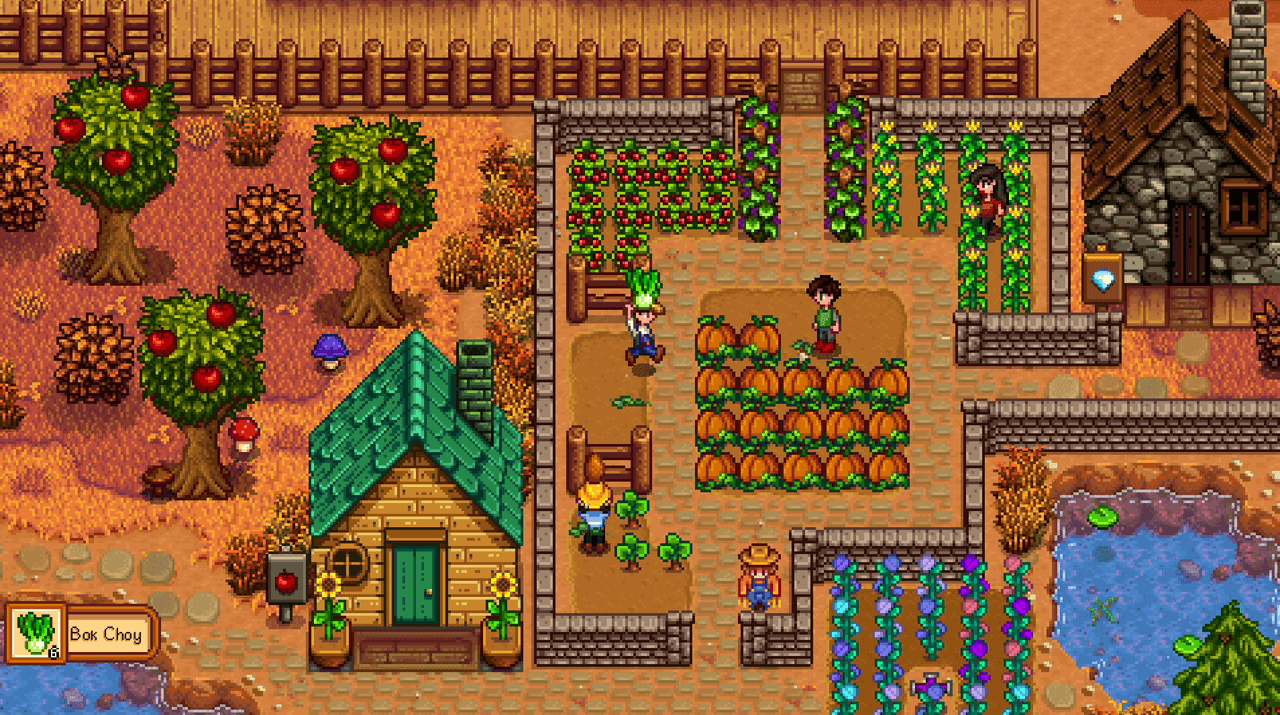
Oyundan bir görsel (Stardew Valley)
The game offers the player five core skill areas: farming, mining, combat, fishing, and foraging. Each skill improves with use, ensuring progression is based not on mechanical repetition but on organic development. This process begins as a very slow one; yet the game establishes a system that rewards patience.
Each level unlocks new recipes, tools, and specialization options. For example, as fishing skill increases, the player encounters rarer fish species and gains access to improved equipment. This allows the player to develop different strategies for each season.
Time is a central structure in the game. Each day spans a fixed period from 6 a.m. to 2 a.m., during which the player must plan tasks such as planting seeds, watering crops, chopping trees, caring for animals, interacting with townspeople, and exploring caves. Each of the four seasons lasts 28 days, and each season allows for different crops to be grown and different fish to be caught. This forces the player to develop distinct production models for each season.
In this way, the game creates a sense of control: daily goals are set, and each harvest becomes a small triumph.
“Stardew Valley” does not provide the player with a to-do list. The player may choose to focus solely on farming, cultivate relationships with townspeople, or explore caves. Eric Barone designed this deliberately: the aim is for the player to experience the game at their own pace and according to their own motivations.
In this context, the game is played not merely to achieve success but to experience. The player may choose to focus on profit or invest effort in building a relationship with a character. Whatever path they take, the game accepts their choice and provides a corresponding progression.
“Stardew Valley” is not merely a farm management game; it is a living space centered on social relationships, communal belonging, and individual-community interaction. This structure is woven through the spatial layout of Pelican Town and the daily practices of its inhabitants. The game world functions not as a static backdrop but as a dynamic social network that evolves through continuous interaction.
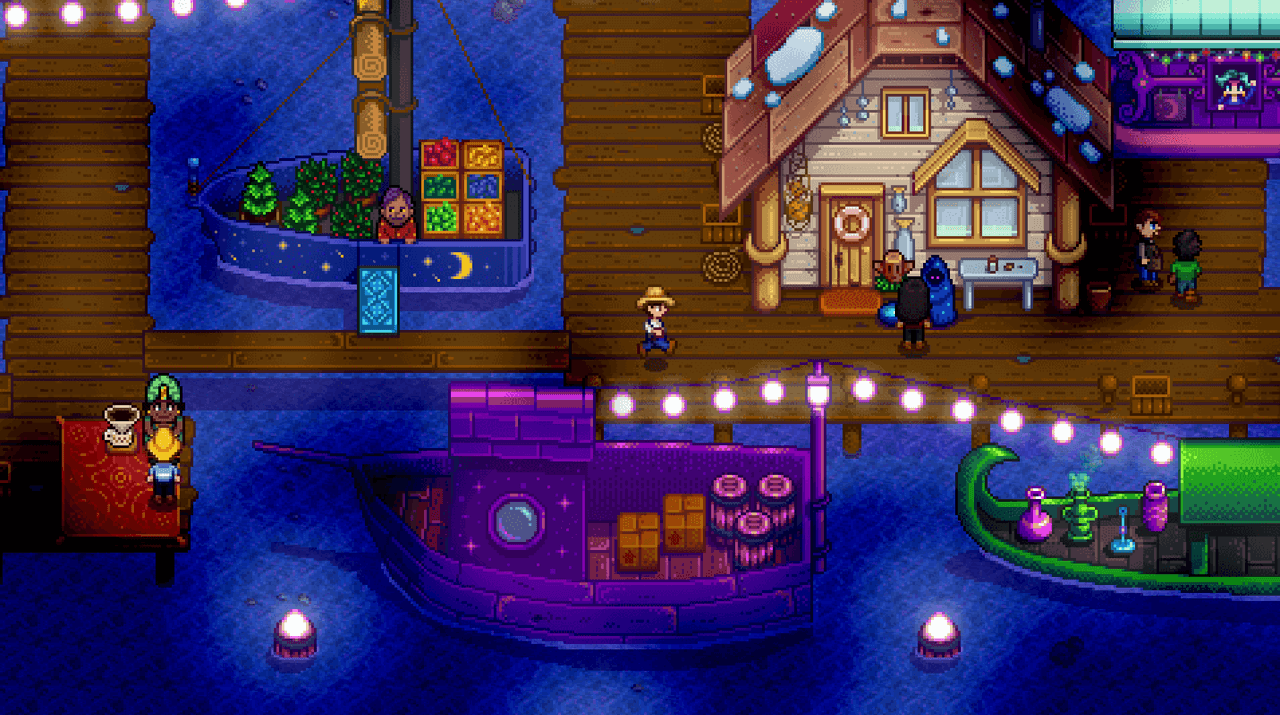
Oyundan bir görsel (Stardew Valley)
The characters living in Pelican Town each possess distinct pasts, personalities, and daily routines. The player gradually builds relationships with them. Each character has a birthday, favorite and disliked gifts, special cutscenes, and personal stories. As Parker, a player cited in the NPR article, demonstrates, the depth of this mechanism is revealed through details such as the relationship between teacher Penny and the children, or Alex’s traumatic past—details that require the player’s careful and patient exploration.
In Barone’s system, characters are not merely dialogue nodes; they become structures that evolve over time and respond to the player’s presence. Thus, the player does not merely gather resources in town—they cultivate meaningful relationships and become part of the community.
One of the most striking social spaces in the game is the dilapidated community center. The player can choose to restore it and rebuild traditional social structures, or reject this path and collaborate with Joja Corporation. This choice shapes not only the game’s spatial layout but also its value system.
With the arrival of JojaMart, traditional structures weaken, and communal living gives way to a culture of individual consumption. The player must take a position in this conflict. In this context, “Stardew Valley” moves beyond pastoral simulation to construct an allegorical structure that critiques modern capitalism.
Relationships with characters in the game do not develop instantly. Certain characters—such as Shane, Sebastian, or Linus—remain distant from the player for extended periods. As noted in the Ars Technica review, this slow unfolding enhances the sense that these characters are authentic individuals. Some NPCs do not leave their homes at certain times of day; others appear only during special events. This requires the player to carefully plan and time each interaction.
This slow tempo counters the modern gaming trope of “instant interaction—immediate reward,” instead encouraging the construction of community based on patience and continuity. This transforms the town from a mere “space” into a “way of life.”
“Stardew Valley” draws attention not only through its gameplay, aesthetics, and themes but also through its mode of production. The entire game—code, visual design, music, and narrative—was developed by a single person: Eric Barone (known by his pseudonym ConcernedApe). This creates a profound resonance between the game’s content and its production process: the theme of individual life-building mirrors the act of individual creation.
While developing “Stardew Valley,” Eric Barone lived in near-total social isolation for seven years. He began work late in the morning in his Seattle apartment, spending most of the day at his computer. He left home only to go to the grocery store, get fresh air, or drop off his girlfriend at school.
This mode of production is rare in today’s game industry. The absence of a team or publisher pressure explains why the final product feels so uniquely authentic.
One of the most striking aspects of Barone’s work is that he treated the game not as a “product” but as a form of expression. Initially begun as a way to develop his skills after failing to find employment, the project gradually evolved into a unique world design. The game contains none of the common elements of today’s game industry—no early access, no microtransactions, no competitive multiplayer structures. This allows the game to cultivate an experience-driven aesthetic.
“Stardew Valley” does not conform to prevailing trends in the modern game industry; instead, it references the sincere, slow, and meaningful game experiences of the past while critically reimagining them.
A direct connection can be drawn between Barone’s production process and the game’s themes. The new life the player builds in Pelican Town parallels the space Barone carved out for himself in the industry. Just as the player patiently constructs their farm, Barone built his career by designing every component of the game himself.
Therefore, “Stardew Valley” is not merely a game; it can be read as the digital output of an independent developer’s long-term creative process. The fact that the game’s journey from solitude to community, from disorder to order, is so deeply intertwined with its creator’s own life elevates it beyond the status of an ordinary simulation.
Ars Technica. "Stardew Valley Review: A Pastoral, Contemporary Escape." Accessed April 22, 2025.
Barone, Eric. *Stardew Valley*. Accessed April 22, 2025.https://www.stardewvalley.net/.
GQ. "Valley Forged: How One Man Made the Indie Video Game Sensation 'Stardew Valley'." Accessed April 22, 2025.
NPR. "Reading The Game: Stardew Valley." Accessed April 22, 2025.

Stardew Valley
Developer | Eric Barone (ConcernedApe) | ||||||||
|---|---|---|---|---|---|---|---|---|---|
Publisher | Chucklefish (initially for PC version) | ||||||||
Initial Release Date | 26 Şubat 2016 | ||||||||
Platform | iOS Nintendo Switch Android Xbox One PlayStation 4 PC | ||||||||
Game Genre | Agriculture simulation, RPG, life simulation | ||||||||
Modes | Single-player, local multiplayer | ||||||||
No Discussion Added Yet
Start discussion for "Stardew Valley (Video Game)" article
The Game’s Narrative
Capitalist Burnout and the Search for an Alternative Life
The Space Created by Silence and Emptiness
The Game’s Assumption
Gameplay Dynamics
Personal Growth Across Five Domains
Daily Routine and Seasonal Cycles
A System Built on Choice
Space and Social Structure: Pelican Town
An Interaction Network with Over Thirty Characters
Tradition and Systemic Critique in the Game
Silence, Distance, and Gradual Intimacy
The Anatomy of Independent Creation: Eric Barone and Seven Years of Isolation
The Production Process
A Design Logic Free from Commercial Concerns
Game Design as a Personal Expressive Space