


This article was automatically translated from the original Turkish version.
+1 More
(Sony)
Sony Walkman
First Model | TPS-L2 | ||||||||
|---|---|---|---|---|---|---|---|---|---|
First headphone model | MDR-3L2 | ||||||||
Product type | Portable personal stereo music player | ||||||||
First release date | 1 July 1979 | ||||||||
Developing institution | Sony Corporation | ||||||||
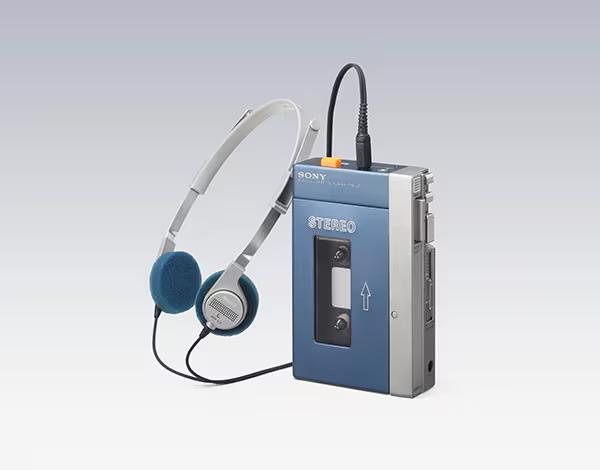
Walkman is a series of portable audio devices developed by Sony for personal and portable music listening. The first model, TPS-L2, was introduced on 1 July 1979. By combining the compact cassette format, a small body design, and lightweight stereo headphones, the Walkman played a key role in transforming music from an experience confined to the home or automobile into a personal portable and everyday companion.
Sonny Walkman (Sony Malaysia)
The name Walkman was subject to various evaluations during its international market launch. While the first model was introduced in Japan under the name Walkman, Sony’s overseas sales subsidiaries opposed its use, arguing that it was a Japanese-made English expression. As a result, the product was initially marketed under different names in various countries.【1】
In the United States, the name “Sony Disco Jogger” was initially proposed, linking the product to the disco and jogging trends of the era. However, Akio Morita rejected this suggestion, emphasizing that the product should appeal not only to young users but to a broader audience.【2】 Instead, the name “Soundabout” was adopted in the United States, derived from the phrase “walk about”.【3】
The product was sold as Soundabout in the United States, Stowaway in the United Kingdom, and Freestyle in Australia. However, the rapid popularity of the name Walkman in Japan, combined with foreign visitors purchasing the device under this name and taking it back to their home countries, helped establish its recognition abroad.
In April 1980, Akio Morita announced at a sales meeting in the United States that the product would be known globally as Walkman.【4】 Following this decision, the name Walkman became synonymous with Sony’s personal portable stereo products. It was included in the French Petit Larousse dictionary in 1981, the Oxford English Dictionary in 1986, and the Japanese Kojien dictionary in 1991.【5】 Thus, Walkman became not merely a product name but a widely recognized term representing the culture of personal portable music listening.
The emergence of the Walkman was the culmination of a development process linked to the portability of audio technologies in the twentieth century. Until the mid-twentieth century, portable recording equipment was often quite heavy. The introduction of small transistor radios in 1954 marked the beginning of a new era in portable entertainment.
İlk Model olan TPS-L2 (flickr)
The compact cassette, developed by Philips in 1962, provided a more practical medium for music distribution and portable recording. The widespread adoption of the compact cassette coincided with technical advances enabling the miniaturization of cassette players and recorders. During this period, Sony developed various models of portable audio devices. The TC-50, introduced in 1968, was marketed as the smallest and lightest cassette recorder of its time, notable for its built-in microphone and one-handed operation. The TCM-100 Pressman, developed in 1978, was a compact and lightweight mono recording device designed for easy portability. Its mechanism was used in the development of the first Walkman.
Also among Sony’s portable recording devices during this period was the TC-D5. The TC-D5, a small stereo recorder from the “Densuke” series, gained prominence for use with microphones in live recordings such as concerts and bird songs. These models demonstrated Sony’s accumulated progress in miniaturization, weight reduction, and personal use in portable audio technology prior to the Walkman.
The key factors enabling the development of the Walkman were transistor technology, the compact cassette format, smaller battery designs, lightweight materials, and advances in headphone technology. Traditional portable cassette players were typically limited by the inclusion of speakers, recording functions, and larger battery requirements. The Walkman instead centered on personal portable listening by removing the speaker and recording functions and adding stereo circuitry and lightweight headphones. This historical context made possible the introduction of the first Walkman model, the TPS-L2, in 1979.
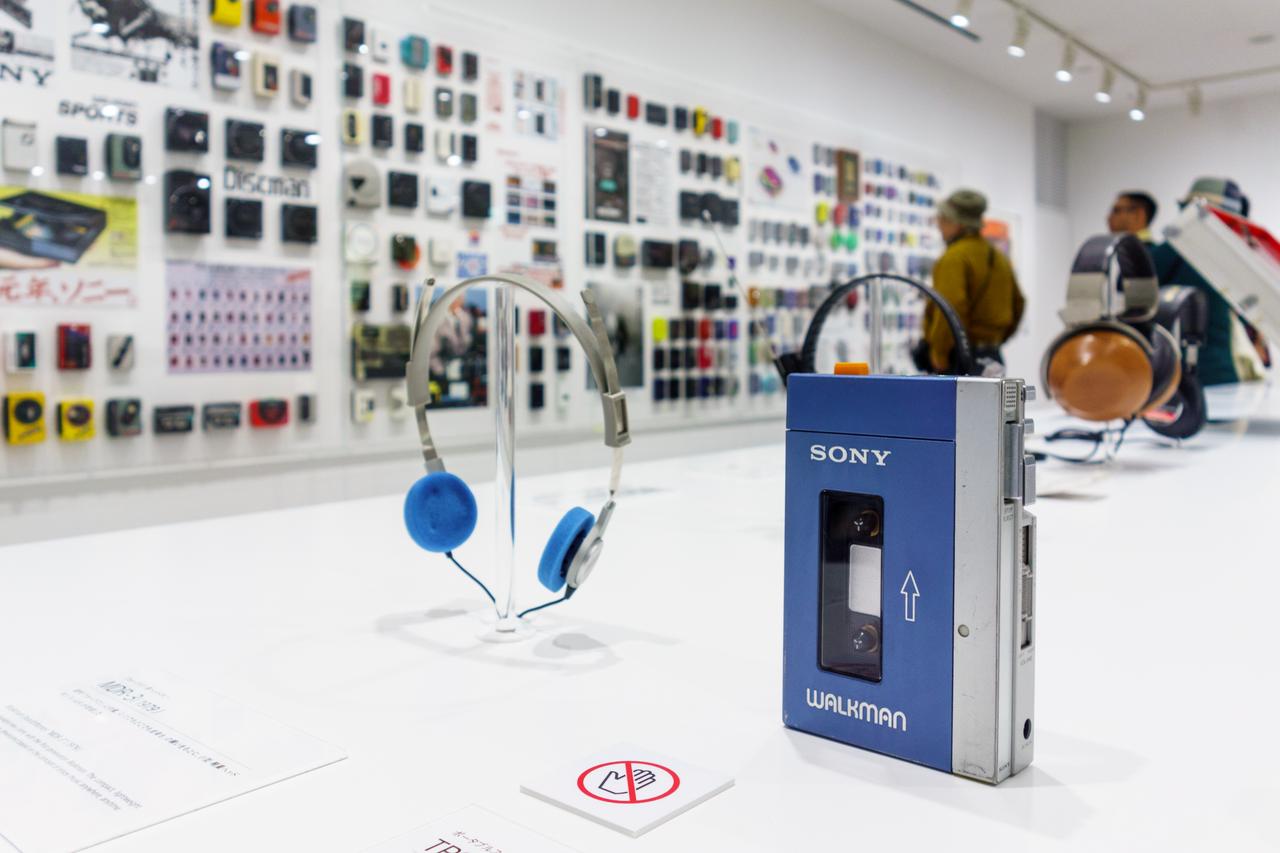
The first Walkman model, the TPS-L2, was designed as a portable stereo player using compact cassettes. The recording function and speaker found in conventional cassette recorders were removed; in their place, stereo circuitry and a stereo headphone jack were added. This design choice shifted the device’s primary function from recording to personal music listening.
WM-101 (Sony)
The first model featured a design that allowed two people to listen simultaneously. Additionally, a small microphone enabled users to speak without removing their headphones. The device operated on two AA batteries or an optional rechargeable battery pack.
Headphones were a defining element of the Walkman design. The first model was bundled with MDR-3L2 headphones, weighing 45 grams. In contrast, conventional headphones of the era weighed approximately 300–400 grams; the lightweight headphones introduced with the Walkman became one of the essential components of the personal portable listening experience.
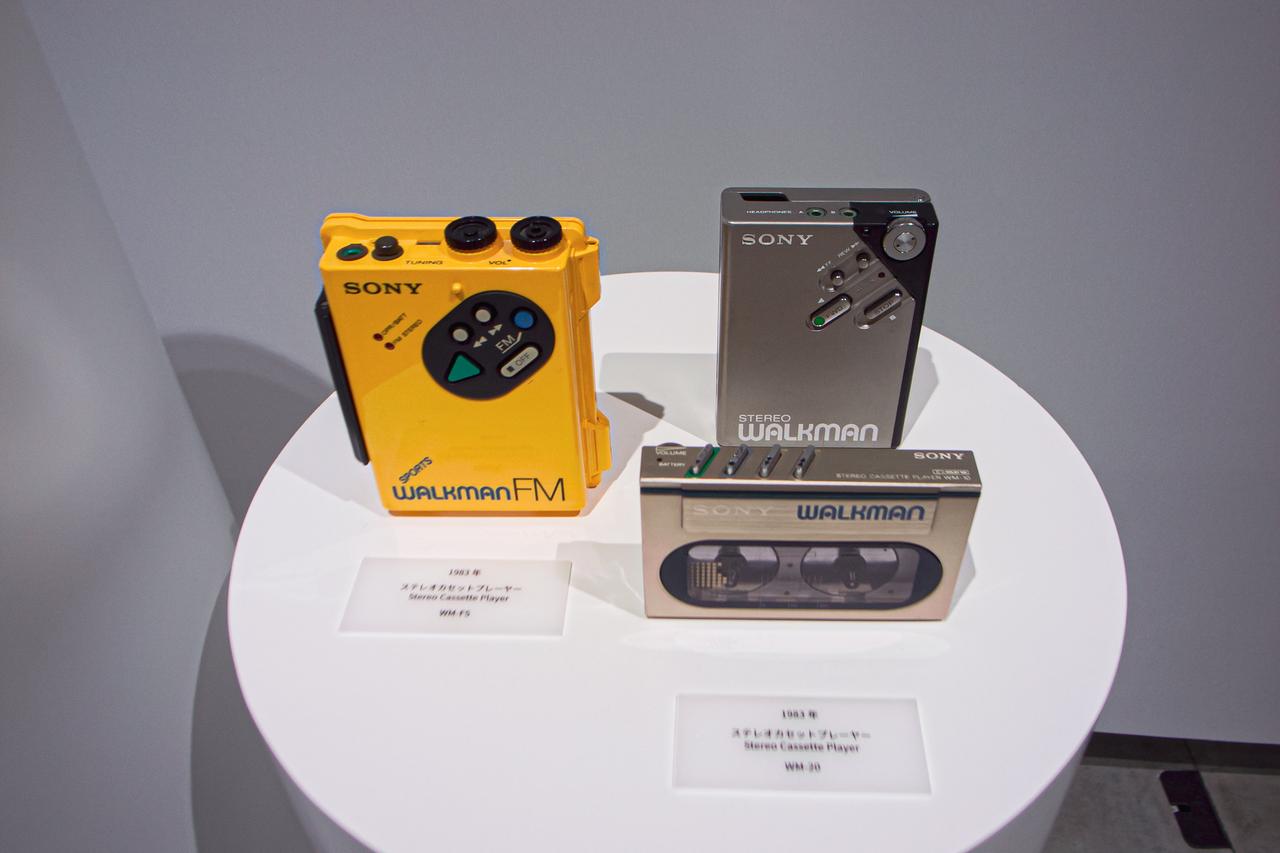
Subsequent models saw continued miniaturization and weight reduction. The WM-2 was a lighter Walkman model compared to the first generation, featuring a metal cassette holder and an anti-rolling mechanism. This model emphasized design and sound quality. The WM-20 was developed to be approximately the size of a cassette case. In this model, a single AA battery, the head, pinch roller, and headphone jack were aligned along the same axis, with the cassette placed horizontally beside this structure.
WM-F5, WM-20 (flickr)
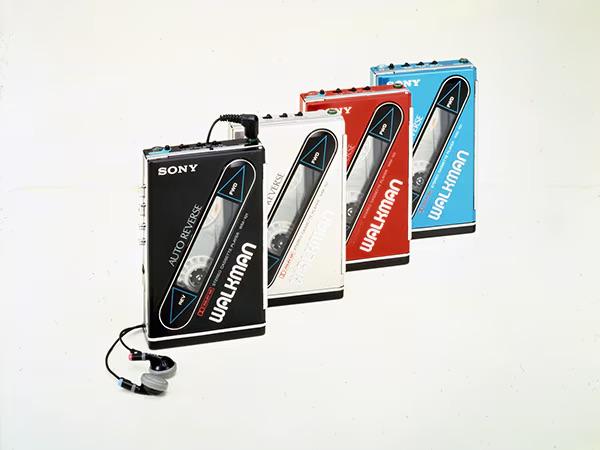
Battery technology was also a crucial part of the Walkman design. The WM-101 was among the first models to use a “chewing gum stick”-shaped rechargeable battery while also supporting AA batteries. This design reduced battery costs and lowered the device’s weight to under 200 grams.
Different designs were developed for Walkman products based on usage scenarios. The WM-F5 was one of the first Walkman models designed for outdoor activities, constructed from impact-resistant materials and featuring waterproof control buttons. Its yellow color became a distinctive design feature for sports models. In the My First Sony WM-3500 model, transparent panels were used to expose the internal mechanism, aiming to increase children’s interest in electronic products.
Later Walkman models incorporated various technologies including cassette, CD, DAT, MiniDisc, Memory Stick, internal memory, Android-based systems, and high-resolution audio support. Nevertheless, the core principles of Walkman design remained centered on portability, personal listening, compact body structure, and headphone-based usage.
The Walkman emerged as one of the products that removed music listening from fixed environments and transformed it into a personal and portable experience. Before the Walkman, music was primarily enjoyed through home stereo systems or car audio systems. The Walkman enabled individual listening through headphones, allowing users to carry music with them and listen during various moments of daily life.
This shift led to music being perceived not merely as content to be listened to, but as a personal companion integrated into everyday life. With the use of personal music players, individuals developed their own listening preferences through recorded formats such as cassette, CD, and MP3. Music thus became a portable companion that could be selected according to mood, environment, and daily activities. During this process, the Walkman became associated with practices such as creating a personal auditory space, escaping daily routines, and constructing identity through personal music preferences.
The cultural impact of the Walkman is also linked to urban life and mobility. Its portable nature allowed users to listen to music while walking, using public transportation, or during daily commutes. In this regard, the Walkman acquired an identity closely tied to the mobile lifestyle of the modern urban individual. A 2008 Sony Walkman advertising campaign that reinterpreted the London Underground map using musical artist names and headphone cables exemplifies the relationship between the Walkman and urban culture, music, mobility, and visual culture.【6】
The Walkman also became a product family associated with lifestyle and consumer identity. Sony developed numerous Walkman models targeting different user groups. Colorful and transparent designs for children, durable and water-resistant models for sports use, and more minimalist or advanced models for adult users are examples of this diversity. This product variety contributed to positioning the Walkman not merely as an audio device but as a lifestyle product linked to distinct user profiles.
Atmaca, Hande. “Mapping Modernity: Sony Walkman and the London Underground Map”. *GRID - Architecture Planning and Design Journal* 9, no. 1 (2026): 1–21. Accessed June 29, 2026.https://doi.org/10.37246/grid.1696664
Millard, Andre. "Sony Introduces the Walkman." *EBSCO Research Starters: History*, 2021. Accessed June 29, 2026.https://www.ebsco.com/research-starters/history/sony-introduces-walkman
SONY. "Product & Technology Milestones." *sony.com*. Accessed June 29, 2026.https://www.sony.com/en/SonyInfo/CorporateInfo/History/sonyhistory-e.html
SONY. "Sony Celebrates Walkman® 20th Anniversary." *sony.com*. Accessed June 29, 2026.
SONY. "Throwback Walkman." sony.com. Accessed June 29, 2026.
SONY. "Vol.20 : Walkman Finds its Way into the Global Vocabulary." sony.com. Accessed June 29, 2026.
Sony Malaysia. "Sony Walkman | Sony Walkman 40th Anniversary." YouTube, 1:06. Accessed June 29, 2026.
Tak, Yoshikazu. "First Walkman 1979." Flickr. Accessed June 29, 2026.https://flic.kr/p/Pfm7So
Usano, Nagi. "100.80.60.展 | Ginza Sony Park." Flickr. Accessed June 29, 2026.https://flic.kr/p/2sgcY3i
Çerezcioğlu, Aykut. “POPÜLER MÜZİK VE GÜNDELİK YAŞAM DENEYİMİ.” *Folklor/Edebiyat* 19, no. 75 (2013): 159–72. Accessed June 29, 2026.https://izlik.org/JA69AU27WB
[1]
SONY, “Sony Celebrates Walkman® 20th Anniversary,” sony.com, Son erişim 29 Haziran 2026, https://www.sony.com/en/SonyInfo/News/Press/199907/99-059/
[2]
SONY, “Sony Celebrates Walkman® 20th Anniversary.”
[3]
SONY, “Vol.20 : Walkman Finds its Way into the Global Vocabulary,” sony.com, Son erişim 29 Haziran 2026, https://www.sony.com/en/SonyInfo/CorporateInfo/History/capsule/20/
[4]
SONY, “Vol.20 : Walkman Finds its Way into the Global Vocabulary.”
[5]
SONY, “Vol.20 : Walkman Finds its Way into the Global Vocabulary.”
[6]
Hande Atmaca, “Mapping Modernity: Sony Walkman and the London Underground Map”, GRID - Architecture Planning and Design Journal 9, no.1 (2026): 3. https://doi.org/10.37246/grid.1696664


(Sony)
Sony Walkman
First Model | TPS-L2 | ||||||||
|---|---|---|---|---|---|---|---|---|---|
First headphone model | MDR-3L2 | ||||||||
Product type | Portable personal stereo music player | ||||||||
First release date | 1 July 1979 | ||||||||
Developing institution | Sony Corporation | ||||||||
Naming Process
Historical Background
Technical Features and Design
Cultural Impact and Legacy