This article was automatically translated from the original Turkish version.
+1 More
Construction Period | Ottoman Period (late 19th century) | ||||||||
|---|---|---|---|---|---|---|---|---|---|
Original Function | French Hospital | ||||||||
Subsequent Functions | Homeland Hospital (1920), Orphanage (1925), Model Hospital (1930s), Tuberculosis Hospital and Chest Hospital (until 1976), Provincial Health Directorate (1976–2003) | ||||||||
Current Function | Environment Culture and Art House | ||||||||
Number of Floors | 3 | ||||||||
Material(s) | Cut stone stone infill between wood | ||||||||
Restoration Years | 1982 and 2003 | ||||||||
Maintenance Organization | Sivas Provincial Special Administration | ||||||||
Old Chest Hospital is a historical healthcare structure located in the city center of Sivas, currently used as the Environment Culture and Art House. Throughout the transition from the Ottoman period to the Republic, the building served various institutions and stands as one of the significant examples of Sivas urban history due to its original floor plan, cut-stone architecture, and kiosk rooms reflecting civil architecture.
The building is situated in the Bezirci Neighborhood of the Sivas city center. It is recorded on Map 20 M I, plot 13, parcel 84, lot 4.
Before World War I, the building functioned as the French Hospital. In 1920, it was converted into the Homeland Hospital. After the proclamation of the Republic, it was used in 1925 as the dormitory building of the Orphans’ Home. Extensions built between 1930 and 1935 expanded the structure, and from 1935 onward it operated under the name Sample Hospital.
Following the construction of the new Sample Hospital, the building was transformed into a Tuberculosis Hospital and served as a Chest Hospital until 1976. Between 1976 and 2003, it functioned as the administrative building of the Sivas Provincial Directorate of Health. In 2003, after restoration, it was converted into the Environment Culture and Art House.
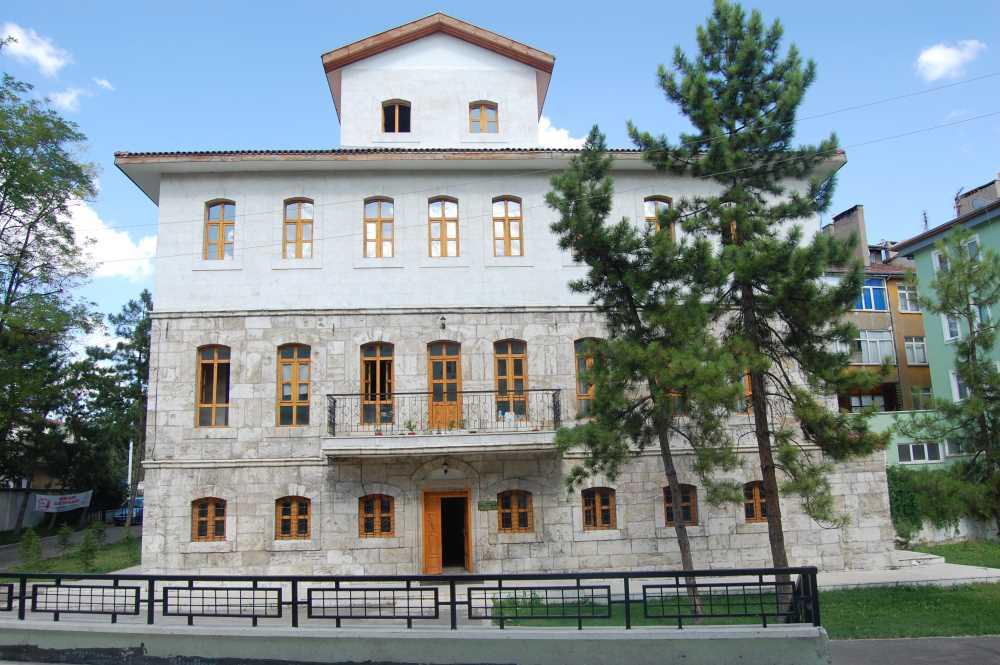
Old Chest Hospital (Culture Portal)
The building is three stories high. The ground and first floor walls are entirely constructed of cut stone masonry. The third floor, built between 1930 and 1935, along with the kiosk rooms, employs a timber-frame stone infill system. Access to the building is through a main entrance on the western side, featuring a flat arch, cut-stone lintel, and wooden double doors. A corridor running north-south from the entrance connects the two wings of the building. The large hall opposite the entrance projects outward in a triangular bay. Two plastered load-bearing columns stand at the center of the hall.
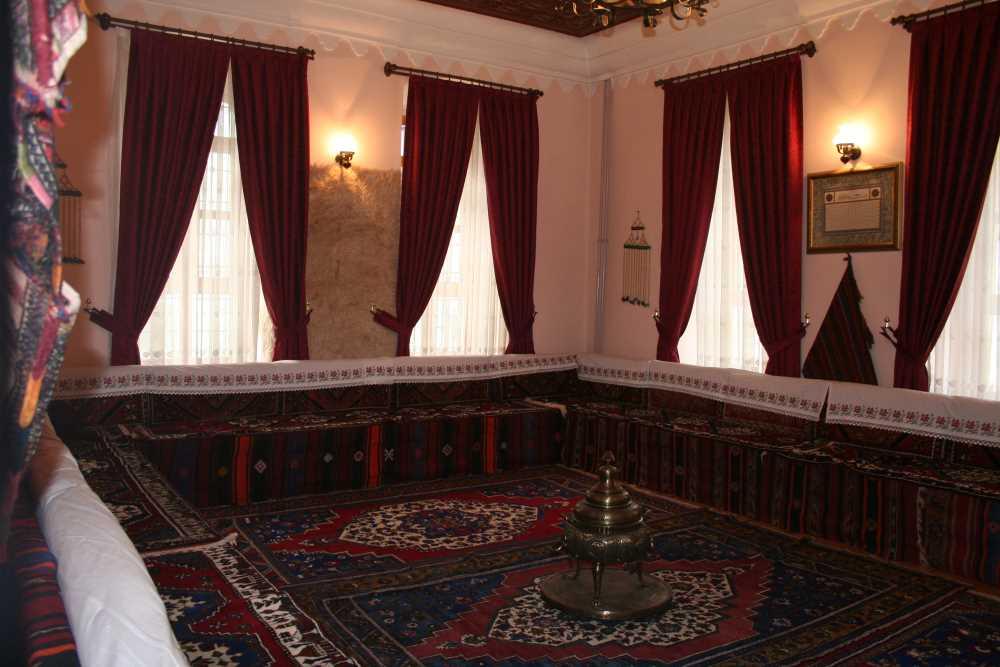
The second floor follows the same layout as the ground floor. The most elaborate decoration is found on this level. The ceiling of the hall, reached by a double-flight wooden staircase from the ground floor, is adorned with geometric panels featuring floral motifs applied over plaster. The ceilings of the rooms on this floor are made of wood. In the southwest corner and the room opposite, circular domed wooden ceilings with ornamental motifs, typical of Sivas civil architecture, are present.
The third floor underwent a change in plan: only the triangular bay was removed, and one kiosk room was added to each of the four main directions. These rooms have broken roofs with shingle cladding. The facades feature triangular pediments and two flat-arched window openings.
The building is equipped with water, electricity, and heating systems. As part of the renovation works, the electrical and heating installations and the roof were renewed in 2003 by the Sivas Provincial Special Administration.
The building has been restored twice, in 1982 and 2003. During the 2003 restoration, all wooden structural elements, the roof covering, and the utilities were completely renewed. The building was officially registered on 22 July 1983 under decision number A-4468. It is currently under the maintenance responsibility of the Sivas Provincial Special Administration.
Constructed during the Ottoman period, the building served various healthcare institutions throughout the Republican era, acquiring the character of a multi-functional public building. The combined use of stone and wood in its construction reflects the transitional architectural character of its time.
Ministry of Culture and Tourism. "Eski Göğüs Hastanesi / Çevre Kültür Sanat Evi (Sivas)." Türkiye Kültür Portalı – Anıtlar Envanteri. Accessed October 22, 2025. https://www.kulturportali.gov.tr/turkiye/sivas/kulturenvanteri/esk-gogus-hastanescevre-kultur-sanatev
Ministry of Culture and Tourism. "Eski Göğüs Hastanesi / Çevre Kültür Sanat Evi – Sivas." *Turkey Culture Portal – Places to Visit.* Accessed October 22, 2025. https://www.kulturportali.gov.tr/turkiye/sivas/gezilecekyer/esk-gogus-hastanes-cevre-kultur-sanat-ev
Construction Period | Ottoman Period (late 19th century) | ||||||||
|---|---|---|---|---|---|---|---|---|---|
Original Function | French Hospital | ||||||||
Subsequent Functions | Homeland Hospital (1920), Orphanage (1925), Model Hospital (1930s), Tuberculosis Hospital and Chest Hospital (until 1976), Provincial Health Directorate (1976–2003) | ||||||||
Current Function | Environment Culture and Art House | ||||||||
Number of Floors | 3 | ||||||||
Material(s) | Cut stone stone infill between wood | ||||||||
Restoration Years | 1982 and 2003 | ||||||||
Maintenance Organization | Sivas Provincial Special Administration | ||||||||
No Discussion Added Yet
Start discussion for "Sivas Old Chest Hospital (Environment Culture Art House)" article
Location
History and Usage Periods
Architectural Features
Structural Systems and Technical Features
Restoration and Conservation Status
Architectural Period and Cultural Context