

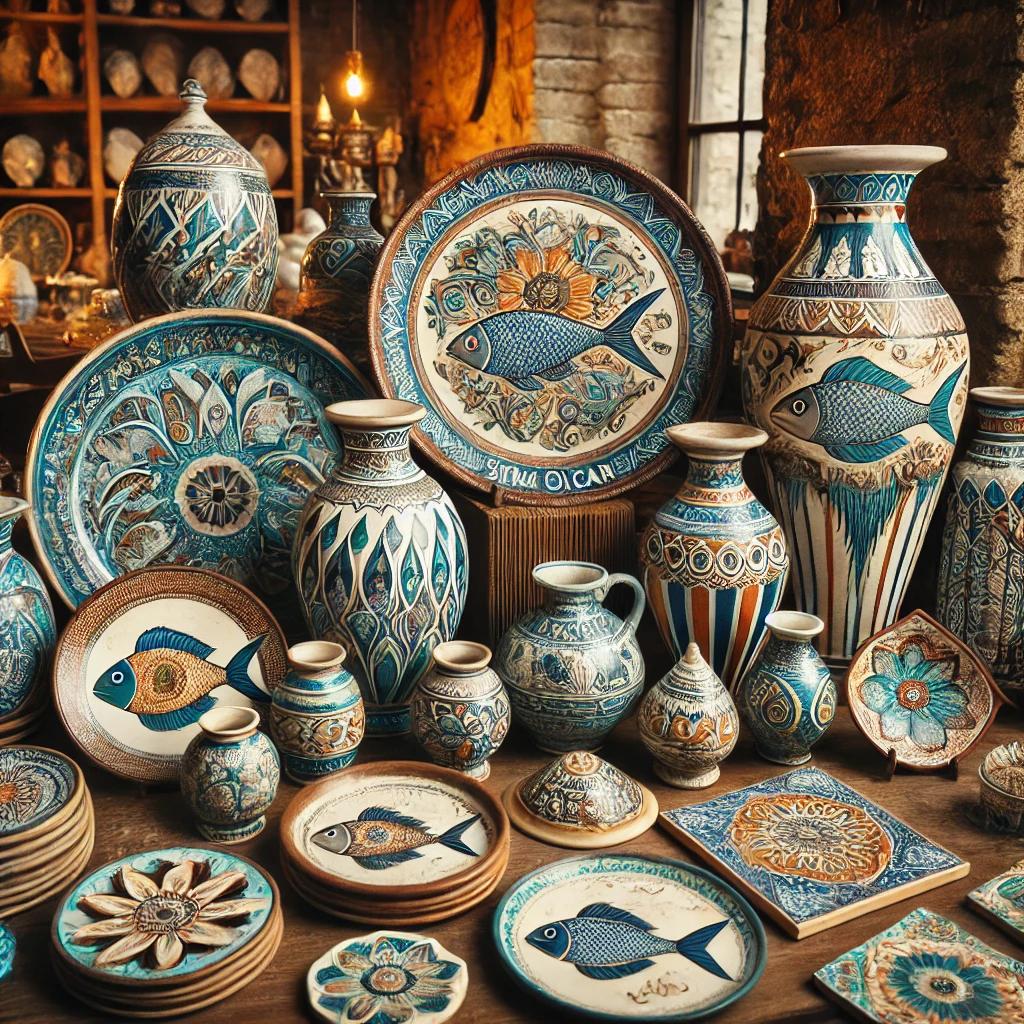

Sıtkı Olçar was born in 1948 in Kütahya. He was deeply influenced during his childhood and youth by the historical fabric and art of Kütahya. He did not receive formal art education but developed his mastery of tile art through self-study, driven by his strong observation talent and curiosity. He is also known as “Alaylı Usta.” One of the most significant elements in his art is his dedication to craftsmanship and his efforts to preserve traditional techniques. In 1973, he established his own workshop in Kütahya and began producing tiles. His works, which fused traditional tile art with modern lines, attracted great attention over time. Drawing inspiration especially from Ottoman and Seljuk tile art, he blended traditional patterns with contemporary interpretations and produced distinctive works.
Sıtkı Olçar’s works stand apart by reinterpreting the traditional Kütahya tile art with original expressions. Although inspired by Ottoman and Seljuk tiles, he avoided direct copying and instead introduced his own unique patterns and colors, adding a modern touch. One of the most striking features of his works was his use of fish motifs, rarely found in traditional tile art; these motifs eventually became his signature. Moreover, unlike the glossy and smooth glaze structure of classical tiles, he favored aging techniques and natural soil tones to create a more authentic texture. Embracing entirely handcrafted production, he avoided industrial manufacturing and used colors made from natural pigments rather than chemical dyes. While traditional tiles were primarily produced for decorative purposes, Olçar transformed tiles into artistic and functional objects, designing plates, vases and pitchers that could be used in daily life. His recognition by UNESCO in 2008 as a “Living Human Treasure” served as international confirmation of his dual commitment to preserving tradition while offering an innovative approach. Thus, Sıtkı Olçar secured a lasting place in both traditional and modern art collections through works that carry the traces of the past while reflecting his own unique spirit.
Sıtkı Olçar signed numerous important initiatives to promote Kütahya’s cultural heritage and raise awareness of tile art on a global scale. To establish Kütahya’s reputation as the capital of tile art, he introduced his works in exhibitions both within Türkiye and internationally, contributing to UNESCO’s official designation of Kütahya as a “Craft and People Arts City.” Through exhibitions in art centers such as Paris, London and Tokyo, he introduced Kütahya tiles to the world and represented them on international platforms through events organized with the Ministry of Culture and Tourism. His efforts to preserve traditional tile art contributed to the inclusion of Kütahya tile art on UNESCO’s Concrete Intangible Cultural Heritage List in 2016. By training artists and young masters in his own workshop, he led the popularization of tile art and significantly boosted Kütahya’s tourism by organizing events allowing visitors to experience tile craftsmanship firsthand. Additionally, through interviews and documentaries, he highlighted Kütahya’s historical and artistic value, emphasizing the need to protect tile art from industrialization and mechanization. Through all these efforts, Sıtkı Olçar became not merely a tile master but also an artistic ambassador who introduced Kütahya’s cultural heritage to the world.
Sıtkı Olçar passed away in Istanbul on 5 November 2010. Long duration Olçar, who had been battling health issues, was 64 years old at the time of his death. His funeral was held in Kütahya, the city where he was born, raised and devoted his artistic life.
After his death, his art continued to live on through the works he left behind and the masters he trained. His daughter, Kübra Olçar, continues his legacy by promoting and sustaining the art of tile making. Moreover, Olçar’s works are exhibited in numerous museum and collections, ensuring that the value he added to tile art is passed on to future generations.
Accessed March 24, 2025. https://www.kitaptansanattan.com/unesco-odullu-cini-ustamiz-sitki-olcarin-hikayesi-babami-alan-marti/
Living Heritage and Cultural Activities General Directorate. Accessed March 24, 2025. https://yakegm.ktb.gov.tr/TR-12934/sitki-olcar-1948-2010.html
A Modern Master: Sıtkı Olçar and His Contributions to Tile Art
Cultural Impact
Sıtkı Olçar’s Death and Living Legacy