This article was automatically translated from the original Turkish version.
+1 More
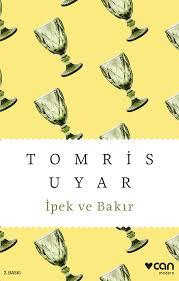
Book Title | Silk and Copper | ||||||||
|---|---|---|---|---|---|---|---|---|---|
Author(s) | Tomris Uyar | ||||||||
Publisher(s) | Can Yayınları | ||||||||
Language(s) | Turkish | ||||||||
Genre | Novel | ||||||||
Number of Pages | 128 | ||||||||
ISBN | 9789750763434 | ||||||||
Silk and Copper is a narrative whole in which individual experiences, social roles, and human relationships are explored through short stories. Central themes in the book include minor events of everyday life, moments of rupture in relationships, the female experience, and the search for identity. The words “silk” and “copper” in the title are chosen to symbolize the contrasts within the stories—softness/hardness, sensitivity/resilience, fragility/tenacity. Relationships between men and women, loneliness, time, memory, and space are thematically highlighted throughout the structure.
The stories employ a simple and intense narrative style. Tomris Uyar uses a descriptive language rich in allusions. The third-person perspective predominates in the narration; however, certain stories also incorporate techniques such as interior monologue and stream of consciousness. The language is woven with restrained symbolism without veering into poeticism. Narrative time is flexible, with transitions between past and present. The narrator turns inward toward the characters’ psyches, offering psychological analyses.
The characters are predominantly urban individuals. Female characters are positioned between social roles, personal desires, and societal expectations. They are portrayed as subjects confronting changing social structures. Male characters serve as the opposing pole in relationships, embodying tension and conflict. The characters’ intellectual dimensions and inner worlds form the foundation of the narrative; emotion and atmosphere take precedence over plot.
Silk and Copper can be read in parallel with debates in early 1970s Türkiye concerning female identity, individual freedom, and social norms. The work indirectly questions women’s place within the traditional family structure, the institution of marriage, and their position in society. Social gender roles and the relationship between the individual and society are conveyed not through direct discourse but through the experiences and observations of the story characters.
Silk and Copper is regarded as one of Tomris Uyar’s earliest short story collections and as an example of the individual-centered narrative in modern Turkish short fiction. Published during a period when women writers were asserting their own perspectives in literature, the work holds significance for its treatment of the female experience on a personal narrative level. It stands out among notable Turkish literary works for its representation of social gender.
Silk and Copper is a literary work that, through short stories, presents the conflicts and emotional resolutions of individuals caught between social roles and personal aspirations in everyday life.
Gürman Şahin, Asuman. 2021. “Violence Against Women in Stories of Tomris Uyar.” Korkut Ata Türkiyat Araştırmaları Dergisi 4 (April): 157–73. https://doi.org/10.51531/korkutataturkiyat.892373
Uyar, Tomris. 2024. İpek ve Bakır. İstanbul: Can Yayınları. ISBN 978-9750763434.

Book Title | Silk and Copper | ||||||||
|---|---|---|---|---|---|---|---|---|---|
Author(s) | Tomris Uyar | ||||||||
Publisher(s) | Can Yayınları | ||||||||
Language(s) | Turkish | ||||||||
Genre | Novel | ||||||||
Number of Pages | 128 | ||||||||
ISBN | 9789750763434 | ||||||||
No Discussion Added Yet
Start discussion for "Silk and Copper (Book)" article
Narrative and Style
Characters
Intellectual and Social Context
Literary Position
Thematic Layers