This article was automatically translated from the original Turkish version.
+2 More
Scope(s) | Animal husbandry traditional production practices folk culture | ||||||||
|---|---|---|---|---|---|---|---|---|---|
Related Traditions | Davar Yüzü (Saya Gezme), seasonal festivals | ||||||||
Cultural Dimension | Ceremonies, prayers, decoration practices | ||||||||
Application Area(s) | especially the Eastern and Central Anatolia regions Anatolia | ||||||||
Time | Autumn (typically October–November) | ||||||||
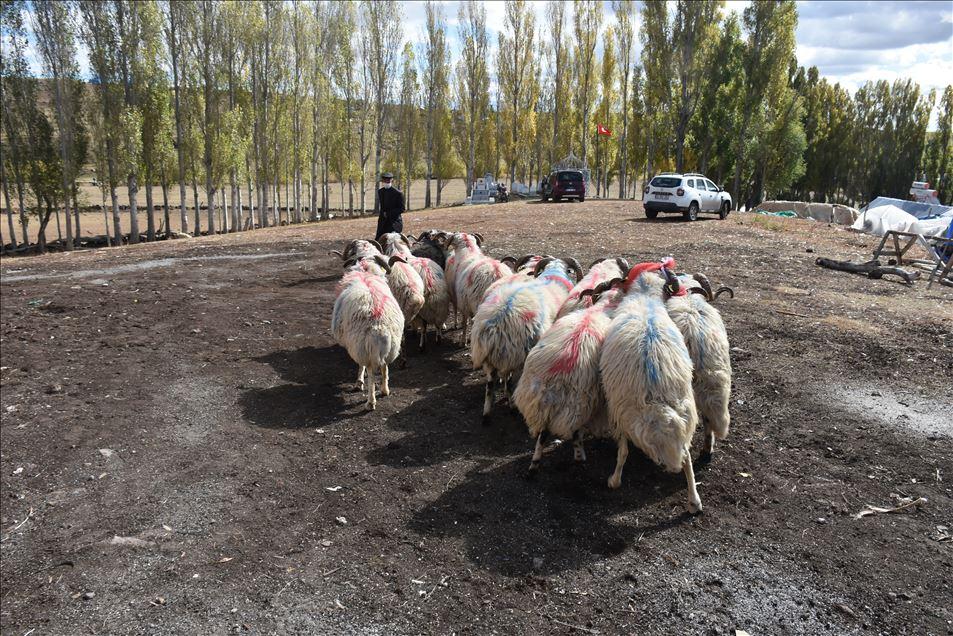
Ram Mating, refers to the practice and traditional process surrounding the reintroduction of rams into the flock after being separated during a specific period, aimed at controlling breeding in small livestock farming. This practice is systematically carried out to ensure that lambs are born within a defined time frame and to regulate flock productivity. In Anatolia, it is also regarded not merely as a technical husbandry activity but as a cultural phenomenon linked to abundance, prosperity, and the continuity of the production cycle.
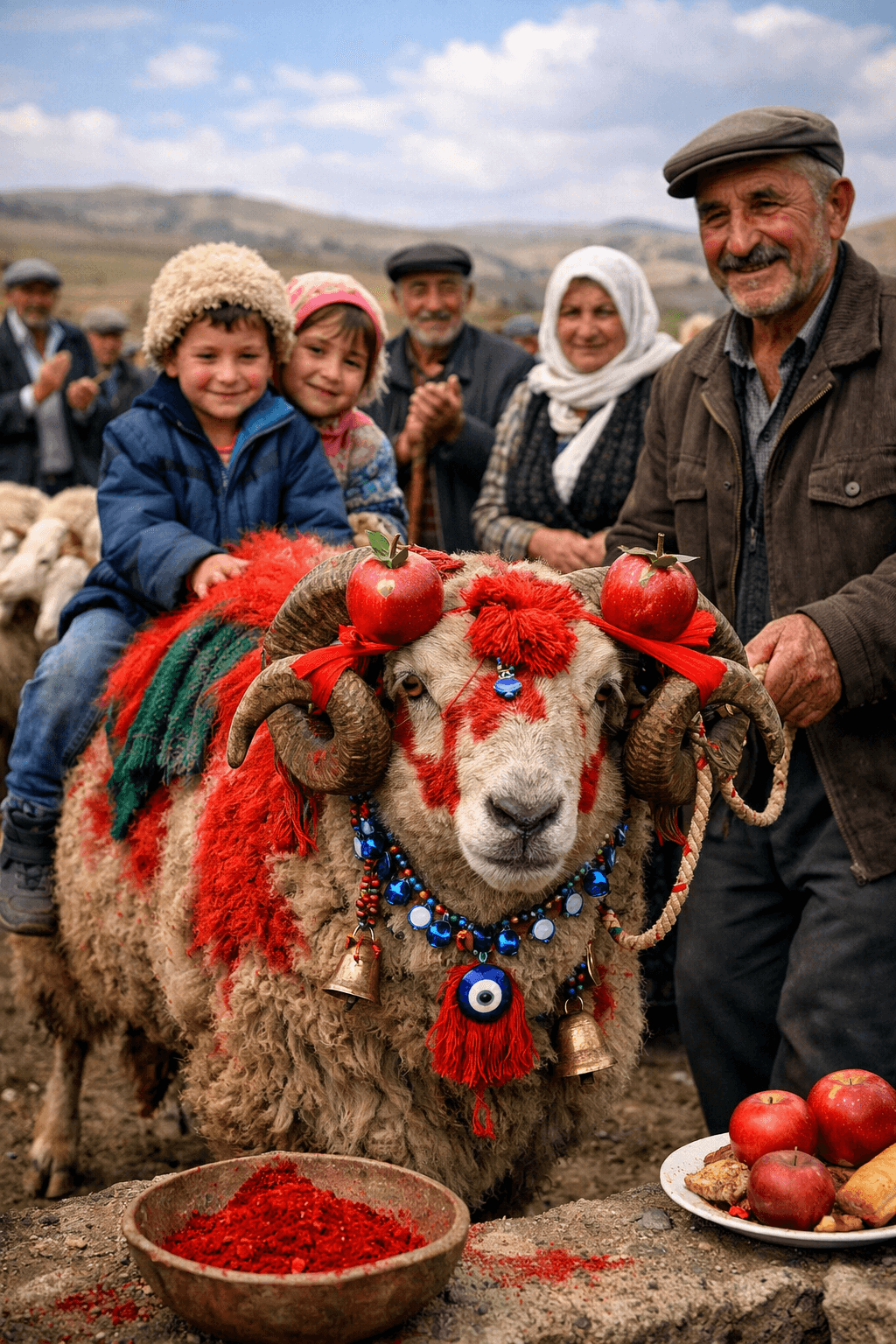
Ram Mating (Generated by Artificial Intelligence)
Ram mating is a planned practice carried out during a specific time of the year in communities engaged in small livestock farming. It is typically conducted in the autumn months. This timing is chosen to ensure that lambs are born in the spring, thereby protecting them from the harsh conditions of winter.
Ram mating is considered directly linked to the seasonal cycle and constitutes a key stage in the livestock calendar. In this regard, the practice emerges not only as a form of production planning but also as part of a timing system aligned with natural conditions.【1】
While ram mating is a calendar-based practice in terms of husbandry, in some regions it is accompanied by ceremonial elements. Preparations are made prior to the rams’ reintroduction, including the regulation of animal care and the predetermined selection of the implementation date. Before mating, rams are cleaned, well-fed, and shorn, forming part of the preparatory process.
First Recorded Moment of Rams Joining the Flock (Youtube)
On the ceremonial day, the reintroduction of rams into the flock is often conducted as a communal event. Rituals include decorating the rams, marking them with colored dyes, and performing various symbolic acts. In some regions, prayers are recited during ram mating, and villagers gather together.
These practices reveal that ram mating is not merely a technical reproductive adjustment but also a tradition involving social participation.
In various regions of Anatolia, ram mating is associated with abundance, prosperity, and the continuity of the production cycle. The ram is widely regarded as a symbol of strength, fertility, and reproduction.
Decorations, dyeing, marking, and similar rituals performed during the practice carry symbolic meanings. For instance, it is known that painting rams red and green symbolizes good fortune and abundance, as well as themes of youth and renewal. Similarly, a red apple is placed on the rams’ horns to represent nature’s rebirth after death.【2】
Such practices demonstrate that livestock farming is viewed not only as an economic process but also as a cultural and belief-based practice.
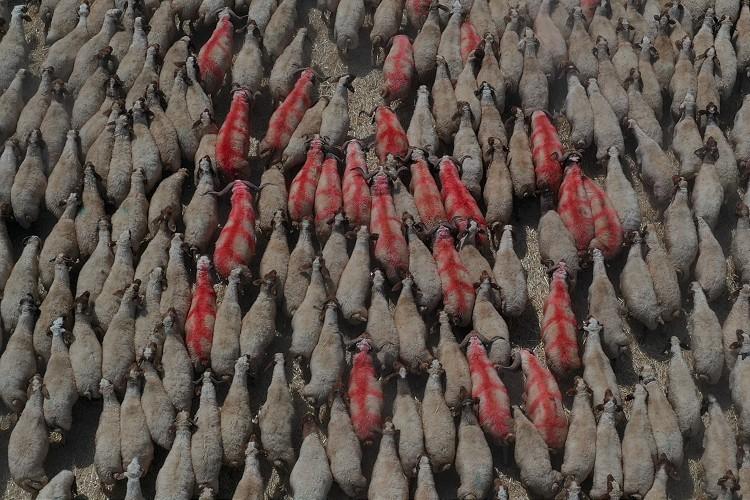
Ram Mating in Şanlıurfa (Anadolu Ajansı)
Ram mating practices share the same fundamental objectives across different regions of Anatolia but may vary according to local conditions. The timing of the practice changes depending on climate and geographic factors; while some areas observe no ceremonial elements, others maintain them more prominently.
Nevertheless, the common element across all regions is that ram mating serves as a planned adjustment to ensure flock reproduction.
Davar Yüzü or Saya Gezme is a traditional practice linked to ram mating, symbolizing the continuity of the livestock cycle. This ritual is performed with the wish for healthy and productive lambs.
During Saya Gezme, participants walk through the village reciting manis and poems, engaging the local community and heralding the arrival of spring. Practices such as offering collected food to animals are associated with expectations of abundance and productivity.
Ram mating is regarded as a practice directly tied to the seasonal cycle. Aligning births with the spring months reflects a production plan harmonized with nature’s renewal process.
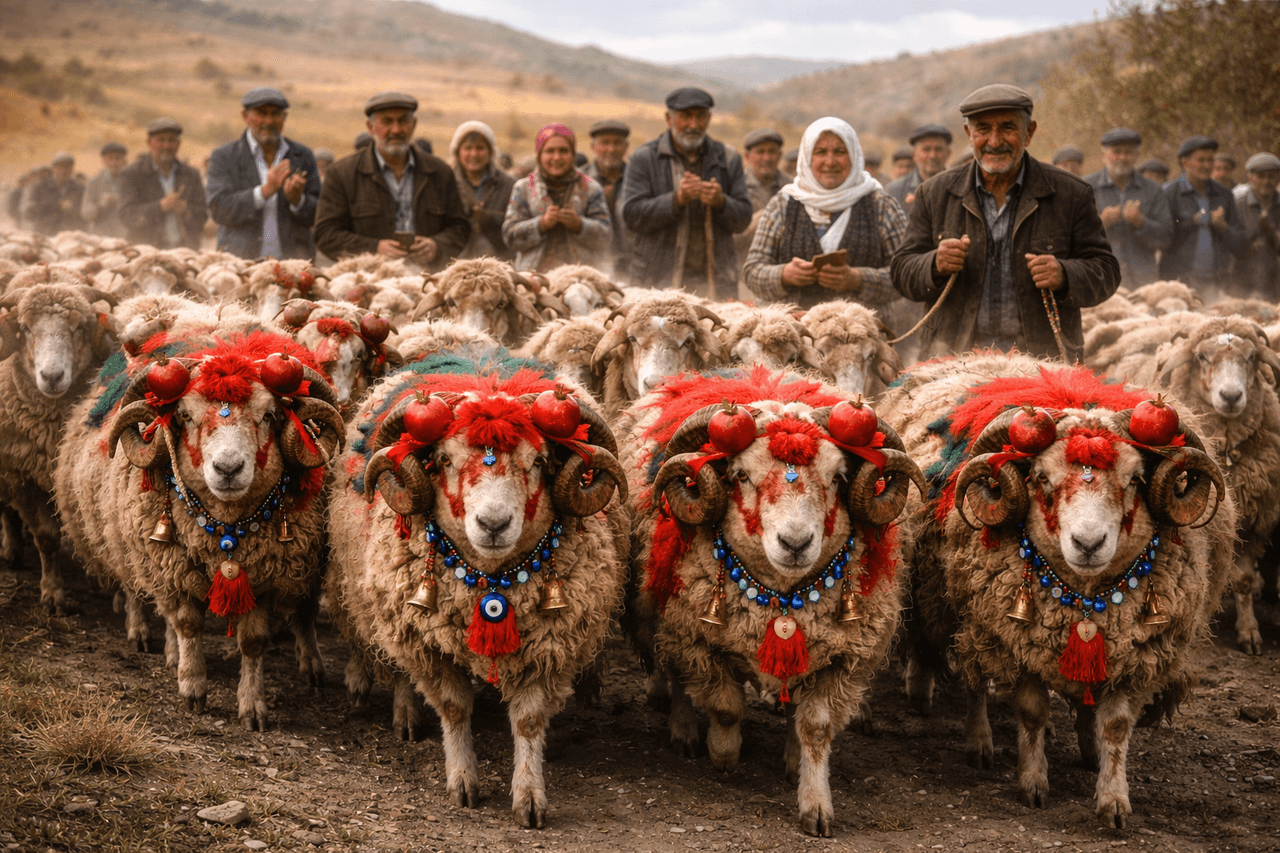
Beliefs and Rituals Related to Ram Mating (Generated by Artificial Intelligence)
In this context, ram mating is discussed alongside other cultural practices directly linked to seasonal transitions such as Nevruz.【3】
Today, ram mating continues as part of planned breeding management in small livestock farming. Its primary objective remains ensuring that births occur within a specific time frame and enhancing flock productivity.
In some rural areas, ram mating is still practiced with its traditional elements intact. While the intensity of ceremonial aspects varies by region, both the economic and cultural dimensions of the practice persist.
Anadolu Ajansı. "Türkiye’nin en büyük tarım işletmesinde elit sürülere koç katımı başladı." June 16, 2020. Accessed February 7, 2026. https://www.aa.com.tr/tr/ekonomi/turkiyenin-en-buyuk-tarim-isletmesinde-elit-surulere-koc-katimi-basladi/1879951
Coşan, Aytaç, and Yusuf Öztürk. "Nevruz, Koç Katımı, Hıdırellez Üzerine Bir İnceleme: Çağlayan Köyü Örneği." *21. Yüzyılda Eğitim ve Toplum / Education and Society in the 21st Century* 12, no. 34 (2023): 295–307. Accessed February 7, 2026. https://dergipark.org.tr/en/download/article-file/3248662
Genç Haber. "Koçlarla koyunların buluşma anı ilk kez görüntülendi." YouTube. Accessed March 24, 2026. https://www.youtube.com/watch?v=BsDZKD1CIuk.
Kars İl Kültür ve Turizm Müdürlüğü. "Koç Katımı." Accessed February 7, 2026. https://kars.ktb.gov.tr/TR-288229/koc-katimi.html
Sinmez, Çağrı Çağlar, and Ali Yiğit. "Sivas Folklorunda Davar Yüzü (Saya Gezme) ve Koç Katımı Töreni." *Lokman Hekim Journal* 4, no. 1 (2014): 19–25. Accessed February 7, 2026. https://dergipark.org.tr/en/download/article-file/643650
Türkiye Gazetesi. "Koç Katımı Ne Zaman Yapılır, Anlamı ve Denk Geldiği Mevsim." November 14, 2024. Accessed February 7, 2026. https://www.turkiyegazetesi.com.tr/haberler/koc-katimi-ne-zaman-yapilir-anlami-ve-denk-geldigi-mevsim-1126095
Türkiye Kültür Portalı. "Koç Katımı – Çorum." T.C. Kültür ve Turizm Bakanlığı. Accessed February 7, 2026. https://www.kulturportali.gov.tr/turkiye/corum/kulturatlasi/koc-katimi
[1]
Çağrı Çağlar Sinmez, Ali Yiğit. “Sivas Folklore: Davar Yüzü (Saya Gezme) and Ram Mating Ceremony.” Lokman Hekim Journal 4, no. 1 (2014): 20–23. Access date: 7 February 2026. https://dergipark.org.tr/en/download/article-file/643650.
[2]
Aytaç Coşan, Yusuf Öztürk. “A Study on Nevruz, Ram Mating, and Hıdırellez: The Case of Çağlayan Village,” Education and Society in the 21st Century 12, no. 34 (2023): 299. Access date: 7 February 2026. https://dergipark.org.tr/en/download/article-file/3248662.
[3]
Aytaç Coşan, Yusuf Öztürk. (a.g.e), 296–297.


Scope(s) | Animal husbandry traditional production practices folk culture | ||||||||
|---|---|---|---|---|---|---|---|---|---|
Related Traditions | Davar Yüzü (Saya Gezme), seasonal festivals | ||||||||
Cultural Dimension | Ceremonies, prayers, decoration practices | ||||||||
Application Area(s) | especially the Eastern and Central Anatolia regions Anatolia | ||||||||
Time | Autumn (typically October–November) | ||||||||
Timing and Seasonal Characteristics of Ram Mating
Ram Mating Ceremonies and Implementation Process
Beliefs and Symbols
Regional Practices
Davar Yüzü (Saya Gezme)
Relationship with the Seasonal Cycle
Ram Mating Today