This article was automatically translated from the original Turkish version.
Kingdom(s) | Fungi | ||||||||
|---|---|---|---|---|---|---|---|---|---|
Phylum | Ascomycota | ||||||||
Class | Pezizomycetes | ||||||||
Order | Pezizales | ||||||||
Family | Morchellaceae | ||||||||
Genus | Morchella | ||||||||
Specie(s) | Morchella esculenta etc. (multiple species) Morchella deliciosa Morchella elata | ||||||||
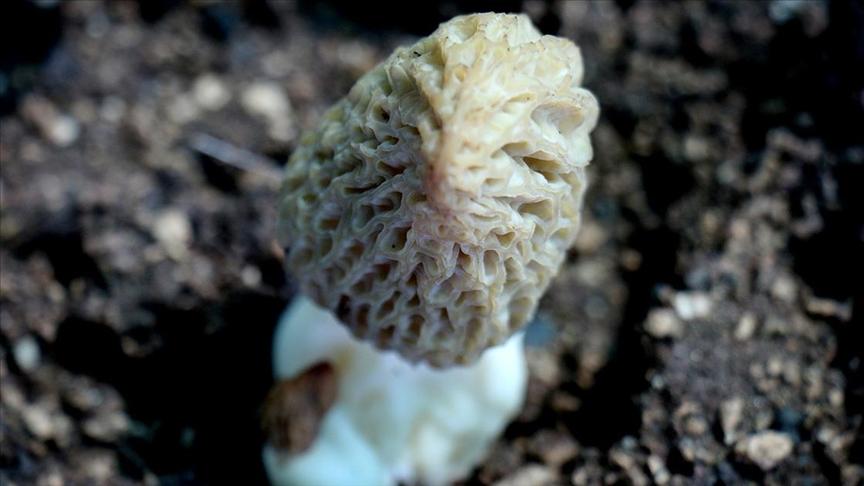
Morel mushroom (Morchella spp.) is a group of spring mushrooms classified within the genus Morchella of the family Morchellaceae in the phylum Ascomycota. They typically have a sponge-like appearance with a cap and stem structure. The caps are honeycombed (alveolate) and hollow, while the stem is cylindrical. They fruit generally between March and June in semi-moist and cool soils. Some species are also prominent in post-fire ecosystems.
Morpho-microscopic analyses are based on the cap, stem, hymenium, and spores:
These characteristics, when combined with macroscopic observation and microscopic analysis, enable reliable species identification.
In Türkiye’s flora, the genus Morchella is generally divided into two main groups:
Based on molecular analyses conducted by Çukurova University (Taşkın, 2011), a total of 490 samples collected between 2007 and 2010 revealed 15 species in the Elata group and 5 in the Esculenta group. Nine of these species were identified as endemic to provinces such as Osmaniye, Adana, and Antalya. DNA analyses were performed on the RPB1, RPB2, EF1-α, 28S LSU, and ITS regions, confirming the presence of endemic species.
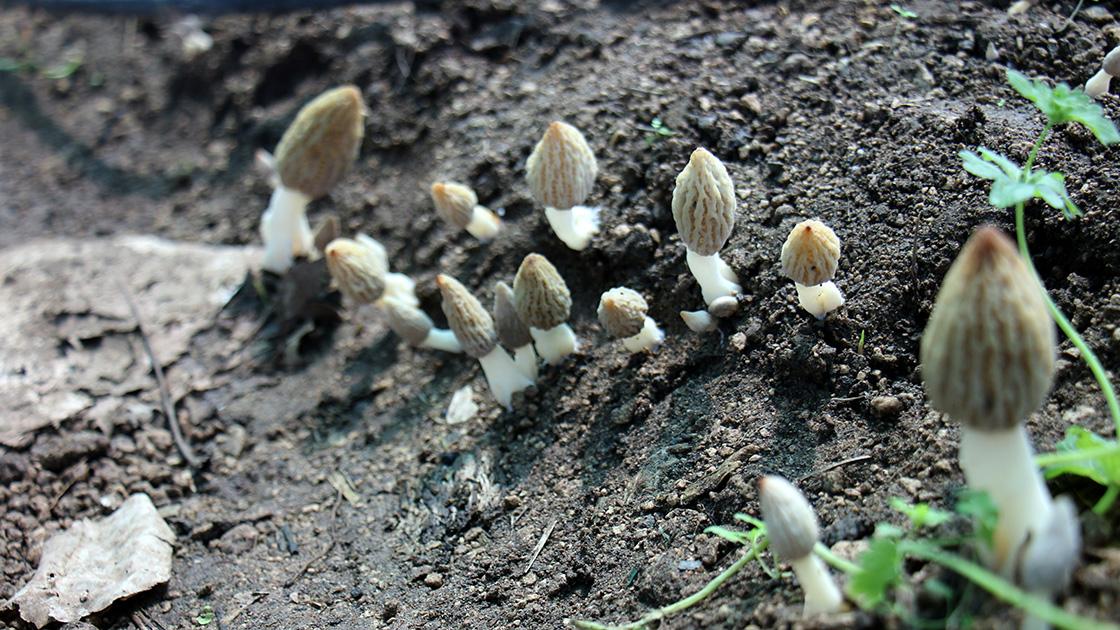
Morel mushrooms (Hüseyin Hilmi Çömez. Anadolu Agency)
Data from sample analyses conducted between 2007 and 2010 confirmed the presence of 15 species in the Elata group and 5 in the Esculenta group. Newly identified species include Morchella fluvialis, M. americana, M. dunalii, M. importuna, and M. tridentina. These findings demonstrate that Türkiye is a region of significant genetic diversity for Morchella.
Natural habitats offer opportunities for both agriculture and ecotourism. For instance, municipal and institute collaborations have been initiated in the Eğirdir region to develop morel cultivation.
The fruiting period of morel mushrooms generally spans March to June. Snowmelt, soil moisture, and temperature fluctuations are key triggers for their development. These species are reported to exhibit both mycorrhizal and saprotrophic nutritional modes.
Türkiye possesses significant potential in terms of genetic diversity and endemic Morchella species. Supporting morphological and microscopic analyses with molecular techniques enhances the reliability of species identification. Future recommendations include:
These efforts will contribute to the conservation and sustainable use of natural genetic resources.
Atatürk Bahçe Crops Central Research Institute (Yalova). "Kuzu Göbeği Mantarı Üretimi Semineri," September 3, 2024. Accessed June 22, 2025. https://arastirma.tarimorman.gov.tr/yalovabahce
Education Brochure. "Doğa Mantarları ve Yapılan Bilinçsiz Toplamaların Olumsuz Etkileri." PDF, Accessed June 22, 2025. https://arastirma.tarimorman.gov.tr/etae/Belgeler/EgitimBrosur/129-ciftcibro.pdf
Hatıra Taşkın. Saadet Büyükalaca. DergiPark. "Elata ve Esculenta Gruplarındaki 'Göbek Mantarı' Toplanmaları ve Ekogeografik Dağılımı." PDF, Accessed June 22, 2025. https://dergipark.org.tr/tr/download/article-file/39699
Hüseyin Hilmi Çömez. Anadolu Ajansı. “Mersin'de Araştırma Enstitüsünün Serasında Kuzu Göbeği Mantarı Yetiştirildi.” Anadolu Ajansı, April 8, 2022. Accessed June 22, 2025. https://www.aa.com.tr/tr/ekonomi/mersinde-arastirma-enstitusunun-serasinda-kuzugobegi-mantari-yetistirildi/2560590
Ministry of Agriculture and Forestry. "Doğal Mantarlar–Kuzu Göbeği (Morchella) Ekolojik İnceleme." BGT 2024, no. 1. PDF, Accessed June 22, 2025. https://arastirma.tarimorman.gov.tr/ktae/Belgeler/BGT/bgt_2024_1_Dogal_mantarlar.pdf
Selçuk Üniversitesi et al. “Türkiye Florasında Kuzu Göbeği Mantarı Çeşitliğinin Moleküler Karakterizasyonu.” Alata Tarım Bülteni 21, no. 1 (2012). PDF, Accessed June 22, 2025. https://arastirma.tarimorman.gov.tr/alata/Belgeler/alatarim/alatarim021_2012_06.pdf
Selçuk Üniversitesi, Faculty of Science, Department of Biology; Osmaniye KorkutAta Üniversitesi,Çukurova Üniversitesi; Hasan Hüseyin Doğan, Fuat Bozok, Hatıra Taşkın, Saadet Büyükalaca. “Türkiye'de Kuzu Göbeği Mantarı (Morchella Türleri): Morfolojik ve Moleküler Analiz Çalışması.” Alata Tarım Bülteni 29, no. 6 (June 2016). PDF, Accessed June 22, 2025. https://arastirma.tarimorman.gov.tr/alata/Belgeler/alatarim/alatarim029_2016_06.pdf

Kingdom(s) | Fungi | ||||||||
|---|---|---|---|---|---|---|---|---|---|
Phylum | Ascomycota | ||||||||
Class | Pezizomycetes | ||||||||
Order | Pezizales | ||||||||
Family | Morchellaceae | ||||||||
Genus | Morchella | ||||||||
Specie(s) | Morchella esculenta etc. (multiple species) Morchella deliciosa Morchella elata | ||||||||
No Discussion Added Yet
Start discussion for "Sheep's Belly Mushroom (Morchella spp.)" article
Morphological Evaluation
Systematic Diversity
Genetic and Molecular Approaches
Agricultural and Ecotourism Potential
Ecology and Fruiting Period
Cultural Expansion