


This article was automatically translated from the original Turkish version.
+2 More
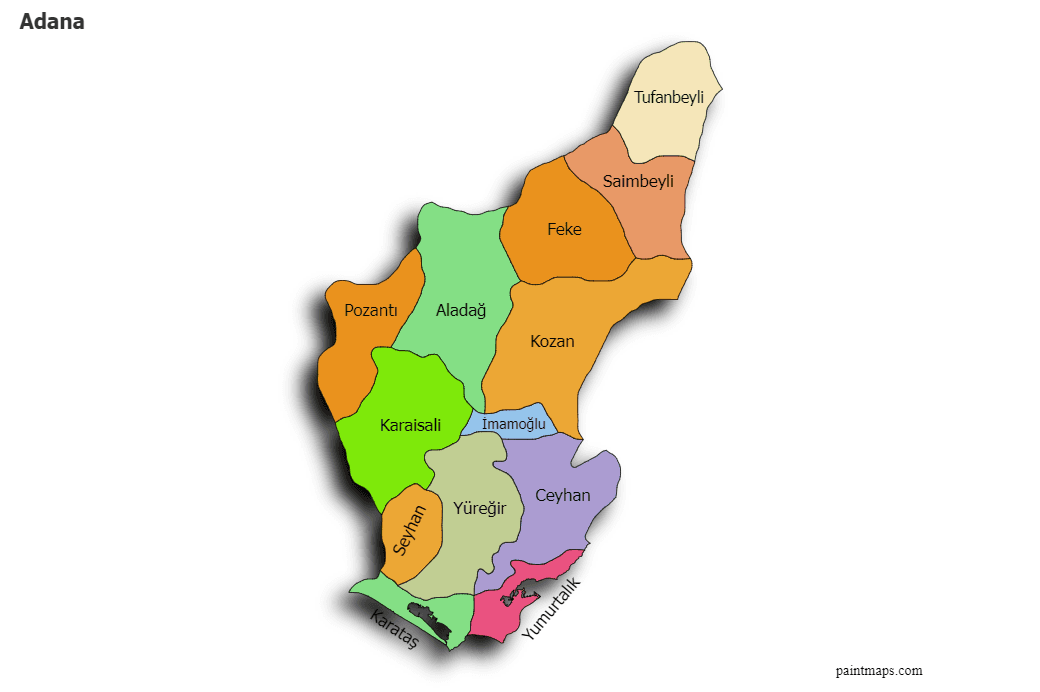
Seyhan District
Province | Adana | ||||||||
|---|---|---|---|---|---|---|---|---|---|
Population (Number) | 786.931 | ||||||||
District Governor | Ekrem İnci | ||||||||
Places to Visit | Seyhan Nehri Merkez Camii Taşköprü | ||||||||
Adana province’s oldest largest and most densely populated district is Seyhan which occupies a central position in the Çukurova Region due to its historical past as well as its economic social and cultural structure. Located on the western bank of the Seyhan River the district derives its name from the Seyhan River which originates in the Taurus Mountains. Seyhan one of Türkiye’s most developed metropolitan districts serves as the administrative commercial and cultural heart of Adana.
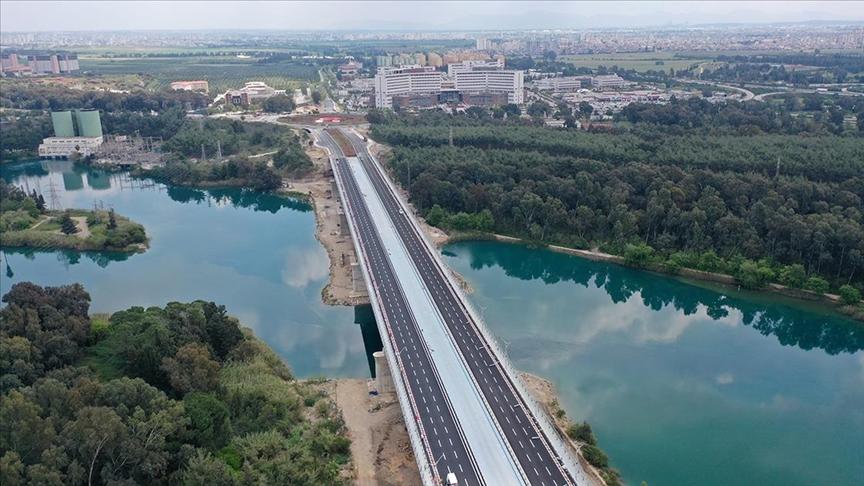
Seyhan River (Source: Anadolu Agency)
The Adana region where Seyhan is located has been a settlement area for many civilizations throughout history. The Hittites Assyrians Persians Macedonians Romans Byzantines and Arabs among others ruled over these lands. The area that developed as Adana’s urban center also falls within the current boundaries of Seyhan district.
During the Roman period Adana became an important military and commercial center and the Taşköprü built during this era remains one of the most significant architectural legacies to survive to the present day. From the 7th century onward the city became a stage for Arab raids and came under Turkish dominance in the 11th century. Adana was incorporated into the Ottoman Empire in 1517 and experienced rapid growth in the 19th century due to increased cotton production with this development concentrated especially in the Seyhan area. Seyhan officially gained district status in 1986 with Law No. 3392 which divided the central district into Seyhan and Yüreğir.
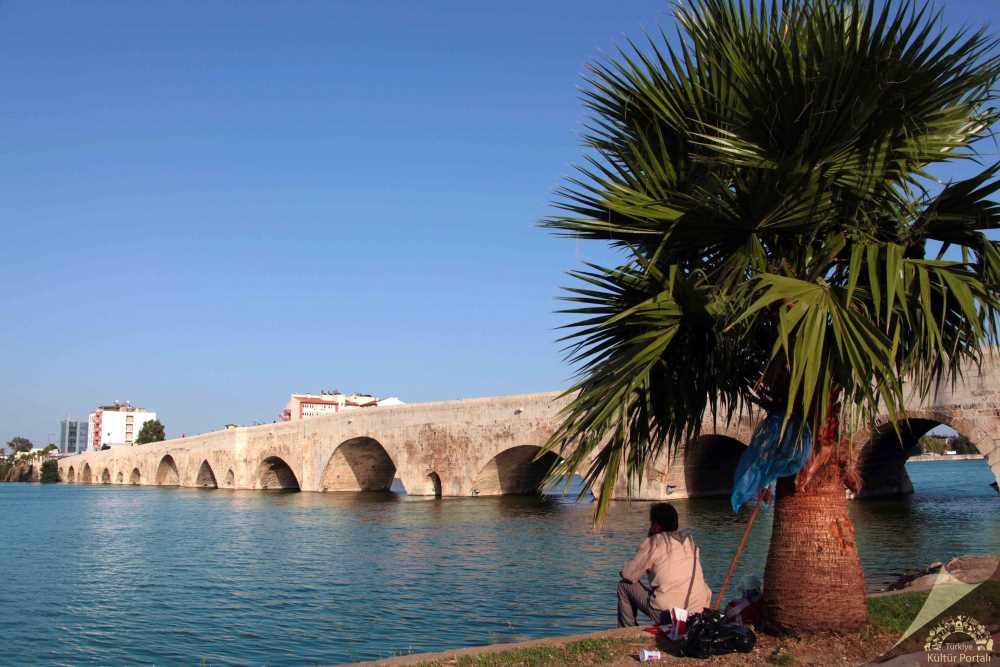
Adana Taşköprü (Source: Culture Portal)
Seyhan district is located west of Adana’s city center. Covering the western part of the urban expansion along both banks of the Seyhan River the district is bordered by Yüreğir district to the east across the river Karataş and Yüreğir to the south Çukurova district to the west and Sarıçam district to the north.
The district lies within the wide and fertile plain known as Çukurova (ancient Cilician Plain). With an average elevation of 20 to 30 meters above sea level Seyhan possesses rich alluvial soils favorable for agricultural activity. The Seyhan Dam Lake is situated near the northern boundary of the district and is used for both energy production and irrigation.
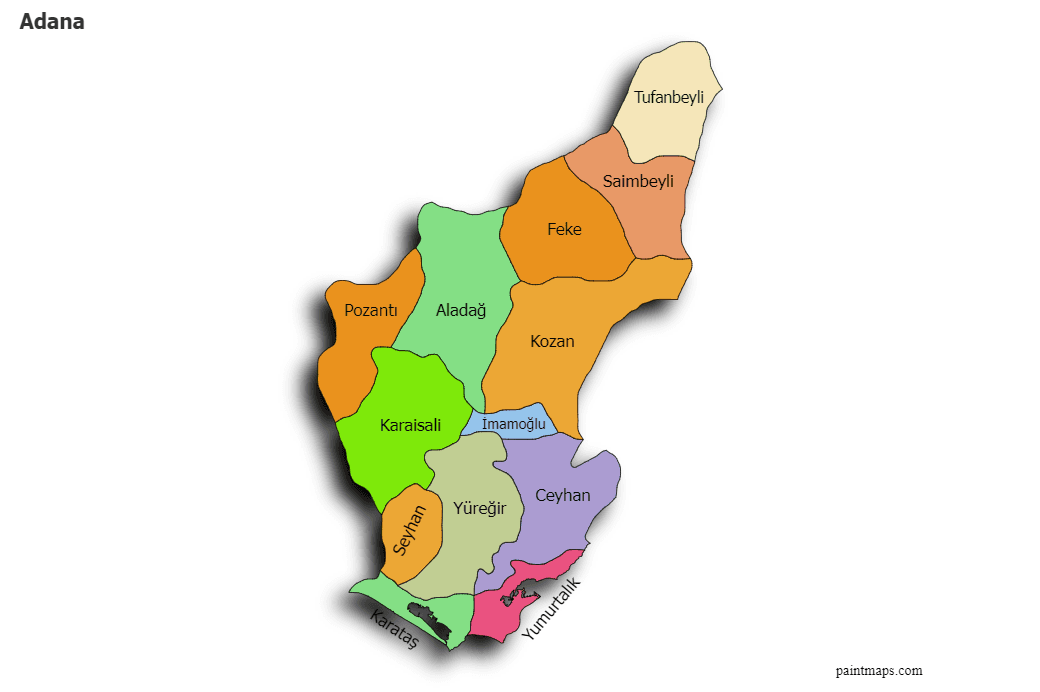
Seyhan District and Neighboring Districts (Source: Paintmaps)
The Mediterranean climate dominates in Seyhan district. Summers are very hot and dry while winters are mild and rainy. Temperatures can reach up to 40°C in July and August but rarely drop below 5°C in winter months. The annual average temperature is approximately 19°C.
The natural vegetation has largely been replaced by agricultural land and urban development. However parks surrounding the district riverbanks and the area near the dam lake still offer biodiversity in terms of local flora.
According to 2024 data Seyhan district has a population of 786931. Of this population 50.19 percent are female and 49.81 percent are male. The district comprises a total of 96 neighborhoods. Seyhan is the most densely populated district of Adana and also serves as a home to many migrant groups. Its social structure has diversified through waves of migration throughout the 20th century primarily from Southeastern Anatolia Eastern Anatolia and the Balkans. Additionally Syrian refugees constitute a significant demographic group in the district.
Seyhan district has a multicultural structure due to the coexistence of communities with diverse ethnic backgrounds. Turks Kurds Arabs Circassians and migrant groups live together in Seyhan creating a culturally rich social fabric. The district hosts numerous public and private schools hospitals universities campuses including some units of Çukurova University and social facilities. The Seyhan Municipality carries out activities to enhance social participation through cultural artistic and social projects.
Seyhan’s economy is largely based on the industry trade and service sectors. While the district hosts numerous small and medium-sized enterprises it also serves as the headquarters or branches of major industrial establishments. The Wholesale Market the Metal Industry Zone the Furniture Makers Zone and the Koza Industrial Zone are key centers of economic activity in the district.
In addition Seyhan district contains many public and private service buildings bank branches shopping malls and commercial centers. Although agricultural production is limited within the district center some rural neighborhoods under its jurisdiction still produce citrus fruits vegetables and cotton.
Seyhan hosts numerous tourist attractions reflecting Adana’s cultural and historical heritage.
•Taşköprü: Built during the Roman Empire this bridge remains one of the world’s oldest continuously used stone bridges and has become a symbol of the district.
•Sabancı Central Mosque: Opened in 1998 this grand mosque with a capacity of 28500 people is one of the largest mosques in Türkiye. It is located along the banks of the Seyhan River.
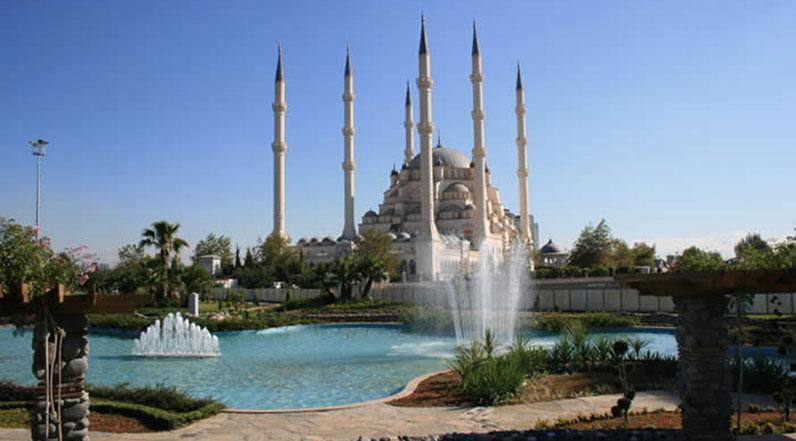
Sabancı Central Mosque (Source: Sabancı Foundation)
•Adana Archaeology Museum: Established in 1924 and one of Türkiye’s oldest museums this building was relocated to a new facility in 2017 and equipped with modern exhibition techniques.
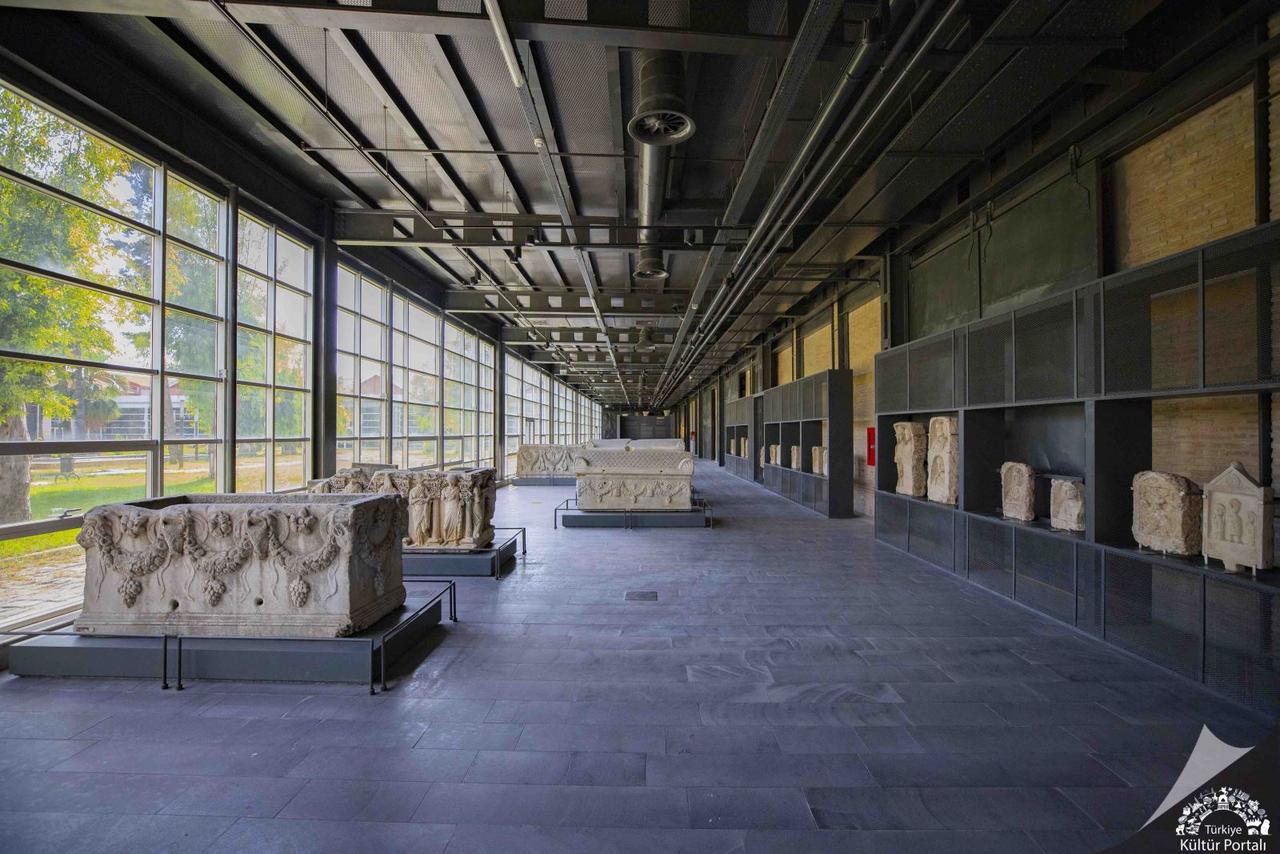
Adana Archaeology Museum (Source: Türkiye Culture Portal)
•Merkez Park: One of Türkiye’s largest urban parks this area covers 33 hectares. With walking paths sports facilities concert stages and children’s play areas it is a frequently chosen recreational space by the public.
•Adana State Theatre and Cultural Centers: Active theaters art galleries and cultural centers in the district shape Seyhan’s cultural life.
•Cultural Events and Festivals: Every year the International Adana Golden Cotton Film Festival held in Seyhan district attracts national and international artists.

Golden Cotton Film Festival (Source: Anadolu Agency)
"Taş Köprü." Kültür Portalı. Accessed April 16, 2025.https://www.kulturportali.gov.tr/turkiye/adana/gezilecekyer/tas-kopru804491
Adana Valiliği. *İlimizi Tanıyalım*. Accessed April 16, 2025.https://adana.csb.gov.tr/ilimizi-taniyalim-i-1222
Adana İl Kültür ve Turizm Müdürlüğü. *Genel Bilgiler*. Accessed April 16, 2025.https://adana.ktb.gov.tr/tr-60704/genel-bilgiler.html
Seyhan Belediyesi. *Kentsel Gelişim ve Proje Raporları*. Accessed April 16, 2025.https://www.seyhan.bel.tr
Seyhan Kaymakamlığı. *Nüfus Durumu*. Accessed April 16, 2025.https://seyhan.gov.tr/nufus-durumu
Türkiye İstatistik Kurumu (TÜİK). *Adrese Dayalı Nüfus Kayıt Sistemi Sonuçları, 2024*. Accessed April 16, 2025.https://data.tuik.gov.tr
Çukurova Kalkınma Agency. *Adana Turizm ve Kültür Envanteri Raporu*. Accessed April 16, 2025.https://cka.org.tr
“Kaymakamımızın Özgeçmişi.” Seyhan Kaymakamlığı. Accessed April 16, 2025.http://www.seyhan.gov.tr/kaymakamimizin-ozgecmisi
“Seyhan Nehri’nin Yeni Gerdanlığı: Adana 15 Temmuz Şehitler Köprüsü Olacak.” Anadolu Ajansı, 2023. Accessed April 16, 2025.https://www.aa.com.tr/tr/gundem/seyhan-nehrinin-yeni-gerdanligi-adana-15-temmuz-sehitler-koprusu-olacak/2882539

Seyhan District
Province | Adana | ||||||||
|---|---|---|---|---|---|---|---|---|---|
Population (Number) | 786.931 | ||||||||
District Governor | Ekrem İnci | ||||||||
Places to Visit | Seyhan Nehri Merkez Camii Taşköprü | ||||||||
History
Geographical Structure
Climate and Vegetation
Demographic Structure
Social Structure
Economic Structure
Tourism Potential