


This article was automatically translated from the original Turkish version.
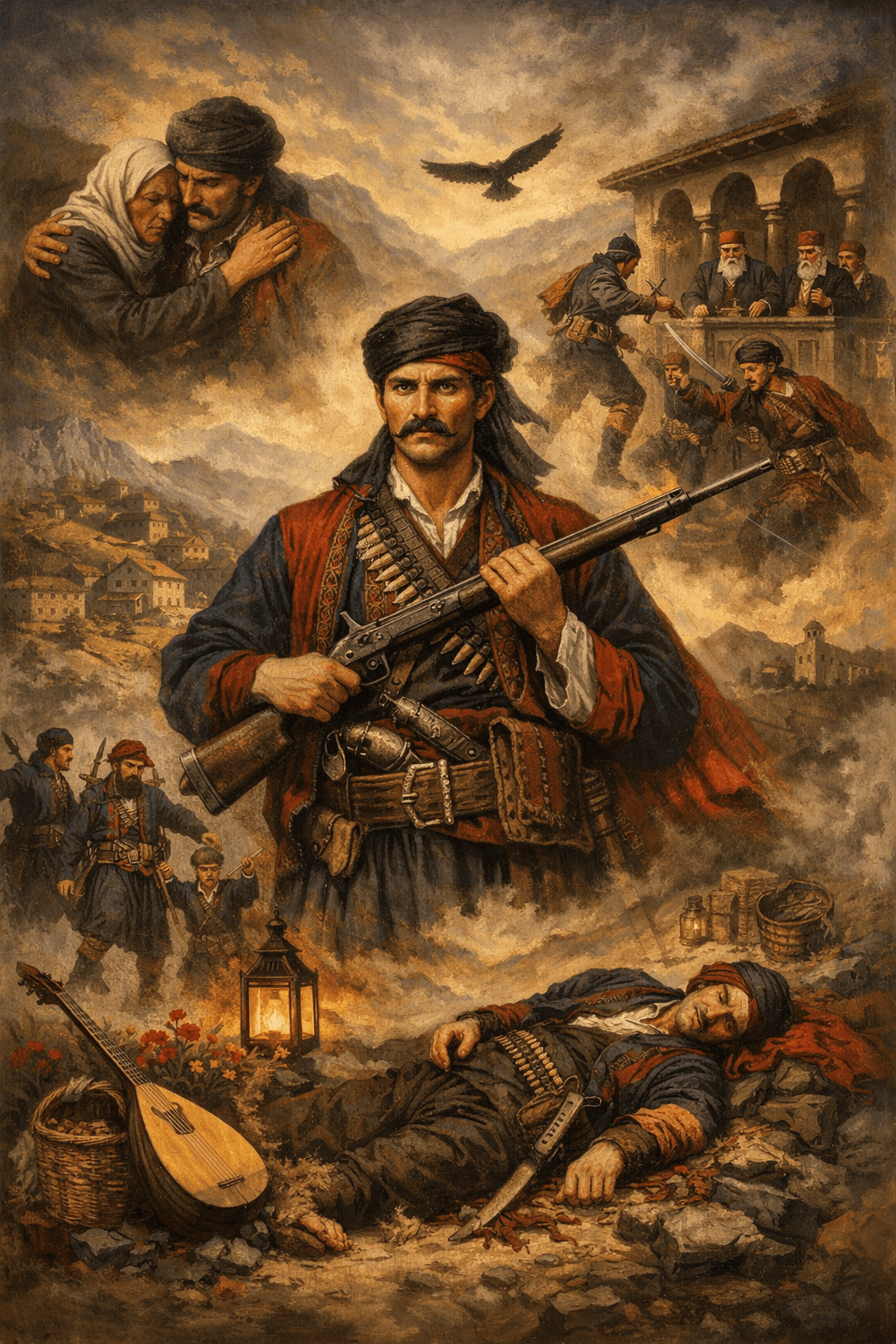
Sepetçioğlu Ballad (generated by artificial intelligence)
Type(s) | Turkish folk ballad | ||||||||
|---|---|---|---|---|---|---|---|---|---|
Region(s) | Kastamonu | ||||||||
Subject(s) | The Life and Death of Sepetçioğlu Osman Efe Heroism | ||||||||
Cultural Significance | Narrative that unites local history with collective memory | ||||||||
Folk Song Quality | Anonymous, Lament-like | ||||||||
Hero | Sepetçioğlu Osman Efe | ||||||||
Main Theme | Heroism, Popular Justice, Fate, and Death | ||||||||
Historical Background | The Late Periods of the Ottoman State | ||||||||
Sepetçioğlu Türküsü is an anonymous Turkish folk song【1】 that originates from the oral tradition and is rooted in the historical events surrounding Sepetçioğlu Osman Efe, a figure whose life, character, and death have been shaped by collective memory in the region of Kastamonu and its surroundings. The song draws from the Anatolian tradition of outlawry and efe heroism, transmitting its narrative across generations. Beyond recounting an individual’s tale of bravery, the song carries a powerful narrative that reflects the social understanding of justice, the tense relationship between the populace and authority, and the symbolic meanings attached to local heroes【2】.
Sepetçioğlu Türküsü (TRT Avaz)
The emergence of theSepetçioğlu Türküsü is closely tied to the social, economic, and administrative challenges experienced in Kastamonu and its vicinity during the final years of the Ottoman Empire. During this period, certain individuals known locally as “efe” or “yiğit” gained popular support by resisting local injustices and gradually acquired an almost legendary status【3】.
Sepetçioğlu Osman Efe occupies a dual role in the song: as a historical figure and as an idealized character within popular narratives【4】.
According to sources, Sepetçioğlu Osman Efe was renowned in the Kastamonu region for his courage, defiance of authority, and uncompromising nature, eventually becoming a celebrated figure among the people【5】.
In the song, Osman Efe is not portrayed merely as an outlaw or armed fighter, but as a noble and courageous Anatolian man who stands with the oppressed. This depiction is significant as it illustrates how individual tales of heroism in folk culture are transformed into collective memory【6】.
The lyrics of the Sepetçioğlu Türküsü present Osman Efe’s identity, bravery, reputation among the people, and tragic end through dramatic language and vivid imagery. Rather than following a chronological historical account, the song conveys events through emotionally intense scenes, evoking both admiration for heroism and a sense of sorrow in the listener. In this regard, the song aligns with the Anatolian folk tradition of the “lament” sung in mourning for a fallen hero.
The primary themes in the lyrics include heroism, fate, death, and the people’s perception of justice. References to Osman Efe’s mother, his community, and his enemies elevate the narrative beyond an individual biography into a broader social story, transforming the song from a local event into a work of folk literature that speaks to universal emotions.
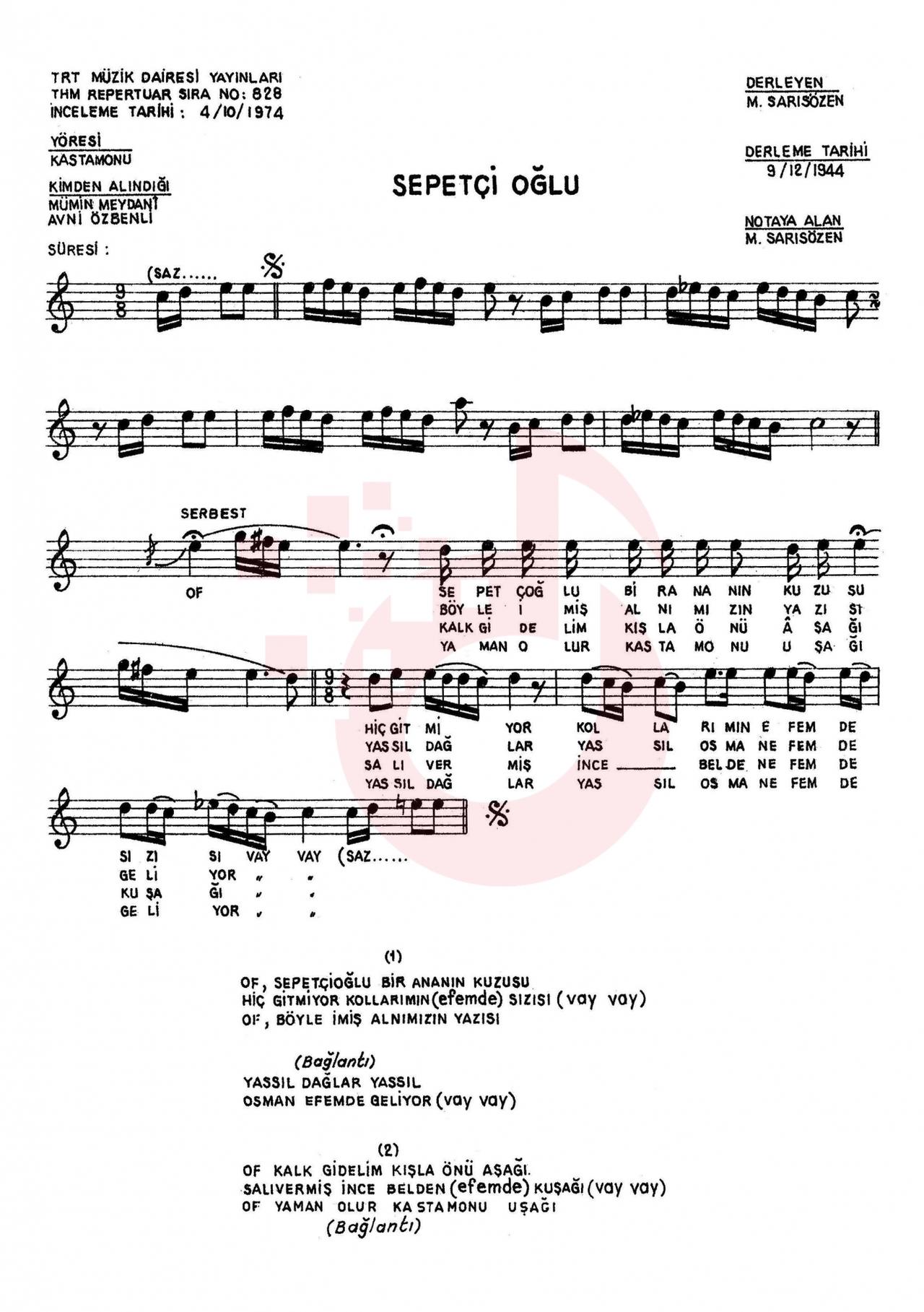
Sepetçioğlu Türküsü’nün Notaları (TRT)
Sepetçioğlu is a mother’s lamb
Never leaving my arms, my efem, oh woe, woe
So it was written on our foreheads
Yassıl mountains, Yassıl, my Osman Efe comes, oh woe, woe
Lament Sepetçioğlu, lament
Lament on the flowery, green mountains
No mother gives birth to such a lion
Yassıl mountains, Yassıl, the lion comes
Rise, let us go down to the barracks
My efem has shed his belt, oh woe, woe
Kastamonu’s youth is fierce
Yassıl mountains, Yassıl, my Osman Efe comes, oh woe, woe
All his enemies filled the court
They drove my mother and father from the court
They strangled the noble ram like a lamb
Give way to the lion efem, oh smoke-filled mountains
The Sepetçioğlu Türküsü is regarded as one of the most important works of folk music from the Kastamonu region. With its regional melodic structure, lyrical qualities approaching the lament form, and powerful storytelling, the song holds a unique place in the repertoire of Anatolian folk music. It is also a valuable source for oral history and folklore studies, demonstrating how local history and music are deeply intertwined【7】.
Today, the Sepetçioğlu Türküsü is performed by various folk music artists and preserved through collections in written and digital formats. Its inclusion in publications by the Ministry of Culture and Tourism demonstrates its official recognition as a cultural heritage element. This confirms that the Sepetçioğlu Türküsü is not merely a relic of the past but continues to live as a vibrant part of contemporary cultural memory【8】.
Kastamonu İstiklal Gazetesi. “Kastamonu’da Bir Yiğit: Sepetçioğlu Osman Efe’nin Hikâyesi.” Accessed January 5, 2026. https://www.kastamonuistiklal.com/kastamonuda-bir-yigit-sepetcioglu-osman-efenin-hikayesi
Kastamonur. “Bir Anadolu Efesi: Sepetçioğlu Osman.” Accessed January 5, 2026. https://www.kastamonur.com/bir-anadolu-efesi-sepetcioglu-osman/
Ministry of Culture and Tourism. "Sepetçioğlu." Türkiye Kültür Portalı / e-Kitap. Accessed January 5, 2026. https://ekitap.ktb.gov.tr/TR-79646/sepetcioglu.html
Türkü Dostları. "Sepetçioğlu Türküsü Sözleri." Accessed January 5, 2026. https://www.turkudostlari.net/soz.asp?turku=1252
Türküler.com. "Sepetçioğlu Türküsü Hikâyesi." Accessed January 5, 2026. https://www.turkuler.com/hikayeler/sepetcioglu.asp
[1]
Kültür ve Turizm Bakanlığı. “Sepetçioğlu.” Türkiye Kültür Portalı / e-Kitap. Erişim tarihi: 5 Ocak 2026. https://ekitap.ktb.gov.tr/TR-79646/sepetcioglu.html
[2]
Türküler.com. “Sepetçioğlu Türküsü Hikâyesi.” Erişim tarihi: 5 Ocak 2026. https://www.turkuler.com/hikayeler/sepetcioglu.asp
[3]
Kastamonu İstiklal Gazetesi. “Kastamonu’da Bir Yiğit: Sepetçioğlu Osman Efe’nin Hikâyesi.” Erişim tarihi: 5 Ocak 2026. https://www.kastamonuistiklal.com/kastamonuda-bir-yigit-sepetcioglu-osman-efenin-hikayesi
[4]
Kastamonur. “Bir Anadolu Efesi: Sepetçioğlu Osman.” Erişim tarihi: 5 Ocak 2026. https://www.kastamonur.com/bir-anadolu-efesi-sepetcioglu-osman/
[5]
Kastamonu İstiklal Gazetesi. “Kastamonu’da Bir Yiğit: Sepetçioğlu Osman Efe’nin Hikâyesi.” Erişim tarihi: 5 Ocak 2026. https://www.kastamonuistiklal.com/kastamonuda-bir-yigit-sepetcioglu-osman-efenin-hikayesi
[6]
Türküler.com. “Sepetçioğlu Türküsü Hikâyesi.” Erişim tarihi: 5 Ocak 2026. https://www.turkuler.com/hikayeler/sepetcioglu.asp
[7]
Türküler.com. “Sepetçioğlu Türküsü Hikâyesi.” Erişim tarihi: 5 Ocak 2026. https://www.turkuler.com/hikayeler/sepetcioglu.asp
[8]
Kastamonur. “Bir Anadolu Efesi: Sepetçioğlu Osman.” Erişim tarihi: 5 Ocak 2026. https://www.kastamonur.com/bir-anadolu-efesi-sepetcioglu-osman/

Sepetçioğlu Ballad (generated by artificial intelligence)
Type(s) | Turkish folk ballad | ||||||||
|---|---|---|---|---|---|---|---|---|---|
Region(s) | Kastamonu | ||||||||
Subject(s) | The Life and Death of Sepetçioğlu Osman Efe Heroism | ||||||||
Cultural Significance | Narrative that unites local history with collective memory | ||||||||
Folk Song Quality | Anonymous, Lament-like | ||||||||
Hero | Sepetçioğlu Osman Efe | ||||||||
Main Theme | Heroism, Popular Justice, Fate, and Death | ||||||||
Historical Background | The Late Periods of the Ottoman State | ||||||||
No Discussion Added Yet
Start discussion for "Sepetçioğlu Folk Song" article
Origins and Historical Background of the Song
Sepetçioğlu Osman Efe in Popular Narratives
Subject and Narrative Structure of the Song
Themes in the Song’s Lyrics
Lyrics of the Song
Cultural and Musical Significance
Sepetçioğlu Türküsü Today