

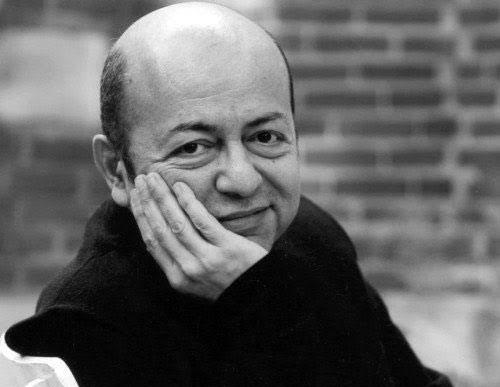

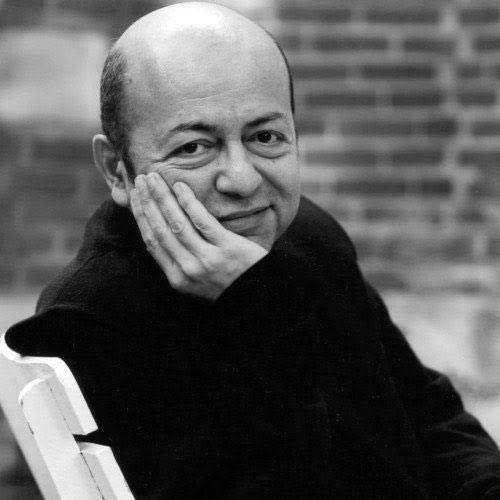
Selim İleri
Mother | Süheyla İleri | ||||||||
|---|---|---|---|---|---|---|---|---|---|
Father | Hasan Hilmi İleri | ||||||||
Date of birth | 1949-04-30 | ||||||||
Date of death | 2025-01-08 | ||||||||
30 April 1949, Selim İleri was born in the Kadıköy district of Istanbul. He is one of the significant figures of Republican-era Turk literature. İleri began his writing career with short stories and later produced works in many genres including novel, screenplay, theater, criticism, essay, and memoir. His works commonly explore themes of nostalgia, hüzün, and resistance to time.
Selim İleri grew up in an environment where his father, Hasan Hilmi İleri, was a faculty member at Istanbul Teknik University, and his mother, Süheyla İleri, had a melancholic disposition. He began his education at Galatasaray High School and continued at Atatürk Boys’ High School. He was particularly influenced by teachers such as Vedat Günyol and Rauf Mutluay at Atatürk Boys’ High School, who introduced him to the concepts of enlightenment and humanism. Although he began studying at Istanbul University Law Faculty, he abandoned his legal studies before completion and devoted himself entirely to literature.
At the age of 19, Selim İleri entered the literary world with his first published book, Cumartesi Yalnızlığı. His 1976 work Dostlukların Son Günü was awarded the Sait Faik Short Story Prize, drawing significant attention. The following year, his novel Her Gece Bodrum won the Turkish Language Association Novel Prize. This novel is regarded as one of the key works representing the transition to modernism in Turkish literature.
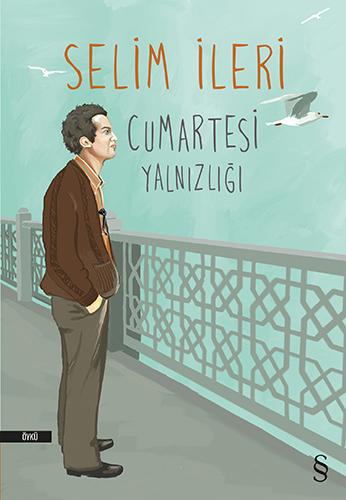
Cover of the book Cumartesi Yalnızlığı. (https://www.everestyayinlari.com/kitap/cumartesi-yalnizligi-selim-ileri/10645)
His 1981 novel Yaşarken ve Ölürken was named Novel of the Year by Milliyet Sanat Dergisi. This award is seen as recognition of the aesthetic and thematic depth of the work within modern Turkish literature. The novel, which explores existential questioning and confrontation with social transformation, received widespread praise from critics and readers. As a screenwriter, İleri also achieved success; his screenplay Kırık Bir Aşk Hikâyesi was awarded Best Screenplay by the Sinema Yazarları Derneği in 1982–83. In the 1990s, he turned to theater and won the Afife Jale and Avni Dilligil Awards for his play Allahaısmarladık Cumhuriyet.
In addition to literature, İleri worked in journalism and radio programs. In 1999, he received the Turkey Journalists Association Television Award for Culture and Art. In 2002, his novel Bu Yaz Ayrılığın İlk Yazı Olacak won the Orhan Kemal Novel Prize. In 2012, Selim İleri was honored with the Presidency Culture and Art Grand Prize, and in 2021 he received the Erdal Öz Literature Prize.
Throughout his life, Selim İleri pursued no other profession but writing. He wrote columns for newspapers such as Milliyet, Cumhuriyet, and Radikal, and produced cultural programs for radio and television. Guided by the principle of art for art’s sake, İleri explored individual solitude and social critique. In his novels within the series Geçmiş, Bir Daha Geri Gelmeyecek Zamanlar, he revisited forgotten values. He developed a unique narrative style in which social history and personal memory intertwine. The Sanat Symposium held in honor of his 40th year as a writer underscores his influence and importance in Turkish literature. At this event, numerous writers and critics evaluated İleri from various perspectives.
Selim İleri’s works are characterized by an expressive narrative style centered on themes of hüzün, melancholy, and resistance to time. These themes are particularly evident in his novel Her Gece Bodrum through the protagonist’s inner conflicts, and in his short story collection Dostlukların Son Günü through the lens of friendship and loss. His work Bu Yaz Ayrılığın İlk Yazı Olacak further expands the theme of longing for the past. İleri adopted a distinctive narrative style by aesthetically reconstructing the past and establishing intertextual relationships within literature.
Melancholy, nostalgia, and solitude dominate İleri’s works. These themes are directly linked to the melancholic disposition he inherited from his mother.
In his novels, İleri offers an original critical perspective by connecting individual solitude with social alienation. Particularly in works such as Her Gece Bodrum and Mavi Kanatlarınla Yalnız Benim Olsaydın, personal isolation and social change are intricately interwoven.
While İleri did not adopt a socially realistic stance, his works critically examine the place of artists and intellectuals in society, creating a distinct voice. Notable examples of this critique include the Bodrum Quartet and Yalancı Şafak.
In his final years, Selim İleri lived a quiet life in Istanbul, focusing particularly on memoirs and essays about the past, while maintaining strong ties to the literary world. He regularly met with young writers to share his experiences and participated in literary events as an honored guest. He continued to inspire the literary world through his works and ideas. Selim İleri passed away on January 8, 2025, leaving behind a vast literary legacy. He was buried at Sahrayıcedit Cemetery.
Abatay, Burak. "Yazar Selim İleri 75 yaşında hayatını kaybetti: 'Türkçeyi çok iyi tanıyan bir edebiyatçıydı'". BBC News Türkçe. Date Published January 8, 2025.https://www.bbc.com/turkce/articles/cge9egrl3nyo
Güngör, Okan Celal. “Selim İleri’nin Eserlerinden Türkçe Sözlük’e Katkılar.” Recep Tayyip Erdoğan Üniversitesi Sosyal Bilimler Dergisi 9, no. 1 (June 2022): 185–216.https://doi.org/10.34086/rteusbe.1124257.
Harmancı, Abdullah. "Selim İleri'nin Edebi Kişiliğini Şekillendiren Unsurlar ve Bunların Öykülerine Yansımaları." Selçuk Üniversitesi Edebiyat Fakültesi Dergisi/Journal of Faculty of Letters 22 (2009): 1–22.
Harmancı, Abdullah. "Selim İleri’nin Edebi Kişiliğine İlişkin Bazı Dikkatler." Anemon Muş Alparslan Üniversitesi Sosyal Bilimler Dergisi 8, no. 6 (2020): 1835–1840.
Koç, Murat. "Metinlerarası İlişkiler Metoduna Göre Selim İleri'nin Kırık Deniz Kabukları Adlı Romanı Üzerine Bir İnceleme." İlmi Araştırmalar 15 (2003): 39–52.
Mengi, Nesrin. "Selim İleri'nin Romancılığı ve Türk Romancılığındaki Yeri." Folklor/Edebiyat 18, no. 71 (2012): 127–140.
Mengi, Nesrin. "Selim İleri’nin Romanlarında Zaman Kurgusu." Turkish Studies - International Periodical for the Languages, Literature and History of Turkish or Turkic 6, no. 3 (Summer 2011): 1083–1096.
Terzi, Şermin. "Hüznün, Yalnızlığın, Buhran ve Kırılganlıkların Yazarı Selim İleri". Hürriyet Pazar. Date Published April 8, 2007.
Yıldız, Alpay Doğan. "Edebiyatın Kaynağı Olarak Edebiyat: Selim İleri Romancılığı." Turkish Studies - International Periodical for the Languages, Literature and History of Turkish or Turkic 4, no. 1-II (Winter 2009): 1463–1478.
Çopur, Yusuf. "Selim İleri’nin Romanlarında Türk Edebiyatından İzler." Uluslararası Sosyal Araştırmalar Dergisi / The Journal of International Social Research 13, no. 72 (August 2020).

Selim İleri
Mother | Süheyla İleri | ||||||||
|---|---|---|---|---|---|---|---|---|---|
Father | Hasan Hilmi İleri | ||||||||
Date of birth | 1949-04-30 | ||||||||
Date of death | 2025-01-08 | ||||||||
Youth and Education
Career and Achievements
Artistic Personality
Contributions to Literature and Works
Novels
Short Stories
Other Works
Literary Themes and Style
Final Years and Death