
This article was automatically translated from the original Turkish version.

Procrastination may appear, from an outside perspective, to be a simple issue of willpower. Yet the scientific reality is far more unsettling.
Your brain is locked in a constant struggle between its logical component (the prefrontal cortex) and its emotional component (the limbic system). And more often than not, victory belongs to Netflix, Instagram, or the 17th random tab you opened. What, scientifically, is the cause of this phenomenon? In this article, we will find the answer.
Behavioral psychology research has uncovered a phenomenon called "temporal discounting," which helps explain why procrastination pulls us in.
Temporal discounting refers to the tendency of the human brain to value immediate rewards more highly than future rewards.
Studies show that when you think about your future self, it is quite easy for your brain to recognize the value of actions that yield long-term benefits. Your future self places greater value on long-term rewards. However, while your future self can set goals, only your present self can take action. When the moment of decision arrives, you are no longer choosing for your future self—you are in the present moment, and your brain is thinking about your present self.
Experts have found that individuals consistently prefer the immediate feeling of satisfaction over long-term benefits. If we wish to break the habit of procrastination, we must make it as easy as possible for our present self to take action, and trust that once started, motivation and momentum will naturally develop.
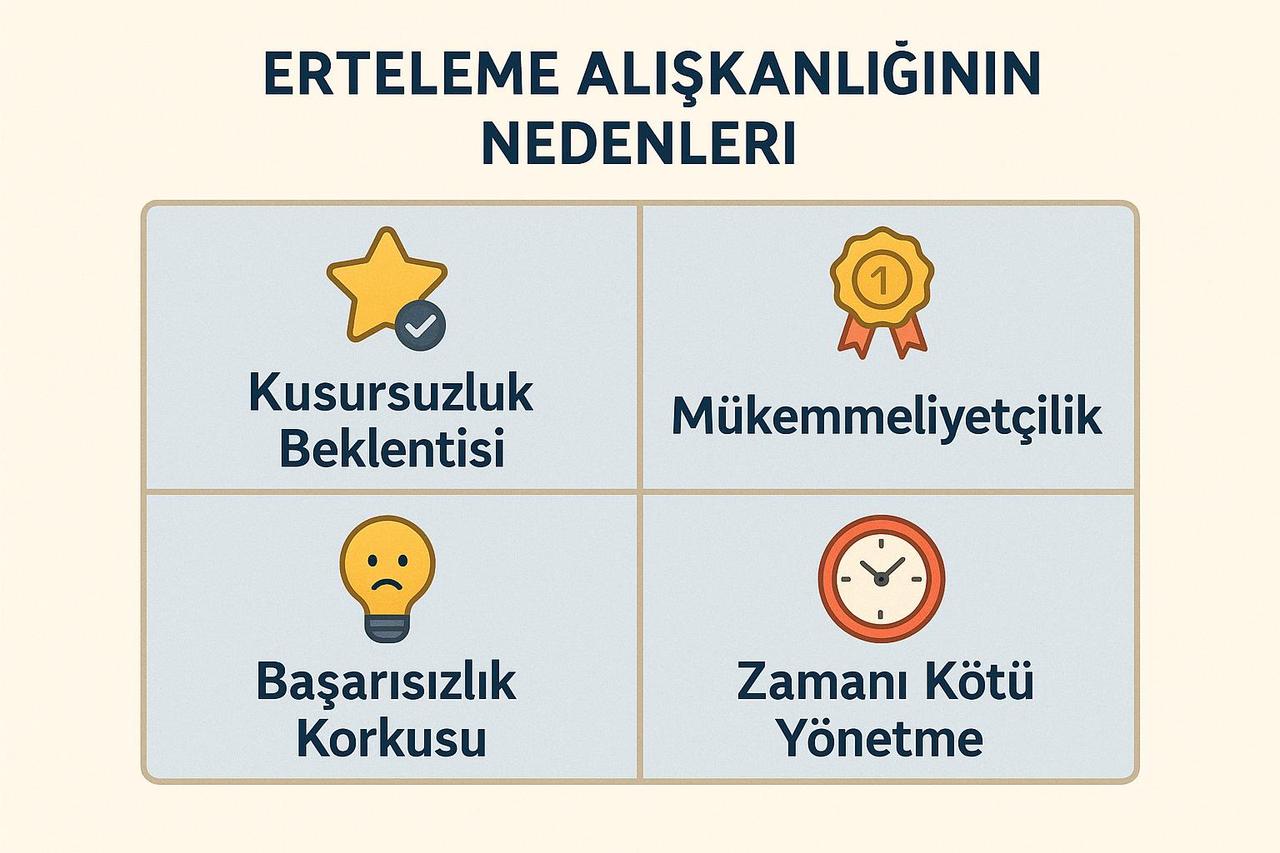
Reasons for Procrastination (Generated by Artificial Intelligence.)
The core principle of this rule is that when starting a new habit, the task should take less than two minutes to begin. The intention here is to make initiation as easy as possible, and then rely on the momentum that follows once you have started.

Visual Summarizing the Two-Minute Rule (Generated by Artificial Intelligence.)
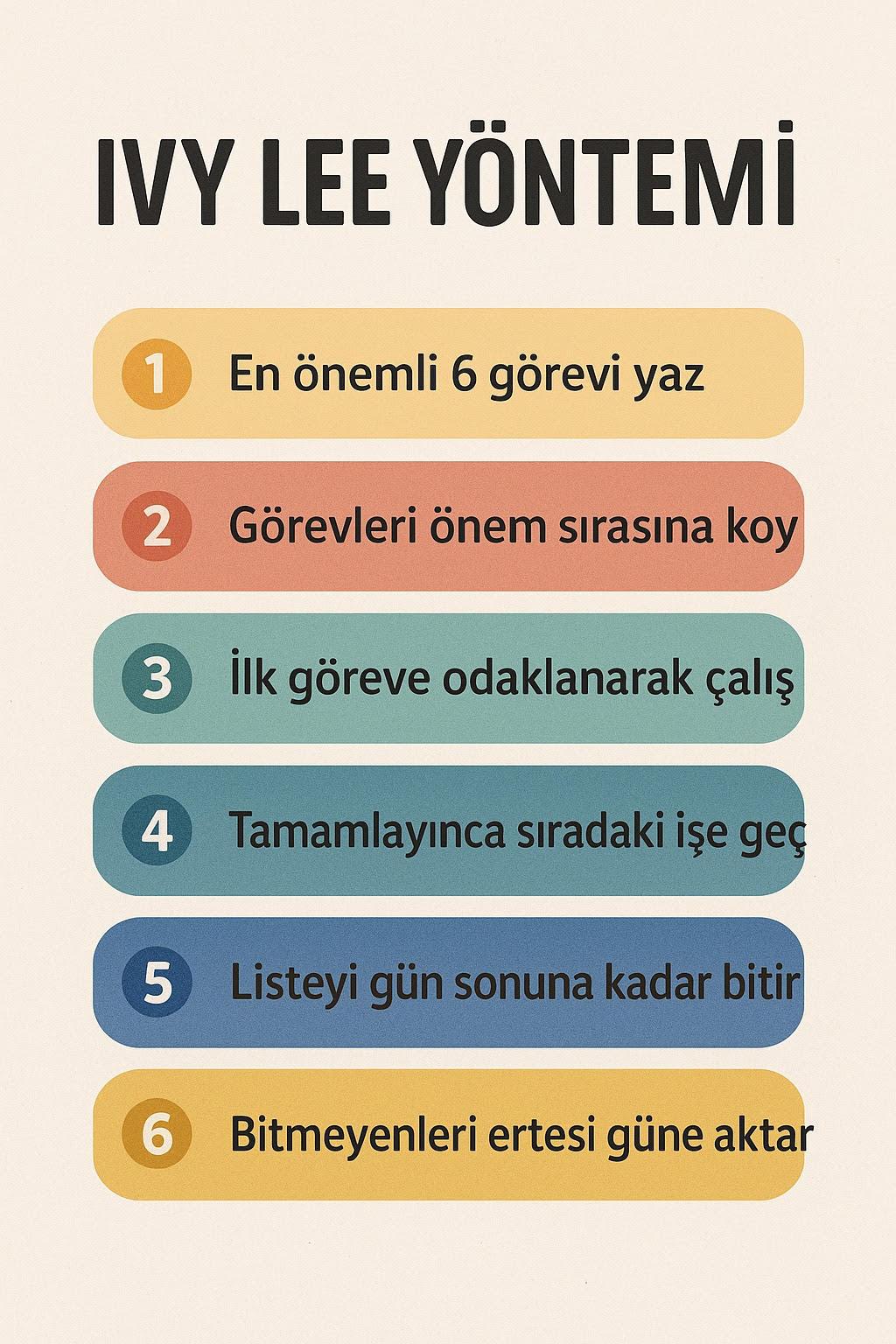
Table Illustrating the Ivy Lee Method (Generated by Artificial Intelligence.)
Clear, James. "The Ivy Lee Method: The Daily Routine for Peak Productivity." *JamesClear.com*. Accessed May 10, 2025. https://jamesclear.com/ivy-lee.
Clear, James. "The Psychology of Procrastination: Why We Delay and What to Do About It." *JamesClear.com*. Accessed May 10, 2025. https://jamesclear.com/procrastination.
Why Do We Procrastinate?
How Can We Stop Procrastination Quickly?
What Is the “Two-Minute Rule” in Procrastination?
The Daily Routine Recommended by Experts for Maximum Productivity: The Ivy Lee Method