


This article was automatically translated from the original Turkish version.
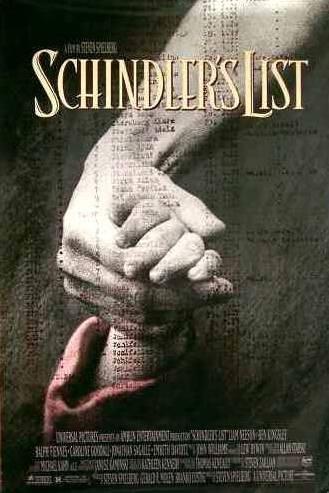
Schindler's List
Original Title | Schindler's List | ||||||||
|---|---|---|---|---|---|---|---|---|---|
Type | Drama War History | ||||||||
Production Year | 1993 | ||||||||
Director | Steven Spielberg | ||||||||
Screenplay | Steven Zaillian | ||||||||
Duration | 195 minutes | ||||||||
Lead Actor | Ben Kingsley Ralph Fiennes Liam Neeson | ||||||||
IMDb | 9.0 | ||||||||
Box Office Revenue | 322 million dollars | ||||||||
Schindler’s List tells the true story of events that took place in Nazi-occupied Poland during World War II. The film focuses on the transformation of Oskar Schindler (Liam Neeson), a German businessman who arrived in Kraków at the start of the war driven by a desire for wealth and who exploited Jewish workers as cheap labor to build a vast fortune.
Initially seeking to profit from the opportunities presented by the war, Schindler undergoes a transformation as he becomes a witness to Nazi brutality. With the help of his accountant Itzhak Stern (Ben Kingsley), he begins to seek ways to save the lives of Jewish workers. By listing them as “employees” in his factory, he protects Jews who were being gathered for deportation to Nazi concentration camps and ultimately saves the lives of more than 1,100 people.
In contrast to Schindler stands the cruel and sadistic SS officer Amon Göth (Ralph Fiennes), who oversees the genocide of Jews. Schindler wages a quiet war against Göth.
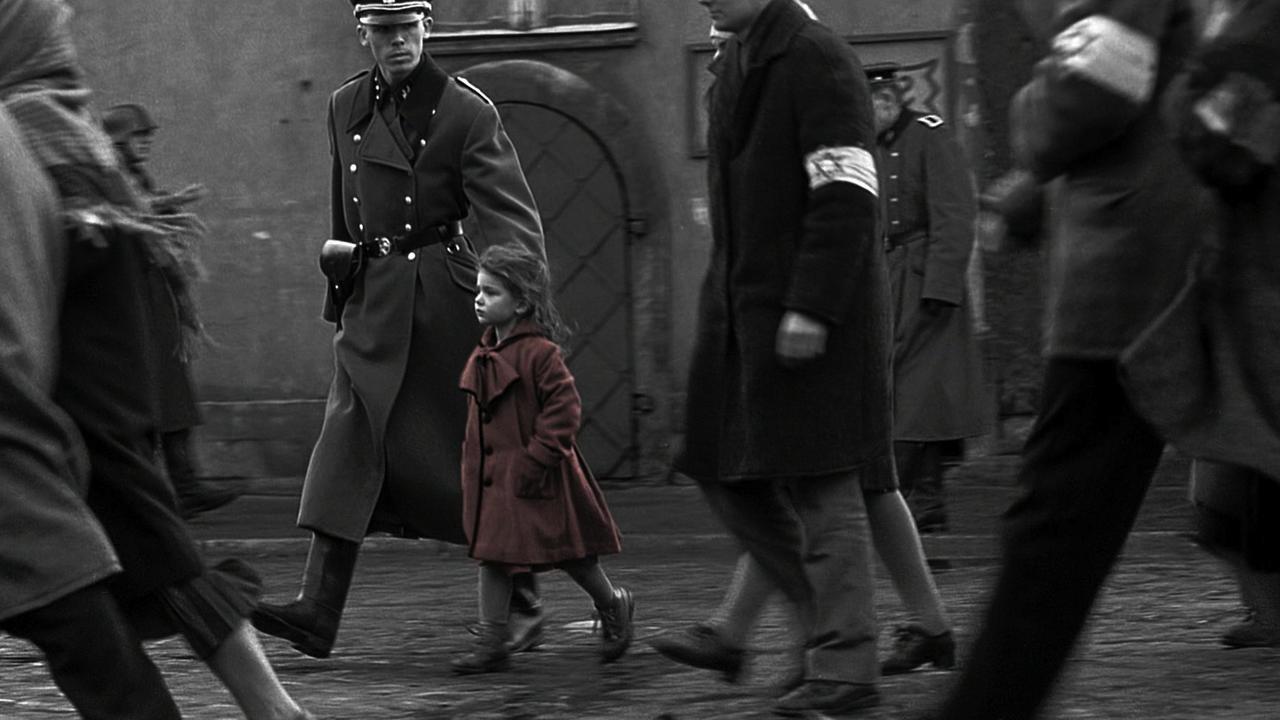
Frame from the film - MUBI
The characters of Schindler and Amon Göth represent two opposing aspects of human nature. While Göth abuses Jews with a sadistic thirst for control granted by power, Schindler gradually turns away from power and chooses to save lives.
The film aims to emphasize that individuals have the potential to alter the course of history. Schindler’s journey from a profit-driven businessman to someone who assumes moral responsibility demonstrates how a person can change by questioning their own values.
Spielberg shot the film almost entirely in black and white to reflect the cold and harsh atmosphere of war. The only colorful scene depicts the moment a little girl in a red coat is killed. This scene symbolizes the horrific impact of the genocide on the innocent.
Initially employing Jewish workers for profit, Schindler gradually begins to spend his fortune to save their lives. At the end of the film, his grief over not being able to do more for each person he saved illustrates the depth of his transformation.
Schindler’s List is adapted from the 1982 novel Schindler’s Ark by Thomas Keneally. Steven Spielberg, who directed the film, sought to move away from Hollywood’s classic approach to war films and create a narrative faithful to reality. Most of the filming took place in Kraków, Poland, particularly in areas near the Auschwitz concentration camp. The film won seven Academy Awards (Oscars) in 1994, including Best Picture, Best Director (Steven Spielberg), and Best Adapted Screenplay.
Liam Neeson portrayed Schindler’s internal transformation, highlighting both his charismatic and compassionate sides. Ben Kingsley brought to life Itzhak Stern, the Jewish accountant, as a quiet yet powerful figure. Ralph Fiennes, as SS officer Amon Göth, captured the psychological depth of a ruthless Nazi officer and received widespread critical acclaim.
Upon its release, the film generated significant interest in the cinematic world.
• Metacritic: 93/100
• IMDb: 9.0
• Roger Ebert assessed the film as “one of the most powerful narratives in the art of cinema.”
• The American Film Institute (AFI) listed the film among “The 100 Most Important American Films of All Time.”
Critics widely regard the film as one of the most successful cinematic portrayals of the Holocaust and it is frequently used in educational programs worldwide.
Schindler’s List is generally accepted by film critics as one of the most realistic cinematic portrayals of the Holocaust. The list of names featured in the film is now archived at Yad Vashem (Israel’s Holocaust Memorial Center). Inspired by the film’s impact, Spielberg founded the “Shoah Foundation” to record testimonies of Holocaust survivors.
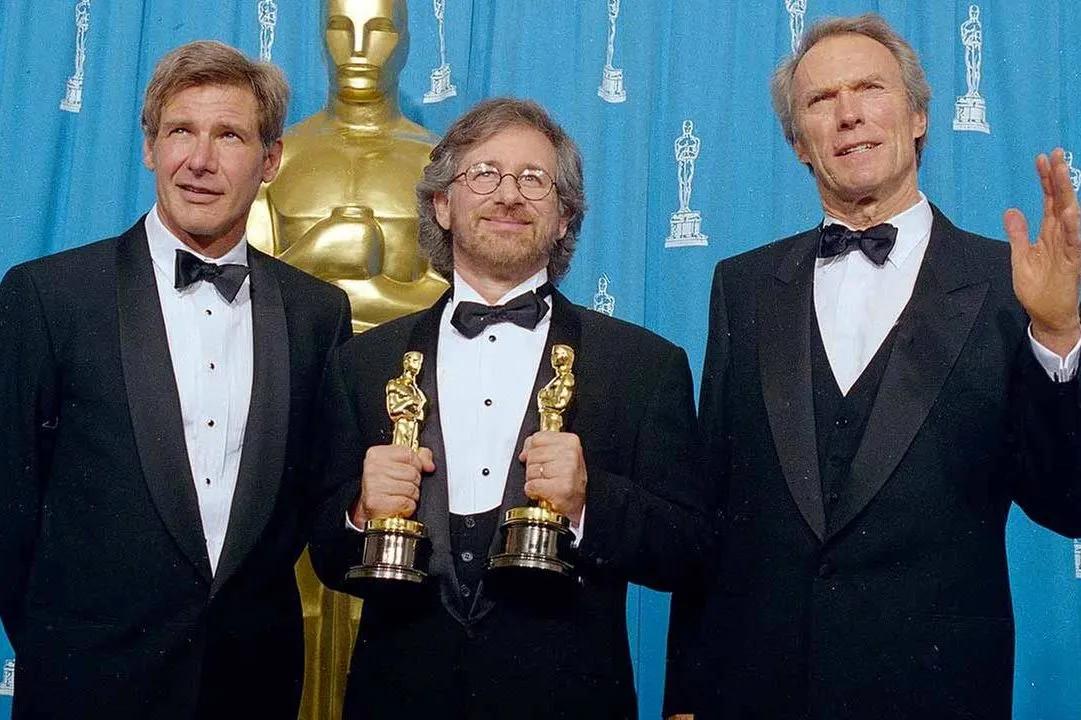
Director Steven Spielberg at the Academy Awards
Upon its release, the film received numerous prestigious awards. Among the most notable are seven Oscars, three Golden Globes, and seven BAFTAs. Below are the major awards won by Schindler’s List:
Won:
• Best Picture – Steven Spielberg, Gerald R. Molen, Branko Lustig
• Best Director – Steven Spielberg
• Best Adapted Screenplay – Steven Zaillian
• Best Cinematography – Janusz Kamiński
• Best Film Editing – Michael Kahn
• Best Original Score – John Williams
• Best Art Direction – Allan Starski, Ewa Braun
• Best Actor – Liam Neeson
• Best Supporting Actor – Ralph Fiennes
• Best Costume Design
• Best Sound
• Best Makeup
• Best Motion Picture (Drama)
• Best Director – Steven Spielberg
• Best Screenplay – Steven Zaillian
• Best Actor (Drama) – Liam Neeson
• Best Supporting Actor – Ralph Fiennes
• Best Film
• Best Director – Steven Spielberg
• Best Actor – Liam Neeson
• Best Supporting Actor – Ralph Fiennes
• Best Adapted Screenplay – Steven Zaillian
• Best Film Editing – Michael Kahn
• Best Cinematography – Janusz Kamiński
• Best Original Music – John Williams
• Best Production Design
• Best Sound
• Best Instrumental Composition Written for a Motion Picture – John Williams
• Best Director – Steven Spielberg
• Best Adapted Screenplay – Steven Zaillian
• Best Film
• Best Director – Steven Spielberg
• Best Film
• Best Director – Steven Spielberg
• Best Supporting Actor – Ralph Fiennes
• Included in the lists of “The 100 Greatest American Films of All Time” in both 1998 and 2007.
• Schindler’s List was selected for preservation in the U.S. National Film Registry by the Library of Congress in 2004, deemed culturally, historical, and aesthetically significant.
"1994 Oscar Töreni: Unutulmaz Anlar." The Academy. Accessed March 20, 2025.Link.
"Schindler’s List (1993)." IMDb. Accessed March 20, 2025.Link.
"Schindler’s List." Metacritic Değerlendirmeleri. Accessed March 20, 2025.Link.
Alkan Bala, Havva. “Schindler’in Listesi Soykırım Öyküsünden Sinema-Mimarlık Arakesitinde Berlin Yahudi Müzesi Mekânsal Çözümlemeleri.” *SineFilozofi Dergisi*, Özel Sayı (2019): 53–74. Accessed March 20, 2025.Link
American Film Institute (AFI). "Schindler’s List (1993)." AFI Catalog. Accessed March 20, 2025.Link.
Beyazperde. "Schindler’in Listesi (1993)." Film Bilgileri. Accessed March 20, 2025.Link.
Oskar Schindler (Summary Article). United States Holocaust Memorial Museum. Accessed March 20, 2025.Link
Sinemalar.com. "Schindler’in Listesi (1993)." Film Detayları. Accessed March 20, 2025.Link
Soltekin, Furkan, and Dilek Arlı Çil. “Schindler’in Listesi ve Schopenhauer’in Özgür İnsanı.” *SineFilozofi Dergisi*, Özel Sayı (2020): 91–107. Accessed March 20, 2025.Link

Schindler's List
Original Title | Schindler's List | ||||||||
|---|---|---|---|---|---|---|---|---|---|
Type | Drama War History | ||||||||
Production Year | 1993 | ||||||||
Director | Steven Spielberg | ||||||||
Screenplay | Steven Zaillian | ||||||||
Duration | 195 minutes | ||||||||
Lead Actor | Ben Kingsley Ralph Fiennes Liam Neeson | ||||||||
IMDb | 9.0 | ||||||||
Box Office Revenue | 322 million dollars | ||||||||
Themes Explored in the Film
Violence and Mercy
Individual Courage and Ethical Responsibility
The Reality of War and the Holocaust
Economic Interests and Moral Transformation
Production and Release Process
Performances
Criticism and Impact
Cultural and Historical Impact
Awards Won
1994 Academy Awards (Oscars)
Nominations:
1994 Golden Globe Awards
Won:
Nominations:
1994 BAFTA Awards (British Academy Film Awards)
Won:
Nominations:
Other Awards
1994 Grammy Awards
1994 Directors Guild of America (DGA) Awards
1994 Writers Guild of America (WGA) Awards
1994 National Board of Review Awards
1993 Los Angeles Film Critics Association Awards
American Film Institute (AFI) – 100 Greatest American Films
Library of Congress – National Film Registry