


This article was automatically translated from the original Turkish version.
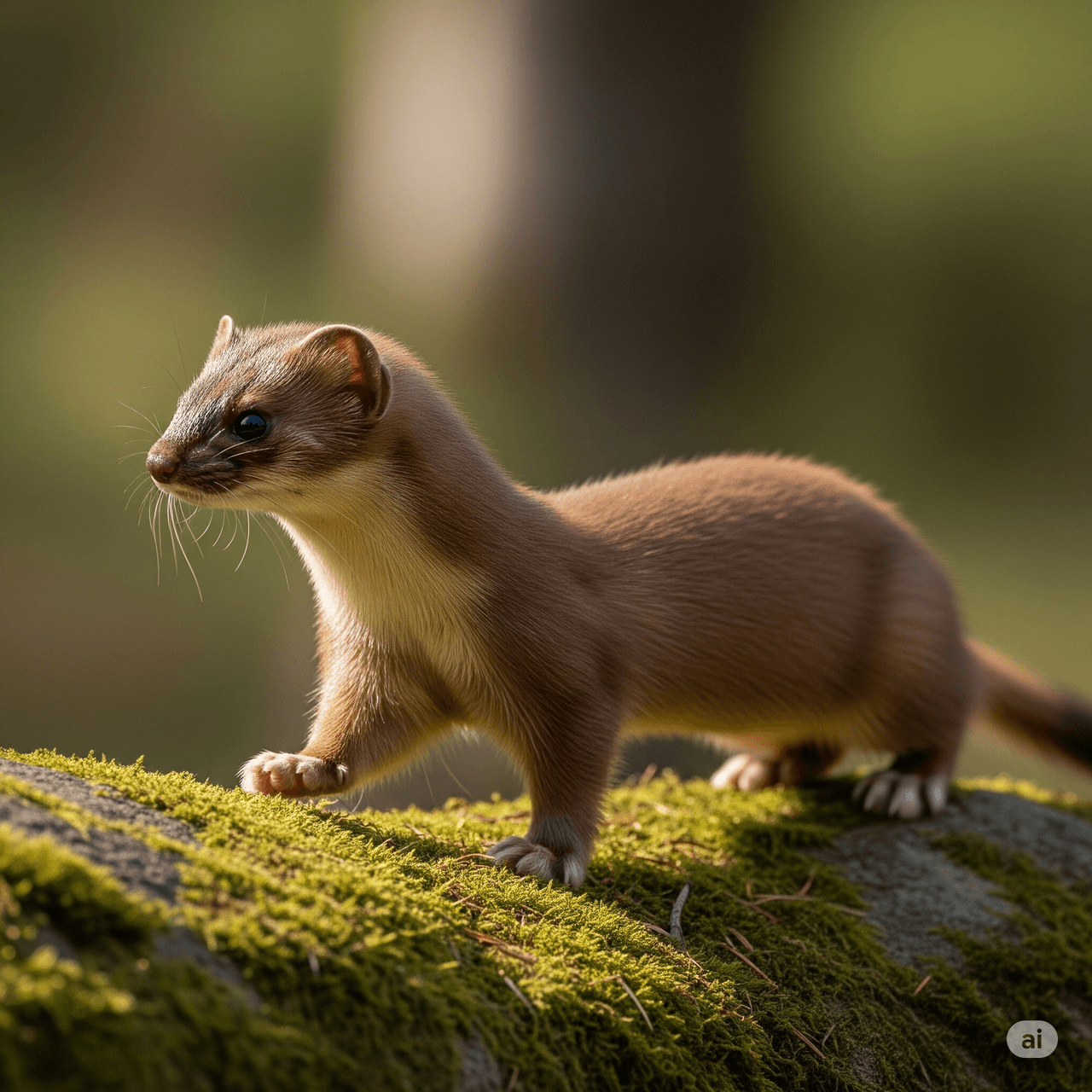
Martens (Martes martes)
Taxonomy | Martes martes (Linnaeus, 1758) | ||||||||
|---|---|---|---|---|---|---|---|---|---|
Family | Mustelidae | ||||||||
Body Length | 40-55 cm | ||||||||
Weight(s) | 1-2 kg | ||||||||
Fur Color | Dark brown, yellowish-white patch on the throat | ||||||||
Distribution(s) | Europe Caucasus Anatolia Western Siberia | ||||||||
Habitat | Forested areas Rural areas Agricultural lands | ||||||||
Diet(s) | Omnivorous Fruits Insects Birds Small mammals | ||||||||
The pine marten (Martes martes) is a medium-sized carnivore belonging to the Mustelidae family and is widely distributed across the forested regions of Europe and Western Asia. Recognized for its exceptional climbing ability, agile build, and nocturnal behavior, this species plays a significant role in ecosystems. The pine marten exhibits an omnivorous diet, consuming both animal prey and fruit. Its habitat preferences, behavioral traits, and ecological importance have been extensively studied through various scientific research efforts.
The pine marten has a slender, elongated body, short legs, and a long, bushy tail. Adult individuals typically reach a body length of 40–55 cm and weigh between 1 and 2 kg. The fur is generally dark brown, with a distinctive yellowish-white patch on the throat. This species belongs to the genus Martes within the Mustelidae family and is closely related to the beech marten (Martes foina) and the sable (Martes zibellina).
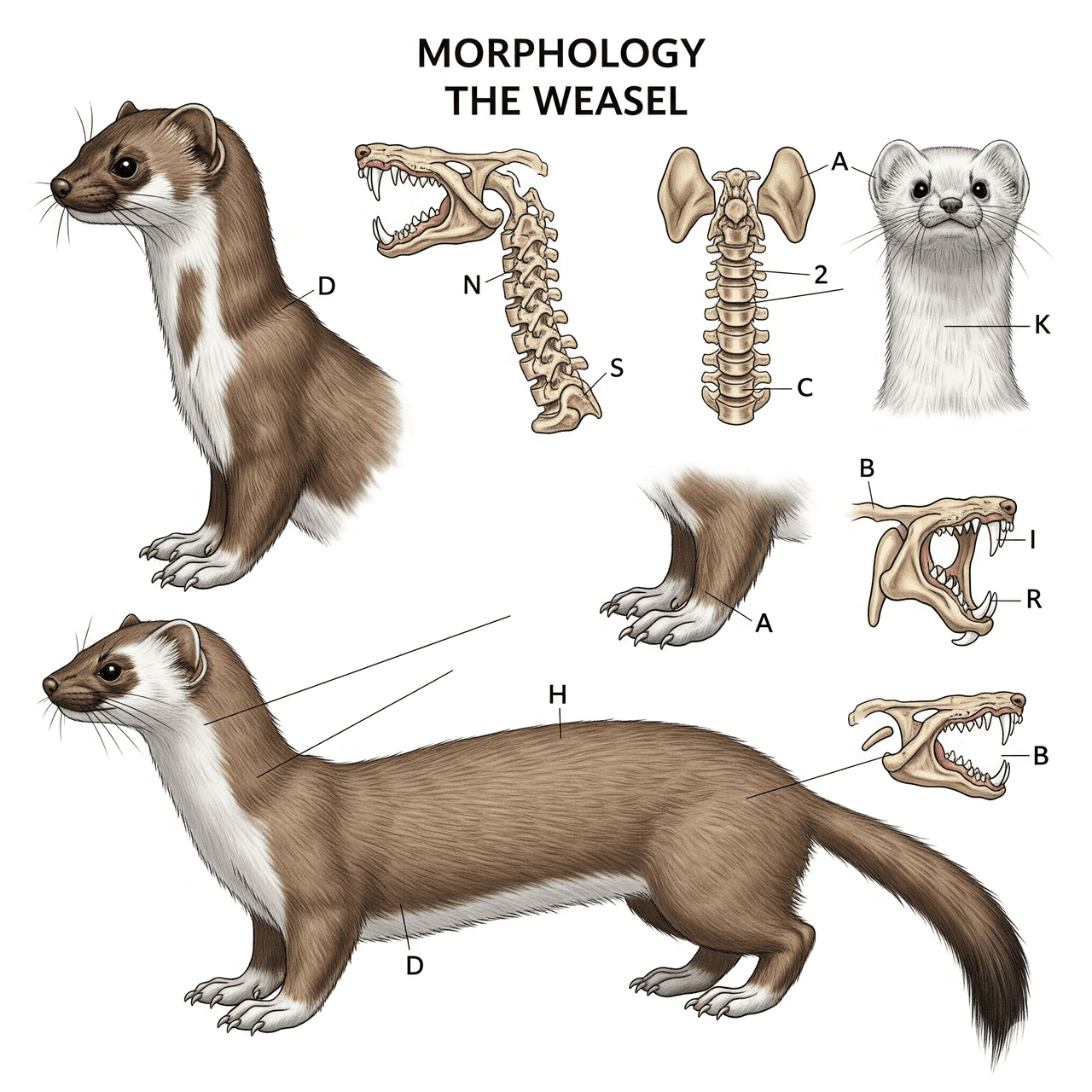
Pine Marten Body Structure (Generated by artificial intelligence.)
The pine marten is commonly found across much of Europe, western Siberia, Anatolia, and the Caucasus. It primarily inhabits forested areas but, due to its habitat flexibility, can also live in agricultural lands and rural regions. Habitat selection varies depending on the availability of food resources and the intensity of human activity.
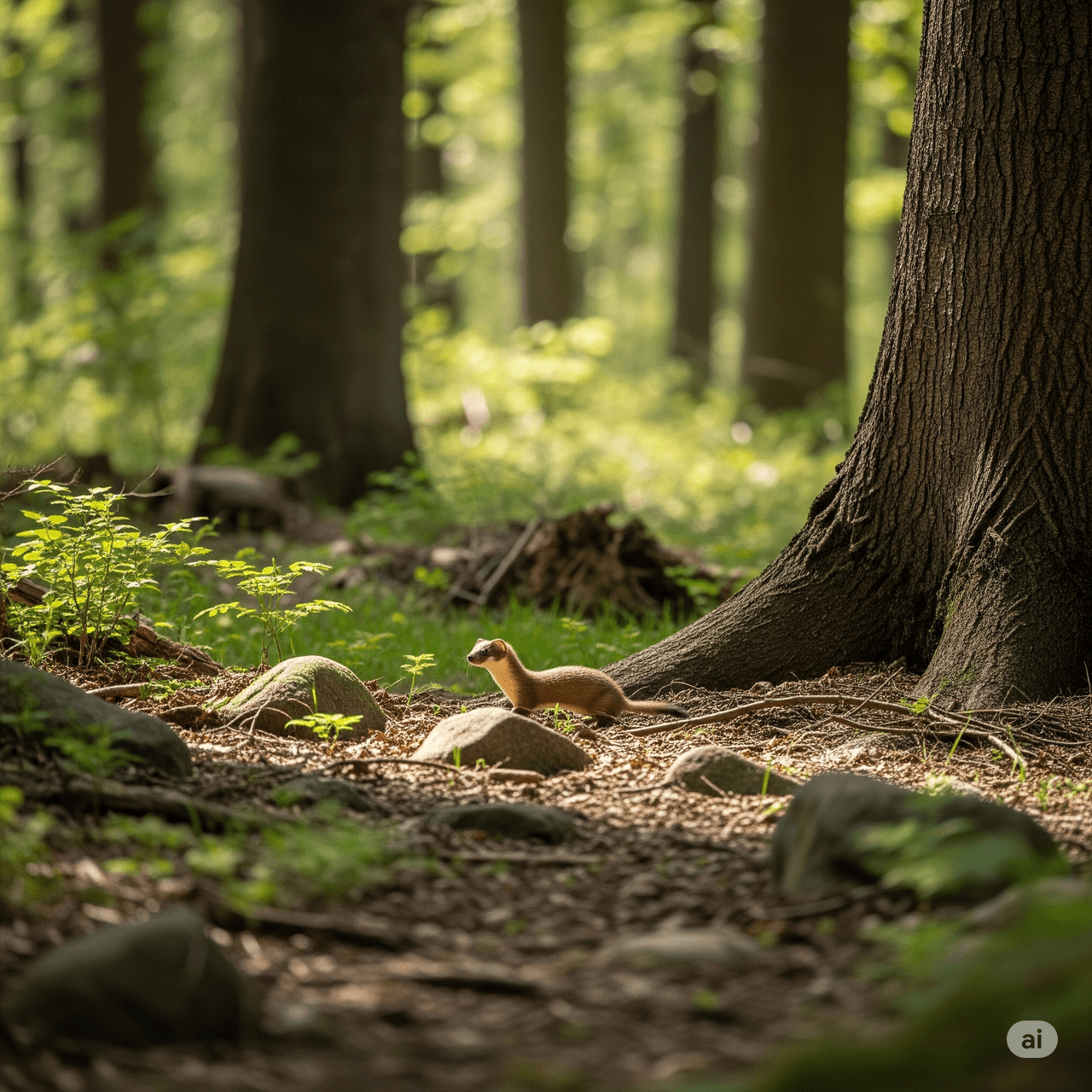
Pine Marten Habitat (Generated by artificial intelligence.)
The pine marten leads a nocturnal and solitary life. Foraging and activity levels typically increase during twilight hours. Its feeding habits vary seasonally: fruit and insects are consumed more frequently in summer, while small mammals and birds become the primary food sources in winter. The pine marten communicates through scent marking, a behavior that intensifies during the breeding season.
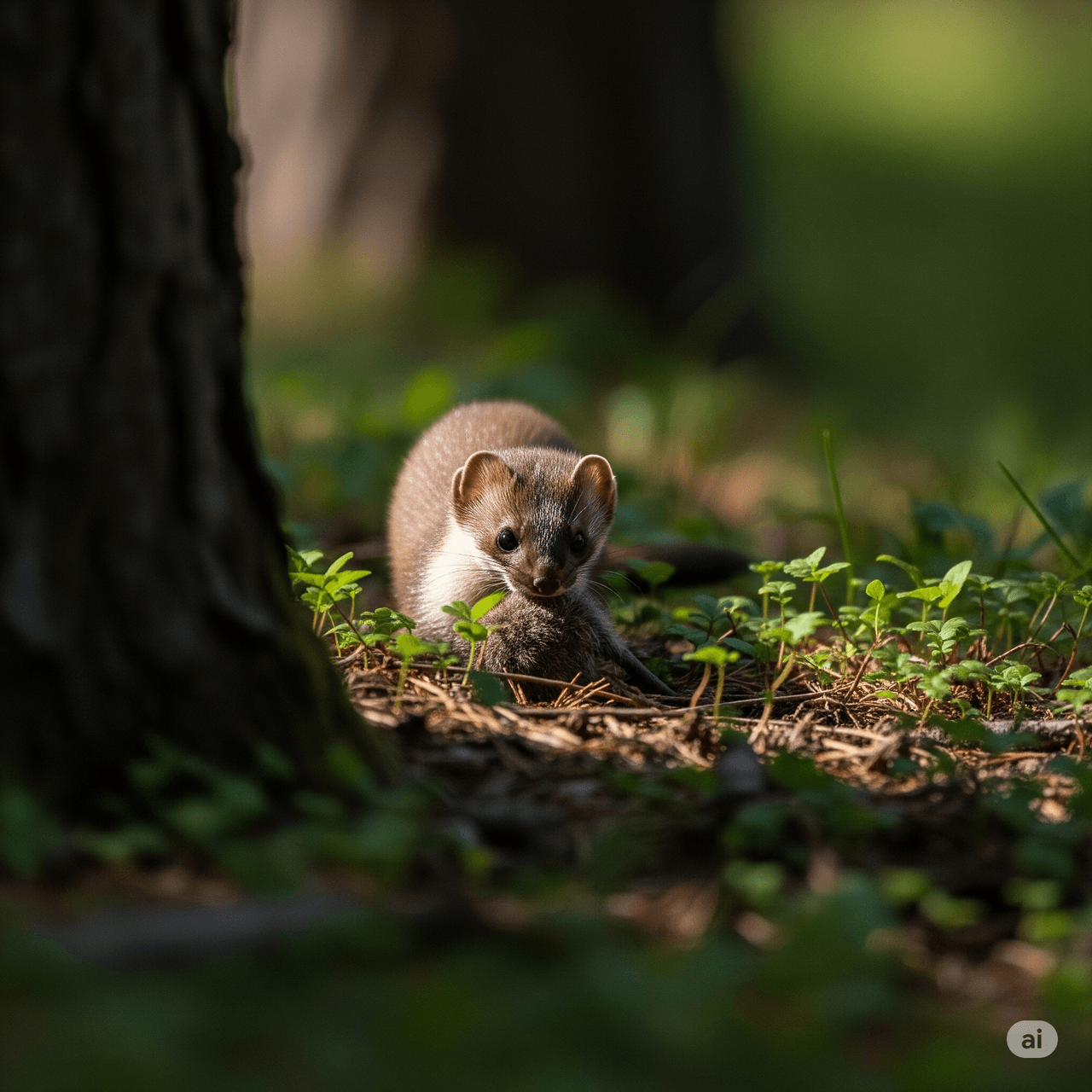
Pine Marten Hunting (Generated by artificial intelligence.)
Balestrieri, A., Remonti, L., & Prigioni, C. (2016). Distribution and ecology of lowland pine marten (Martes martes L. 1758). Università degli Studi di Milano. Accessed May 24, 2025. https://air.unimi.it/handle/2434/358805
Fedele, E. (2021). Spatiotemporal activity of the pine marten *Martes martes*: Insights from an island population. *Ecological Research*. Accessed May 24, 2025. https://www.academia.edu/101575974/Spatiotemporal_activity_of_the_pine_marten_Martes_martes_Insights_from_an_island_population
Proulx, G., Aubry, K. B., Birks, J. D. S., Buskirk, S. W., Fortin, C., Frost, H. C., ... & Zielinski, W. J. (2004). World distribution and status of the genus Martes in 2000. In *Martens and fishers (Martes) in human-altered environments* (pp. 21-76). Springer. Accessed May 24, 2025. https://link.springer.com/chapter/10.1007/0-387-22691-5_2
Ruiz-González, A., Saino, N., & Prigioni, C. (2014). Distribution and habitat use by pine marten Martes martes in a riparian corridor crossing intensively cultivated lowlands. ResearchGate. Accessed May 24, 2025. https://www.researchgate.net/publication/269275121_Distribution_and_habitat_use_by_pine_marten_Martes_martes_in_a_riparian_corridor_crossing_intensively_cultivated_lowlands

Martens (Martes martes)
Taxonomy | Martes martes (Linnaeus, 1758) | ||||||||
|---|---|---|---|---|---|---|---|---|---|
Family | Mustelidae | ||||||||
Body Length | 40-55 cm | ||||||||
Weight(s) | 1-2 kg | ||||||||
Fur Color | Dark brown, yellowish-white patch on the throat | ||||||||
Distribution(s) | Europe Caucasus Anatolia Western Siberia | ||||||||
Habitat | Forested areas Rural areas Agricultural lands | ||||||||
Diet(s) | Omnivorous Fruits Insects Birds Small mammals | ||||||||
Morphological Characteristics and Taxonomy
Distribution and Habitat Preferences
Behavior and Ecology