


This article was automatically translated from the original Turkish version.
+2 More
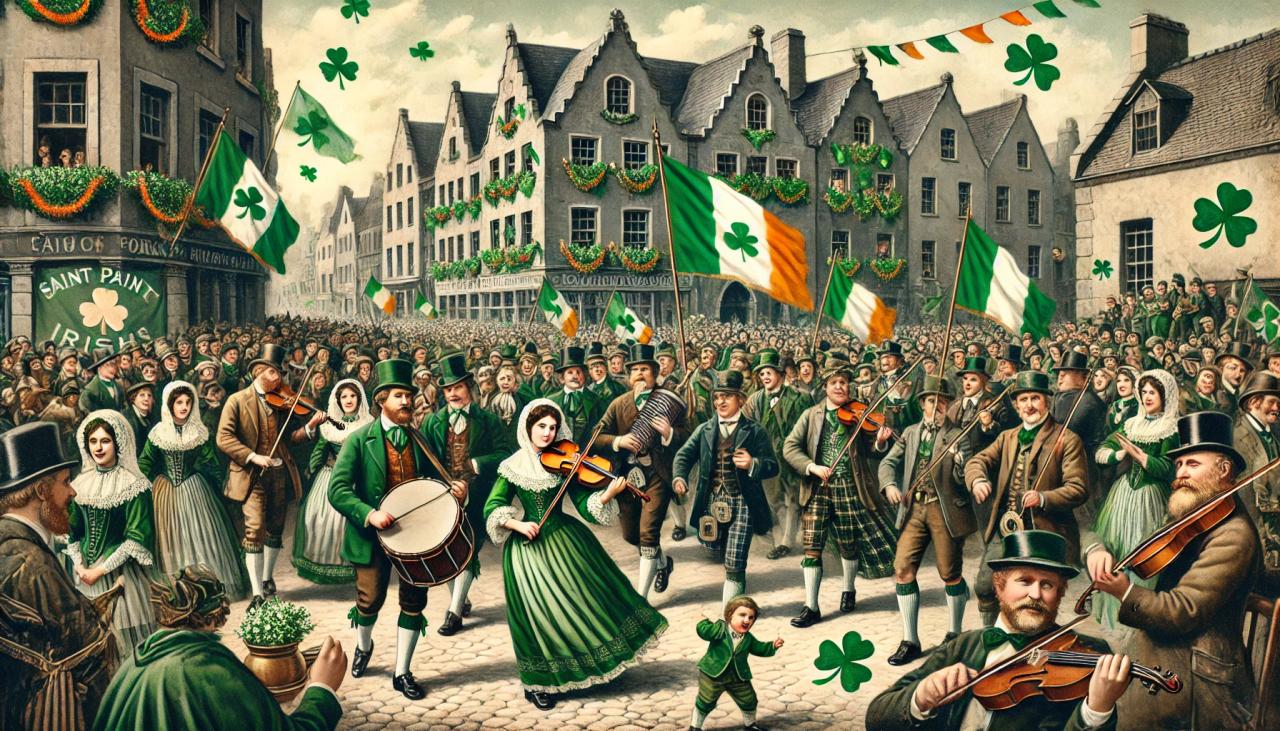
Saint Patrick's Day
Door | Commemoration and Celebration Day | ||||||||
|---|---|---|---|---|---|---|---|---|---|
Beginning | March 17, 461 | ||||||||
Referenced Event | Death of Saint Patrick | ||||||||
Celebrated Event | Spread of Christianity | ||||||||
Primary Celebrated Country | Ireland | ||||||||
Saint Patrick’s Day is a special day observed annually on 17 March in honor of Saint Patrick, the patron saint of Ireland, and has both religious and cultural significance. This day is celebrated worldwide, particularly by Irish and Irish-descended communities. Originally emerging as a religious feast, Saint Patrick’s Day has over time become a cultural and national symbol.
Born as Maewyn Succat in Roman Britain, Saint Patrick was captured at a young age by Irish raiders and taken to Ireland, where he spent six years as a slave tending sheep. During his enslavement, Patrick underwent a religious conversion and, guided by an angel in his dreams according to Christian belief, managed to escape and reunite with his family.
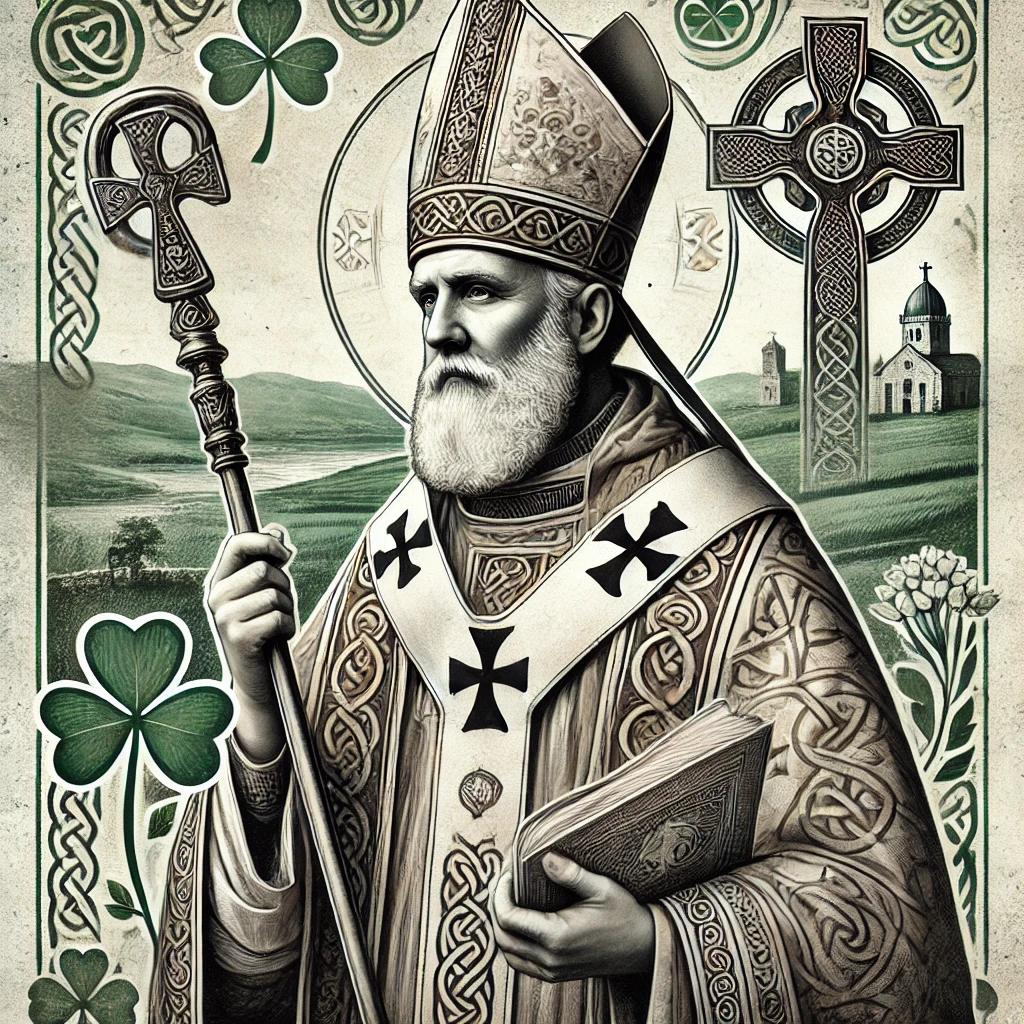
AI-generated representative image of Saint Patrick.
After returning to Britain, he received religious education under Saint Germanus in Auxerre, Gaul. Following his ordination as a priest, Patrick returned to Ireland and devoted the remainder of his life to spreading Christianity among the Irish people.
Saint Patrick actively engaged in missionary work throughout Ireland, establishing numerous monasteries and churches. He authored two important works during this period: Confessio (Confessions) and Epistola (Letter to the Soldiers of Coroticus). Confessio is an autobiographical text that details Patrick’s religious views, inner life, and missionary activities in Ireland. Epistola expresses the injustices suffered by Irish Christians and Patrick’s response to them.
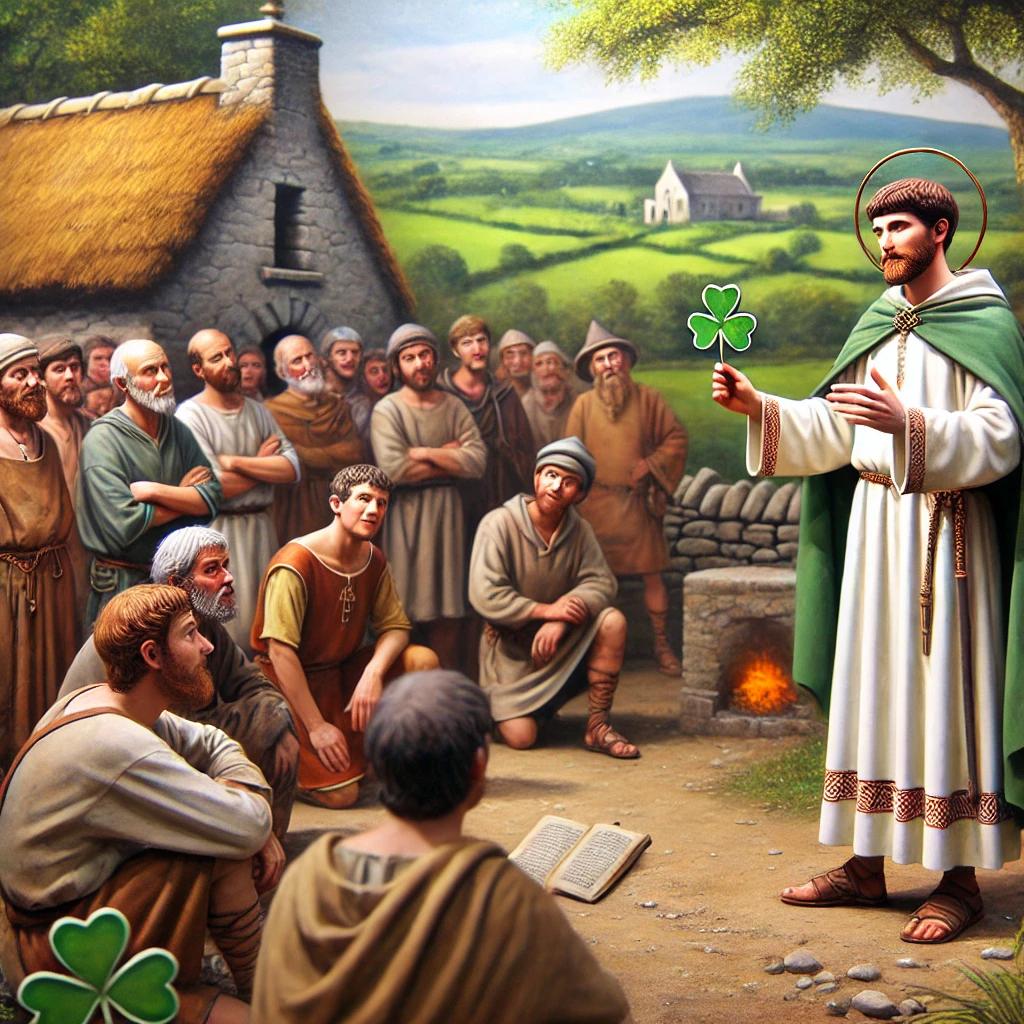
AI-generated. Symbolizes Patrick’s teaching using the three-leaf clover.
Patrick engaged with pagan Irish leaders to spread Christianity and made efforts to distance the Irish people from pagan traditions. Although he succeeded in converting many local chieftains and tribal leaders, it would take much longer for Christianity to become the national religion of Ireland.
Saint Patrick’s Day is one of the few days jointly recognized by both Catholic and Protestant communities. Due to Patrick’s role in introducing Christianity to Ireland and replacing paganism with Christian faith, he holds great religious importance. Consequently, the Catholic Church declared him a saint and designated the date of his death as his feast day.
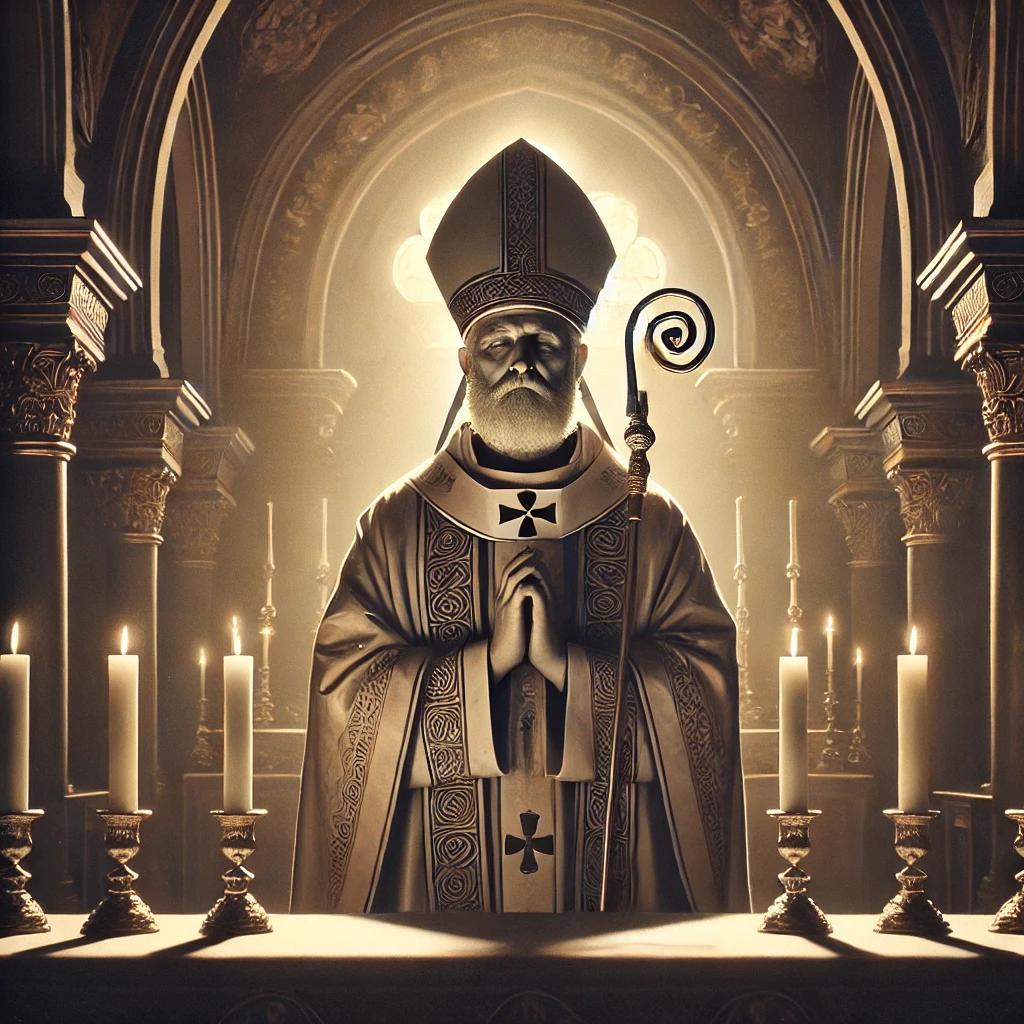
AI-generated. Depicts a ceremony held in honor of Saint Patrick.
Today, the Church of Ireland, along with Catholic, Anglican, and Protestant communities, commemorates the day through joint prayers and religious services. Special liturgies are held in churches on Saint Patrick’s Day, which is officially recognized as a major feast in the Catholic liturgical calendar.
Saint Patrick’s Day has become a global representation of Irish culture and identity. Among its most recognizable symbols are the color green and the shamrock. The use of the shamrock stems from Patrick’s practice of using the three-leafed plant to explain the Christian doctrine of the Holy Trinity to the Irish people.
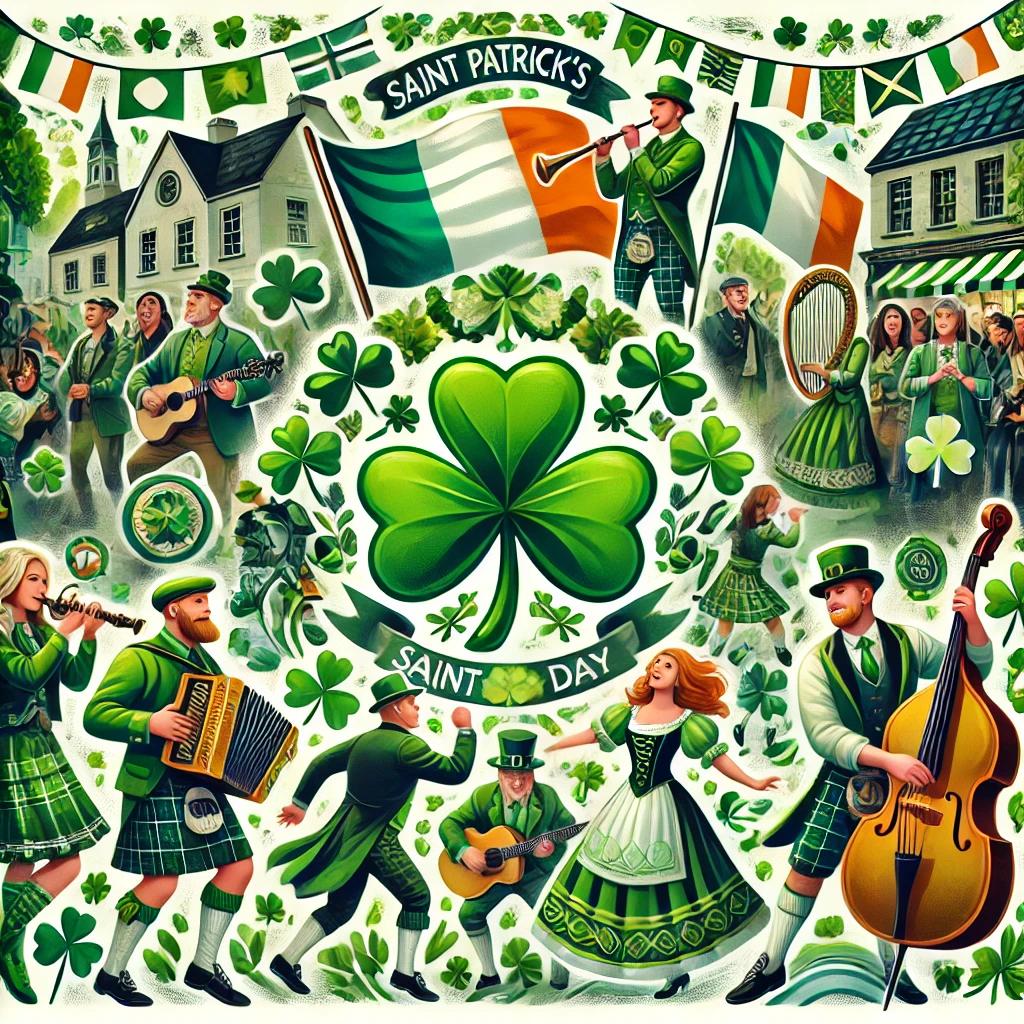
AI-generated. Depicts some traditions associated with Saint Patrick’s Day.
Green is regarded as the national color of Ireland and has become one of the central symbols of modern celebrations. On this day, people wear green clothing, display shamrock symbols, and participate in Irish cultural events.
Numerous legends are associated with Saint Patrick’s Day. The most famous is the tale that Patrick drove all snakes out of Ireland into the sea, purifying the land of evil. This story is widely interpreted as a metaphor for the end of paganism.
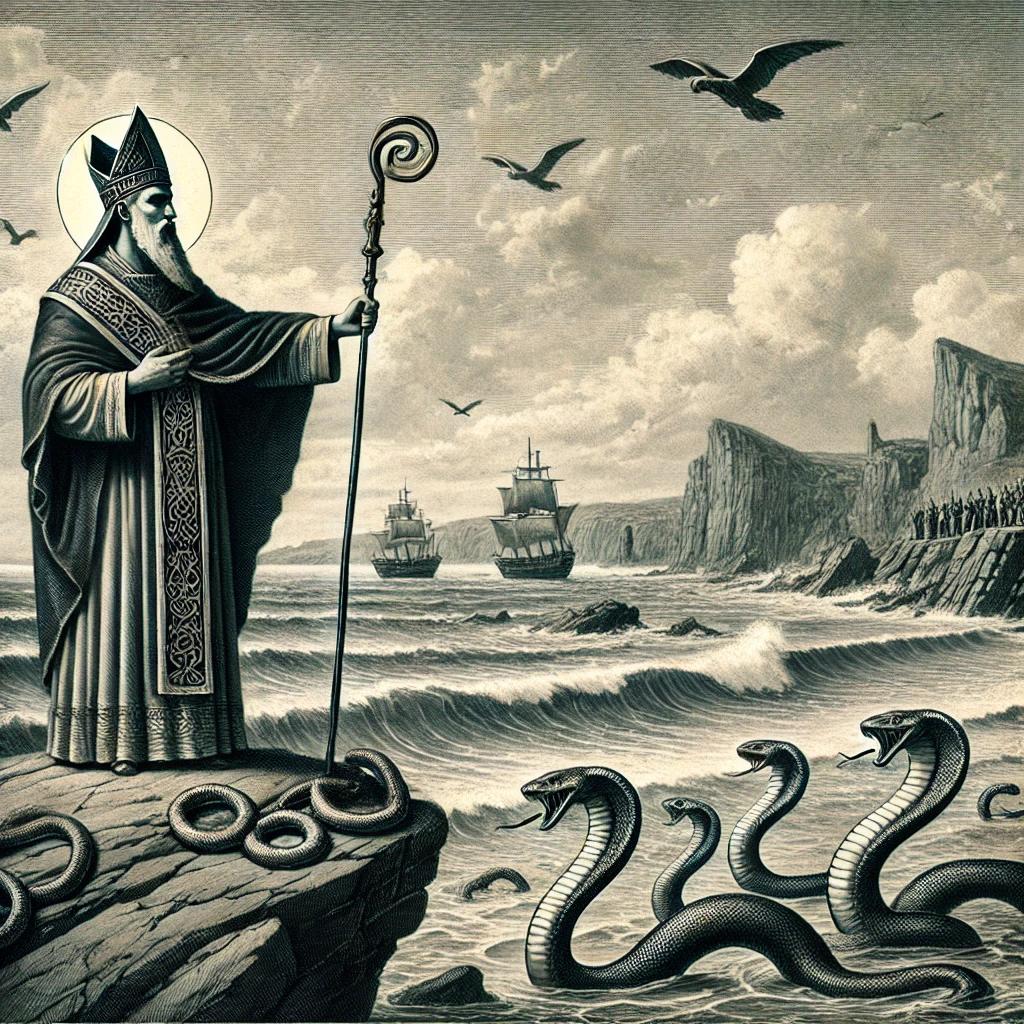
AI-generated. Depicts Saint Patrick driving snakes out of Ireland.
Saint Patrick’s Day is celebrated not only in Ireland but also in many other countries including the USA, Canada, Australia, and the United Kingdom. In New York and Chicago in the USA, large parades are held, and in Chicago specifically, the river is dyed green to mark the occasion.
In Dublin, the capital of Ireland, major festivals are organized, featuring extensive events attended by both locals and tourists. Irish music and dance play a prominent role in these celebrations, ensuring the preservation and transmission of cultural heritage across generations.

AI-generated. Depicts the global celebration of Saint Patrick’s Day.
Originally a religious observance, Saint Patrick’s Day has evolved into both a national symbol of Ireland and a globally celebrated cultural festival. This special day, where diverse cultures come together to showcase Irish heritage, continues to be observed with significance within Christian communities today. The life and legacy of Saint Patrick remain the foundational elements that give meaning to its celebration.
"(St. Patrick's Day): 9 Facts About St. Patrick's Day." Euronews. March 17, 2025.Accessed Adresi.
"St. Patrick’s Day Research Paper." IvyPanda. Accessed March 17, 2025.Accessed Adresi.
"The True Story of St. Patrick." *Celtic Druid Temple.* Accessed March 17, 2025.Accessed Adresi.
Coleman, David. "Translating St Patrick: Political ethnicity, Ulster, and the early modern Anglo-Irish." *Textual Practice* 23, no. 5 (2009): 723-738. Accessed March 17, 2025.Accessed Adresi.
Conway, Moncure. "The Saint Patrick Myth." *The North American Review* 137, no. 323 (1883): 358–371. Accessed March 17, 2025.Accessed Adresi.
McGrath, Christina Isabella. *Saint Patrick: Issues of Translation & His Enduring Pastoral Message.* Madison: New Jersey. Accessed March 17, 2025.Accessed Adresi.
Moss, Kenneth. "St. Patrick's Day Celebrations and the Formation of Irish-American Identity, 1845-1875." *Journal of Social History.* (1995): 125-148. Accessed March 17, 2025.Accessed Adresi.
Sanderson, Joseph. *The Story of Saint Patrick With A Sketch of Ireland's Condition Before and After Patrick's Time.* Richardson Company: New York. Accessed March 17, 2025.Accessed Adresi.

Saint Patrick's Day
Door | Commemoration and Celebration Day | ||||||||
|---|---|---|---|---|---|---|---|---|---|
Beginning | March 17, 461 | ||||||||
Referenced Event | Death of Saint Patrick | ||||||||
Celebrated Event | Spread of Christianity | ||||||||
Primary Celebrated Country | Ireland | ||||||||
No Discussion Added Yet
Start discussion for "Saint Patrick's Day" article
The Life of Saint Patrick
Missionary Activities
Religious Significance
Cultural Significance and Traditions
Celebrations Worldwide