


This article was automatically translated from the original Turkish version.
+1 More
Rigor mortis (Post-mortem stiffening) is a biochemical and physiological change that occurs during the early post-mortem period, resulting from the sustained contraction of muscles, leading to loss of elasticity and the transformation of muscle tissue into meat. This process develops as a result of complex reactions triggered by the cessation of muscle metabolism.
During the transformation of muscle into meat, energy stores within the muscle tissue are depleted progressively. With the cessation of circulation, oxygen supply is cut off. After slaughter, muscles attempt to meet their energy demands through glycogen stored within the muscle tissue. Both aerobic and anaerobic metabolism are activated during this process.
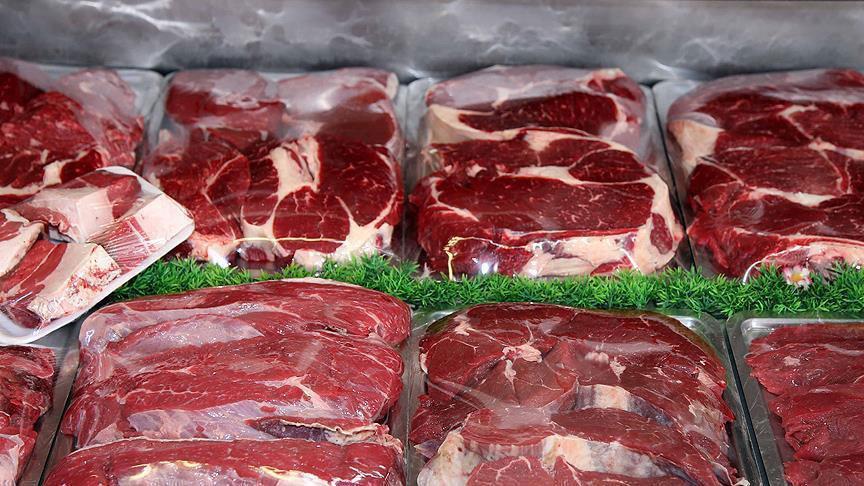
Red Meat Image (Anadolu Ajansı)
As a result of aerobic and anaerobic metabolism, lactic acid accumulates in the muscles, causing the pH to drop to approximately 5.4–5.8.【1】 The accumulation of lactate and hydrogen ions (H⁺) within muscle cells causes a decline in pH. This acidification reduces water-holding capacity and facilitates the formation of actin-myosin cross-bridges.
During this process, ionic (calcium, sodium, potassium) and enzymatic changes occur. The inability to sustain energy production leads to reduced ATP synthesis and inhibition of muscle relaxation. ATP production declines due to the cessation of oxidative phosphorylation and the blockage of ADP rephosphorylation. The decrease in ATP levels disrupts the cycle of muscle contraction and relaxation.
Metabolic reactions continue in the muscle after slaughter. Energy production can be sustained only briefly. Meat tenderization is associated with changes in myofibrillar proteins, most of which are mediated by proteolytic enzymes.
The rigor mortis process is examined in three main stages: pre-rigor, rigor mortis, and post-rigor.
During this stage, active glycolysis continues in the muscles. Due to oxygen depletion, anaerobic metabolism dominates. Muscle elasticity is preserved and extensibility remains high.
With the cessation of ATP synthesis, permanent cross-bridges form between actin and myosin filaments. This reduces muscle extensibility and causes stiffness. Muscle tissue reaches its maximum firmness.
After glycogen reserves are exhausted and pH stabilizes, muscle tissue becomes fixed. During this stage, proteolytic enzymes begin to break down myofibrillar proteins, initiating the tenderization process.
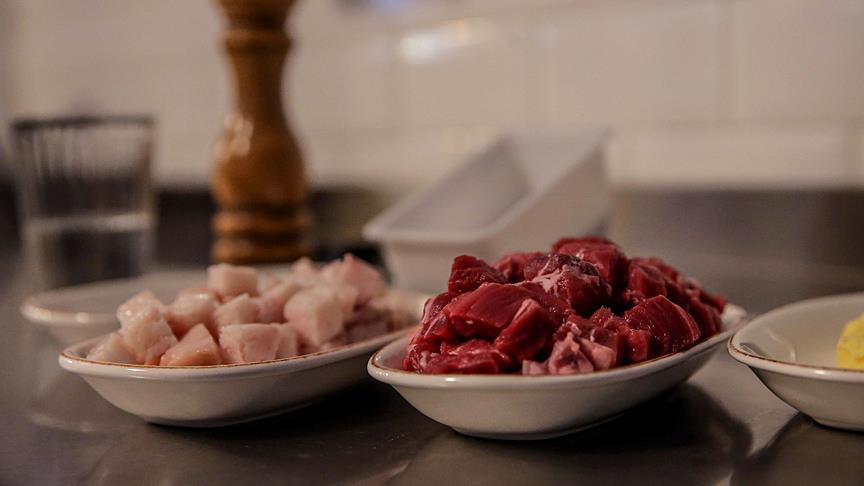
Cube Steak(Anadolu Ajansı)
Changes in pH and glycogen levels in muscle tissue during rigor mortis can lead to the development of distinct forms of alkaline and acidic rigor mortis.
Prior to slaughter, under stressful conditions, muscle glycogen reserves are depleted. This limits lactic acid production, and the pH remains around 6.0. This condition leads to the formation of dark, firm, and dry (DFD: Dark, Firm, Dry) meat. Microbial growth may occur more rapidly in DFD meat. Rigor mortis can develop within as little as one hour.【2】
Stress conditions accelerate glycolysis, causing the pH to drop more rapidly than normal. The pH may fall to approximately 5.3 within 1–1.5 hours. This leads to the formation of acidic rigor mortis. During this process, proteins such as myosin undergo denaturation, resulting in pale, soft, and exudative (PSE: Pale, Soft, Exudative) meat.【3】
During rigor mortis after slaughter, physical tension applied to the muscles affects sarcomere length. The method of suspending the carcass can alter the degree of muscle contraction.
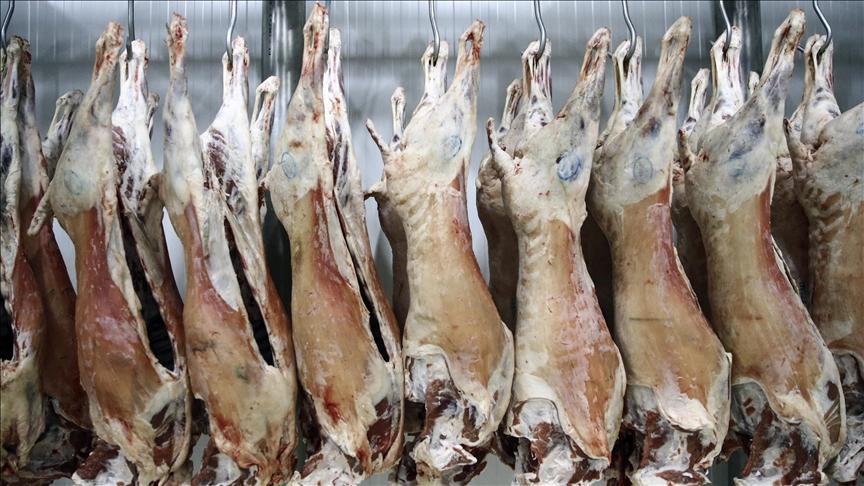
Carcass Meat(Anadolu Ajansı)
In the method of suspension by the Achilles tendon, some muscles are stretched while others contract. In the pelvic bone suspension method (tenderstretch), the hind legs are held close to their natural position.
This method reduces actin-myosin overlap in the longissimus muscle and hind leg muscles, limiting sarcomere shortening. Reduced actin-myosin overlap results in more tender meat.
The rate at which muscles are cooled is a determining factor in rigor mortis development. Rapid cooling of muscles below 15°C before rigor mortis is complete causes cold shortening.【4】 This results in significant shortening of sarcomere length.
Cold shortening is the shortening of muscle fibers that occurs when carcasses are cooled to low temperatures before rigor mortis is complete. During this process, muscles shorten as inactive energy is reactivated, leading to increased nutrient loss.
Rigor stiffness occurs when rigor mortis is reactivated during the thawing of frozen muscles. This causes severe muscle shortening and water loss.
After slaughter, rigor mortis develops in the muscles. Due to muscle contractions, the meat becomes firm. A specific period of time is required for rigor mortis to resolve.
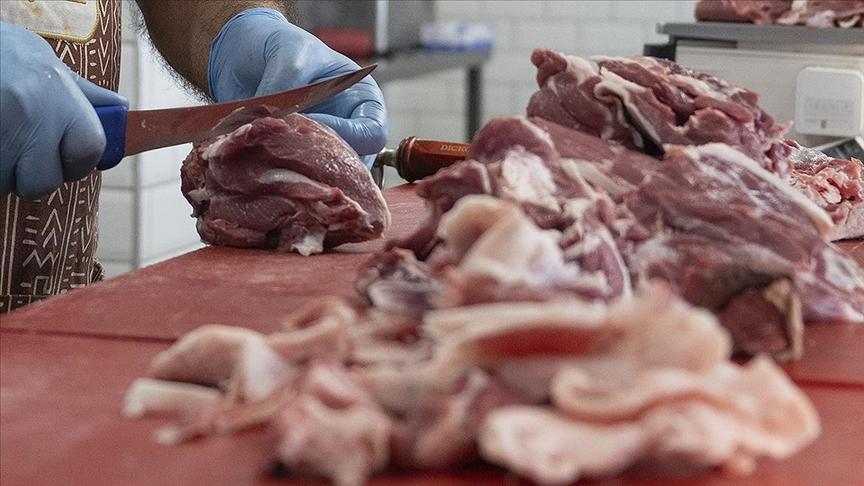
Meat Slaughter(Anadolu Ajansı)
At least 24 hours must pass for rigor mortis to resolve. Meat consumed before this period may be tough, difficult to cook, and hard to digest.【5】
Meat must be properly aged. During aging, meat should be stored in cool, dry, and non-sunlit environments. The carcass must be held until its temperature drops to ambient temperature, but not below 15°C. Sheep and goat carcasses should be held without packaging for approximately 5–6 hours, while large livestock carcasses require 5–8 hours.【6】
In forensic medicine, algor mortis, livor mortis, and rigor mortis are evaluated together to estimate time since death. Rigor mortis typically begins 1–2 hours after death, is complete within 12 hours, and disappears after approximately 24–36 hours.【7】
The decline in ATP, oxygen deficiency, and accumulation of lactic acid cause actin and myosin to bind, resulting in muscle stiffness. During this process, muscles may respond to external stimuli but cannot relax.
Warning: The content in this article is provided solely for general encyclopedic information purposes. The information herein should not be used for diagnosis, treatment, or medical advice. Before making any decisions regarding health, you must consult a physician or qualified healthcare professional. The author and KÜRE Encyclopedia assume no responsibility for any consequences arising from the use of this information for diagnostic or therapeutic purposes.
Anadolu Ajansı. "AVHO Başkanı Şenel: Kurban Eti Kesimden Sonraki Gün Tüketilmeli." August 20, 2018. Accessed May 13, 2026. https://www.aa.com.tr/tr/saglik/avho-baskani-senel-kurban-eti-kesimden-sonraki-gun-tuketilmeli/1236170
Başer, Hikmet Faruk. "Kurban Etlerinin Hızlı Soğutulmaması Riskleri Artırıyor." Anadolu Ajansı, June 5, 2025. Accessed May 13, 2026. https://www.aa.com.tr/tr/gundem/kurban-etlerinin-hizli-sogutulmamasi-riskleri-artiriyor/3589465
Bozdoğan, Hidayet, and T. Haluk Çelik. "Etin Duyusal Niteliklerinden Yumuşaklık Üzerinde Kasların Histolojik ve Biyokimyasal Yapılarının Rolü." *Akademik Et ve Süt Kurumu Dergisi* 6 (2023): 35–43. Accessed May 13, 2026. https://dergipark.org.tr/en/pub/aeskd/issue/80828/1281135
Dahiya, Sunil Kumar, R. Kaushik, J. K. Jakhar, S. K. Dhattarwal, and A. Dahiya. "Rigor Mortis: A Reliable Tool For Estimating Time Since Death In Indian Scenario." *Journal of Indian Academy of Forensic Medicine* 46, no. 4 (2024): 523–532. Accessed May 13, 2026. https://journals.sagepub.com/doi/full/10.1177/09710973251336530
Ding, Zhenjiang, Q. Wei, C. Liu, H. Zhang, and F. Huang. "The Quality Changes And Proteomic Analysis Of Cattle Muscle Postmortem During Rigor Mortis." *Foods* 11, no. 2 (2022): Article No: 233. Accessed May 13, 2026. https://pmc.ncbi.nlm.nih.gov/articles/PMC8775072/
Duran, Enes. "ESK 50 Bin Baş Canlı Kesimlik Sığırdan Elde Edilecek Karkasların Satışını Yapacak." Anadolu Ajansı, April 4, 2023. Accessed May 13, 2026. https://www.aa.com.tr/tr/ekonomi/esk-50-bin-bas-canli-kesimlik-sigirdan-elde-edilecek-karkaslarin-satisini-yapacak/2863550
Kahramanmaraş İl Directorate of Agriculture and Forestry. "Kurbanlık Etlerinde Dikkat Edilecek Hususlar." T.C. Ministry of Agriculture and Forestry Local Portal. Accessed May 13, 2026. https://kahramanmaras.tarimorman.gov.tr/Haber/387/Kurbanlik-Etlerinde-Dikkat-Edilecek-Hususlar
Keyvan, Erhan. "Sığır Karkaslarında Post-Mortem Değişiklikler." *Veteriner Hekimler Derneği Dergisi* 81, no. 2 (2010): 43–46. Accessed May 13, 2026. https://dergipark.org.tr/tr/pub/vetheder/article/379407
Çalkaya, Mustafa. "Kırmızı Et Üreticilerinden Fiyat Dalgalanmalarına Karşı 'Küçük İşletme' Önerisi." Anadolu Ajansı, December 16, 2023. Accessed May 13, 2026. https://www.aa.com.tr/tr/ekonomi/kirmizi-et-ureticilerinden-fiyat-dalgalanmalarina-karsi-kucuk-isletme-onerisi/3084121
Çalkaya, Mustafa. "Kırmızı Et Üretimindeki Artış, Fiyatları Düşürebilir." Anadolu Ajansı, June 9, 2018. Accessed May 13, 2026. https://www.aa.com.tr/tr/ekonomi/kirmizi-et-uretimindeki-artis-fiyatlari-dusurebilir/1170092
[1]
Erhan Keyvan, "Sığır Karkaslarında Post-Mortem Değişiklikler," Veteriner Hekimler Derneği Dergisi 81, no. 2 (2010): 44, Access 13 May 2026, https://dergipark.org.tr/tr/pub/vetheder/article/379407
[2]
Keyvan, "Sığır Karkaslarında Post-Mortem Değişiklikler," 44, Access 13 May 2026, https://dergipark.org.tr/tr/pub/vetheder/article/379407
[3]
Keyvan, "Sığır Karkaslarında Post-Mortem Değişiklikler," 44, Access 13 May 2026, https://dergipark.org.tr/tr/pub/vetheder/article/379407
[4]
Keyvan, "Sığır Karkaslarında Post-Mortem Değişiklikler," 44, Access 13 May 2026, https://dergipark.org.tr/tr/pub/vetheder/article/379407
[5]
Kahramanmaraş Provincial Directorate of Agriculture and Forestry. “Kurbanlık Etlerinde Dikkat Edilecek Hususlar,” Access 13 May 2026, https://kahramanmaras.tarimorman.gov.tr/Haber/387/Kurbanlik-Etlerinde-Dikkat-Edilecek-Hususlar
[6]
Kahramanmaraş Provincial Directorate of Agriculture and Forestry. “Kurbanlık Etlerinde Dikkat Edilecek Hususlar,” Access 13 May 2026, https://kahramanmaras.tarimorman.gov.tr/Haber/387/Kurbanlik-Etlerinde-Dikkat-Edilecek-Hususlar
[7]
Sunil Kumar Dahiya, Kaushik R., Jakhar J. K., Dhattarwal S. K., and Dahiya A., "Rigor Mortis: A Reliable Tool For Estimating Time Since Death In Indian Scenario," Journal of Indian Academy of Forensic Medicine 46, no. 4 (2024): 523, Access 13 May 2026, https://journals.sagepub.com/doi/full/10.1177/09710973251336530

No Discussion Added Yet
Start discussion for "Rigor Mortis (Death Rigidity)" article
Muscle to Meat Transformation and Post-Mortem Energy Metabolism
Stages of Rigor Mortis
Pre-rigor (Delay Phase)
Rigor Mortis (Rapid Phase)
Post-Rigor Stage
Alkaline and Acidic Rigor Mortis
Alkaline Rigor Mortis (DFD Meat)
Acidic Rigor Mortis (PSE Meat)
Sarcomere Length and Muscle Tension
Cooling Rate
Cold Shortening and Rigor Stiffness
Meat Slaughter Process
Rigor Mortis in Forensic Medicine