


This article was automatically translated from the original Turkish version.
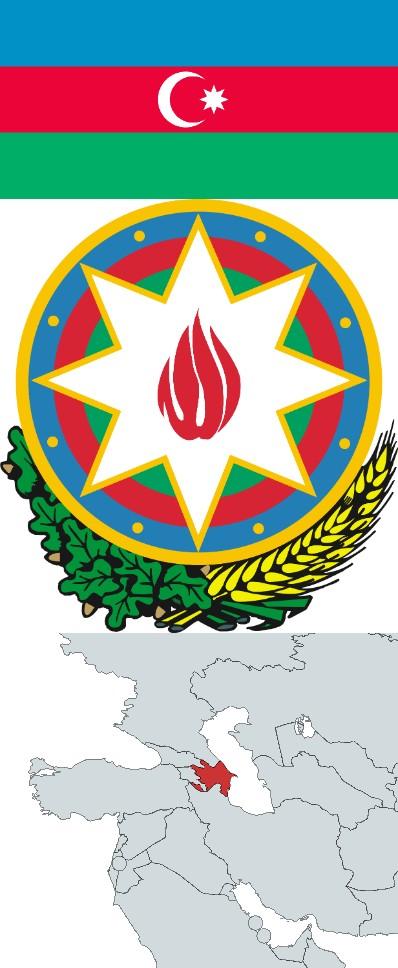
Republic of Azerbaijan
Official Name | (Azerbaijani: Azərbaycan Respublikası) Republic of Azerbaijan | ||||||||
|---|---|---|---|---|---|---|---|---|---|
Independence Date | 18 Ekim 1991 | ||||||||
GDP (Nominal) | $74.32 billion (2024) | ||||||||
GDP per Capita | $7,283.8 (2024) | ||||||||
Ethnic Groups | Azerbaijani 91.6%, Lezgi 2%, Russian 1.3%, Armenian 1.3%, Talysh 1.3%, other 2.4% (2009 estimate) | ||||||||
Religious Composition | Muslim 97.3% (mostly Shia), Christian 2.6%, other <0.1%, unaffiliated <0.1% (2020 estimate) | ||||||||
Telephone Code | +994 | ||||||||
Internet Country Code | .az | ||||||||
Head of State | Ilham Aliyev | ||||||||
Common Languages | Russian, Turkish, English | ||||||||
Total Population | 10,650,239 (2024 estimate) | ||||||||
Official Language | Azerbaijani Language | ||||||||
Capital | Baku | ||||||||
Climate | Dry and Semi-Arid Climate | ||||||||
Form of Government | Presidential System | ||||||||
Surface Area | 86,600 km² | ||||||||
Azerbaijan Republic, a state located in the eastern part of the South Caucasus, bordering the Caspian Sea and situated at the crossroads between Asia and Europe. It is bordered byRussiato the north, Georgia to the northwest, Armenia to the west, andIranto the south, and shares a short border with Türkiye via the Nakhchivan Autonomous Republic. Positioned at the center of east-west energy and transport corridors, the country serves as a transit point linking the Caucasus with the Black Sea basin, Central Asia, and the Middle East.
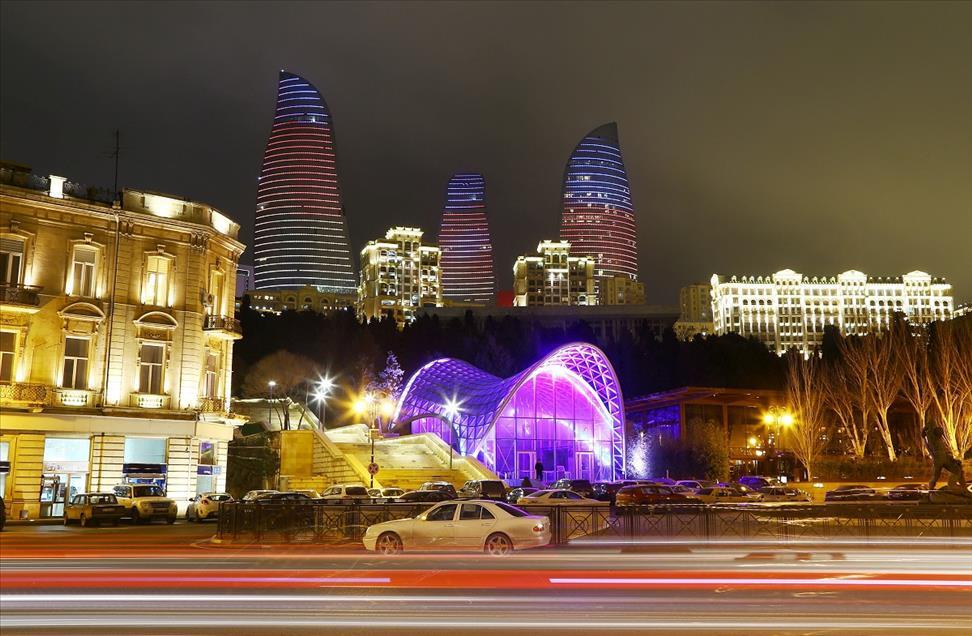
A View from the Capital Baku (AA)
Azerbaijani society is predominantly rooted in Turkish culture, with the vast majority of the population consisting of Azerbaijanis. The official language is Azerbaijani Turkish, and Islam is the dominant religion. Historically, the country has been situated at the intersection of Iranian, Caucasian, and Turkish cultures; traces of this synthesis are evident in music, literature, cuisine, and architecture. Azerbaijan is a country distinguished by its energy infrastructure, cultural heritage, and modernization strategies.
The lyrics of the National Anthem of Azerbaijan were written by Ahmad Javad in 1919, and the music was composed the same year by one of the most prominent figures in Azerbaijani musical history, Üzeyir Hacıbeyli. The anthem was used as the national anthem during the period of the Azerbaijan People's Republic and regained its official status in 1991 following the dissolution of the Soviet Union, becoming one of the nation's symbols. The anthem is also known in Azerbaijani Turkish as Azərbaycan Marşı. The text primarily conveys a framework of meaning centered on homeland, flag, heroism, and sacrifice. Musically, it reflects Hacıbeyli’s style, which synthesized Western harmony with Azerbaijani melodic identity.【1】
Azerbaijan National Anthem (Ian Berwick)
The State Flag of the Republic of Azerbaijan consists of three equal horizontal stripes: blue at the top, red in the center, and green at the bottom. In the center of the red stripe is a white crescent and an eight-pointed star. The blue color in the flag represents the Turkish origin of the Azerbaijani people. The red color reflects the ideals of modernization, nation-building, progress, and democratic development. The green color symbolizes Azerbaijan’s affiliation with the Islamic civilization.
The crescent on the flag represents the state tradition as a Turk-Islamic symbol. The eight-pointed star has been subject to academic interpretations, either representing the eight Turkic peoples of the world or the eight letters of the word “Azerbaijan” in Arabic script; however, the officially accepted meaning is the eight Turkic tribes.【2】
The tricolor flag (blue-red-green) was first adopted by the Government of the Azerbaijan People's Republic on 9 November 1918. The flag was lowered from state buildings on 27 April 1920 following the Soviet occupation. Although it did not hold official status during the Soviet period, it continued to exist as a symbolic element of Azerbaijani national identity.
The State Emblem of the Republic of Azerbaijan is a constitutional state symbol representing the country’s independence, sovereignty, and state continuity. The emblem is a modernized version of the design tradition that emerged during the Azerbaijan People's Republic, revived after independence.
As part of the process to establish state symbols, the Government of the Azerbaijan People's Republic organized a competition for the state emblem on 30 January 1920, planning to adopt the selected design on 28 May 1920. However, the collapse of the Republic on 28 April 1920 prevented the official ratification of the emblem. Consequently, although emblem designs prepared between 1919 and 1920 were completed, they did not acquire legal status.
Following the Soviet era, the process of re-establishing Azerbaijan’s state symbols was revived on 17 November 1990 through an initiative by the Supreme Council of the Nakhchivan Autonomous Republic. It was proposed that a new emblem competition be held to establish institutions for Azerbaijani independence. On 5 February 1991, the Supreme Soviet of the Republic of Azerbaijan decided to open the competition, and ultimately, the emblem was officially adopted after revisions to one of the historical designs. The State Emblem of the Republic of Azerbaijan acquired legal status through the Constitutional Law adopted on 19 January 1993.
Among the central symbols of the emblem, the eight-pointed star is a widespread symbol in Turkish culture, reflecting Azerbaijan’s historical ties to the Turkic world. The flame symbol represents Azerbaijan’s historical and mythological identity as “Odlar Yurdu” (Land of Fires), embodying the ideas of enlightenment, life, and national revival. Oak branches signify strength, resilience, and the rootedness of the state.
Ears of grain symbolize agriculture, prosperity, production, and the people’s livelihood. Gold-colored borders, buttons, and oak leaves represent state authority, wealth, splendor, and unity.【3】
National holidays in the Republic of Azerbaijan are defined in the Azerbaijan Republic Labor Code and constitute legally recognized elements of the national-cultural identity, historical events, and state traditions. These days serve as symbolic markers supporting the institutionalization of the modern state structure and historical-national memory:【4】
Azerbaijan, due to its location between the South Caucasus and the Near East, has hosted various tribes, early state formations, and cultural developments since antiquity. This period spans approximately from the 3rd millennium BCE to the 1st century BCE. Azerbaijan, with its fertile lands, temperate climate, and natural resources, has been a site of human settlement since very early times. The earliest traces of human communities are found in cave sites such as Azikh, Taghlar, Gazma, and Damjili. These communities sustained their lives through hunting, gathering, and stone tool production.
The most significant findings from the Stone Age are in the Azikh Cave, where Neanderthal-like human communities have been identified. During these periods, tribal communities, primitive religious beliefs, and the use of fire emerged. In the Mesolithic and Neolithic periods, the use of bows and arrows became widespread, and the first agricultural experiments began. The Gobustan rock carvings constitute the most important cultural heritage of this era. In the Neolithic period, animal husbandry and agriculture developed, and the first village settlements appeared.
During the Bronze Age, the processing of bronze accelerated social development. The Kura-Araxes culture is the region’s characteristic culture. Economic differentiation among tribes began, and the earliest examples of urbanization are seen in Nakhchivan’s Üzürlütepe. In the Iron Age, the widespread use of iron increased economic and military power. During this period, agriculture, animal husbandry, metalworking, and trade developed rapidly.
Between the 3rd and 1st millennia BCE, numerous local tribes and early state formations emerged in Azerbaijan, particularly in the southern region, which maintained close contact with Mesopotamian civilizations. Examples include the Lullubi, Kuti, Subar, and Turukki tribal unions (3rd–2nd millennia BCE). These communities engaged in agriculture, animal husbandry, and mining, and developed trade relations with Mesopotamian cities.
The Kingdom of Mannae, existing from the 9th to 6th centuries BCE, is the first known powerful state in ancient Azerbaijan. It was established around Lake Urmia, with its capital at Izirtu. It both waged wars and maintained diplomatic relations with its neighbors, Assyria and Urartu.
The Atropatene Kingdom emerged from the 4th century BCE onward, founded by the general Atropates after the death of Alexander the Great. It was a kingdom centered in southern Azerbaijan, with its capital at Kazaka. Zoroastrianism was influential in this kingdom, and it is known that the name “Azerbaijan” derives from this state.
In the 4th century BCE, another significant ancient state, Albania, emerged in northern Azerbaijan contemporaneously with Atropatene. Albania was an ancient state with a strong military tradition, advanced agricultural and craft culture, capable of fielding armies large enough to confront Rome, controlling trade routes, and possessing a multi-ethnic and multicultural structure. Its capital was Gabala, and this state played a crucial role in shaping the historical identity of the region.【5】
The geography of Azerbaijan, due to its geopolitical position in the South Caucasus, has historically been an intersection of diverse cultures and states, developing continuously through political, economic, and cultural interactions. The historical process reflects a long-term continuity beginning with the settlement of early Turkic communities in the region. The arrival of Turkic tribes to the Caucasus occurred via migration routes extending from the Caspian basin to Iran and Anatolia; following this mobility, independent or semi-independent political structures emerged in the region.
Eldegizids (12th century) are among the first major Turkic political structures established in Azerbaijan after the Seljuks. The dynasty’s rise to power became the key factor in determining the political balance in the Caucasus during a period of weakening central authority. While maintaining an independent dynastic character, it continued the Seljuk political legacy and played a significant role in reshaping the region’s military and administrative structures.
Kara Koyunlu (14th–15th centuries) established extensive political dominance in Azerbaijan and its surroundings as a Turkmen confederation. The state assumed a strategic role in controlling urban centers and trade routes, particularly making Tabriz one of its cultural and political centers. During this period, political hegemony in the region was shaped by power competition and tribal alliances.
Aq Qoyunlu (15th century) overthrew the Kara Koyunlu and assumed control of the region, becoming a powerful force across Anatolia and Iran. The state’s expansionist policy contributed to strengthening Azerbaijan as an important economic and military center. The Aq Qoyunlu administration ensured the continuity of Turkmen political structures in the region and laid the groundwork for the emergence of the Safavid state.
Safavids (16th–18th centuries) constitute one of the transformative phases in Azerbaijani history. The state’s formation developed through a centralized administrative model, institutionalization, and a regional imperial structure. The selection of Tabriz as the first capital reinforced Azerbaijan’s status as a political center. During this period, Shiism became the state ideology, leaving lasting impacts on social identity and political structure. The Safavids played a decisive role in the regional balance of power in relations with the Caucasus, Iran, and the Ottomans.
After the decline of Safavid rule, political dominance in the region was maintained by the Ashkars and subsequently the Qajars (18th century). This period was characterized by Azerbaijan being governed within Iranian-centered state structures, while local khanates gained strength. The khanate system determined regional power relations during periods of weak central authority; khanates such as Karabakh, Ganja, and Baku formed the political structure of this era.【6】
From the end of the 18th century, the expansionist policy of the Russian Empire toward the South Caucasus fundamentally altered the region’s political structure. This process gained momentum through campaigns initiated by Tsar Peter I in 1721 with the aim of reaching warm seas; the capture of Derbent and Baku established a new power balance favorable to Russia.
In the early 19th century, Russia turned its focus toward establishing permanent dominance. Following the annexation of Eastern Georgia in 1801, military advances led to the occupation of most of the Azerbaijani khanates north of the Aras River. After the Russo-Persian War of 1826–1828, the Treaty of Turkmenchay established the Aras River as the border, dividing Azerbaijani territories: the northern territories passed under Russian control. Thus, Azerbaijan entered a period of Tsarist rule lasting approximately a century.
Following the occupation, the khanate system was completely abolished, and lands belonging to the khans were nationalized. Azerbaijan was divided into provinces and directly subordinated to central authority under the “Military Administrative System.” Governors appointed by the Tsar were placed at the head of the administration. During this period, natural resources were transported to Russia, and the region’s economic resources were centralized under Russian initiative.
From the 1840s onward, the administrative system was reorganized; the vilayet and kaza system was introduced, and a new regulation was published in 1846. Although this reform enabled land ownership to become transferable, in practice, the complete use of Russian in courts and the assignment of the judiciary to Russian officials created injustices for the local population.
Russia sought to consolidate its control over the region by altering the demographic structure of the local population. Through new settlement policies, Russians and other ethnic groups were settled in the region, while the native Muslim population was relegated to a secondary position politically and economically. This situation generated long-term effects that deepened social fragmentation.
By the end of the 19th century, the main driver of Azerbaijan’s economy was the oil sector. Baku transformed into an industrial center, gaining a strategic position in both regional trade and the global energy market. Industrialization increased urbanization and turned the region into an attractive destination for international capital. During this period, significant developments occurred in education, the press, and intellectual movements. Cultural modernization and national consciousness laid the foundations for political activism. The ideological movements opposing the repressive structure of Tsarist rule played a decisive role in the rise of independence demands in the early 20th century.
The Tsarist Russian period in Azerbaijani history was marked by territorial loss, administrative transformation, colonial policies, and fundamental changes in the economic structure; at the same time, it was an era of modernization, urbanization, and the development of national consciousness. This process prepared the political conditions for the establishment of the Azerbaijan People’s Republic in 1918.【7】
The beginning of the 20th century was a critical period in Azerbaijani history, marked by political transformation and the strengthening of the idea of national independence. The weakening of Tsarist Russia led to changes in the power balance in the South Caucasus; war, revolutions, and ethnic conflicts affected the region’s social structure.
The 1905 Russian Revolution, while shaking imperial authority throughout the empire, laid the groundwork for the emergence of modern political movements in Azerbaijan. During this period, press activities increased, modern intellectual circles expanded, and ideological currents that strengthened national consciousness emerged. Baku became one of the centers of political organization due to its oil production and labor movements. Simultaneously, conflicts occurred between Armenian political organizations and the Muslim population; this tension would later escalate into broader violent incidents.
One of the most important developments of this period was the establishment of political parties among Azerbaijani Turks. The Musavat Party became the pioneer of the modern political movement based on national identity, organized around the ideal of integration with the Turkic world. In contrast, the Hümmet Movement operated along socialist lines, while the Difai Organization emerged to defend against Armenian komitacı attacks. These organizations formed the social base of the national movement and popularized the idea of independence.
The outbreak of World War I in 1914 weakened Russian control in the region. Political authority was destabilized due to front-line activities, creating local governance vacuums and accelerating the struggle for power. During this period, Armenian armed organizations, with Russian army support, launched armed attacks against the Muslim population; massacres and forced migrations caused demographic devastation in the region. Karabakh and its surroundings became one of the main centers of intensified conflict.
The February and October 1917 Russian Revolutions completely collapsed imperial rule and eliminated central authority. As a result, the South Caucasus moved toward a provisional administration. The power vacuum paved the way for the establishment of Soviet dominance in Baku. The Bolsheviks, under the leadership of Stepan Shaumyan, seized power by establishing the Baku Soviet.
Armed Armenian units supported by the Baku Soviet carried out large-scale massacres in Baku and its surroundings in March 1918. These attacks caused mass casualties not only in Baku but also in Shamakhi, Quba, and Karabakh regions. The events created a deep trauma within the Azerbaijani Turk community, strengthened the sense of national unity, and accelerated public support for the idea of independence. This process enabled political organizations to take more decisive steps in armed and diplomatic struggle.
By 1918, Azerbaijani society had matured the idea of establishing a modern state at both political and social levels. Relations with the Ottoman Empire strengthened the search for political and military support within the Turkic world; the decision for independence was grounded in historical and social context.
The years 1914–1918 marked a threshold in Azerbaijani history when national identity was transformed into a political program. The crisis created by war, revolutions, and ethnic conflicts mobilized society to determine its own political destiny; organized political struggle prepared the path toward the declaration of an independent state in 1918.【8】
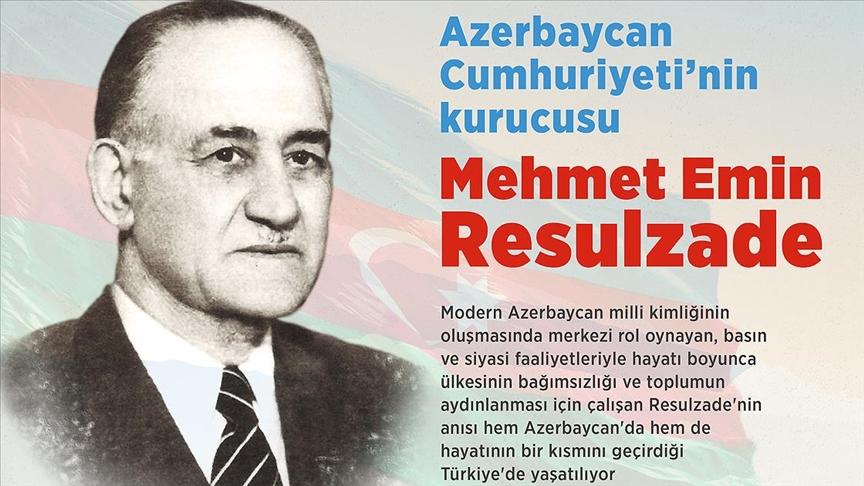
Mehmet Emin Resulzade (AA)
The period 1918–1920 was a brief but long-lasting era in Azerbaijani history, marked by the establishment of the first modern independent state. The power vacuum created by World War I, the revolutions in Russia, and the political authority crisis in the South Caucasus led Azerbaijan to enter the state-building process through the organized rise of the national movement.
On 28 May 1918, the Azerbaijan People’s Republic was proclaimed by Azerbaijani national representatives. This development was a historic turning point as the first parliamentary republic in the Turkic and Muslim world. The capital was initially designated as Ganja; after Baku was regained shortly thereafter, the administrative center was moved there. The phrase “A flag once raised will never fall.”, which became a slogan symbolizing independence for Azerbaijanis, was coined by Mehmet Emin Resulzade, who played a major role in the formation of modern Azerbaijani national identity.【9】
The Republic aimed to establish a democratic structure based on a parliamentary system and the creation of modern state institutions. The parliament was organized to include representatives from different ethnic and political groups, and legislative activities were rapidly initiated. Institutionalization efforts were undertaken in education, law, military, and administration.
One of the most critical issues at the state’s founding was control over Baku. The city was under the control of Bolshevik and Armenian forces. After the March 1918 events, the Muslim population in the region had suffered serious losses. The new government prioritized the recovery of Baku for political legitimacy and economic resources. In this process, cooperation was established with the Ottoman Empire, and the Caucasian Islamic Army was deployed to the region. Following military intervention, Baku was recaptured and the state’s center was moved there. This achievement enabled the young state to establish control over its security and energy resources.
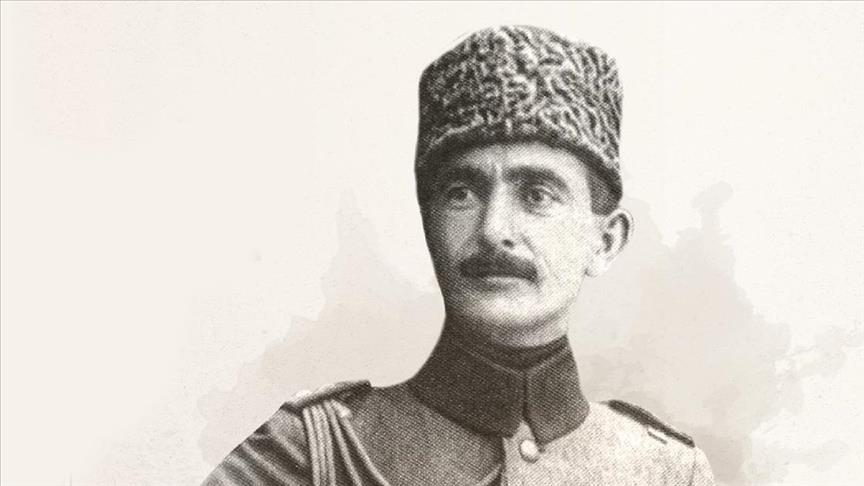
Commander of the Caucasian Islamic Army Nuri (Killigil) Pasha (AA)
The Republic attracted attention through modernization initiatives such as the opening of new educational institutions, expansion of press activities, and granting women the right to vote and stand for election. The state adopted policies to strengthen national identity in language and culture. During this period, the legal system was reorganized, administrative structures were established, and a regular army was created.
Azerbaijan’s independence occurred in an environment of intense ethnic and political competition. Conflicts occurred with Armenian armed groups in regions such as Karabakh, Ganja, and Zangezur. Simultaneously, diplomatic tensions emerged with Georgia and Iran regarding border arrangements. Internal political opposition and economic difficulties also hindered the state’s institutionalization process.
Azerbaijan Democratic People
Despite its short lifespan, the Azerbaijan People’s Republic laid the foundations of modern state institutions. It transformed the ideals of national identity and sovereignty into a political structure and made the idea of independence a lasting historical continuity. It became the historical reference for the independently proclaimed Azerbaijani state in 1991.
The Azerbaijan People’s Republic quickly established contact with the international community and sought diplomatic recognition. Contacts with European states increased; during the Paris Peace Conference, international representation was secured, and the independence claim was brought to the global platform. Due to its location along east-west trade routes, the state gained geopolitical importance.
With the resurgence of Soviet Russia in 1920, a new military strategy was developed toward the South Caucasus. As a result of the Red Army’s advance, the Azerbaijan People’s Republic was occupied on 28 April 1920, and the Azerbaijan Soviet Socialist Republic was established. The Republic’s two-year existence came to an end, but the idea of independence did not disappear; instead, it formed the ideological basis for the subsequent state-building process.
Following the occupation of the Azerbaijan People’s Republic by the Red Army on 28 April 1920, the country became part of the Union of Soviet Socialist Republics and entered a new era lasting approximately seventy years. This period was characterized by political repression, ideological transformation, centralized planning, and cultural control; at the same time, industrialization, education policies, and modernization initiatives brought about fundamental changes in the social structure.
After the occupation, all political institutions of Azerbaijan were abolished; independent government elements were dismantled, and Soviet administrative organs were established. State authority was subordinated to a Moscow-centered structure, rendering local political actors ineffective. The appointment of party cadres, implementation of economic planning, and establishment of security mechanisms were all conducted under centralized control.
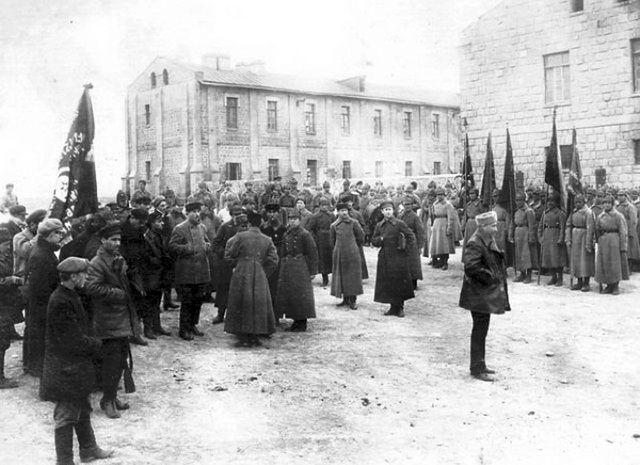
The Red Army occupied Baku, the capital of Azerbaijan (Ministry of Defense of the Republic of Azerbaijan)
The Soviet regime implemented rapid and coercive policies for economic transformation. Land was nationalized, private ownership was abolished, and agricultural production was reorganized into collective farms (kolkhozes) and state farms (sovkhozes). The seizure of production tools from peasants, increased tax obligations, and compulsory production policies caused social and economic problems in rural areas. During this period, industry, particularly the oil sector, was restructured. Baku became one of the critical energy centers of the Soviet industry, and the country’s oil production played a decisive role in the USSR’s strategic military and economic policies.
The harshest repressions of the Soviet regime occurred in the 1930s. The regime targeted intellectuals, religious leaders, and representatives of the national movement, labeling them as “counter-revolutionary” and “Pan-Turkist.” Many individuals were executed, exiled, or sent to forced labor camps. During this period, cultural life was brought under ideological control, local identity elements were suppressed, and Russification policies accelerated.
During World War II, Azerbaijan became the most important energy source of the Soviet war economy. Baku’s oil played a critical role in the logistical capacity of the Red Army. During the same period, a large portion of the population was mobilized for the front; after the war, urbanization, industrialization, and infrastructure investments increased. The post-war period was marked by intensified ideological control and the consolidation of Stalinist political repression. The purging of local officials and the adaptation of cultural life to the single-party ideology became synonymous with this era.
After the war, Azerbaijan transformed into one of the modern industrial centers. The energy sector continued to play a dominant role in the Soviet planned economy. Baku became one of the leading cities in engineering, refining, and oil technology. Industrialization led to rapid population growth in cities and intense migration from rural areas to urban centers.
Educational and cultural institutions expanded during this period; universities, technical schools, and research centers were established. However, this development occurred within an ideological framework; academic production and cultural activities were tightly controlled.
The Soviet regime sought to transform Azerbaijani identity according to its “Sovietization” policy. Religion was pushed outside institutional life; education was shaped on secular and ideological foundations. Historical and linguistic discourses emphasizing Turkic identity were suppressed. Cultural life was conducted within the limits defined by the regime, and national historical narratives were brought under control. This situation created a need for reconstruction between cultural memory and political identity after independence.
In the late 1980s, reform movements gaining strength across the USSR accelerated political awakening in Azerbaijan. Large demonstrations, mass protests, and demands for freedom became visible in public life. During this period, the Karabakh issue reignited. Ethnic tensions and mass attacks defined the political atmosphere. As the idea of independence strengthened at the societal level, the Soviet system entered a process of dissolution, and in 1991 Azerbaijan redeclared its independence. Thus, the Soviet era ended, and the country entered the modern republic period.【10】
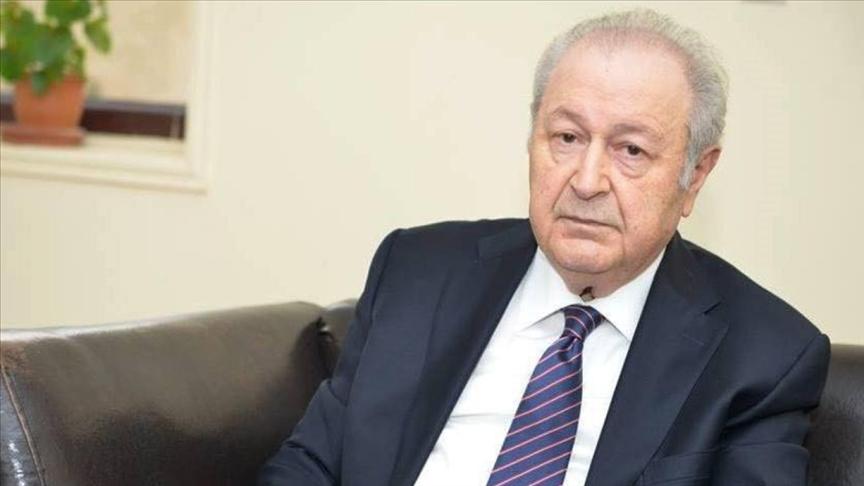
Ayaz Mütellibov (AA)
Azerbaijan redeclared its independence on 18 October 1991, amid rising societal movements, conflicts in Karabakh, and the weakening of central authority during the dissolution of the Soviet Union. The independence decision was submitted to a referendum on 29 December 1991 and was approved with high participation.
Immediately after independence, the process of international recognition began; Türkiye became the first state to recognize Azerbaijan on 9 November 1991. Subsequently, countries such as Pakistan, Romania, Switzerland, and Iran issued recognition declarations. By 1993, Azerbaijan was recognized by 113 states and established bilateral relations with 70 countries. The first post-independence presidential elections were won by Ayaz Mütellibov. However, this period was short-lived due to military defeats in Karabakh and internal political pressures. Soviet-era state institutions had not yet been established, and the military organization was incomplete.
Nagorno-Karabakh was an autonomous region within the borders of the Azerbaijan Soviet Socialist Republic during the Soviet period. The status of the region, whose population was predominantly Armenian, became a subject of debate during the final years of the Soviet Union. In 1988, the Nagorno-Karabakh Autonomous Oblast Soviet demanded that the region be detached from Azerbaijan and attached to the Armenian Soviet Socialist Republic. The Azerbaijani administration rejected this demand.
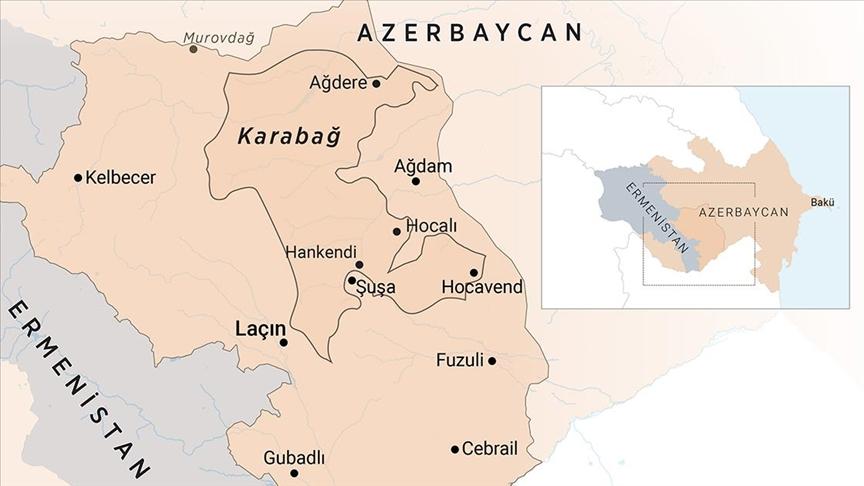
Nagorno-Karabakh and Surroundings (AA)
The weakening of the Soviet central administration enabled local armed groups to gain strength and escalate conflicts. After Azerbaijan and Armenia declared their independence in 1991, the dispute took on the character of an armed conflict between two independent states. From late 1991, conflicts intensified in Nagorno-Karabakh and its surroundings. In 1992, the conflicts expanded. On the night of 25–26 February 1992, mass killings targeting Azerbaijani civilians occurred in Khojaly. In the same year, Shusha and Lachin fell under Armenian control, establishing a land connection between Nagorno-Karabakh and Armenia.
In 1993, Armenian forces took control of large parts of the Kelbajar, Agdam, Fuzuli, Jabrayil, Kubatli, and Zangilan districts surrounding Nagorno-Karabakh. Thus, in addition to Nagorno-Karabakh itself, seven surrounding districts came under Armenian control. The United Nations Security Council, through resolutions 822, 853, 874, and 884 adopted in 1993, called for an end to the conflict and the withdrawal of forces from the occupied territories.
Under increasing political pressure and criticism, Ayaz Mutallibov was forced to resign from office on 6 March 1992. The incoming Ebulfez Elçibey initiated a profound transformation process in the country’s political, social, economic, and cultural fields. During this period:
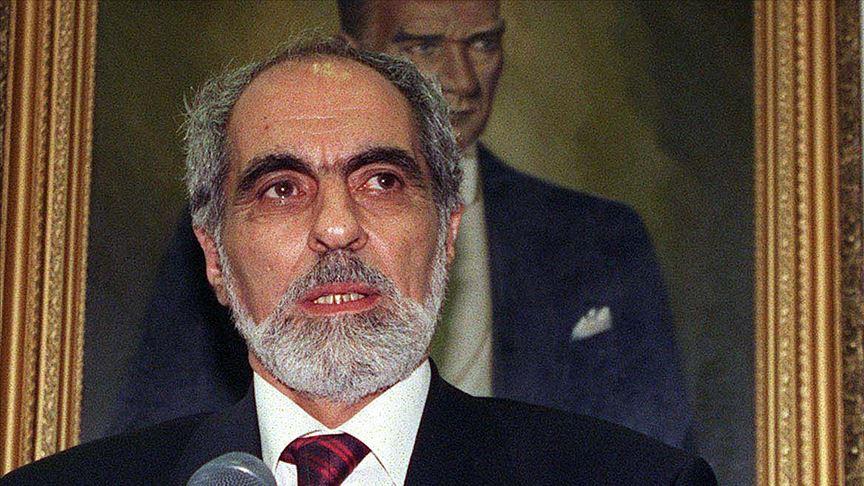
Ebulfez Elçibey (AA)
However, military losses in Karabakh, refugee crises, and economic problems weakened the government. As the political crisis deepened, pro-Russian military factions moved into action, and the government changed.【11】
Following internal turmoil, Heydar Aliyev came to power in 1993 and restructured the state. During this period, state institutions were centralized, the military was reorganized, and a multi-directional balance policy was pursued in foreign policy. Political stability in the country was restored.
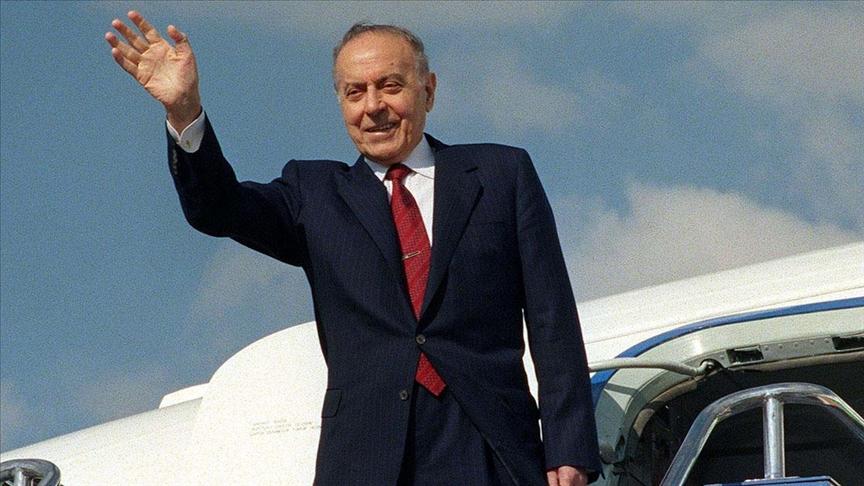
Heydar Aliyev (AA)
The Contract of the Century is the international oil agreement concerning the development and operation of the Azerbaijani-Chirag-Guneshli (ACG) oil fields in the Caspian Sea. The agreement was signed on 20 September 1994 in Baku between the State Oil Company of the Republic of Azerbaijan (SOCAR) and eleven international oil companies from seven countries.【12】 Under the agreement, the first phase of Azerbaijani oil was transported to Western markets via the Baku-Novorossiysk and Baku-Supsa pipelines.
The Baku-Novorossiysk pipeline, operational since 1996, begins at the Sangachal Terminal and reaches the Black Sea coast of Russia. The Baku-Supsa Pipeline transports crude oil from offshore Caspian oil fields through Azerbaijan and Georgia to the Supsa Terminal on the Black Sea coast. From Supsa, oil is shipped by tanker to European markets.
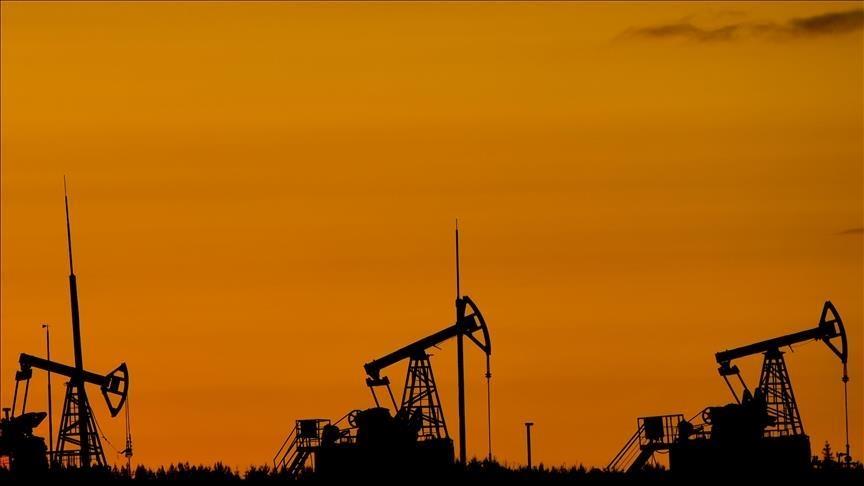
Under the Contract of the Century, Azerbaijani oil was transported to Europe (AA)
As Azerbaijan’s first large-scale international energy agreement after independence, the Contract of the Century is regarded as a pivotal turning point in the country’s energy policy and economic transformation. Following the agreement, rising energy revenues strengthened the national economy; however, this process also mobilized internal opposition and external actors. Coup attempts targeting the capital and Ganja occurred; state institutions were targeted for seizure.
During this period, Heydar Aliyev mobilized public support; mass rallies suppressed coup attempts. By the end of this period, political stability was achieved, and state control was strengthened.
The post-independence period was a historical era in which Azerbaijan both re-established its nation-state identity and consolidated its economic and political structure. During this period:
Following the death of Heydar Aliyev in 2003, Ilham Aliyev became president. During this period, energy revenues drove transformation in transportation, infrastructure, industry, and finance. The country gained strategic importance as both a Caspian energy hub and an Eurasian transit corridor; defense industry was strengthened, and an energy-centered foreign policy created regional influence.
During this period, foreign policy became multi-dimensional:
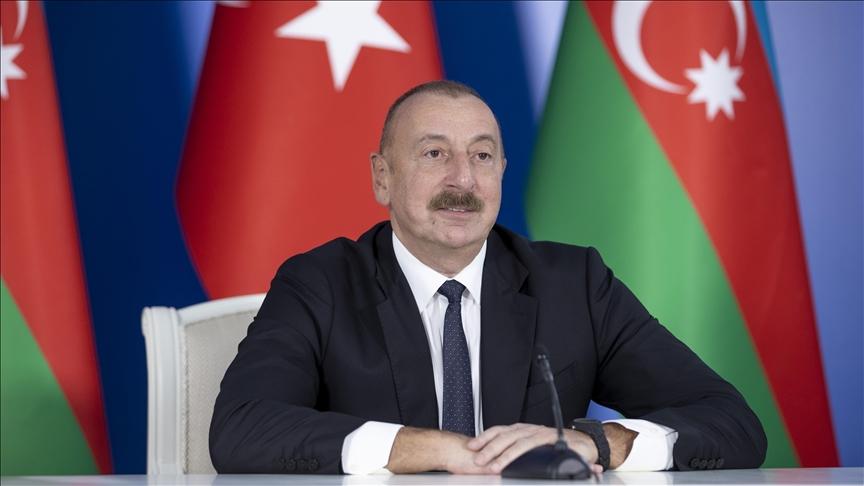
Ilham Aliyev (AA)
The defining orientations of this period were:
The Second Karabakh War, which began between Azerbaijan and Armenia on 27 September and ended on 10 November 2020, lasted 44 days and concluded with the decisive defeat of Armenian forces.
After the First Karabakh War, the primary platform for negotiations became the OSCE Minsk Group. Drafts such as phased solutions and the Madrid Principles were discussed, but the conflicting priorities of the parties prevented consensus. During this period, the contact line transformed into a low-intensity but persistent security regime marked by heavy fortifications, landmines, and artillery presence. The social-spatial problems of hundreds of thousands of displaced persons and humanitarian issues (missing persons, prisoners, landmines, cultural heritage) remained on the agenda for a long time.
The 2016 Four-Day War created limited but symbolic change on the front, casting doubt on the effectiveness of the Minsk Process. Although the 2018 “Velvet Revolution” in Armenia generated brief diplomatic momentum, fundamental positions remained unchanged between 2019 and 2020. The 2020 Tovuz clashes heightened risks along the energy and transport corridors, serving as a critical warning regarding regional security.
Content on the Karabakh Victory (TRT News)
On 27 September 2020, the Second Karabakh War began between Azerbaijan and Armenia. The fundamental causes were Azerbaijan’s inability to recover its occupied territories, the stagnation of the Minsk Process, and the collapse of the status quo following the border tensions of summer 2020. In September 2020, Armenia’s large-scale military preparations were closely monitored by Azerbaijan; on the morning of 27 September, Armenia’s attack on Azerbaijani civilian settlements and positions triggered the conflict. The Azerbaijani army launched a counter-offensive, initiating the operation.
In the initial phase of the war, artillery, missiles, and armored units were heavily used; Azerbaijan achieved a clear advantage on the battlefield by employing UAV/SUAV-based reconnaissance and strike integration to suppress air defenses and destroy armored units. The decisive axis of the operation was the southern axis (Fuzuli–Jabrayil–Zangilan–Qubadli). This advance strained Armenian supply lines and created strategic depth. In early November, fighting intensified around Shusha; the capture of Shusha on 8 November fundamentally altered the military balance and negotiation conditions. The war ended on 9–10 November 2020 with a trilateral statement. The agreement called for an end to hostilities and the withdrawal of Armenian forces from Agdam, Kelbajar, and Lachin.
In the post-war period, Azerbaijan’s priorities were the return of displaced persons, demining, reconstruction, the opening of regional transportation and energy corridors, and the institutionalization of defense cooperation with Türkiye. This process permanently shaped Azerbaijan’s security doctrine and foreign policy orientation.【15】
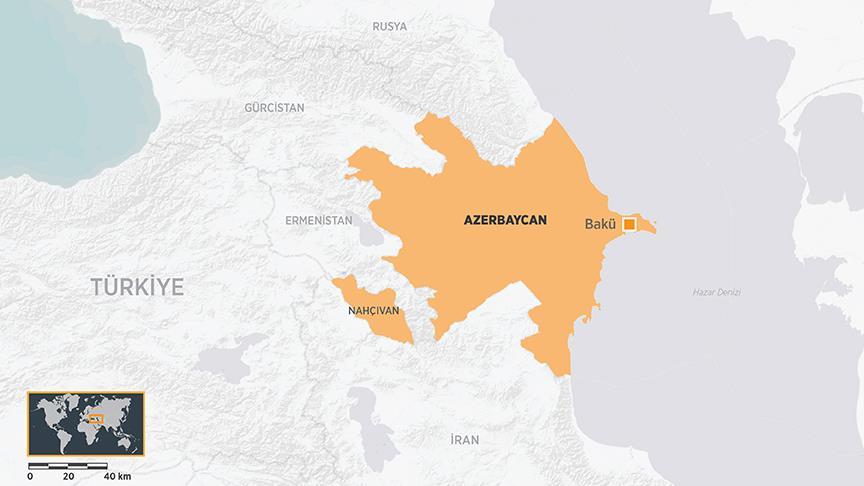
Azerbaijan’s Political Location (AA)
Azerbaijan is a state located in Southwest Asia and partially in Europe, forming a transit zone between the Caucasus, Central Asia, the Middle East, and the Black Sea basin due to its position on the Caspian Sea. The country’s total area is 86,600 km², of which 82,629 km² is land and 3,971 km² are water areas. This territory includes the Nakhchivan Autonomous Republic. Its geographical structure exhibits significant diversity, with high mountain ranges in the north, plateau areas in the west, broad alluvial plains in the center, and a peninsula belt extending toward the Caspian Sea in the east.【16】
Azerbaijan is located in Southwest Asia, on the coast of the Caspian Sea, between Iran and Russia, north of the Caucasus Mountains. Its geographic coordinates are approximately 40°30' north latitude and 47°30' east longitude. The total land border length is 2,468 km. In addition to its main territory, the country possesses an exclave, the Nakhchivan Autonomous Republic, located between Türkiye and Iran. Azerbaijan has a 713 km coastline along the Caspian Sea; although under international law the Caspian is classified as a “lake/closed sea,” Azerbaijan is technically considered a landlocked country, yet it effectively conducts maritime transport and port activities via the Caspian.
Politically, the country occupies a position that spans both Asia and Europe via the Caucasus. Its borders are as follows:
Azerbaijan’s surface features present a multi-layered topography combining mountainous areas, plateaus, and extensive plain systems. The average elevation is 384 meters; however, the difference between the highest and lowest points is very pronounced.【18】
The Greater Caucasus Mountains extend along the northern part of the country, forming a significant natural barrier and climatic boundary along Azerbaijan’s northern border. The highest point within Azerbaijan’s borders (4,466 m) is Mount Bazardüzü, part of the Greater Caucasus range.【19】 The western part of the country features the Karabakh Plateau, whose rugged and mountainous terrain defines the character of the western interior regions.
At the center of Azerbaijan’s geography lies the Kura-Araz Plain, one of the country’s largest flatlands. This plain serves as a favorable transitional zone between the mountainous areas in the north and the lowland regions in the south and east, suitable for agriculture and settlement.
These alluvial plains along the Kura-Araz system are areas where agricultural production and rural settlements are concentrated. Extending eastward, they reach the Caspian Sea coast and the Absheron Peninsula, forming a natural corridor connecting the country’s interior with the Baku region.
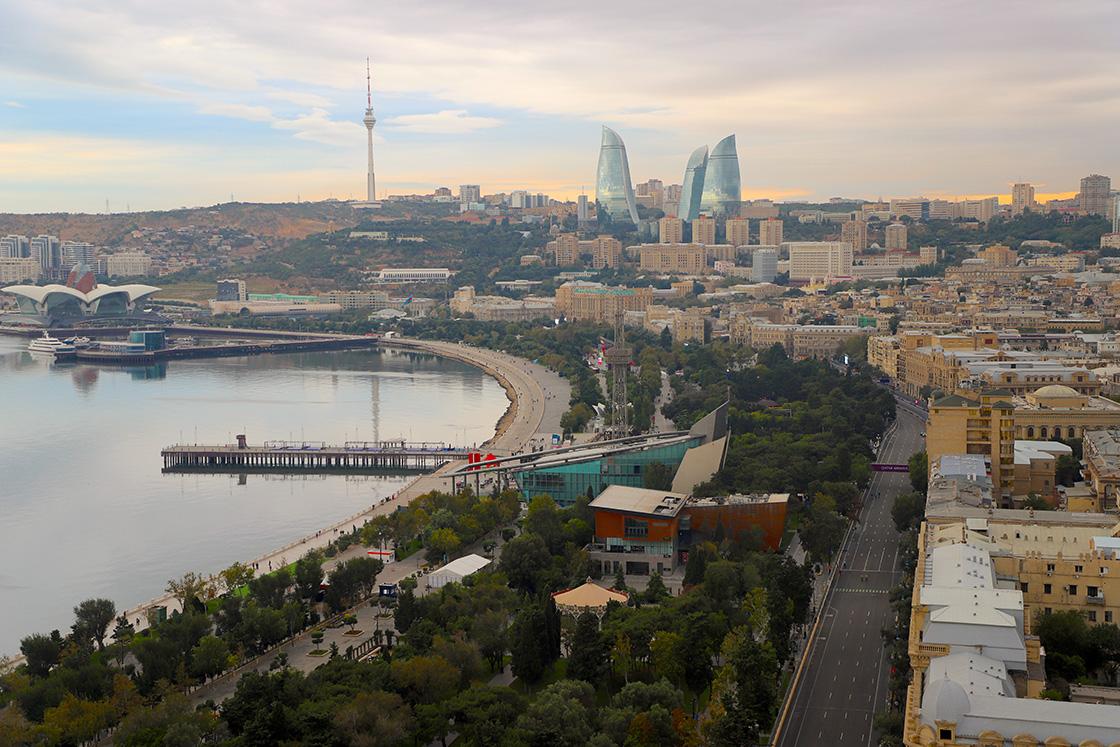
Caspian Sea (AA)
The Kura-Araz Plain in the central and lower parts of the country derives its name from the river system shaping its basin and collects a significant portion of the country’s water resources. The most important water body in terms of lakes and closed seas is the Caspian Sea, which borders Azerbaijan. The Caspian, with a surface area of 374,000 km² shared with Iran, Russia, Turkmenistan, and Kazakhstan, serves as both a climatic regulator and a strategic element for energy and transportation for Azerbaijan.【20】
Azerbaijan’s climate is dry and semi-arid steppe. This structure is particularly evident in the country’s plains and lowland areas. Summers are hot and dry, while winters are relatively mild and somewhat wetter; precipitation is irregularly distributed both seasonally and spatially. Land use data provide indirect information on climate and vegetation:
This distribution indicates that steppe and pasture ecosystems are widespread across the country, while forested areas are relatively limited. Extensive agricultural and pasture lands are consistent with the semi-arid character of the climate and economic activities. Local climate variations occur between mountainous areas with significant elevation differences and lowland plains, contributing to regional diversity in vegetation.
Azerbaijan’s main natural resources are as follows and form the foundation of the country’s economic structure and industrial composition:
Electricity access in Azerbaijan has reached 100% of the population (2022 estimate), with the following data:
The distribution of electricity generation sources is as follows:
Data on Azerbaijan are as follows:
These indicators reveal that Azerbaijan possesses a multi-modal transportation system encompassing air, rail, and maritime transport. Its coastline on the Caspian Sea, merchant fleet, and railway network have made the country a significant hub both within regional energy corridors and in freight and passenger transport.
The Azerbaijani economy, based on energy revenues, is classified as an upper-middle-income economy. According to 2024 estimates, the real gross domestic product (GDP) in purchasing power parity terms is approximately $225 billion. Per capita income reached $22,000 in the same year.【25】
In terms of macroeconomic balances, public debt is relatively low; 2021 estimates indicate public debt at approximately 17% of GDP. The current account balance is in surplus due to energy exports, estimated at around $4.7 billion in 2024. Foreign exchange and gold reserves are estimated at approximately $12.7 billion. Overall, the main vulnerability of the economy is its dependence on oil and natural gas revenues; sharp declines in energy prices directly affect the budget, current account, and growth.
Looking at economic data:
The Azerbaijani economy exhibits a structure dominated by industry and services. According to 2024 estimates:
This distribution indicates that production and exports are largely based on the oil and natural gas sector, while services have expanded due to domestic demand, urbanization, and public infrastructure investments.【27】
Although the agricultural sector is limited in economic size, it holds a strategic position for employment and rural livelihoods. Major products include milk, wheat, barley, potatoes, tomatoes, watermelons, onions, apples, corn, and cotton. Approximately one-third of agricultural land is permanent pasture, reinforcing the role of livestock in production structure. The agricultural sector is also critically important for food security, rural income sources, and meeting domestic demand.【28】
The industrial sector is largely based on hydrocarbon production. Oil and natural gas extraction, oilfield equipment, steel, chemicals, petrochemicals, cement, and textiles constitute the main industrial sectors. In 2023 estimates, oil production stood at 618,000 barrels per day, and natural gas production at approximately 36 billion cubic meters. Energy products form the primary source of export revenues and public financing. Industrial growth in 2024 is estimated at around 2.1%.【29】
The services sector consists of urbanization, transportation, retail, public services, communications, and banking. The banking system operates under state supervision, and financial markets have limited depth. The development of education, healthcare, public administration, and communication infrastructure supports the growth of the services sector.
Azerbaijan’s foreign trade is decisively based on energy exports. Crude oil and natural gas constitute the majority of export revenues; the country occupies the position of a regional supplier in the international energy market. In 2023 estimates, total exports amounted to approximately $35 billion, with crude oil, natural gas, refined petroleum, electricity, and plastic products forming a significant portion. Main markets are Italy, Türkiye, Israel, Greece, and Russia; Italy holds the largest share, over 30%.
Imports consist of industrial inputs, transportation equipment, consumer goods, automobiles, and electronic products. In 2023 estimates, total imports were approximately $25 billion. Main suppliers include Russia, China, Türkiye, Georgia, and Germany. The trade balance is sensitive to energy prices, and the current account surplus remained significant in 2024 estimates.【30】
As of 2024 estimates, Azerbaijan’s population is approximately 10,650,239, with a gender-balanced demographic structure. The male population is around 5.33 million, and the female population is approximately 5.32 million. The population growth rate is low (approximately 0.43%) and reflects a slowly growing population profile.
The median age is 34.3, with the majority of the population in the working-age group (15–64 years, 68.7%). The child population constitutes 22.3%, and the elderly population is around 9% of the total. Life expectancy at birth is approximately 76 years for the total population, 79 years for women, and 73 years for men.
The fertility rate has dropped to 1.69 children per woman, below the level required for population replacement. The infant mortality rate is approximately 11 per 1,000 live births. Maternal mortality rates are low and comparable to regional standards. Access to health services is comprehensive in urban areas and high in rural areas; over 97% of the population has access to improved water sources, supporting key public health indicators.
The sex ratio at birth is high in favor of males (1.15 males per female), but in the adult population, it is nearly balanced, while in the elderly population, females are significantly more numerous. This trend, similar to other regional countries, indicates higher male mortality and risk factors.【31】
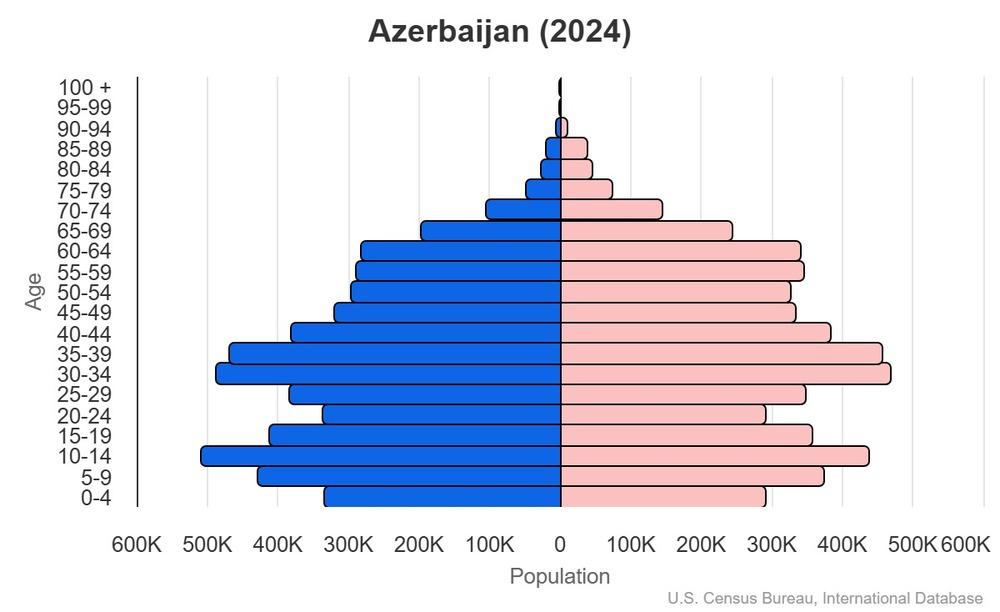
Azerbaijan Demographics Graph (The World Factbook)
Settlement patterns are heavily concentrated in Baku and its surroundings. Approximately 57.6% of the population lives in urban areas, with the largest urban center being the capital Baku, estimated at approximately 2.4 million. Urban areas outside Baku are smaller in scale, and the western and southern regions of the country are more sparsely populated. The urbanization rate is increasing, with annual growth at approximately 1.4%.【32】
The Azerbaijani population is largely homogeneous in ethnic composition. Azerbaijanis constitute approximately 91.6% of the population. Lezgins, Russians, Armenians, and Talysh communities are represented in small proportions (each 1–2%), with over 80 ethnic groups contributing to the country’s cultural diversity. Historically, the Nagorno-Karabakh region had a concentrated Armenian population, but recent developments have significantly transformed the demographic structure.【33】
The majority of the population is Muslim, with Islam predominantly represented through the Shia branch. The Muslim population exceeds 97%; the Christian population is approximately 2–3%. Religious affiliation is largely nominal within the general population; levels of personal and institutional religiosity are lower compared to the overall religious composition.【34】
Net migration rate is negative, estimated at approximately -0.6 per 1,000 people in 2024 estimates.【35】 This indicates limited population losses due to emigration. Low fertility rates and negative migration contribute to a demographic framework that may strengthen long-term population aging.
Azerbaijan’s education system is characterized by a high literacy rate, widespread primary education, and a state-supported public education structure.
In 2023 estimates, the literacy rate is close to 100% for both male and female populations, indicating widespread access to education at the societal level. The expected years of schooling from primary to higher education are estimated at 13 years, with equality between genders.【36】
The higher education system follows a mixed model including both state and private institutions. Access to education is concentrated geographically in Baku and major cities; infrastructure limitations in rural areas affect the quality of educational services. Gender disparity in education is low, and women’s access to secondary and higher education is historically higher than in many other countries in the region.【37】
Azerbaijani culture has developed as a multi-layered structure through contact with Caucasian, Iranian, Turkic, and Islamic civilizations throughout history. The ethnic communities in the country continue to preserve their own cultural elements, traditions, cuisine, handicrafts, and ceremonial practices. The state has adopted as a fundamental policy the protection of cultural diversity within the framework of social unity, the preservation of cultural identities, and the institutional support of cultural heritage.
This multicultural structure emerged during historical processes in which ethnic groups defined themselves within the national identity of “Azerbaijanis” while preserving their own cultural characteristics. These cultural components are reflected in handicrafts, traditional lifestyles, culinary culture, and ceremonial rituals.
Azerbaijan’s cultural heritage encompasses both the Turk-Islamic tradition and the Caucasian Alban cultural fabric. During periods of occupation and conflict, particularly in the Karabakh region, this heritage suffered damage. During the 30-year Armenian occupation, a significant portion of cultural assets in the region was destroyed; historical settlements and religious structures were demolished.
Following the re-establishment of Azerbaijani control over the region after 2020, the state initiated comprehensive restoration processes for both Alban-Christian heritage and Turk-Islamic artifacts.
Azerbaijani literature exhibits a development from the oral epic and ashik tradition of Central Asia to classical divan literature and then to modern and contemporary literature. In the Middle Ages, poets such as Nizami and Fuzuli ensured the global recognition of Azerbaijani literature; the ashik tradition and the Koroğlu epic shaped the cultural memory. In the 19th century, Ahundzade laid the foundations of modern literature; at the beginning of the 20th century, themes of national awakening and independence emerged. During the Soviet period, despite ideological constraints, identity, language, and human psychology were explored; the 1960–80 generation employed modern narrative techniques.
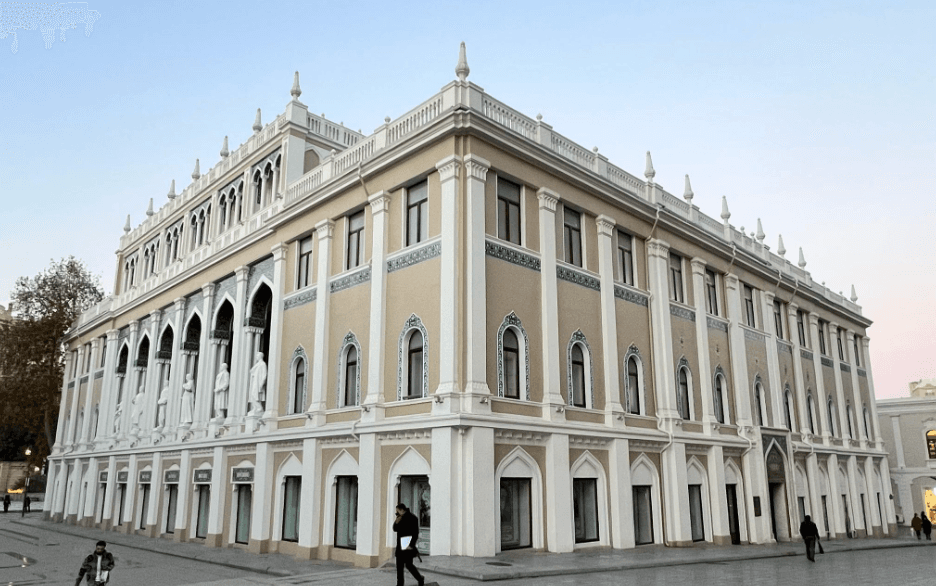
Nizami Ganjavi National Azerbaijani Literature Museum (Photo: Duygu Şahinler)
In the post-independence period, literature was shaped by themes of war, identity, and globalization; contemporary literature has become a dynamic structure with increased genre and stylistic diversity among the younger generation. The Nizami Ganjavi National Azerbaijani Literature Museum is the primary cultural institution presenting the literary heritage of Azerbaijan from its origins to the present, showcasing authors’ works, personal belongings, and portraits in dedicated sections for classical and modern poets, connecting the nation’s literary history with society.
Azerbaijani performing arts constitute a cultural field formed by the convergence of the country’s music, literature, and performance traditions. Theater, developed through modernization movements in the late 19th century, has become a significant art form presenting both classical and contemporary works.
Historically shaped at the intersection of Central Asian, Iranian, Caucasian, and Anatolian cultures, it features a rich structure encompassing both folk traditions and art music. One of the country’s deep-rooted musical genres, Mugham, is an art form based on melodic improvisation with vocal and instrumental variations. Recognized by UNESCO as intangible cultural heritage, mugham has gained international recognition through the contributions of masters such as Üzeyir Hacıbeyli, Alim Qasimov, and Arif Babayev. Üzeyir Hacıbeyli also pioneered the institutionalization of classical music in Azerbaijan by composing Leyli and Majnun, the first opera in the Eastern world.【38】
Azerbaijani Mugham Music (TRT 2)
In the folk music tradition, the ashik art holds a prominent place; this tradition, performed orally with musical accompaniment, plays a role in transmitting social memory. In the modern period, jazz, pop, and symphony orchestras have shown strong development; events such as the Baku Jazz Festival have turned the country into a regional music center. Traditional instruments such as tar, kamancha, balaban, zurna, and nagara stand out; Western-style music, through educational institutions and conservatories, ensures the continuation of the country’s musical heritage through contemporary interpretations.
Azerbaijani theater is based on a cultural foundation drawn from the daily life, festivities, games, and traditions of the people. Rituals such as “Kosa-Kosa,” “Sayaçı,” and “Novruz” contain dramatic plots, role enactment, and masked performances, forming early forms of theater within society. In the 19th century, poet-ashik circles, open-air plays, and folk performances served as important preparatory stages for the development of professional theater.
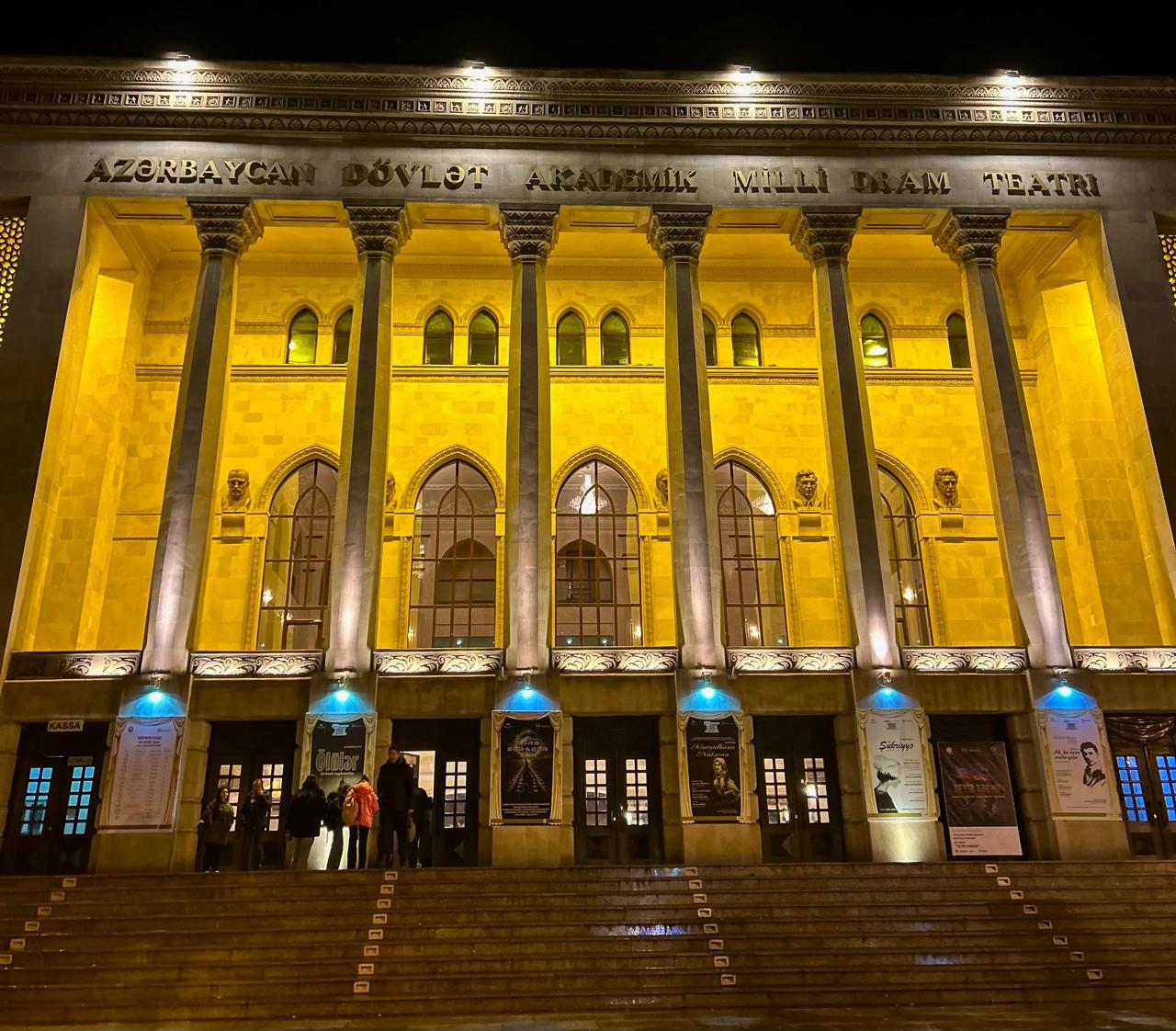
Azerbaijan State Academic National Drama Theater (Photo: Duygu Şahinler)
The foundations of modern theater in Azerbaijan were laid with the staging of Mirza Fathali Akhundzade’s works in Baku in 1873. These first amateur performances, initiated by Hasan Bey Zardabi, marked a turning point in the establishment of national theater. Subsequently, theater activities developed by educated intellectuals in Shusha, Nakhchivan, and other cities ensured the spread of theater across the country. The “First Muslim Drama Troupe,” established in Baku in 1896, played a decisive role in the institutionalization of professional theater. During this period, the repertoire enriched with works by local writers such as Akhundzade, Vezirov, and Haqverdiyev, as well as translations of Russian and Western classics. In 1908, Üzeyir Hacıbeyli’s opera Leyli and Majnun established the foundations of musical theater and opera. Today, Azerbaijani theater has become a cultural institution representing critical thought, democratic, and national ideas.【39】
Azerbaijan’s visual arts are based on an aesthetic tradition shaped by cultural accumulation and East-West interaction throughout history. Miniature art, developed since the Middle Ages, particularly through the Tabriz school, holds an important place in the region’s art history. Traditional carpet weaving, renowned for its color, motif, and composition, is recognized by UNESCO as intangible cultural heritage. The only museum in the world dedicated to carpet art, the Azerbaijan Carpet Museum, allows visitors to see, experience, and explore many details of this art.
With the 20th century, modern painting and sculpture became professionalized; artists such as Sattar Bahlulzade and Tahir Salahov played a significant role in shaping Azerbaijan’s modern artistic identity. In architecture, a wide diversity is visible, ranging from historical Islamic structures to Soviet-era architecture and contemporary designs. Today, museums, galleries, and art institutions sustain both traditional and modern visual arts.
Azerbaijani cuisine possesses a significant gastronomic heritage due to its historical development, geographical location, and diverse climatic conditions. The presence of seven of the eleven climate zones in the country has enabled a wide variety of livestock, agriculture, and plant resources, directly influencing the food culture. Food in society is not merely about nutrition but also a part of hospitality and traditions.
The Nakhchivan region is one of the important centers of this cuisine. Dishes such as kavurma, stone kebab, mash soup, biryani, and qir dolma, along with pilafs, stand out. Dishes based on meat and dough, such as hingel, gürze, düşbere, umac, and tutmac, reflect the continuity of Turkish culture. In winter, meat and dough-based dishes are preferred; in summer, vegetable, herb, and dairy-based dishes are favored. Dovga, herb sautés, kete, and soup varieties are common. Tandır lavash and other regional bread types form the basis of the table. Tea serving is an important tradition; baklava, shekerbura, sucuk, basdiq, and various jams complete tea tables.
Azerbaijani cuisine is an important cultural heritage that shapes social life, family traditions, rituals, and hospitality culture. The preparation and presentation of dishes, tea ceremonies, dessert varieties, and table arrangements are considered integral parts of this tradition.
Azerbaijan’s tourism offers a combination of natural features, historical heritage, and modern cities, providing a cultural, natural, and experiential visit opportunity. The country, with its geography stretching from the Caspian coast to mountainous regions and its cultural elements, caters to tourists with diverse interests.
Azerbaijan, with its climatic diversity, rich natural resources, cultural heritage, and regional differences, possesses a broad destination structure supporting various types of tourism. The country’s 11 regions highlight different tourism potentials:
Tourism centers established in mountainous regions, such as Shahdag and Tufandag, have become current focal points for winter and mountain tourism. Additionally, Naftalan oil, Duzdag underground treatment center, and various mineral waters make health tourism one of Azerbaijan’s prominent specialized tourism types.
As of 21 November 2025, Azerbaijan has five elements inscribed on the UNESCO World Heritage List:
Sheki, located in a valley surrounded by forests at the foot of the Greater Caucasus Mountains, is a historic settlement. After a major flood in 1772 destroyed the old city, it was rebuilt on higher ground. The historic center is notable for its traditional houses with steep roofs, wide verandas, and gardens built on steep slopes. The Gurana River naturally divides the city into northern and southern parts.
<kure-image image-alternate="" image-caption='<p class="paragraph"><i><sup style="white-space: pre-wrap;"><em class="italic superscript">Sheki Khan’s Palace</em></sup></i><span style="white-space: pre-wrap;"><kure-link link-text-format="superscript" link-reference-type="external"
Accessed November 26, 2025. https://mfa.gov.az/az/category/tehlukesizlik/narkotiklerin-qanunsuz-dovriyyesine-qarsi-mubarize
Afyoncu, Erhan, Ahmet Taşağıl, Ramin Sadık (Sadıgov), Mehdi Genceli, Hamza Gündoğdu, Mitat Çelikpala, Osman Gazi Kandemir, and Tufan Gündüz. *Azerbaycan Tarihi I, II.* Edited by Tuğba Eray Biber, Istanbul: İstanbul Ticaret Odası Yayınları, 2022. ISBN 978-605-137-874-9. Accessed https://www.researchgate.net/publication/372438334_Azerbaycan_Tarihi_I_II.
Algül, Emrecan. "Halı Müzesi." Pexels. Accessed September 14, 2025. https://www.pexels.com/tr-tr/fotograf/29232873/
Anadolu Ajansı. "Azerbaycan Cumhurbaşkanı Aliyev: Türkiye Dünyada önemli güç merkezidir." Accessed November 21, 2025. https://www.aa.com.tr/tr/dunya/azerbaycan-cumhurbaskani-aliyev-turkiye-dunyada-onemli-guc-merkezidir/2716701
Anadolu Ajansı. "Azerbaycan ile Çin arasında kapsamlı stratejik ortaklık bildirisi imzalandı." Accessed December 7, 2025. https://www.aa.com.tr/tr/dunya/azerbaycan-ile-cin-arasinda-kapsamli-stratejik-ortaklik-bildirisi-imzalandi/3545922
Anadolu Ajansı. "Azerbaycan ile Çin arasında kapsamlı stratejik ortaklık bildirisi imzalandı." Accessed December 7, 2025. https://www.aa.com.tr/tr/dunya/azerbaycan-ile-cin-arasinda-kapsamli-stratejik-ortaklik-bildirisi-imzalandi/3545922
Anadolu Ajansı. "Azerbaycan ordusu, Bayraktar SİHA'larla tatbikat yaptı." Accessed January 21, 2026. https://www.aa.com.tr/tr/dunya/azerbaycan-ordusu-bayraktar-sihalarla-tatbikat-yapti/2436706
Anadolu Ajansı. "Azerbaycan ordusunun 105. kuruluş yılı kutlanıyor." Accessed December 7, 2025. https://www.aa.com.tr/tr/dunya/azerbaycan-ordusunun-105-kurulus-yili-kutlaniyor/2931239
Anadolu Ajansı. "Azerbaycan ordusunun 107. kuruluş yıl dönümü kutlanıyor." Accessed January 21, 2026. https://www.aa.com.tr/tr/gundem/azerbaycan-ordusunun-107-kurulus-yil-donumu-kutlaniyor/3613743
Anadolu Ajansı. "Azerbaycan ve Ermenistan, barış anlaşmasını parafladı." Accessed December 5, 2025. https://www.aa.com.tr/tr/dunya/azerbaycan-ve-ermenistan-baris-anlasmasini-parafladi/3654523
Anadolu Ajansı. "Azerbaycan ve Ermenistan, barış anlaşmasını parafladı." Accessed December 7, 2025. https://www.aa.com.tr/tr/dunya/azerbaycan-ve-ermenistan-baris-anlasmasini-parafladi/3654523
Anadolu Ajansı. "Azerbaycan'ın eski Cumhurbaşkanı Ayaz Mutallibov vefat etti." Accessed November 21, 2025. https://www.aa.com.tr/tr/dunya/azerbaycanin-eski-cumhurbaskani-ayaz-mutallibov-vefat-etti/2547532
Anadolu Ajansı. "Azerbaycan'ın geçen yıl özgürleştirdiği Şuşa, Ekonomik İşbirliği Teşkilatı'nın 2026 'Turizm Başkenti' oldu." Accessed November 26, 2025. https://www.aa.com.tr/tr/dunya/azerbaycanin-gecen-yil-ozgurlestirdigi-susa-ekonomik-isbirligi-teskilatinin-2026-turizm-baskenti-oldu/3008708
Anadolu Ajansı. "Azerbaycan'ın mimarı Haydar Aliyev." Accessed November 21, 2025. https://www.aa.com.tr/tr/dunya/azerbaycanin-mimari-haydar-aliyev/3080130
Anadolu Ajansı. "Azerbaycan." Accessed November 21, 2025. https://www.aa.com.tr/tr/ulke-profilleri/azerbaycan/901996
Anadolu Ajansı. "Bakü sokakları, Formula 1 Azerbaycan Grand Prix'si için 9. kez piste dönüştürüldü." Accessed November 21, 2025. https://www.aa.com.tr/tr/dunyadan-spor/baku-sokaklari-formula-1-azerbaycan-grand-prixsi-icin-9-kez-piste-donusturuldu/3691164
Anadolu Ajansı. "Bakü'nün tarihi sembolü Kız Kalesi zamana meydan okuyor." Accessed December 2, 2025. https://www.aa.com.tr/tr/kultur/bakunun-tarihi-sembolu-kiz-kalesi-zamana-meydan-okuyor/3306285
Anadolu Ajansı. "Bakü'nün tarihi yapılarından Ateşgah Mabedi'ndeki ateş hiç sönmüyor." Accessed November 26, 2025. https://www.aa.com.tr/tr/dunya/bakunun-tarihi-yapilarindan-atesgah-mabedindeki-ates-hic-sonmuyor/3300192
Anadolu Ajansı. "Bakü-Tiflis-Ceyhan'ın ham petrol sevkiyatında 5 bin tankere ulaşıldı." Accessed December 5, 2025. https://www.aa.com.tr/tr/ekonomi/baku-tiflis-ceyhanin-ham-petrol-sevkiyatinda-5-bin-tankere-ulasildi/2551056
Anadolu Ajansı. "Doğunun ilk opera bestecisi' Hacıbeyli anılıyor." Accessed November 26, 2025. https://www.aa.com.tr/tr/kultur-sanat/dogunun-ilk-opera-bestecisi-hacibeyli-aniliyor/486238
Anadolu Ajansı. "Ebulfez Elçibey vefatının 20. yılında anılıyor." Accessed November 21, 2025. https://www.aa.com.tr/tr/dunya/ebulfez-elcibey-vefatinin-20-yilinda-aniliyor/1949823
Anadolu Ajansı. "Ebulfez Elçibey vefatının 20. yılında anılıyor." Accessed November 21, 2025.
Anadolu Ajansı. "Erdoğan, Aliyev and Şerif will inaugurate the third airport in the Azerbaijani territories liberated from occupation." Accessed December 7, 2025. https://www.aa.com.tr/tr/gundem/erdogan-aliyev-ve-serif-isgalden-kurtarilan-azerbaycan-topraklarindaki-3-havalimaninin-acilisini-yapacak/3580575
Anadolu Ajansı. "Erdoğan, Aliyev ve Şerif, işgalden kurtarılan Azerbaycan topraklarındaki 3. havalimanının açılışını yapacak." Accessed November 26, 2025. https://www.aa.com.tr/tr/dunya/azerbaycan-cumhurbaskani-aliyev-turkiye-dunyada-onemli-guc-merkezidir/2716701
Anadolu Ajansı. "Formula 1'de sıradaki durak Azerbaycan." Accessed November 26, 2025. https://www.aa.com.tr/tr/dunyadan-spor/formula-1de-siradaki-durak-azerbaycan/3692153
Anadolu Ajansı. "Gecelerin gündüze dönüştüğü kent Bakü." Accessed November 21, 2025. https://www.aa.com.tr/tr/pg/%D1%84%D0%BE%D1%82%D0%BE%D0%B3%D0%B0%D0%BB%D0%B5%D1%80%D0%B5%D1%8F/gecelerin-gunduze-donustugu-kent-baku/0
Anadolu Ajansı. "Putin, Azerbaycan uçağının düşürüldüğü 'trajik olayın Rus hava sahasında yaşanması nedeniyle' Aliyev'den özür diledi." Accessed December 7, 2025. https://www.aa.com.tr/tr/dunya/putin-azerbaycan-ucaginin-dusuruldugu-trajik-olayin-rus-hava-sahasinda-yasanmasi-nedeniyle-aliyevden-ozur-diledi/3436648
Anadolu Ajansı. "Rusya ve Azerbaycan arasında 'Müttefiklik Faaliyetleri Hakkında Beyanname' imzalandı." Accessed November 26, 2025. https://www.aa.com.tr/tr/dunya/rusya-ve-azerbaycan-arasinda-muttefiklik-faaliyetleri-hakkinda-beyanname-imzalandi/2510597
Anadolu Ajansı. "TEKNOFEST hosts top foreign officials." Accessed December 5, 2025. https://www.aa.com.tr/en/science-technology/teknofest-hosts-top-foreign-officials/2885223
Anadolu Ajansı. "Şuşa Beyannamesi ve Türkiye-Azerbaycan ilişkilerinde yeni ufuklar." Accessed November 26, 2025. https://www.aa.com.tr/tr/analiz/susa-beyannamesi-ve-turkiye-azerbaycan-iliskilerinde-yeni-ufuklar/2275640
Aydın, Ulviyye. “Türkiye–Azerbaycan İlişkilerininSon Erişim Yılı (2006–2016): Kardeşlikten Stratejik İşbirliğine Uzanan Yol.” *Avrasya Uluslararası Araştırmalar Dergisi* 6, no. 13 (2018): 38–62. Accessed January 20, 2026. https://dergipark.org.tr/en/pub/avrasyad/issue/42257/509957
Azerbaijan Republic Nakhchivan Autonomous Republic Ministry of Culture. "MILLİ MƏTBƏX." Accessed November 22, 2025. https://nculture.gov.az/milli-m-tb-x
Azerbaijan.az. "Azərbaycanda teatr sənətinin yaranması və inkişafı." Accessed November 26, 2025. https://azerbaijan.az/related-information/257
Azerbaijan.az. "Azərbaycanda teatr sənətinin yaranması və inkişafı." Accessed November 26, 2025. https://azerbaijan.az/related-information/257
Bilgiçli, İsmail, and Lale Hüseynzade. “Azerbaycan’ın Alternatif Turizm Politikası.” *Türk Dünyası Akademik Bakış / Journal of Turkic World Academic Perspective* 4, no. 8 (Fall 2024): 33–43. https://www.researchgate.net/profile/Ismail-Bilgicli/publication/389171066_Turk_Dunyasi_Akademik_Bakis_Journal_of_Turkic_World_Academic_Perspective_YilYear_2024-Guz_Autumn_CiltVol_4_SayiIssue_8_E-_AZERBAYCANIN_ALTERNATIF_TURIZM_POLITIKASI_development_of_alternative_tourism_p/links/67b763fd645ef274a48aa030/Tuerk-Duenyasi-Akademik-Bakis-Journal-of-Turkic-World-Academic-Perspective-Yil-Year-2024-Guez-Autumn-Cilt-Vol-4-Sayi-Issue-8-E-AZERBAYCAN-IN-ALTERNATIF-TURIZM-POLITIKASI-development-of-alternative-t.pdf
CIA. "Azerbaijan - The World Factbook." Accessed November 26, 2025. https://www.cia.gov/the-world-factbook/countries/azerbaijan/
Central Intelligence Agency (CIA). "Azerbaijan, Economy." The World Factbook. Accessed December 2, 2025. https://www.cia.gov/the-world-factbook/countries/azerbaijan/#economy
Central Intelligence Agency (CIA). "Azerbaijan, Energy." The World Factbook. Accessed December 2, 2025. https://www.cia.gov/the-world-factbook/countries/azerbaijan/#energy
Central Intelligence Agency (CIA). "Azerbaijan, Geography." The World Factbook. Accessed December 2, 2025. https://www.cia.gov/the-world-factbook/countries/azerbaijan/#geography
Central Intelligence Agency (CIA). "Azerbaijan, Military and Security." The World Factbook. Accessed December 5, 2025. https://www.cia.gov/the-world-factbook/countries/azerbaijan/#military-and-security
Central Intelligence Agency (CIA). "Azerbaijan, People and Society." The World Factbook. Accessed December 2, 2025. https://www.cia.gov/the-world-factbook/countries/azerbaijan/#people-and-society
Central Intelligence Agency (CIA). "Azerbaijan, Transportation" The World Factbook. Accessed December 2, 2025. https://www.cia.gov/the-world-factbook/countries/azerbaijan/#transportation
Haber Global YouTube Channel. "Azerbaijan People's Republic Documentary: A Century of Democracy." Accessed November 21, 2025. https://www.youtube.com/watch?v=mV75Xv-f7wA
Ismailov, Dilgam. "HISTORY OF AZERBAIJAN." 2017. Accessed November 21, 2025. http://anl.az/el/Kitab/2018/02/cd/i-44365.pdf
Karakoç, Edanur. "Azerbaycan-Rusya Diplomatik Gerilimi (2024-2025)." Küre Ansiklopedi. Accessed December 5, 2025. https://kureansiklopedi.com/tr/detay/azerbaycan-rusya-diplomatik-gerilimi-2024-2025-9bc
Ministry of Culture of the Republic of Azerbaijan. "Museum Work in Azerbaijan." Accessed November 22, 2025. https://culture.gov.az/az/activity/13
Ministry of Foreign Affairs of the Republic of Azerbaijan. "Bilateral Relations between the Republic of Azerbaijan and the Islamic Republic of Pakistan." Accessed November 26, 2025. https://mfa.gov.az/az/category/avropa/turkiye
Ministry of Foreign Affairs of the Republic of Azerbaijan. "Bilateral Relations between the Republic of Azerbaijan and the People's Republic of China." Accessed December 5, 2025. https://mfa.gov.az/az/category/asiya-ve-okeaniya/cin
Ministry of Foreign Affairs of the Republic of Azerbaijan. "Bilateral Relations between the Republic of Azerbaijan and the Republic of Turkey." Accessed November 26, 2025. https://mfa.gov.az/az/category/avropa/turkiye
Ministry of Foreign Affairs of the Republic of Azerbaijan. "Bilateral Relations between the Republic of Azerbaijan and the Russian Federation." Accessed November 26, 2025. https://mfa.gov.az/az/category/avropa/rusiya-federasiyasi
Ministry of Foreign Affairs of the Republic of Azerbaijan. "Bilateral Relations between the Republic of Azerbaijan and the Russian Federation." Accessed November 26, 2025. https://mfa.gov.az/az/category/avropa/rusiya-federasiyasi
Ministry of Foreign Affairs of the Republic of Azerbaijan. "Bilateral Relations between the Republic of Azerbaijan and the State of Israel." Accessed December 7, 2025. https://mfa.gov.az/az/category/asiya-ve-okeaniya/israil
Ministry of Foreign Affairs of the Republic of Azerbaijan. "Bilateral Relations between the Republic of Azerbaijan and the United States of America (USA)." Accessed December 7, 2025. https://mfa.gov.az/az/category/amerika/abs
Ministry of Foreign Affairs of the Republic of Azerbaijan. "Fight Against Terrorism." Accessed November 26, 2025. https://mfa.gov.az/az/category/tehlukesizlik/terrorculuga-qarsi-mubarize
Ministry of Foreign Affairs of the Republic of Azerbaijan. "Fight against the illegal circulation of narcotics."
Ministry of Foreign Affairs of the Republic of Azerbaijan. "International Organizations." Accessed December 5, 2025. https://www.mfa.gov.az/az/category/beynelxalq-teskilatlar
President of the Republic of Azerbaijan Ilham Aliyev. "AZƏRBAYCAN RESPUBLİKASININ BAYRAMLARI." Accessed November 26, 2025. https://president.az/az/pages/view/azerbaijan/holidays
President of the Republic of Azerbaijan Ilham Aliyev. "State State Flag" Accessed November 26, 2025. https://president.az/az/pages/view/azerbaijan/symbols
President of the Republic of Azerbaijan Ilham Aliyev. "State Symbols of the Republic of Azerbaijan." Accessed November 26, 2025. https://president.az/az/pages/view/azerbaijan/symbols
SOCAR Türkiye YouTube Channel. "Azerbaycan’ın Kültür Başkenti Şuşa Filmimiz Yayında!" Accessed November 26, 2025. https://www.youtube.com/watch?v=HeaeRC61So8
Serkan Yüksel, “Bağımsız Türk Devletlerinin Millî Marşlarının Muhtevası Üzerine.” *International Journal of Humanities and Education* 10, no. 23 (2024). Accessed November 21, 2025. https://dergipark.org.tr/en/pub/ijhe/issue/88967/1494135
Somuncuoğlu, Servet. Sibirya’dan Anadolu’ya Taştaki Türkler, 2011.
State Tourism Agency of the Republic of Azerbaijan. "General Information." Accessed November 26, 2025. https://tourism.gov.az/pages/umumi-melumat
TRT Avaz YouTube Channel. "Azerbaijan State Flag Square - In the Shadow of the Crescent and Star." Accessed November 26, 2025. https://www.youtube.com/watch?v=etsQZyLqLCU
TRT Azerbaycan. "TURKEY-AZERBAIJAN JOINT EXERCISE." Accessed January 20, 2026. https://www.youtube.com/watch?v=VNZZE2Lxw1M
TRT Haber YouTube Channel. "Karabağ Azerbaycan'dır: Zaferin 5. yılı." Accessed November 21, 2025. https://www.youtube.com/watch?v=AgVB5Q3sCog
Türkiye Cumhuriyeti Ministry of Foreign Affairs. "Turkey–Azerbaijan Political Relations." Accessed November 26, 2025. https://www.mfa.gov.tr/turkiye-azerbaycan-siyasi-iliskileri.tr.mfa
UNESCO Republic of Azerbaijan National Commission. "Azerbaijani mugham." Accessed December 2, 2025. https://unesco.az/en/articles/intangible_cultural_heritage/azerbaijani-mugham
UNESCO Repuclic of Azerbaijan National Commission. "Azerbaijani mugham." Accessed December 2, 2025. https://unesco.az/en/articles/intangible_cultural_heritage/azerbaijani-mugham
UNESCO. "Azerbaijan." Accessed November 21, 2025. https://www.unesco.org/en/countries/az
UNESCO. "Cultural Landscape of Khinalig People and 'Köç Yolu' Transhumance Route." Accessed November 21, 2025. https://whc.unesco.org/en/list/1696/
UNESCO. "Gobustan Rock Art Cultural Landscape." Accessed November 21, 2025. https://whc.unesco.org/en/list/1076/
UNESCO. "Historic Centre of Sheki with the Khan’s Palace." Accessed November 21, 2025. https://whc.unesco.org/en/list/1549/
UNESCO. "Walled City of Baku with the Shirvanshah's Palace and Maiden Tower." Accessed November 21, 2025. https://whc.unesco.org/en/list/958/
UNESCO. "World Heritage Sites." Accessed November 21, 2025. https://www.unesco.org/en/world-heritage/list?fq%5Bsm_unsc_field_ref_countries_label%5D%5B0%5D=Azerbaijan
Visions of Azerbaijan Magazine YouTube Channel. "Tradition of Tea in Azerbaijan." Accessed November 22, 2025. https://www.youtube.com/watch?v=b7bjNuehnk4
World Bank Group. "Azerbaijan." Accessed December 7, 2025. https://data.worldbank.org/country/azerbaijan?utm_source=chatgpt.com
Worldometer. "Azerbaycan GSYH." Accessed November 26, 2025. https://www.worldometers.info/tr/gsyih/azerbaycan-gsyih/
Şahinler, Duygu. "2. Karabağ Savaşı." Küre Ansiklopedi. Accessed November 21, 2025. https://kureansiklopedi.com/tr/detay/2-karabag-savasi-baac0
Şahinler, Duygu. "Azerbaycan Halı Müzesi." Küre Ansiklopedi. Accessed December 2, 2025. https://kureansiklopedi.com/tr/detay/azerbaycan-hali-muzesi-f9a11
[1]
Serkan Yüksel, “Bağımsız Türk Devletlerinin Millî Marşlarının Muhtevası Üzerine.” International Journal of Humanities and Education 10, no. 23 (2024). 403-407. Last Access: 21.11.2025. https://dergipark.org.tr/en/pub/ijhe/issue/88967/1494135
[2]
Azərbaycan Respublikasının Prezidenti İlham Əliyev. "The National Flag." Last Access: 26.11.2025. https://president.az/az/pages/view/azerbaijan/symbols
[3]
Azərbaycan Respublikasının Prezidenti İlham Əliyev. "Dövlət Gerbi" Last Access: 26.11.2025. https://president.az/az/pages/view/azerbaijan/symbols
[4]
Azərbaycan Respublikasının Prezidenti İlham Əliyev. "AZƏRBAYCAN RESPUBLİKASININ BAYRAMLARI." Last Access: 26.11.2025. https://president.az/az/pages/view/azerbaijan/holidays
[5]
Dilgam Yunis Ismailov, History of Azerbaijan, Baku: Azerbaijan University of Architecture and Construction, 2017, pp. 10-41. Last Access: 2.12.2025. http://anl.az/el/Kitab/2018/02/cd/i-44365.pdf
[6]
Ahmet Taşağıl, “Kafkasya'da Türk Varlığı,” Azerbaycan Tarihi I, II in, editor Tuğba Eray Biber (Istanbul: Istanbul Chamber of Commerce Publications, 2022), 15–41. Last Access: 2.12.2025. https://www.researchgate.net/publication/372438334_Azerbaycan_Tarihi_I_II/citation/download
[7]
Ramin Sadık, “Azerbaycan Tarihi 1” Azerbaycan Tarihi I, II içinde, editör Tuğba Eray Biber (İstanbul: İstanbul Ticaret Odası Yayınları, 2022), 43-48. Last Access: 2.12.2025. https://www.researchgate.net/publication/372438334_Azerbaycan_Tarihi_I_II/citation/download
[8]
Ramin Sadık, “Azerbaycan Tarihi 1” Azerbaycan Tarihi I, II içinde, editör Tuğba Eray Biber (İstanbul: İstanbul Ticaret Odası Yayınları, 2022), 51-54. Last Access: 2.12.2025. https://www.researchgate.net/publication/372438334_Azerbaycan_Tarihi_I_II/citation/download
[9]
Anadolu Ajansı. "Azerbaycan Cumhuriyeti'nin kurucusu Mehmet Emin Resulzade'nin vefatının 66. yılında anılıyor." Last Access: 21.11.2025. https://www.aa.com.tr/tr/dunya/azerbaycan-cumhuriyetinin-kurucusu-mehmet-emin-resulzadenin-vefatinin-66-yilinda-aniliyor/2166652
[10]
Ramin Sadık, “Azerbaycan Tarihi 1” Azerbaycan Tarihi I, II içinde, editör Tuğba Eray Biber (İstanbul: İstanbul Ticaret Odası Yayınları, 2022), 60-67. https://www.researchgate.net/publication/372438334_Azerbaycan_Tarihi_I_II/citation/download
[11]
Ramin Sadık, “Azerbaycan Tarihi 2” Azerbaycan Tarihi I, II içinde, editör Tuğba Eray Biber (İstanbul: İstanbul Ticaret Odası Yayınları, 2022), 76-78. https://www.researchgate.net/publication/372438334_Azerbaycan_Tarihi_I_II/citation/download
[12]
International Energy Agency, "Azerbaijan Energy Profile: Energy Security," IEA, last updated 2023,https://www.iea.org/reports/azerbaijan-energy-profile/energy-security
[13]
Ramin Sadık, “Azerbaycan Tarihi 2” Azerbaycan Tarihi I, II içinde, editör Tuğba Eray Biber (İstanbul: İstanbul Ticaret Odası Yayınları, 2022), 85-98. https://www.researchgate.net/publication/372438334_Azerbaycan_Tarihi_I_II/citation/download
[14]
Ramin Sadık, “Azerbaycan Tarihi 2” Azerbaycan Tarihi I, II içinde, editör Tuğba Eray Biber (İstanbul: İstanbul Ticaret Odası Yayınları, 2022), 78-85. https://www.researchgate.net/publication/372438334_Azerbaycan_Tarihi_I_II/citation/download
[15]
Duygu Şahinler. "2. Karabağ Savaşı." Küre Ansiklopedi. Last Access: 2.12.2025. https://kureansiklopedi.com/tr/detay/2-karabag-savasi-baac0
[16]
Central Intelligence Agency (CIA). "Azerbaijan, Geography." The World Factbook. Last Access: 2.12.2025. https://www.cia.gov/the-world-factbook/countries/azerbaijan/#geography
[17]
Central Intelligence Agency (CIA). "Azerbaijan, Geography." The World Factbook. Last Access: 2.12.2025. https://www.cia.gov/the-world-factbook/countries/azerbaijan/#geography
[18]
Central Intelligence Agency (CIA). "Azerbaijan, Geography." The World Factbook. Last Access: 2.12.2025. https://www.cia.gov/the-world-factbook/countries/azerbaijan/#geography
[19]
Central Intelligence Agency (CIA). "Azerbaijan, Geography." The World Factbook. Last Access: 2.12.2025. https://www.cia.gov/the-world-factbook/countries/azerbaijan/#geography
[20]
Central Intelligence Agency (CIA). "Azerbaijan, Geography." The World Factbook. Last Access: 2.12.2025. https://www.cia.gov/the-world-factbook/countries/azerbaijan/#geography
[21]
Central Intelligence Agency (CIA). "Azerbaijan, Geography." The World Factbook. Last Access: 2.12.2025. https://www.cia.gov/the-world-factbook/countries/azerbaijan/#geography
[22]
Central Intelligence Agency (CIA). "Azerbaijan, Energy." The World Factbook. Last Access: 2.12.2025. https://www.cia.gov/the-world-factbook/countries/azerbaijan/#energy
[23]
Central Intelligence Agency (CIA). "Azerbaijan, Energy." The World Factbook. Last Access: 2.12.2025. https://www.cia.gov/the-world-factbook/countries/azerbaijan/#energy
[24]
Central Intelligence Agency (CIA). "Azerbaijan, Transportation" The World Factbook. Last Access: 2.12.2025. https://www.cia.gov/the-world-factbook/countries/azerbaijan/#transportation
[25]
Central Intelligence Agency (CIA). "Azerbaijan, Economy" The World Factbook. Last Access: 2.12.2025. https://www.cia.gov/the-world-factbook/countries/azerbaijan/#economy
[26]
Central Intelligence Agency (CIA). "Azerbaijan, Economy" The World Factbook. Last Access: 2.12.2025. https://www.cia.gov/the-world-factbook/countries/azerbaijan/#economy
[27]
Central Intelligence Agency (CIA). "Azerbaijan, Economy." The World Factbook. Last Access: 2.12.2025. https://www.cia.gov/the-world-factbook/countries/azerbaijan/#economy
[28]
Central Intelligence Agency (CIA). "Azerbaijan, Economy" The World Factbook. Last Access: 2.12.2025. https://www.cia.gov/the-world-factbook/countries/azerbaijan/#economy
[29]
Central Intelligence Agency (CIA). "Azerbaijan, Economy." The World Factbook. Last Access: 2.12.2025. https://www.cia.gov/the-world-factbook/countries/azerbaijan/#economy
[30]
Central Intelligence Agency (CIA). "Azerbaijan, Economy." The World Factbook. Last Access: 2.12.2025. https://www.cia.gov/the-world-factbook/countries/azerbaijan/#economy
[31]
Central Intelligence Agency (CIA). "Azerbaijan, People and Society." The World Factbook. Last Access: 2.12.2025. https://www.cia.gov/the-world-factbook/countries/azerbaijan/#people-and-society
[32]
Central Intelligence Agency (CIA). "Azerbaijan, People and Society." The World Factbook. Last Access: 2.12.2025. https://www.cia.gov/the-world-factbook/countries/azerbaijan/#people-and-society
[33]
Central Intelligence Agency (CIA). "Azerbaijan, People and Society." The World Factbook. Last Access: 2.12.2025. https://www.cia.gov/the-world-factbook/countries/azerbaijan/#people-and-society
[34]
Central Intelligence Agency (CIA). "Azerbaijan, People and Society." The World Factbook. Last Access: 2.12.2025. https://www.cia.gov/the-world-factbook/countries/azerbaijan/#people-and-society
[35]
Central Intelligence Agency (CIA). "Azerbaijan, People and Society." The World Factbook. Last Access: 2.12.2025. https://www.cia.gov/the-world-factbook/countries/azerbaijan/#people-and-society
[36]
Central Intelligence Agency (CIA). "Azerbaijan, People and Society." The World Factbook. Last Access: 2.12.2025. https://www.cia.gov/the-world-factbook/countries/azerbaijan/#people-and-society
[37]
Central Intelligence Agency (CIA). "Azerbaijan, People and Society." The World Factbook. Last Access: 2.12.2025. https://www.cia.gov/the-world-factbook/countries/azerbaijan/#people-and-society
[38]
UNESCO Repuclic of Azerbaijan National Commission. "Azerbaijani mugham." Last Access: 2.12.2025. https://unesco.az/en/articles/intangible_cultural_heritage/azerbaijani-mugham
[39]
Azerbaijan.az. "Azərbaycanda teatr sənətinin yaranması və inkişafı." Last Access: 26.11.2025. https://azerbaijan.az/related-information/257

Republic of Azerbaijan
Official Name | (Azerbaijani: Azərbaycan Respublikası) Republic of Azerbaijan | ||||||||
|---|---|---|---|---|---|---|---|---|---|
Independence Date | 18 Ekim 1991 | ||||||||
GDP (Nominal) | $74.32 billion (2024) | ||||||||
GDP per Capita | $7,283.8 (2024) | ||||||||
Ethnic Groups | Azerbaijani 91.6%, Lezgi 2%, Russian 1.3%, Armenian 1.3%, Talysh 1.3%, other 2.4% (2009 estimate) | ||||||||
Religious Composition | Muslim 97.3% (mostly Shia), Christian 2.6%, other <0.1%, unaffiliated <0.1% (2020 estimate) | ||||||||
Telephone Code | +994 | ||||||||
Internet Country Code | .az | ||||||||
Head of State | Ilham Aliyev | ||||||||
Common Languages | Russian, Turkish, English | ||||||||
Total Population | 10,650,239 (2024 estimate) | ||||||||
Official Language | Azerbaijani Language | ||||||||
Capital | Baku | ||||||||
Climate | Dry and Semi-Arid Climate | ||||||||
Form of Government | Presidential System | ||||||||
Surface Area | 86,600 km² | ||||||||
No Discussion Added Yet
Start discussion for "Republic of Azerbaijan" article
National Anthem
Flag
State Emblem
National Holidays
History
Ancient Era
Early State and Tribal Unions of the Ancient Period
First Turkic Settlements in the Caucasus (12th–18th Centuries)
Imperial Russian Period (1801–1917)
World War I, Revolutions, and National Awakening (1914–1918)
Azerbaijan People’s Republic (1918–1920)
Azerbaijan in the Soviet Union (1920–1991)
Azerbaijan After Independence (1991–Present)
First Karabakh War
Ebulfez Elçibey Period
Heydar Aliyev Period
The Contract of the Century
Other Important Developments
Ilham Aliyev Period
Second Karabakh War
Geography
Location
Topography
Mountains
Plains and Valleys
Rivers and Lakes
Climate and Vegetation
Natural Resources
Energy and Transportation Infrastructure
Energy Infrastructure
Transport and Logistics Infrastructure
Economy
Key Economic Indicators
Sectoral Distribution
Agriculture and Livestock
Industry
Services Sector and Financial System
Foreign Trade
Demographics
Population Distribution and Urbanization
Ethnic Structure
Religious Distribution
Migration and Population Decline
Education
Literacy Rate
Educational Institutions
Culture
Literature
Performing Arts
Music
Theater
Visual Arts
Culinary Culture
Tourism
Tourist Regions and Attractions
UNESCO World Heritage Sites
1- Historical Center of Sheki with the Khan’s Palace