This article was automatically translated from the original Turkish version.
Original Title | Reprise | ||||||||
|---|---|---|---|---|---|---|---|---|---|
Production Year / Country | 2006 / Norway | ||||||||
Genre | Drama | ||||||||
Director(s) | Joachim Trier | ||||||||
Screenplay(s) | Joachim Trier Eskil Vogt | ||||||||
Main Cast | Anders Danielsen Lie, Espen Klouman Høiner, Viktoria Winge | ||||||||
Cinematographer(s) | Jakob Ihre | ||||||||
Language(s) | Norwegian | ||||||||
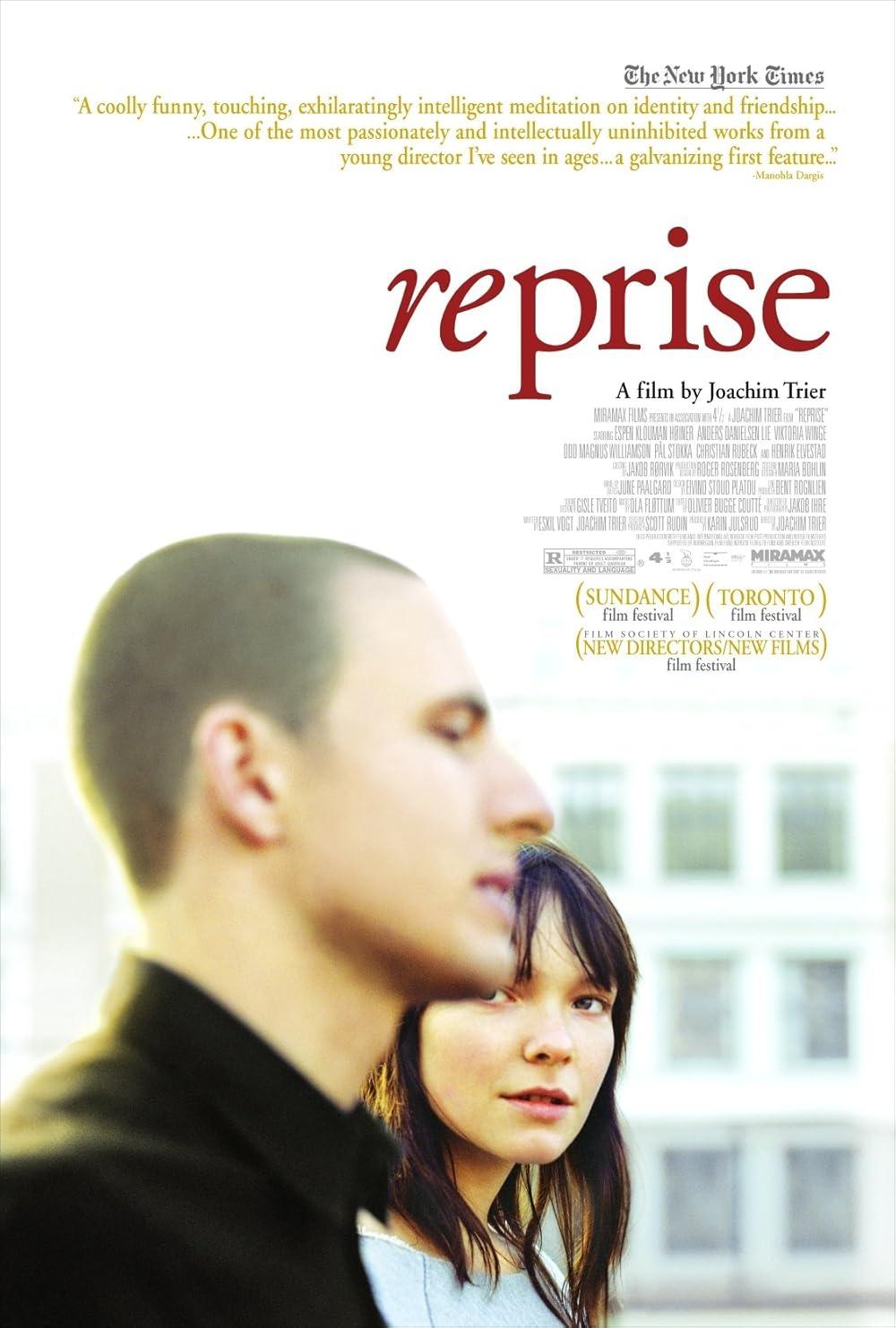
Reprise (Repetition) is a 2006 Norwegian drama film directed by Joachim Trier and written by Trier and Eskil Vogt. The film is positioned within the wave of modern urban dramas that emerged in Norwegian cinema. It centers on themes of youth, creativity, psychological breakdowns and competition. Oslo’s cultural atmosphere is treated as a character throughout the film. During production, natural lighting, urban layouts and minimalist spatial designs were prioritized. The film has been recognized as the voice of a new generation in national cinema and has generated widespread international acclaim.
The cast includes young Norwegian actors Anders Danielsen Lie, Espen Klouman Høiner and Viktoria Winge. Lie and Høiner portray two friends striving to enter the literary world, while Winge embodies a role that shapes the emotional bonds between the characters. The film draws attention through its energetic narrative structure, sound design and minimalist musical approach. Cinematographer Jakob Ihre and editor Olivier Bugge Coutté established a distinctive cinematic style. The film is widely regarded as a pivotal moment in raising the international profile of Norwegian cinema and has also achieved critical success within European film circles beyond Norway.
The film explores the lives of two young men caught between their passion for writing and personal unraveling. As these close friends attempt to enter the literary world, they engage in both individual and artistic struggles for existence. The narrative examines the blurred boundaries between success and failure through psychological fluctuations and societal expectations. The story unfolds through a non-linear structure, with transitions into the characters’ inner worlds achieved through dreams, fantasies and alternative future scenes. Oslo’s somber atmosphere serves as a parallel backdrop to the characters’ internal states. The film draws attention to the loneliness of the modern individual and the psychological collapse inherent in the creative process.
Thematically, the film highlights the cost of engaging with literature and art, foregrounding issues such as social acceptance and personal instability. It particularly portrays the younger generation’s search for meaning along the fragile line between artistic freedom and psychological fracture. The characters’ inner voices merge with external narration to create a multilayered storytelling structure. This approach allows the viewer to simultaneously observe the events as an external witness and as a witness to the characters’ mental worlds. The work presents a portrait of a generation in which individual failures transform into a collective sense of helplessness. In this sense, the film is not merely a character study but also a representation of a generation’s identity quest.
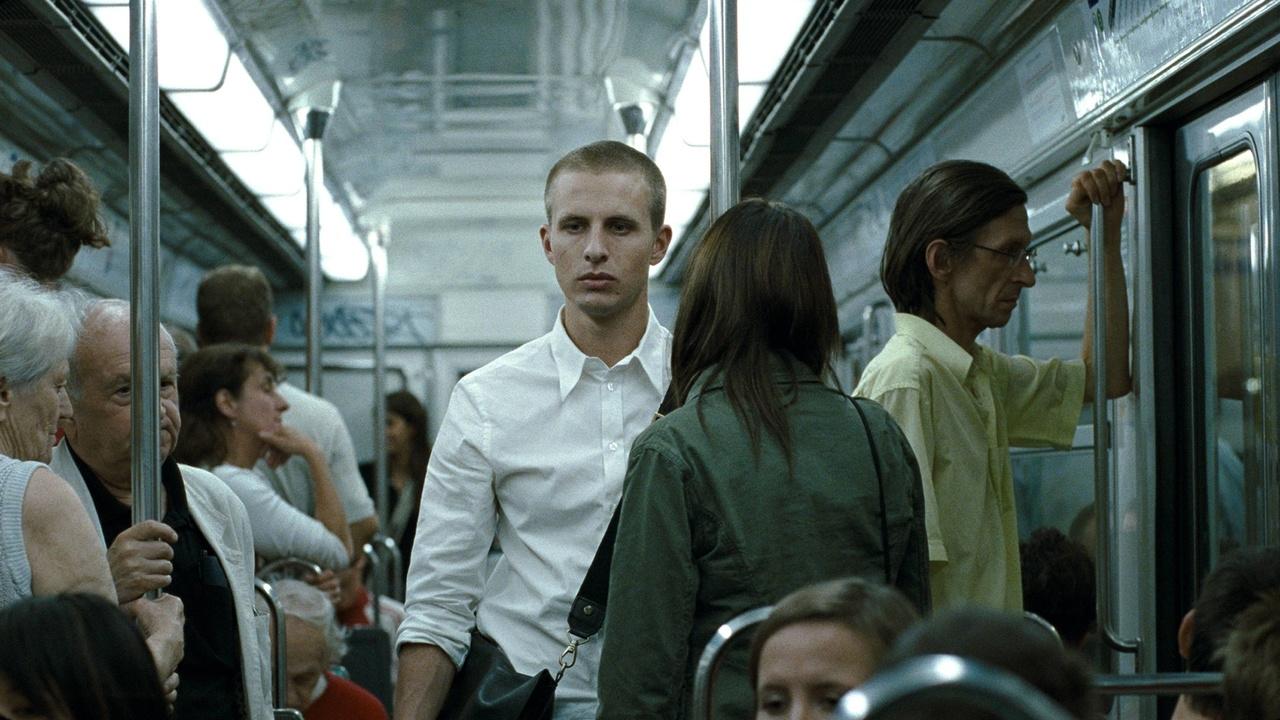
A scene from the film (IMDb)
The film serves as an example of independent production within Norwegian cinema in terms of budget and scale. Cinematographer Jakob Ihre captured the urban fabric with realistic use of natural light. Editor Olivier Bugge Coutté’s rapid transitions serve the film’s multi-layered narrative. Ola Fløttum’s sparse musical compositions support the emotional intensity of the scenes. In sound design, the naturalism of dialogue is preserved, and environmental sounds enhance the realism of the settings. Various districts of Oslo were selected as locations, with the city itself functioning as a space that reflects the characters’ psychological conditions. Despite being the director’s first feature film, it presents a mature cinematic language.
The shooting process created an atmosphere informed by Norway’s cold color palette. Camera movements are synchronized with the characters’ psychological fluctuations. Throughout the film, the pacing occasionally slows to make room for the characters’ internal reflections. The preference for silence over music in scene transitions reinforces the characters’ emotional void. Sharp editing choices in post-production combine the film’s youthful energy with its mental chaos. Visual minimalism balances narrative intensity. Thus, the film maintains equilibrium between a minimalist aesthetic and deep psychological analysis.
The film won six awards and received sixteen nominations at international festivals between 2006 and 2007. At Norway’s national cinema awards, the Amanda Awards, it won three major prizes: Best Film, Best Director (Joachim Trier) and Best Screenplay (Joachim Trier and Eskil Vogt). At the same ceremony, Viktoria Winge was nominated for Best Supporting Actress. At the Kanonprisen Awards, Joachim Trier won Best Director and Olivier Bugge Coutté won Best Editing. The film was also nominated for Best Producer, Best Supporting Actor and Best Original Screenplay.
Internationally, the film won the Golden Tulip – Best Film award at the Istanbul Film Festival and the Discovery Award at the Toronto International Film Festival. At the Angers European First Film Festival, it achieved a triple success by winning the Jury Grand Prize, the Audience Award and the Deuxième Souffle Award. It received the Critics’ Prize at the Rouen Nordic Film Festival and the MovieZone Award at the Rotterdam Film Festival. The film also received nominations at major institutions including the European Film Awards, Bodil Awards, Satellite Awards and the Nordic Council Film Prize.
IMDb. "Reprise – Awards." Accessed October 6, 2025. https://www.imdb.com/title/tt0827517/awards/?ref_=tt_ov_at_op_awd
IMDb. "Reprise – Full Cast & Crew." Accessed October 6, 2025. https://www.imdb.com/title/tt0827517/fullcredits/?ref_=tt_ov_at_pop_cst
IMDb. "Reprise – Locations." Accessed October 6, 2025. https://www.imdb.com/title/tt0827517/locations/?ref_=tt_ov_at_dt_flmg
IMDb. "Reprise – Media Index." Accessed October 6, 2025. https://www.imdb.com/title/tt0827517/mediaindex/?ref_=tt_ov_at_pop_ph
IMDb. "Reprise – Plot Summary." Accessed October 6, 2025. https://www.imdb.com/title/tt0827517/plotsummary/?ref_=tt_ov_at_pl_pl
IMDb. "Reprise." Accessed October 6, 2025. https://www.imdb.com/title/tt0827517/
IMDb. “Reprise – Release Info.” Accessed October 6, 2025. https://www.imdb.com/title/tt0827517/releaseinfo/?ref_=tt_ov_at_dt_rdat
Letterboxd. “Reprise.” Accessed October 6, 2025. https://letterboxd.com/film/reprise/
MUBI. "Reprise." Accessed October 6, 2025. https://mubi.com/tr/tr/films/reprise
Rotten Tomatoes. “Reprise.” Accessed October 6, 2025. https://www.rottentomatoes.com/m/1196293-reprise
Sinemalar. "Reprise." Accessed October 6, 2025. https://www.sinemalar.com/film/9737/reprise
Subtitles. "Interview with Joachim Trier on 'The Reprise.'" Accessed October 6, 2025. https://altyazi.net/soylesiler/joachim-trier-ile-tekrar-uzerine-soylesi/

Original Title | Reprise | ||||||||
|---|---|---|---|---|---|---|---|---|---|
Production Year / Country | 2006 / Norway | ||||||||
Genre | Drama | ||||||||
Director(s) | Joachim Trier | ||||||||
Screenplay(s) | Joachim Trier Eskil Vogt | ||||||||
Main Cast | Anders Danielsen Lie, Espen Klouman Høiner, Viktoria Winge | ||||||||
Cinematographer(s) | Jakob Ihre | ||||||||
Language(s) | Norwegian | ||||||||
Plot and Themes
Production and Technical Features
Awards