This article was automatically translated from the original Turkish version.
Producer | Renault S.A. | ||||||||
|---|---|---|---|---|---|---|---|---|---|
Years of Production | 1969 – 1980 (France) 1989 – 2000 (Türkiye-Renault 12 Toros) | ||||||||
Vehicle Class | Mid-size (C segment) | ||||||||
Engine | 1.3 L – 1.6 L inline four-cylinder (gasoline) | ||||||||
Drivetrain | Front-wheel drive | ||||||||
Transmission | 4 or 5-speed manual | ||||||||
Maximum Speed | 160 km/h (Toros version) | ||||||||
Weight | 890 kg | ||||||||
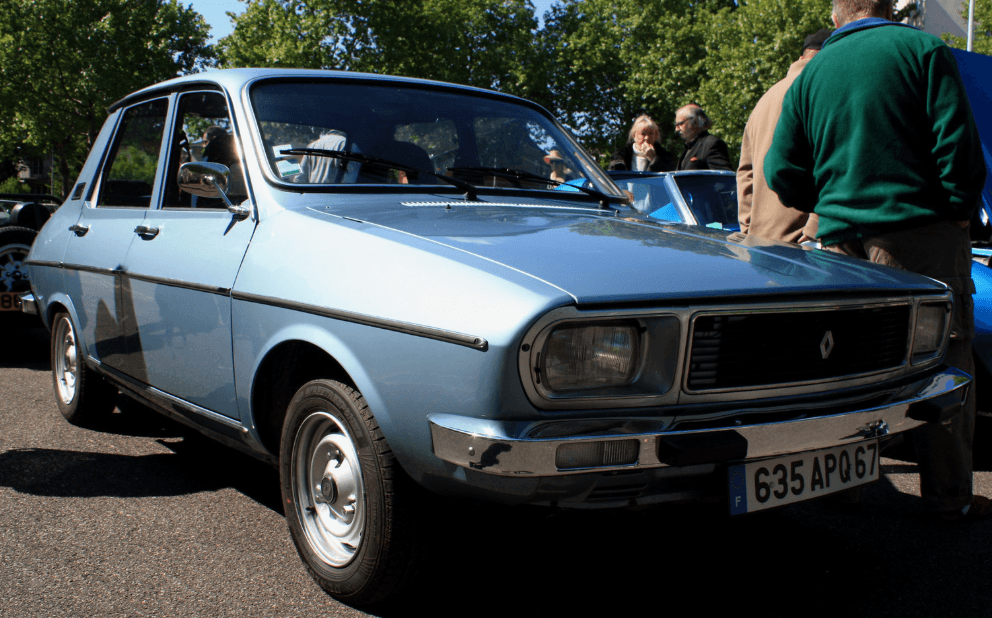
The Renault 12 is a mid-size family car introduced in 1969 that embodied the concept of a “world car” through its front-wheel-drive layout. It was developed to strengthen Renault’s position in the mid-size market. The rear-engine design of the Renault 8 and Renault 10 models had become outdated and failed to meet the technical and design expectations of the era, prompting the brand to shift toward a new front-wheel-drive platform. Built on the success of the Renault 16, this model was designed as a more economical and practical alternative. The Renault 12 was engineered with a simple yet reliable structure, making it easy to produce, easy to repair, and suitable for local manufacturing worldwide under a “global car” philosophy.
Official production began in France and soon expanded under license to countries including Romania, Spain, Argentina, Brazil, Türkiye and Australia. The Renault 12’s robust mechanical design and simple technology enabled it to remain in production for decades across diverse regions. Although production in France ended in 1980, its legacy continued into the 2000s through derivatives developed on the same platform: the Renault 15, 17, 18 and Fuego.
Renault 12 Toros Advertisement (Youtube - Old Advertisements)
The primary goal during the development of the Renault 12 was a low-cost production system. The body structure followed the classic three-box (sedan) layout. The design team emphasized aerodynamic lines to reduce wind resistance and improve fuel efficiency. The longitudinally mounted engine with front-wheel drive was an adaptation of a technology previously tested on Renault’s Estafette van.
The Renault 12’s body was produced in two main variants: sedan and station wagon (SW). The station wagon version became especially popular for commercial use in South America and Eastern Europe. Interior materials were designed to be simple yet durable. A high roofline, large glass surfaces and comfort-oriented seating provided a spacious cabin by the standards of its time.
Renault 12 (Flickr)
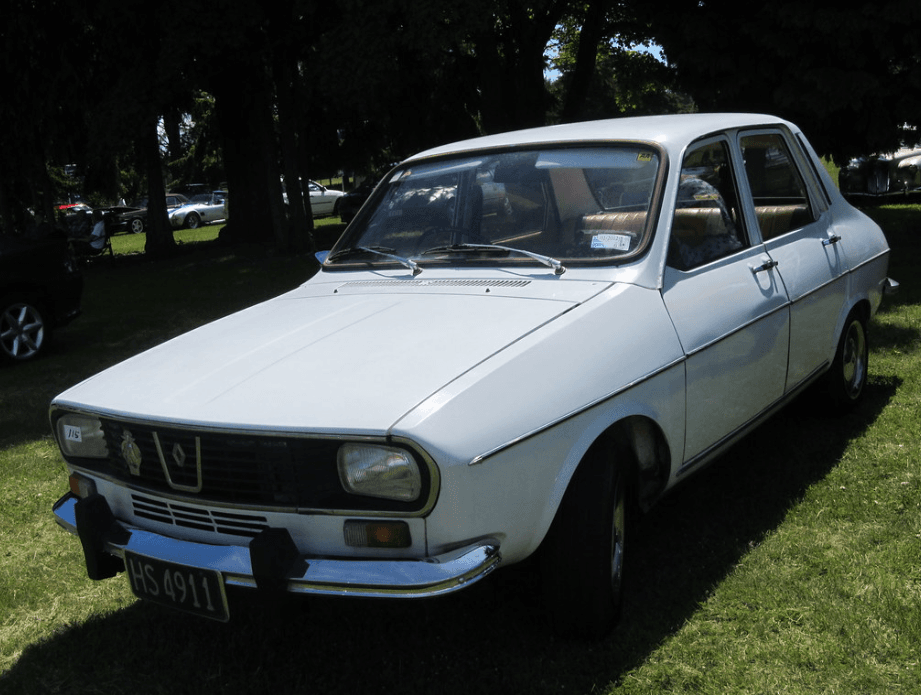
The Renault 12 was equipped with a 1.3-liter four-cylinder engine from Renault’s “Cléon-Fonte” family. This engine produced 54 horsepower, rising to 64 horsepower in the TS variant. The later Gordini version could reach up to 125 horsepower. The longitudinal engine placement shifted weight to the front axle, creating a tendency for understeer. However, this configuration was an effective solution for its time, offering excellent road holding and balance.
The suspension system featured independent front suspension and a rigid rear axle with helical springs. Although considered basic by the French automotive press, this setup provided durability and ease of maintenance, offering advantages worldwide. The steering system was mechanical with a 3.5-turn lock-to-lock ratio. The braking system combined front disc brakes with rear drum brakes.
Renault 12 (Flickr)
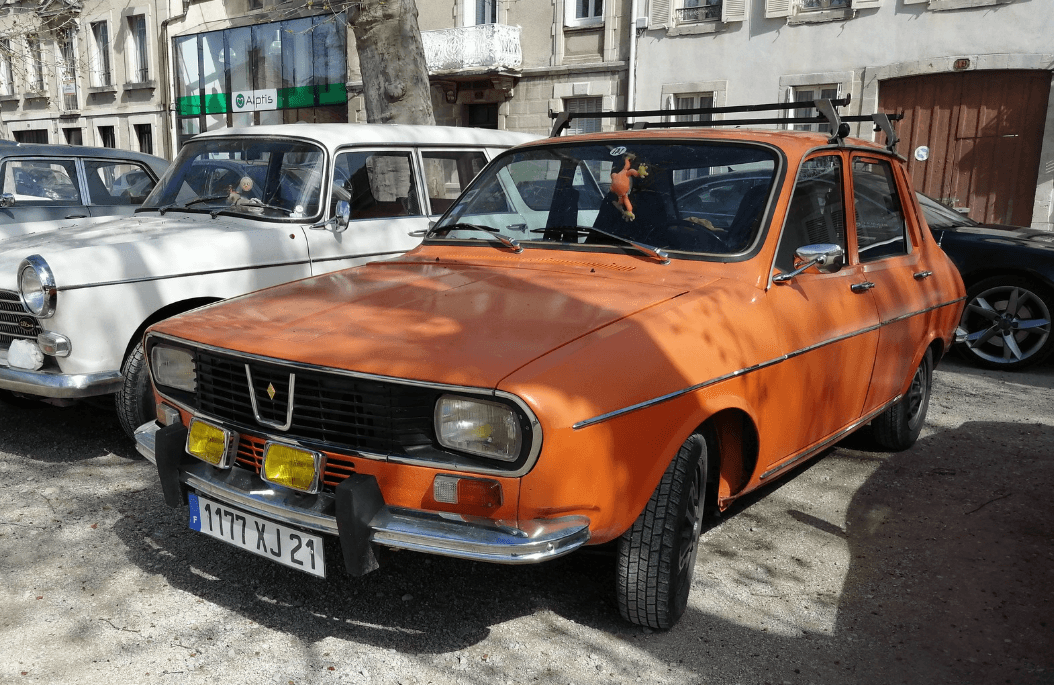
The Renault 12 exemplified the concept of a “world car” through its design and production structure. Production expanded after France to Brazil, Argentina, Spain, Romania, Australia and Türkiye. In Romania, the model was produced as the Dacia 1300 until 2006. Ford’s Brazilian operations, having taken over Willys-Overland facilities, manufactured the Ford Corcel, a derivative of the Renault 12.
In France, the Renault 12 was positioned as a mid-size family car, while in Australia it won the “Car of the Year” award in 1970. The model remained in production in Australia for 12 years, with a total of 26,000 units sold.
Renault 12 (Flickr)
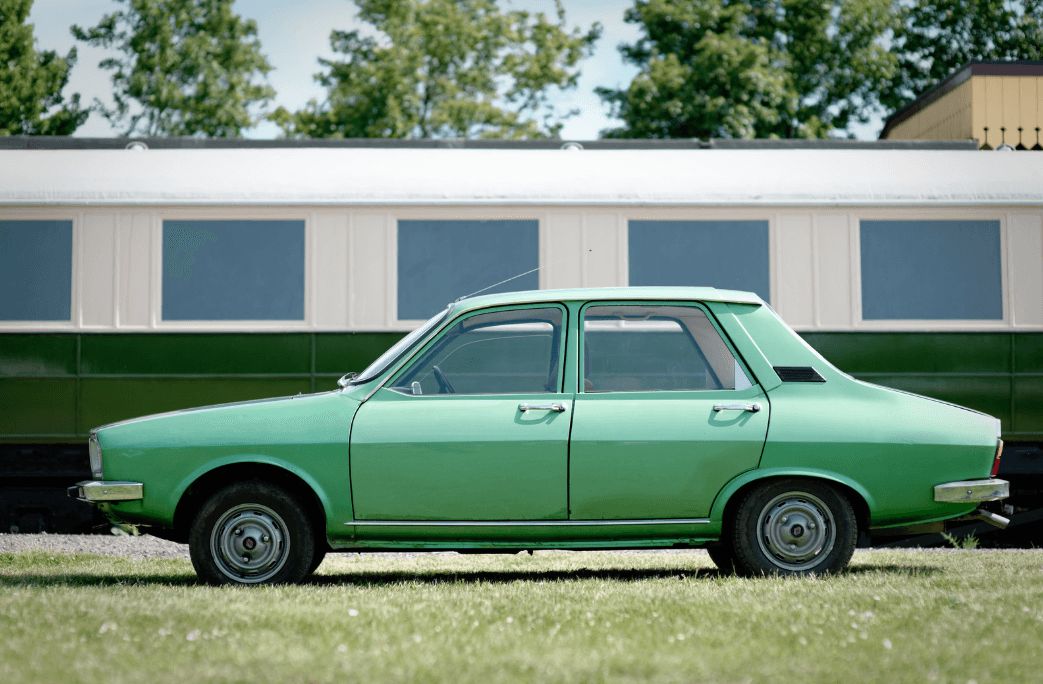
Launched in 1970, the Renault 12 Gordini was the performance-oriented version of the model. It featured a 1.6-liter engine producing 125 horsepower, twin Weber carburetors and four-disc brakes. This variant could accelerate from 0 to 100 km/h in 9 seconds and helped maintain Renault’s presence in French motorsport. The Australian version of the Renault 12 Gordini was produced as a limited run of six right-hand-drive units specifically for rally racing.
The Australian variant, developed by Bob Watson and Enzo Dozzi, was equipped with a 120 kW engine, a close-ratio five-speed gearbox, a 80-liter fuel tank and a lightweight body weighing 965 kilograms. These models achieved notable success in the Australian Rally Championship.
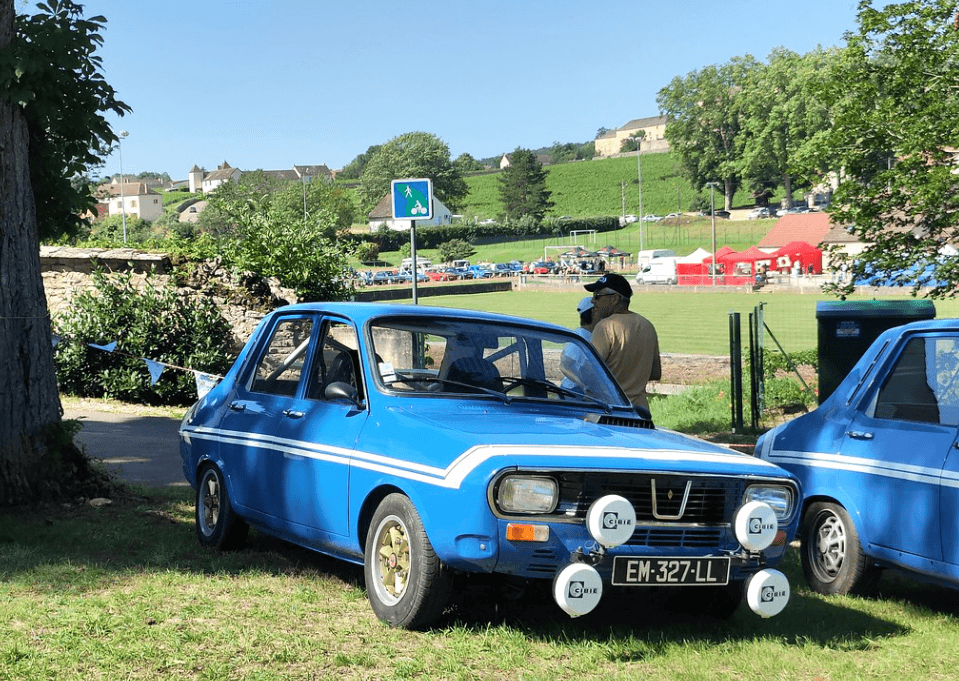
Renault 12 Gordini (Flickr)
Production of the Renault 12 in Türkiye began in 1971 at the Bursa plant through the joint venture OYAK-Renault. Variants produced during its production run included TL, TS, GTS, TSW, TX and SW. In 1989, the model was succeeded by the Renault 12 Toros, a locally developed version of the Renault 12 that remained in production until 2000.
The Toros model featured a 1.4-liter naturally aspirated petrol engine (C1J/791) producing 72 horsepower and 11 mkg of torque, with a top speed of 160 km/h. It was equipped with a five-speed gearbox and achieved a fuel consumption of 7 liters per 100 km at a constant speed of 90 km/h. The braking system used front disc and rear drum brakes. The vehicle’s curb weight was approximately 890 kilograms.
Due to its sturdy body structure, durable suspension and low maintenance costs, the Toros became known as the “mountain goat.” It was widely preferred by farmers, small business owners and public institutions in Türkiye. It was also used as an official vehicle by police forces, the military and various government agencies.
The Legend of Renault 12 and Toros with Unknown Details / Renault 12, TL, GTS, TS, TSW, Renault 9 (Youtube - How Did They Do It?)
The engine of the Renault 12 Toros is an overhead valve, four-cylinder, liquid-cooled unit with a compression ratio of 8.2:1 and a Solex 35 SEIA carburetor. The vehicle has a 47-liter fuel tank and a 6-liter cooling system capacity. The steering system provides a full lock-to-lock turn in 3.5 turns, with a turning circle of 10 meters.
The suspension system features independent front suspension and a rigid rear axle, equipped with helical springs and telescopic shock absorbers, with front and rear anti-roll bars for balance. The electrical system is supported by a 12-volt, 45 ampere-hour battery.
Throughout its production period from 1990 to 2000, the model underwent various annual updates. Production of the four-speed variant ended in 1991. Instrument panels were redesigned in 1995, and in 1997 the transmission was switched to the NG1-063 type. Color-tinted glass was introduced in 1999, and the final versions were discontinued in 2000.
The Renault 12 carried different meanings across regions. In Europe it was seen as an ordinary family car, but in Türkiye it became a symbol of durability. It served for decades on village roads, in fields, in urban transport and within government institutions. Hundreds of Renault 12s are still in use today in Fethiye and its surroundings.
The vehicle transcended its role as mere transportation in Türkiye and became a nostalgic icon in the collective memory. Described as a “car for traveling over mountains and rocks,” it earned public trust through its long-lasting performance despite its simple design.
The Renault 12 is remembered in modern automotive history as an example of technical simplicity achieving global success. Over its production life from 1969 to 2000, more than seven million units were sold worldwide. Its legacy continued in Romania under the Dacia brand.
Production of the final version, marketed in Türkiye as the Toros, ended in 2000. Since then, no vehicles have been produced under the Renault 12 name; however, the model has become firmly established in automotive history as a symbol of ruggedness in popular culture. The Renault 12 has left a lasting mark both as an engineering classic and as a cultural icon representing the philosophy of “technological simplicity.”
Curbside Classic. "COAL: The Cars of My Father – His Renault Period (R12, R18)." November 13, 2021. Accessed October 8, 2025.https://www.curbsideclassic.com/cars-of-a-lifetime/coal-the-cars-of-my-father-his-renault-period-r12-r18/
Flickr. "1975 Renault 12 TL Saloon." Riley. Accessed October 8, 2025.https://www.flickr.com/photos/nzcarfreak/6464791535/
Flickr. "Renault 12 Gordini." Crash71100. Accessed October 8, 2025.https://www.flickr.com/photos/152930510@N02/54347481776/in/photolist-2qNv3TS-2exzTQD-2p4thC2-23CHozm-2ntUrjD-zhUxYr-2r2uTvn-2n36igY-2mM2jg7-2kYLxrh-2rjwmwZ-YGejop-2qNzLHF-2kXieG2-Yr2eJf-2q3YiHW-XsfEbt-2kYK1rC-2fQznyT-LtptkU-2q1xAZt-2mEH3gZ-2n37wW2-2nxuyES-2od4uxn-2nuiCfJ-XywdHU-2nvz87L-2orL1zB-K2Ak4K-2oWRfDR-bBKLdQ-269neXX-8VUhCn-2mLnZcw-2mqKDGt-28ersuX-aTEqBa-zg1isd-9SZ5ec-PvHk7J-WmZ6f6-2iUVCJu-2ph8rjU-5X5RJt-23MsuXS-2jjYiY9-h2F3DP-9ASp7z-nhVABp
Flickr. "Renault 12 TL." pyntofmyld. Accessed October 8, 2025.https://www.flickr.com/photos/pyntofmyld/20865363326/in/photostream/
Flickr. "Renault 12 TS." Crash71100. Accessed October 8, 2025.https://www.flickr.com/photos/152930510@N02/47044121464
Flickr. "Renault 12 TS." fangio678. Accessed October 8, 2025.https://www.flickr.com/photos/26445677@N03/14805621311/
Honest John. "Renault 12 (1969–1980) Review." Accessed October 8, 2025.https://classics.honestjohn.co.uk/reviews/renault/12/
Petrolblog. "Whatever Happened to the Renault 12?" April 13, 2010. Accessed October 8, 2025.https://petrolblog.com/articles/whatever-happened-renault-12
Renault12.tr.gg. "Renault 12 Türkiye – Renault 12 Toros." Accessed October 8, 2025.http://renault12.tr.gg/Renault-12-Toros.htm
Trade Unique Cars. "Renault 12 Review." Joe Kenwright. September 9, 2011. Accessed October 8, 2025.https://www.tradeuniquecars.com.au/renault-12-review/
Trade Unique Cars. "Renault 12 Review: Classic Metal." John Wright. June 6, 2013. Accessed October 8, 2025.https://www.tradeuniquecars.com.au/classic-metal-renault-12/
Yabangee. "The Peculiar Case of the Cult of the Renault 12." Chris Harris Jones. April 2, 2018. Accessed October 8, 2025.https://yabangee.com/the-peculiar-case-of-the-cult-of-the-renault-12/
YouTube. "Bilinmeyen Detaylarıyla Renault 12 ve Toros Efsanesi / Renault 12, TL, GTS, TS, TSW, Renault 9." *Nasıl Başardılar?* Accessed October 8, 2025.https://www.youtube.com/watch?v=m_fpaGGBH8Q
YouTube. "Renault 12 Toros Reklamı (eskireklamlar.com)." Eski Reklamlar. Accessed October 8, 2025.https://www.youtube.com/watch?v=uMM4a-8DM7k

Producer | Renault S.A. | ||||||||
|---|---|---|---|---|---|---|---|---|---|
Years of Production | 1969 – 1980 (France) 1989 – 2000 (Türkiye-Renault 12 Toros) | ||||||||
Vehicle Class | Mid-size (C segment) | ||||||||
Engine | 1.3 L – 1.6 L inline four-cylinder (gasoline) | ||||||||
Drivetrain | Front-wheel drive | ||||||||
Transmission | 4 or 5-speed manual | ||||||||
Maximum Speed | 160 km/h (Toros version) | ||||||||
Weight | 890 kg | ||||||||
Design and Development Process
Engine and Mechanical Features
Global Spread of the Renault 12
Renault 12 Gordini and Rally History
Renault 12 in Türkiye
Technical Specifications of the Renault 12 Toros
Cultural and Social Impact of the Renault 12
Legacy of the Renault 12