


This article was automatically translated from the original Turkish version.
+2 More
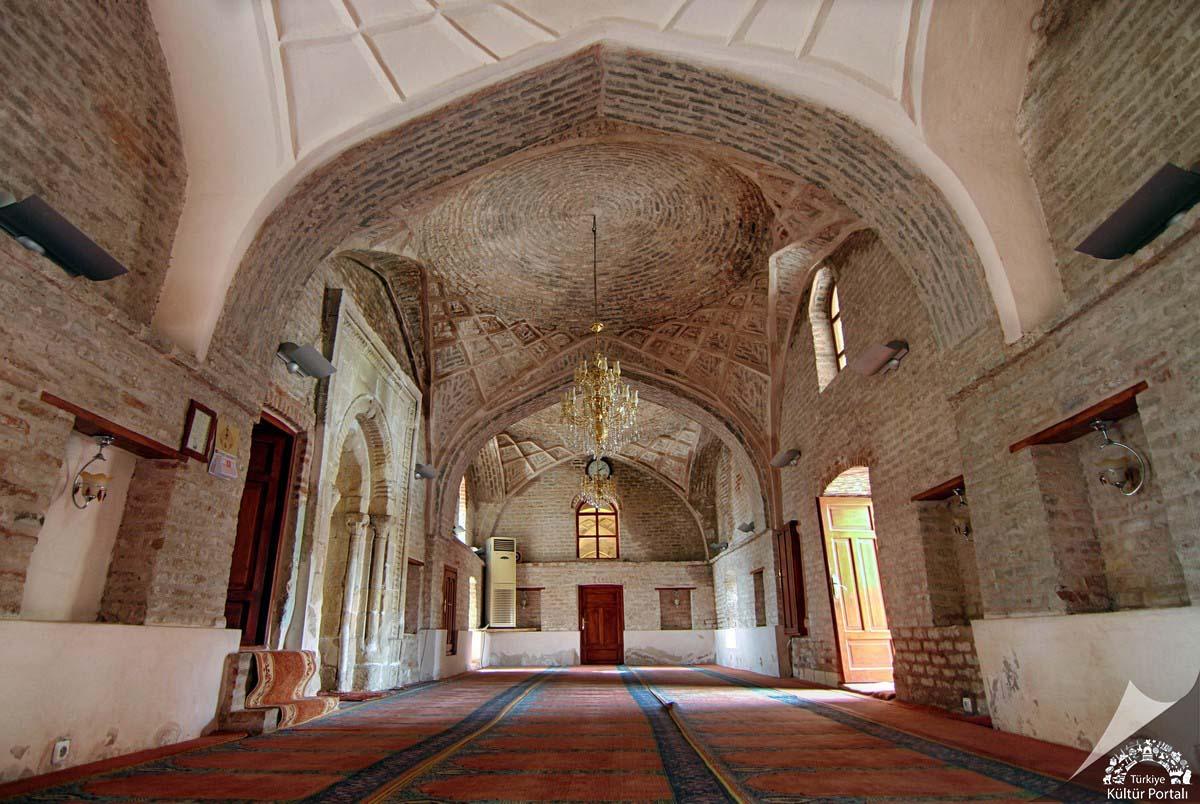
Red Madrasa
Location | Şırnak Cizre Dağ Kapı Mahallesi | ||||||||
|---|---|---|---|---|---|---|---|---|---|
Founder | II. Han Şeref Bey | ||||||||
Construction Date(s) | 14th century | ||||||||
Period | Cizre Beyliği | ||||||||
Material | cut stone rubble stone red brick | ||||||||
Kırmızı Medrese is a historical structure built in the 14th century by II. Han Şeref Bey of the Cizre Beylik. It is located in the Dağ Kapı neighborhood of Cizre district in Şırnak, situated atop the remains of the city’s western walls. The medrese, named for the red bricks used in its construction, is also known as “Medrasa Sur.” It functioned as a center of higher education where regional scholars were trained and comprises a külliye complex including a medrese, mosque, and tomb.
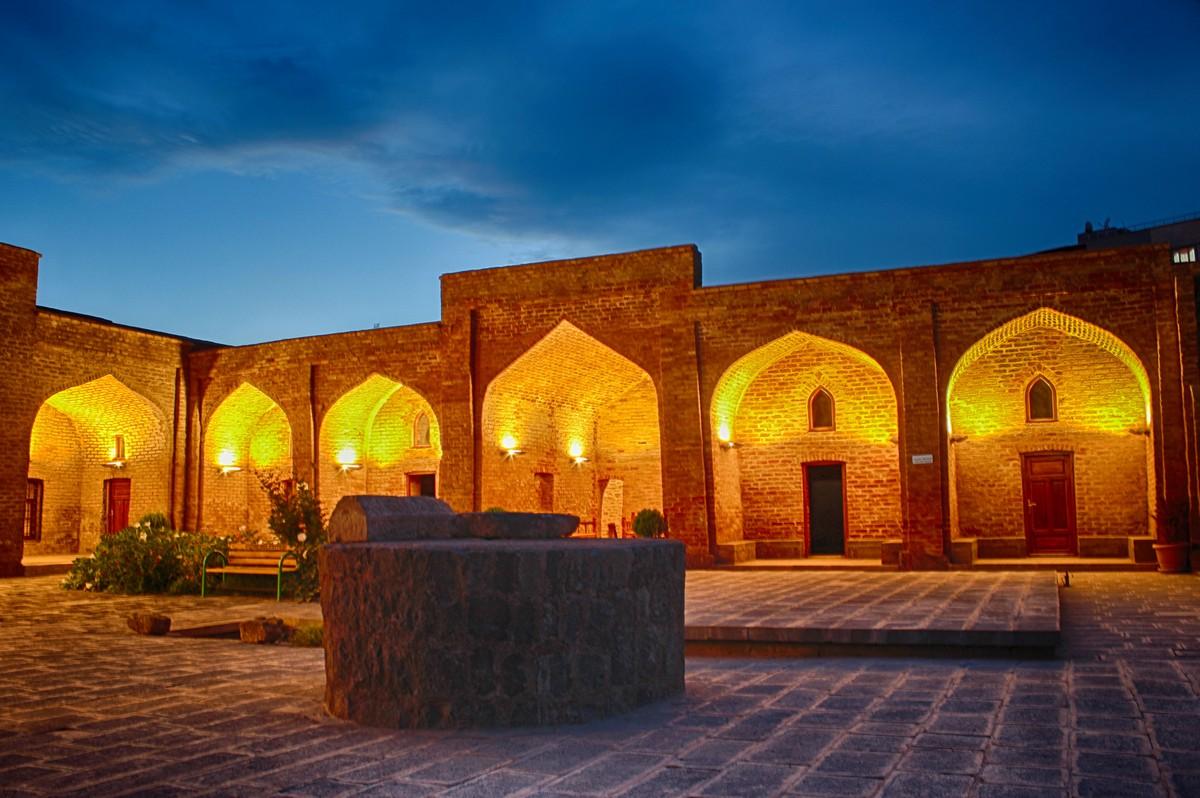
Kırmızı Medrese (Cizre Chamber of Commerce and Industry)
The construction of Kırmızı Medrese is associated with II. Han Şeref Bey’s (Hanşeref) recapture of Cizre in 1508. According to various unverified sources, II. Şeref prayed for the return of Cizre from the Akkoyunlus, saying, “My Lord, if I may regain Cizre, I shall build you a mosque.” It is said that upon the acceptance of this prayer, he commissioned the medrese. Cizre had passed to the Akkoyunlus in 1475, and its emirs had been exiled; however, II. Şeref reclaimed the city with the support of the Boti Tribe and local communities. The medrese was built atop the city walls, integrating seamlessly with the fortifications. After the abolition of the Cizre Beylik in 1847, the medrese fell into ruin, yet it retained its significance in collective memory.
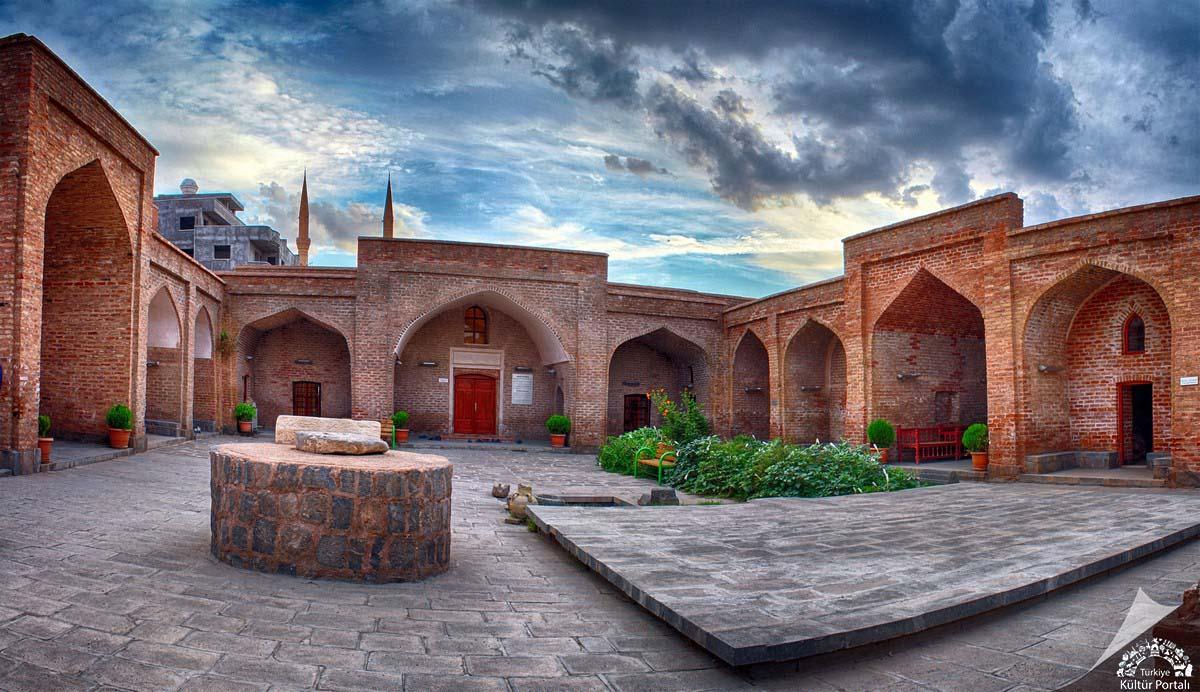
Kırmızı Medrese (Culture Portal)
Kırmızı Medrese is a rectangular, open-court structure oriented north-south, measuring 38.00 x 28.00 meters. The courtyard, measuring 15.16 x 18.95 meters, is surrounded by arcades and student cells on all four sides. The building is single-storied with two iwan halls. The entrance iwan is located at the center of the eastern wall; opposite it, on the western side at the center of the student cells, lies the main iwan. The southern wing houses the mosque, the chief madrasa teacher’s rooms, and the tomb, while the other wings are allocated to teachers and students. The structure is estimated to cover approximately 2,000 square meters.
The mihrab is constructed from white stone and measures 2.82 x 3.78 meters. Its diagonal angle is 55 degrees, and its surround is decorated with concave triangular motifs and inverted U-shaped patterns. The mihrab niche is semicircular in plan and covered by a flattened brick dome. The square-plan chief teacher’s room in the southwest corner is adorned with elegant motifs and was used by notable figures such as Şeyh Ahmed El-Cezeri and Şeyh İbrahim Sori. At the center of the southern facade stands the tomb of Şeyh Ahmed El-Cezeri, featuring a five-sided, inverted dome structure. The tomb is a two-story octagonal building: the lower level serves as a burial chamber and the upper as a visitation area, enhanced by pointed-arch niches.
The medrese was primarily constructed using red brick; the lower sections of the exterior walls feature finely cut stone, while rubble stone is used in some areas. The western wing is supported by three semi-circular towers. The mosque, tomb, and medrese sections exhibit a cohesive architectural unity through complementary techniques and decorative elements.
Kırmızı Medrese is situated within an area containing significant structures from various periods. To its south lie the tomb of Prophet Noah, believed to have been built after the Flood, and the tomb of Cizre inventor İsmail Ebu’l İzz El-Cezeri. Further south are the Mîr Abdal Medrese and the Mem û Zîn Tomb; to the southeast stands the Cizre Ulu Camii. Beneath the medrese lies the family cemetery of the Cizre emirs, alongside the tomb of Şeyh Ahmed El-Cezeri.
Kırmızı Medrese played a vital role in Cizre’s educational and religious life, serving as a center where scholars such as the poet, author, and exegete Şeyh Ahmed El-Cezeri and the scholar Şeyh İbrahim Sori were trained. The processes of Ottoman modernization and the establishment of the Turkish nation-state influenced perceptions of medreses among the Kurds; however, Kırmızı Medrese has endured as an important symbol of identity, culture, and historical context in collective memory.
The mosque and tomb sections of the medrese have remained relatively intact, while the medrese section is largely in ruins. The northern and northeastern arcades and student cells have collapsed to foundation level. Today, the mosque section is used as a mosque, and the tomb is open to visitors. The structure, now surrounded by modern buildings, is regarded as a cultural restoration achievement. Owned by the General Directorate of Foundations, Kırmızı Medrese has been assigned to Bitlis Eren University and is planned for use as a “Research Center.”
Ahi Evran Üniversitesi. “Cizre Kırmızı Medrese Bağlamında Tarih, Kimlik, Hafıza Oluşumu.” Accessed April 4, 2025.https://unis.ahievran.edu.tr/yayin-detay/2_CZSrDZS_95/cizre-kirmizi-medrese-baglaminda-tarih-kimlik-hafiza-olusumu
Cizre Kaymakamlığı. "Kırmızı Medrese." Accessed April 4, 2025.http://www.cizre.gov.tr/kirmizi-medrese.
Cizre Ticaret ve Sanayi Odası. "Cizre Kırmızı Medrese," Accessed April 4, 2025.https://cizretso.org/fotogaleriler/cizre-kirmizi-medrese/.
Kültür Portalı. "Kırmızı Medrese | Kültür Portalı." Accessed April 4, 2025.https://www.kulturportali.gov.tr/turkiye/sirnak/gezilecekyer/kirmizi-medrese.
Kültür Portalı. "Kırmızı Medrese | Kültür Portalı." Accessed April 4, 2025.https://www.kulturportali.gov.tr/turkiye/sirnak/gezilecekyer/kirmizi-medrese.
Şırnak Üniversitesi Distance Education Center. “Tarihi Kırmızı Medrese Üniversitemize Tahsis Edildi.” Accessed April 4, 2025.https://sirnakuzem.sirnak.edu.tr/tr/aktivite/tarihi-kirmizi-medrese-universitemize-tahsis-edildi/20534
Şırnak İl Kültür ve Turizm Müdürlüğü. “Kırmızı Medrese.” Accessed April 4, 2025.https://sirnak.ktb.gov.tr/TR-372121/kirmizi-medrese.html

Red Madrasa
Location | Şırnak Cizre Dağ Kapı Mahallesi | ||||||||
|---|---|---|---|---|---|---|---|---|---|
Founder | II. Han Şeref Bey | ||||||||
Construction Date(s) | 14th century | ||||||||
Period | Cizre Beyliği | ||||||||
Material | cut stone rubble stone red brick | ||||||||
History
Architectural Features
Surroundings and Complex
Cultural and Historical Significance
Current Condition