


This article was automatically translated from the original Turkish version.
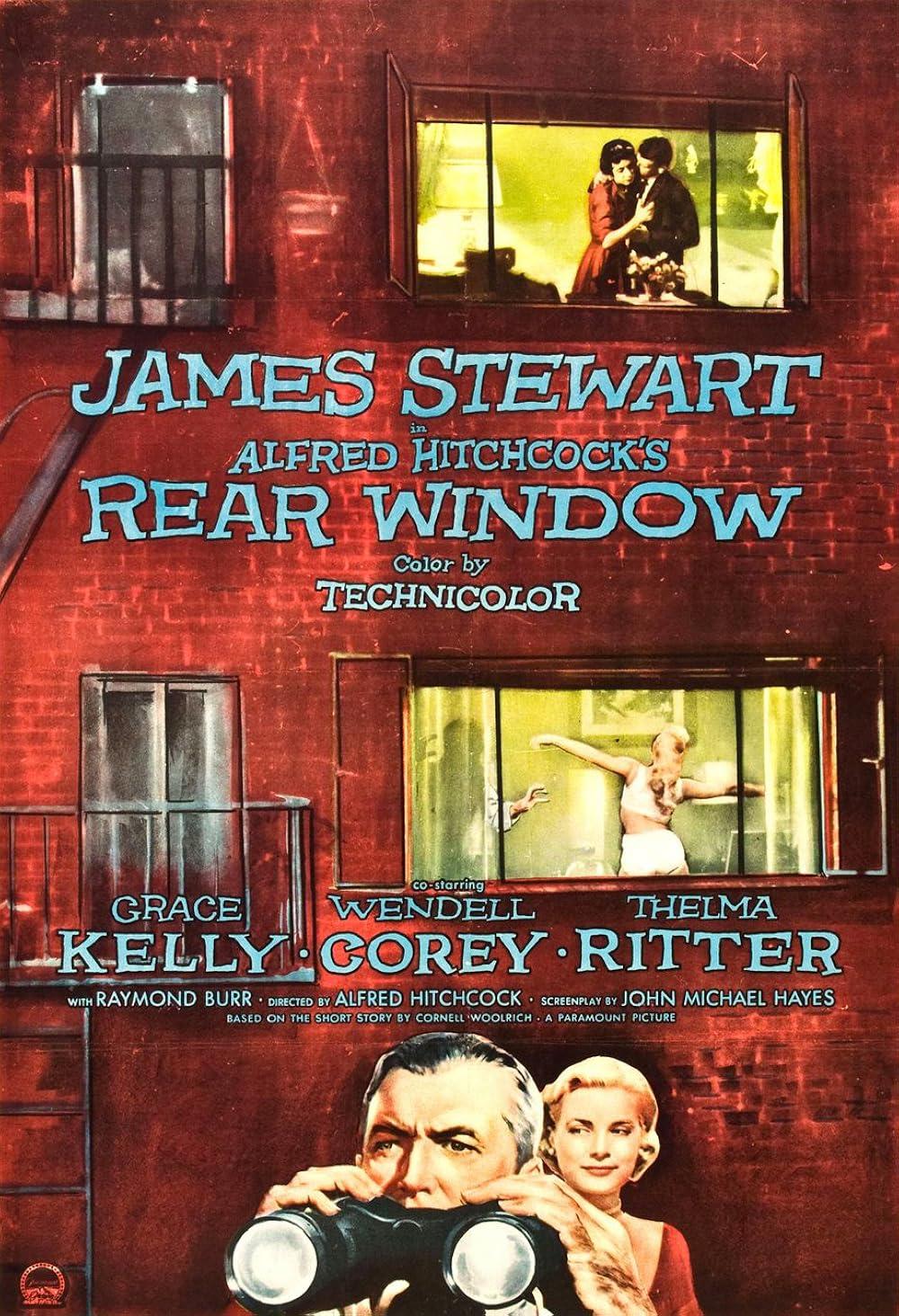
Back Window
Screenplay(s) | Adapted from a short story by Cornell Woolrich | ||||||||
|---|---|---|---|---|---|---|---|---|---|
Original Name(s) | Rear Window | ||||||||
Production Year(Text) | 1954 | ||||||||
IMDb Rating(Text) | 8.5 | ||||||||
Director(s) | Alfred Hitchcock | ||||||||
Actors | Raymond Burr (Lars Thorwald) Thelma Ritter (Stella) Grace Kelly (Lisa Fremont) James Stewart (L.B. "Jeff" Jefferies) | ||||||||
Duration | 112 minutes | ||||||||
Genre | Thriller Mystery | ||||||||
Rear Window is one of Alfred Hitchcock’s most refined tension narratives, a masterful work set entirely in a single location yet fully exploiting the possibilities of cinema. Film begins with L.B. “Jeff” Jefferies (James Stewart), a photographer confined to his apartment due to a accident, secretly observing his neighbors through his window. This ordinary curiosity gradually transforms into a suspicion that one of his neighbors has murdered his wife.
Jeff, along with his girlfriend Lisa (Grace Kelly) and nurse Stella (Thelma Ritter), together investigates the matter. Yet as the story unfolds between suspicion and real, the film raises not only the question of a murder investigation but also brings to the fore issues of surveillance, ethics, relationships, and affiliation.
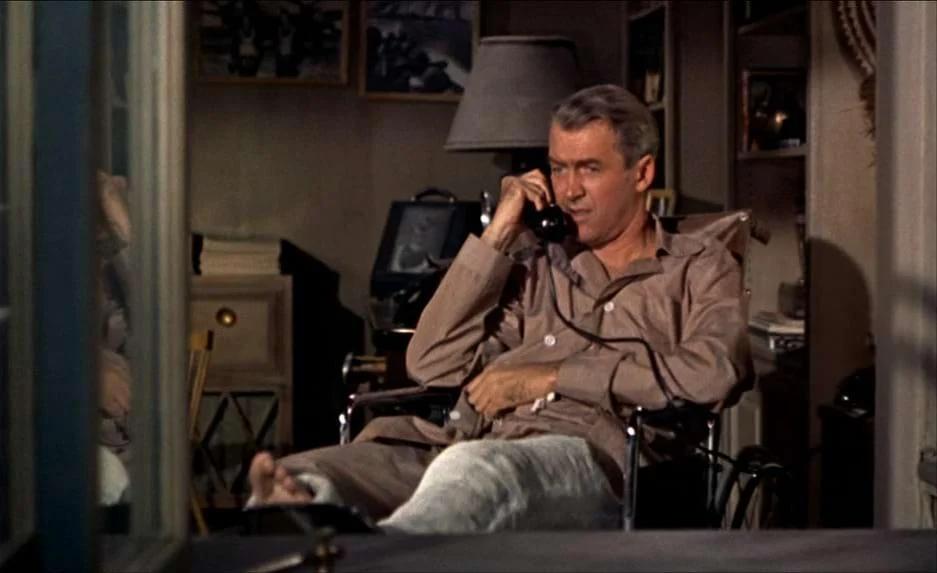
James Stewart as Jefferies -American Cinematographer
Rear Window places the theme of voyeurism at the heart not only of its story but of cinema itself. Jeff’s observation of his neighbors parallels the audience’s gaze upon characters on the silver screen. This experience can also be read as a metacinematic inquiry into the nature of cinema.
In the film, Jeff’s act of surveillance shifts from innocent curiosity to an ethical dilemma. Even if it contributes to solving a crime, is it justified to observe another person’s private life? Hitchcock makes the viewer complicit in this moral quandary.
The film takes place almost entirely within Jeff’s apartment. Yet Hitchcock uses the camera and windows with such mastery that this confined space becomes home to multiple narratives, emotions, and tensions. The film is regarded as one of the most dynamic narratives in cinema history to unfold in a single location.
The character of Lisa Fremont embodies the elegant woman of her era while simultaneously evolving into a strong, autonomous figure who acts on her own will, challenging Jeff’s prejudices. Lisa’s transformation from a passive figure to an active investigator throughout the film signals Hitchcock’s ability to move his female characters beyond conventional stereotypes.
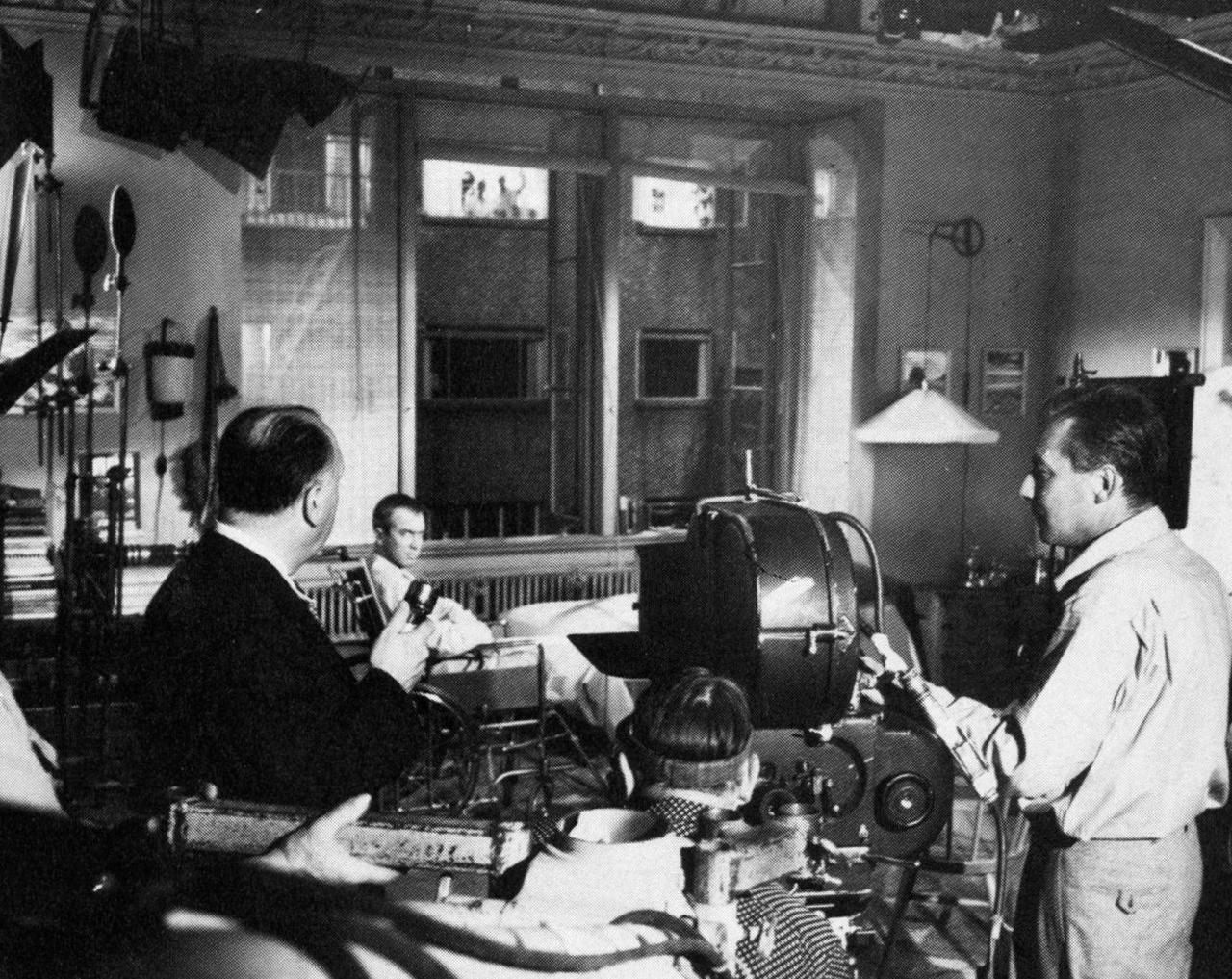
From left, Alfred Hitchcock, Stewart, Schurr and Robert Burks on the apartment set -American Cinematographer
Rear Window was shot on a work interior set at Paramount Studios. Hitchcock transported a New York apartment courtyard into the studio, creating a cinematic space where the rear window perspective could be fully controlled.
Film’s cinematographer Robert Burks adjusted lighting according to different times of day, visually conveying the narrative’s time progression. Silence, telephone hums, music, and city sounds serve as diegetic elements that deepen Jeff’s sense of isolation and observation.
James Stewart masterfully portrays Jeff’s psychological journey from natural curiosity to paranoia. His performance enables the audience to share both his suspicions and his feelings of guilt. Grace Kelly reveals a courageous, determined, and intellectual character beneath her elegant exterior. Her active role in the final scene particularly enriches the film dramatically. Thelma Ritter brings a distinctive tone to the film through her character Stella, offering both humor and perceptive commentary.
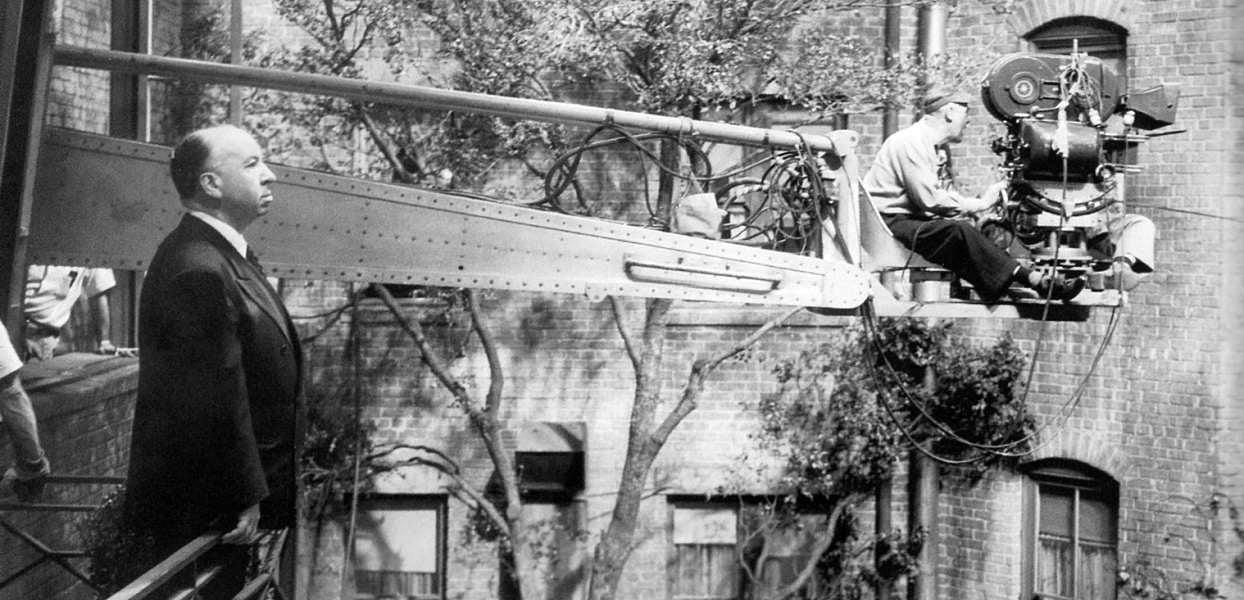
Director Alfred Hitchcock during filming -American Cinematographer
Rear Window is not merely a thriller but a thesis on cinema’s relationship with its audience. By placing the viewer’s desire to observe at the center of the film, Hitchcock established a work that is both aesthetically and philosophically reflective of cinema on. Today, it remains one of the foundational texts in film studies and continues to inspire filmmakers.
Best Director – Alfred Hitchcock
Best Adapted Screenplay – John Michael Hayes
Best Cinematography (Colorful) – Robert Burks
Best Sound Recording
Rear Window was added to the United States National Film Archive in 1997 as “culturally, historical and aesthetically important” significant.
Rear Window has been repeatedly included in Sight & Sound magazine’s lists of “greatest films of all time.”
It has been described by Roger Ebert and numerous critics as a “perfect cinematic narrative.”
American Society of Cinematographers. “Hitchcock’s Techniques in Rear Window.” Accessed April 2, 2025.
Beyazperde. “Arka Pencere (1954).” Accessed April 2, 2025.
Cinephilia & Beyond. “Rear Window: Hitchcock’s Cinematic Exploration of Voyeurism.” Accessed April 2, 2025. Link.
IMDb. “Rear Window (1954).” Accessed April 2, 2025.
Roger Ebert. “Great Movie: Rear Window (1954).” Accessed April 2, 2025.
Sinemalar.com. "Arka Pencere." Accessed April 2, 2025. Link.

Back Window
Screenplay(s) | Adapted from a short story by Cornell Woolrich | ||||||||
|---|---|---|---|---|---|---|---|---|---|
Original Name(s) | Rear Window | ||||||||
Production Year(Text) | 1954 | ||||||||
IMDb Rating(Text) | 8.5 | ||||||||
Director(s) | Alfred Hitchcock | ||||||||
Actors | Raymond Burr (Lars Thorwald) Thelma Ritter (Stella) Grace Kelly (Lisa Fremont) James Stewart (L.B. "Jeff" Jefferies) | ||||||||
Duration | 112 minutes | ||||||||
Genre | Thriller Mystery | ||||||||
No Discussion Added Yet
Start discussion for "Rear Window (Arka Pencere, Film)" article
Themes and Analysis
1. Voyeurism
2. Tension Between Ethics and Curiosity
3. Psychological Use of Space
4. Representation of Women and Relationship Dynamics
Production Process and Technical Features
Performances
Impact and Significance
Awards and Nominations
Academy Awards (Oscar, 1955)
Nominations:
National Film Registry
Other Accolades