


This article was automatically translated from the original Turkish version.
+2 More

RDE (Rotating Detonation Engine)
Engine Type | Advanced jet engine / Rocket engine | ||||||||
|---|---|---|---|---|---|---|---|---|---|
Combustion Type | Detonative combustion (supersonic shock wave) | ||||||||
Combustion Chamber Structure | Annular, nested dual cylinders | ||||||||
Thrust Principle | Thrust via continuous rotating detonation wave | ||||||||
Main Advantages | Higher thermal efficiency Specific thrust Compact structure Few components | ||||||||
Main Challenges | Manufacturing technology Fuel injection Detonation stability | ||||||||
Application Area | Rocket engines Fighter aircraft engines Turbo shaft / turbofan systems | ||||||||
Alternatives | Pulse Detonation Engine (PDE) Scramjet Classic gas turbines | ||||||||
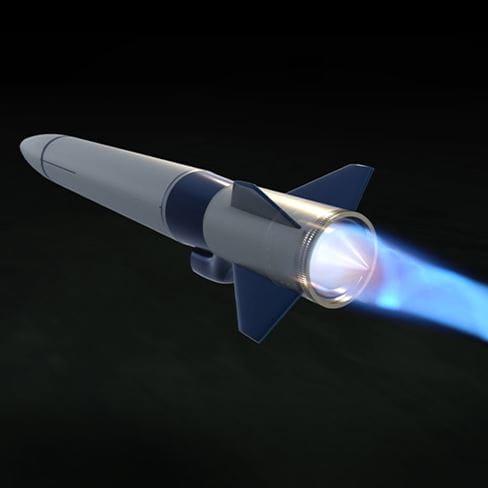
The Rotating Detonation Engine (RDE) is an innovative engine type that converts chemical energy into thrust through detonation waves at high pressure and temperature, unlike conventional propulsion systems. Instead of deflagration—the subsonic combustion process used in classic jet engines and rockets—RDEs utilize detonation, where the combustion wave propagates at supersonic speeds. This approach theoretically offers higher thermal efficiency, specific impulse, and reduced fuel consumption.
RDE technology has been known and studied since the 1960s, but progress has awaited advances in composite materials. Recently, active development is underway by GE and NASA, along with institutions in the United Kingdom, France, and China.
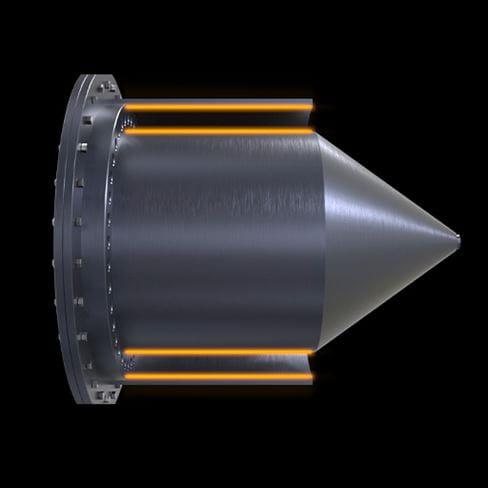
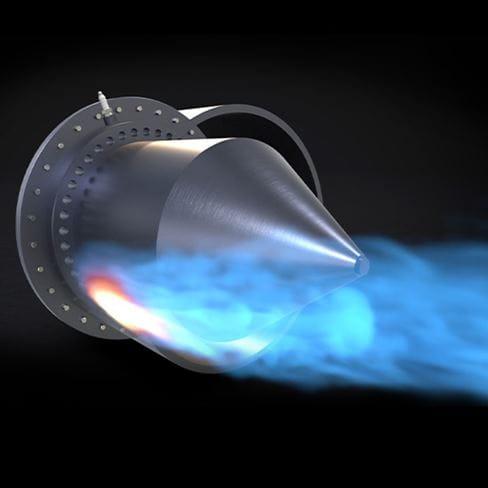
RDEs feature an annular combustion chamber. Within this chamber, a continuous rotating detonation wave is sustained. Inside the chamber, two nested cylinders create an annular gap where the explosion occurs. Ignition follows a cyclic sequence, causing compressed air to rotate between the cylinders. This rotating wave continuously propagates detonations.
The high energy generated by the explosions exits the exhaust as shock waves. This high-pressure, short-duration combustion process enables more efficient conversion of energy into thrust. Compared to conventional engines, the same power output can be achieved with 25–30 percent less fuel.
The RDE design eliminates the need for complex mechanical components found in piston or turbine systems by achieving constant-volume combustion. This results in a more compact structure. The absence of moving parts theoretically increases reliability. However, manufacturing the engine as a single-piece component, especially using composite materials, remains highly challenging and costly.
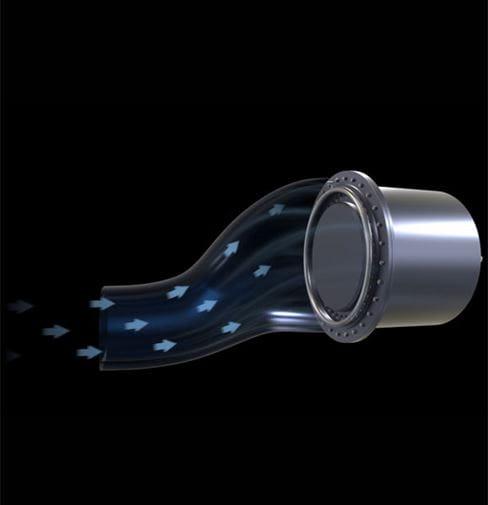
Another technical challenge is air intake. Since RDEs lack moving parts within the system for air compression, an external compressor-like system is required. GE has developed a hybrid solution by integrating a compressor at the front end. This system initially operates like a turbofan and can be shut down after acceleration or supported by a rocket motor.
Engineers at a laboratory in Connecticut, USA, successfully tested an RDE engine. Development efforts began at the RTX Technology Research Center, where active RDE research has been ongoing since 2011. Pratt & Whitney has partnered with Raytheon (a missile technology company) to begin work on an RDE prototype.
Pratt & Whitney’s GatorWorks team member Chris Hugill noted that test results exceeded expectations. According to Hugill, the RDE offers advantages such as high efficiency, power density, compact size, and additional space for fuel, sensors, or payload, thereby increasing system range. It also provides easier maintenance and production due to its fewer parts.
class=\
class=\
class=\
class=\
Turbo EXPO 2024 featured a study titled “Operation of a Fully Integrated Rotating Detonation Combustor in a T63 Gas Turbine Engine,” which examined the integration of RDE technology into a turboshaft engine.
In this context, the Air Force Research Laboratory (AFRL) developed a Rotating Detonation Combustor (RDC) designed to replace the main combustion chamber of the Rolls-Royce T63 turboshaft engine. The system was operated using gaseous hydrogen and demonstrated stable operation throughout all tests.
During six-minute tests, the RDC initially exhibited deflagrative combustion (subsonic), then transitioned to detonative combustion (supersonic) as air and fuel flow rates increased. This demonstrated that the RDE can operate stably under varying conditions in practice.
Pratt & Whitney’s Chief Engineer for Advanced Military Engines, Steven Burd, emphasized that although RDEs appear simple in design, physically operating them is extremely difficult. One of the greatest challenges is fuel injection. To generate an effective detonation wave, air and fuel must be mixed with extreme precision and delivered under exact conditions.
As a result, additive manufacturing technologies have become critical in the production process. Burd also noted that the RDE is among the “most disruptive technologies” he has worked on in his career.
RDEs offer significant thermodynamic advantages because they use detonative combustion as their primary mechanism. Unlike conventional deflagrative systems, this process generates beneficial effects such as increased static pressure.
This concept is known in the literature as Pressure Gain Combustion (PGC). As a result, the engine can achieve the same performance with fewer compressor stages, reducing both size and weight.
However, integrating an RDE into a gas turbine system carries certain risks. One of the biggest unanswered questions is how turbines will respond to these irregular, high-frequency shock waves. Turbines are typically designed for steady, uniform flow, whereas inside an RDE, shock waves rotate within the annulus at speeds of 1–2 km/s, creating complex flow conditions.
AFRL has been conducting various turbine adaptation studies since 2013 to address this issue.
class=\
Raytheon Technologies Newsroom. "More Power, No Moving Parts: The Quest to Fly a Rotating Detonation Engine – RTX." Accessed April 2025.https://www.rtx.com/news/news-center/2024/06/14/more-power-no-moving-parts-the-quest-to-fly-a-rotating-detonation-engine.
Tarakçı, Ayhan. “Havacılığın Geleceği RDE Teknolojisinde mi?” YouTube. Accessed April 2025.https://www.youtube.com/watch?v=ODdkCt9IZGg.
Vutthikraivit, Pongsakorn, Christopher A. Brophy, Michael S. Foelsch, and Joshua P. Mendez. "Operation of a Fully Integrated Rotating Detonation Combustor in a T63 Gas Turbine Engine." ASME Turbo Expo 2024: Turbomachinery Technical Conference and Exposition, GT2024-122373, June 2024. https://doi.org/10.1115/GT2024-122373.

RDE (Rotating Detonation Engine)
Engine Type | Advanced jet engine / Rocket engine | ||||||||
|---|---|---|---|---|---|---|---|---|---|
Combustion Type | Detonative combustion (supersonic shock wave) | ||||||||
Combustion Chamber Structure | Annular, nested dual cylinders | ||||||||
Thrust Principle | Thrust via continuous rotating detonation wave | ||||||||
Main Advantages | Higher thermal efficiency Specific thrust Compact structure Few components | ||||||||
Main Challenges | Manufacturing technology Fuel injection Detonation stability | ||||||||
Application Area | Rocket engines Fighter aircraft engines Turbo shaft / turbofan systems | ||||||||
Alternatives | Pulse Detonation Engine (PDE) Scramjet Classic gas turbines | ||||||||
No Discussion Added Yet
Start discussion for "RDE (Rotating Detonation Engine)" article
Operating Principle
Structural Features and Challenges
Industrial Developments and Tests
Design and Physical Challenges
Thermodynamic Advantages and the PGC Concept