This article was automatically translated from the original Turkish version.
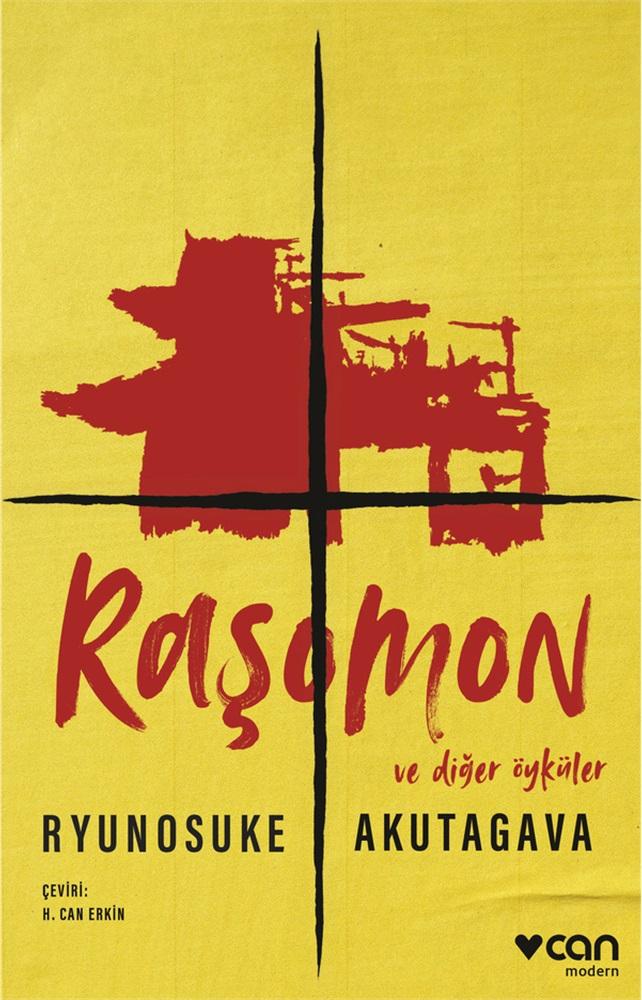
Rashamon and Other Stories (Book)
Author(s) | Ryunosuke Akutagawa | ||||||||
|---|---|---|---|---|---|---|---|---|---|
Genre | Short Story Modern Japanese Literature | ||||||||
Publication Year | Early stories: 1915-1920s | ||||||||
Original Language | Japanese | ||||||||
Ryunosuke Akutagawa’s work Rashomon and Other Stories is one of the significant examples of modern Japanese short fiction. The stories in the book explore themes of the dark aspects of human nature, moral dilemmas, and the individual’s conflict with society. While deeply engaging with Japanese cultural and historical elements, the work also addresses universal ethical questions.
Rashomon and Other Stories consists of short stories written by Akutagawa at different stages of his career. These stories reflect cultural and historical traces from Japan’s Heian and Edo periods while also portraying the psychological conflicts of the modern individual.
Key themes in the work include the distinction between reality and interpretation, moral decay and the significance of individual choice, the individual’s position in the face of societal corruption, and the artist’s responsibility to represent truth. In particular, the story In a Grove challenges the notion that events have a single, absolute truth, questioning how personal interest, perception, and memory shape reality. In Rashomon, the extent to which an individual may compromise moral values in the struggle for survival is examined.
Akutagawa draws attention through his concise and intense narrative style. His descriptions are simple yet powerful. The language is plain and direct, enriched with metaphors and symbols. Techniques such as unreliable narrators and multiple perspectives place the work among early examples of modernist narration.
The stories Rashomon and In a Grove are significant texts not only in Japanese literature but also in world literature for their ethical inquiries and narrative innovations. In a Grove served as the inspiration for Akira Kurosawa’s 1950 film Rashomon, through which Akutagawa gained international recognition. While influenced by Western literature, Akutagawa uniquely incorporated Japanese history, Buddhist values, and cultural symbols into his writing.
The work is widely praised for its profound character analysis and engagement with universal moral themes. However, some stories’ dense symbolism may require careful reading and can be challenging for readers. Additionally, the ambiguous and open-ended conclusions may be unsatisfying for readers seeking definitive answers.
Akutagawa, Ryunosuke. Rashomon and Other Stories. Trans. H. Can Erkin. Istanbul: Can Yayınları, April 2024. 80 pp.
Akutagawa, Ryūnosuke. *Raşomon ve Diğer Öyküler*. Trans. H. Can Erkin. Istanbul: Can Yayınları, 2024. Accessed June 27, 2025. https://www.canyayinlari.com/rasomon-ve-diger-oykuler-9789750763212

Rashamon and Other Stories (Book)
Author(s) | Ryunosuke Akutagawa | ||||||||
|---|---|---|---|---|---|---|---|---|---|
Genre | Short Story Modern Japanese Literature | ||||||||
Publication Year | Early stories: 1915-1920s | ||||||||
Original Language | Japanese | ||||||||
No Discussion Added Yet
Start discussion for "Rashamon and Other Stories (Book)" article
Content and Notable Stories
Major Themes
Style and Narrative Features
Literary and Cultural Significance
Criticism