


This article was automatically translated from the original Turkish version.
RAMJET ENGINE
Inventor | René Lorin | ||||||||
|---|---|---|---|---|---|---|---|---|---|
Invention Year | 1908 | ||||||||
Patent Date | 1913 (France, Patent No: 390256) | ||||||||
A ramjet engine is a type of air-breathing jet engine that fundamentally lacks moving parts. Air-breathing jet engines play a vital role in modern aviation and space technologies. These engines generate thrust by using air drawn from the atmosphere and are designed in various configurations to suit different speed and altitude requirements.
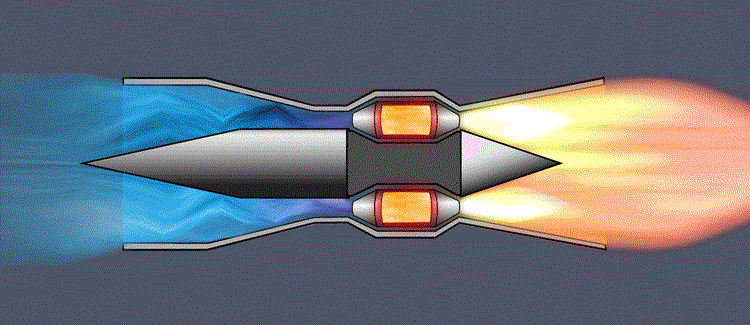
The operating principle of a ramjet engine involves capturing air due to the forward motion of the vehicle and compressing it through a specialized inlet duct for combustion. After fuel is injected and ignited, the combustion process continues spontaneously. Like other jet engines, thrust is produced as a reaction to the high-velocity ejection of hot exhaust gases rearward.
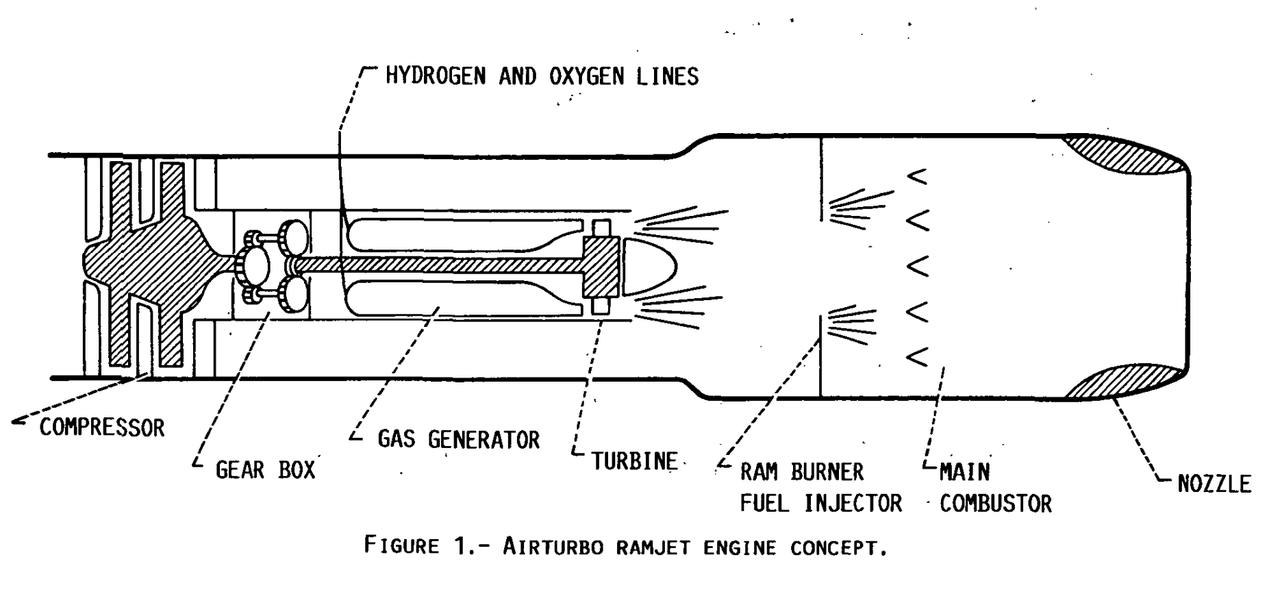
Simple schematic diagram (Source: NASA)
Ramjet engines achieve their highest efficiency at speeds of Mach 2 and above. However, since they cannot produce static thrust, they require an initial mechanism to reach high speeds. Unlike conventional jet engines, ramjet engines have no rotating components such as compressors or turbines. Instead, air is compressed by the forward motion of the engine itself. While this simple design offers production and maintenance advantages, it imposes limitations because ramjets require a minimum forward speed to operate.
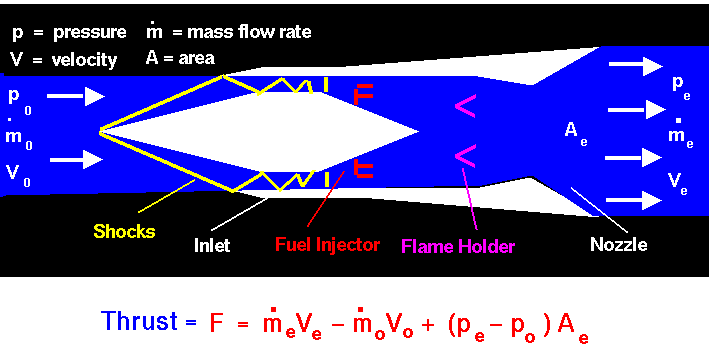
The fundamental operating principle of a ramjet engine involves slowing down and compressing a high-speed airflow, mixing it with fuel, igniting the mixture, and finally expelling the hot exhaust gases through a converging-diverging nozzle. Air enters the engine’s inlet/diffuser section at high velocity. In this section, the airflow is decelerated through a series of shock waves, increasing its pressure. The compressed air then enters the combustion chamber, where it is mixed with fuel and ignited using a flame holder.
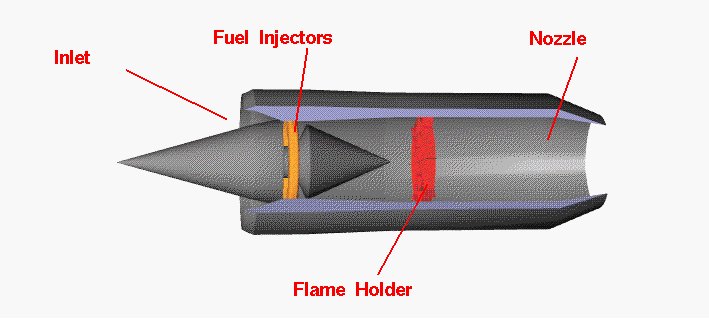
Ramjet engine cross-section (Source: NASA)
The gases produced by combustion at high temperature and pressure are expelled at high velocity through the nozzle at the rear of the engine, generating thrust. Ramjet engines require forward motion to operate because air compression is achieved solely through the “ram effect” created by this motion. Consequently, ramjet engines cannot produce thrust at low speeds or when stationary. Like other air-breathing engines, ramjet engines operate on the Brayton cycle, which includes isentropic compression, constant-pressure heating (combustion), and isentropic expansion.
In an ideal ramjet engine, air entering the engine at ambient pressure is isentropically compressed, resulting in an enthalpy increase proportional to its velocity. After passing through the diffuser, energy is added to the air through fuel combustion, increasing enthalpy while pressure remains constant. The combustion products then expand isentropically down to ambient pressure, increasing the exit flow velocity through the nozzle.
In a real engine cycle, however, temperature and pressure losses occur at every stage of the flow through the engine. These losses reduce compression efficiency and consequently decrease the generated thrust. While ideal cycles assume constant-pressure heat addition, real cycles produce lower pressures due to these losses.
French physicist René Lorin laid the theoretical foundations of ramjet engines in 1913 and obtained a patent for the concept. However, due to the inadequate materials technology of the era, a successful prototype could not be produced. In 1915, Hungarian inventor Albert Fonó designed a projectile combining a ramjet propulsion unit to extend the range of artillery shells. This design was presented to the Austro-Hungarian Army but was not accepted.
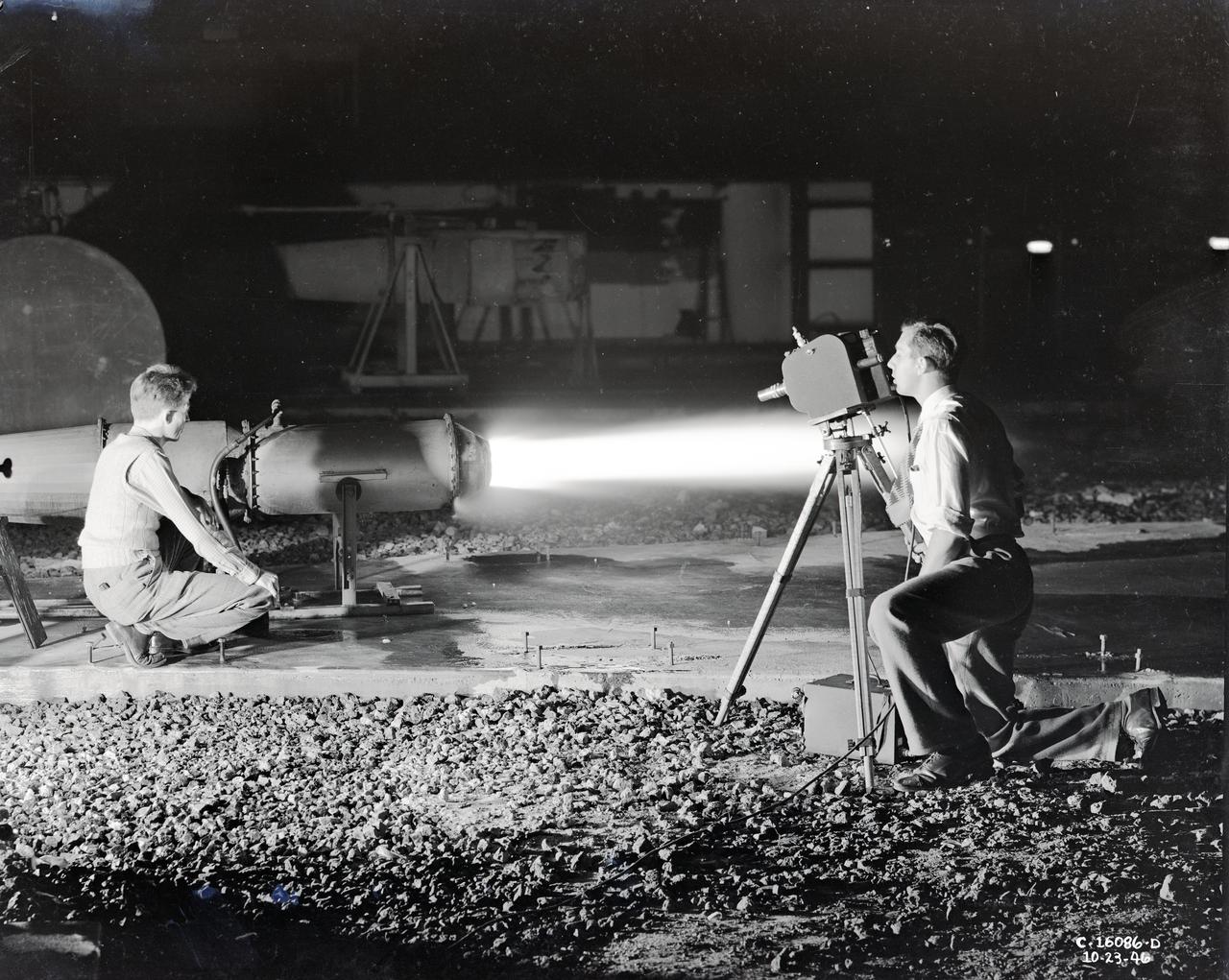
NASA lab ramjet tests (Source: NASA)
The first practical ramjet designs were developed by British scientist Benjamin Carter and Hungarian inventor Albert Fonó. During this period, Germany, France, and the Soviet Union began research on ramjet engines.
During World War II, ramjet engines experienced significant momentum. In Germany, Eugen Sänger worked on ramjet engines for high-altitude bomber aircraft. The German V-1 rockets are regarded as precursors to ramjet engines. During the same period, French scientist René Leduc conducted a ground test achieving a speed of Mach 0.9.
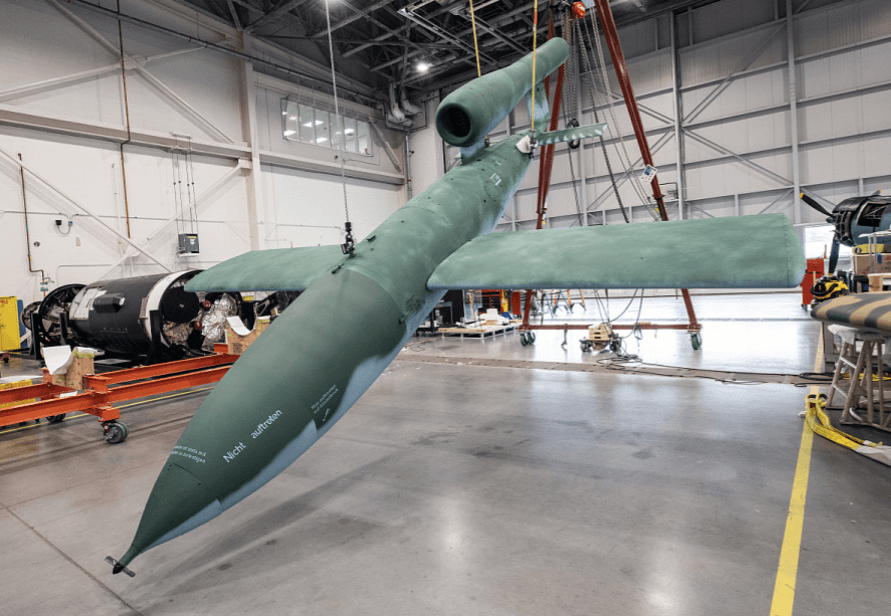
V-1 Cruise Missile (Source: National Air and Space Museum)
In the Soviet Union, the world’s first flight of an aircraft powered by ramjet engines was achieved in 1940 using two DM-2 ramjet engines mounted on a Polikarpov I-153DM biplane. In the United States, beginning in 1944, the U.S. Navy initiated development at the Applied Physics Laboratory (APL) of surface-launched supersonic ramjet-powered vehicles. These efforts led to the first successful supersonic test flight of the Cobra ramjet in 1945. Subsequently, operational ramjet-powered missiles such as the Talos were developed.
During this period, ramjet engines were overshadowed by other jet and rocket engines. However, interest in ramjet technology revived from the 1960s onward due to Soviet systems such as the SA-4, SA-6, and SS-N-19. Simultaneously, the U.S. Navy’s RIM-8 Talos, introduced in the 1950s, became one of the first operational ramjet-powered missiles and was successfully deployed during the Vietnam War.
One of the first operational ramjet-powered aircraft was the French-built Leduc 0.10, which made its first flight on 21 April 1949. This aircraft was among the first to fly solely on ramjet power and was air-launched from a mothership.
Ramjet engines are primarily classified into three types based on combustion speed: subsonic-combustion ramjets, supersonic-combustion ramjets (scramjets), and dual-mode ramjets (DMRs). Subsonic-combustion ramjets decelerate incoming airflow to subsonic speeds before it enters the combustion chamber. These engines typically operate efficiently at Mach 2 and above and are primarily used in missile applications. However, their use today is quite limited. Supersonic-combustion ramjets, or scramjets, operate by maintaining supersonic airflow through the combustion chamber.
Scramjets operate more efficiently at hypersonic speeds of Mach 6 and above and hold potential for future hypersonic aircraft and missile technologies. Dual-mode ramjets (DMRs) are engines capable of operating in both subsonic and supersonic combustion modes. These engines aim to fill the performance gap between conventional ramjets and scramjets by operating efficiently across a wide Mach number range, such as Mach 4 to 8.
(Engine schematic diagram) (Source: NASA)
A ramjet engine consists essentially of three main components: the inlet/diffuser, the combustion chamber, and the nozzle. The inlet or diffuser is responsible for slowing down the high-speed incoming air to achieve the high static pressure required for combustion. Inlets vary in design depending on the operational speed range. Pitot-type inlets are used at subsonic and low supersonic speeds, while at high supersonic speeds, conical or spike-shaped structures generate oblique shock waves to enable more efficient air compression.
Before understanding ramjet engines, it is necessary to explain the concept of shock waves. When an object moves faster than the speed of sound, the molecules of the surrounding medium cannot move out of its way quickly enough and become compressed. This results in the formation of shock waves. Shock waves are approximately 200 nanometers thick and exhibit high temperature and pressure. These waves, which pose a major obstacle to supersonic objects, are harnessed as an advantage in ramjet engines.
Inlet design aims to reduce supersonic flow to subsonic speeds while minimizing pressure loss. This is achieved through a series of oblique and normal shock waves. Although isentropic compression is ideal, it is practically impossible due to the presence of shock waves; therefore, multiple weak shock waves are preferred for more efficient inlet design. The combustion chamber is the section where compressed air is mixed with fuel and ignited, raising its temperature. It is critical that pressure loss in the combustion chamber is minimized and that fuel burns efficiently.
Due to high airflow velocities, flame holders are used to prevent flame extinction. Ramjet combustion chambers can generally operate safely at stoichiometric fuel-air ratios. The nozzle is responsible for accelerating the hot, high-pressure gases produced by combustion to generate thrust. Subsonic ramjets typically use converging nozzles, while supersonic flight requires converging-diverging nozzles. The nozzle’s geometric design is optimized to maximize expansion and acceleration of the exhaust gases, directly influencing thrust.
Compared with other jet engine types such as turbojets and turbofans, ramjet engines have distinct advantages and disadvantages. Ramjets are simpler and lighter than turbojets and turbofans because they lack moving parts such as compressors and turbines. However, ramjets cannot produce thrust at takeoff and require an initial speed to operate, necessitating support from rockets or other auxiliary systems. In terms of performance, ramjets are more efficient than turbojets and turbofans at high supersonic speeds (around Mach 3).
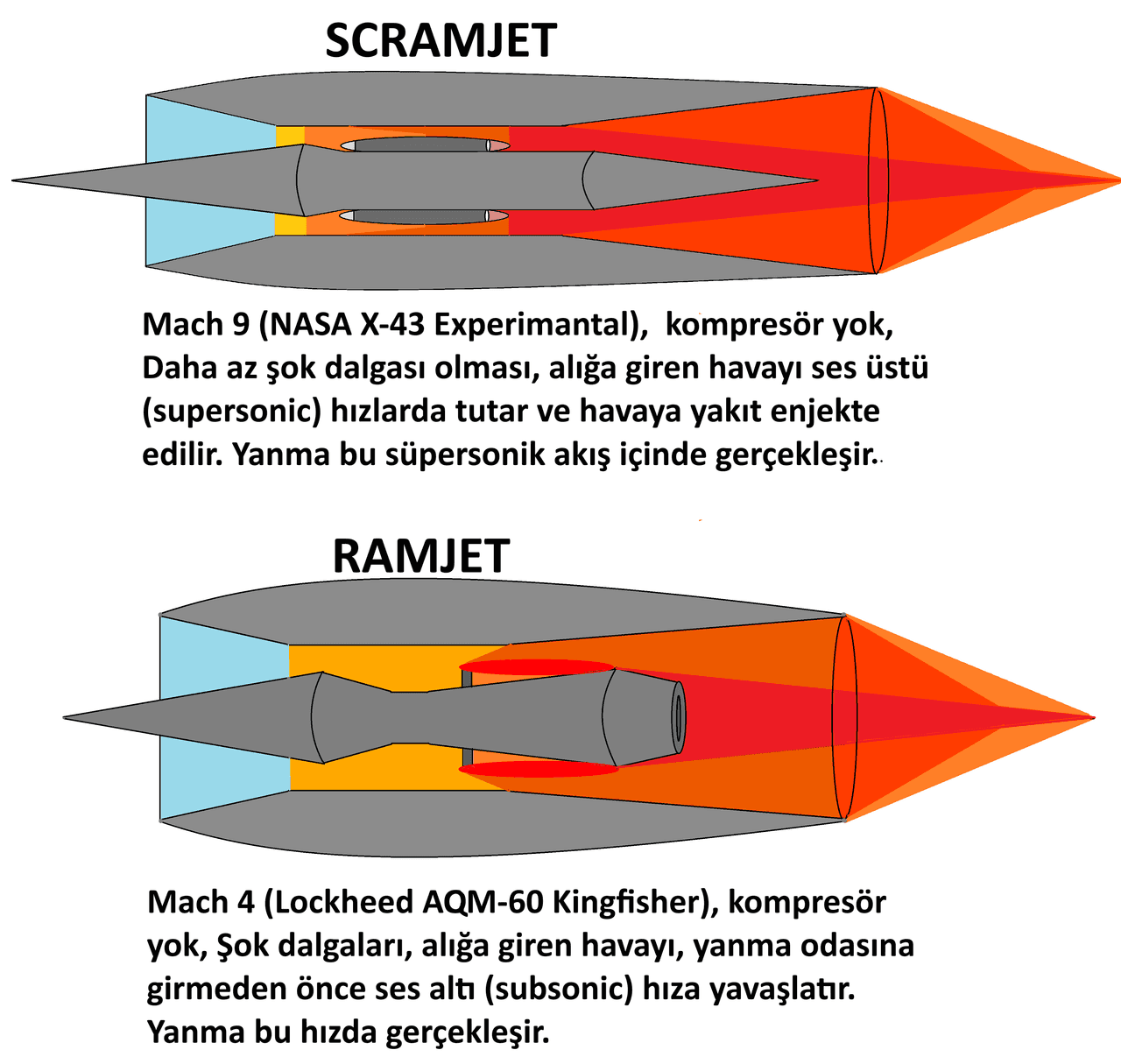
Scramjet and Ramjet engine comparison (Prepared and edited by Mikdat Ramazan Köşker)
In conventional jet engines, air is drawn in by a fan and directed toward a compressor. The compressor increases air pressure using rapidly rotating blades. This pressurized air is then mixed with fuel, ignited, and expelled at high velocity. Turbines located at the exit use the rotating airflow to drive the compressor, ensuring continuous engine operation.
Ramjet engines have no rotating compressor or turbine. Instead, air compressed by the motion of the vehicle above the speed of sound is mixed with fuel and ignited.
This process results in the ejection of high-velocity exhaust gases, generating thrust.
Turbojets and turbofans, by contrast, are more effective at subsonic and low supersonic speeds. Advantages of ramjets include simplicity, high thrust-to-weight ratios at high speeds, and higher specific impulse compared to rockets. Their disadvantages include the inability to produce static thrust and inefficiency at low speeds.
Ramjet engines find applications in various fields requiring high-speed flight. A current example in aviation is the hybrid turbojet-ramjet (turboramjet) engine used in the Lockheed SR-71 Blackbird reconnaissance aircraft, capable of speeds exceeding Mach 3. The Nord Griffon aircraft is another example of a supersonic aircraft powered by a turboramjet engine. One of the most important applications of ramjet engines is in missile technology. Ramjet engines are used in numerous missile types, including surface-to-air missiles (Talos, Bloodhound, Sea Dart), air-to-air missiles (Meteor), and cruise missiles (BrahMos).
Solid-fuel ramjets (SFRJs) and integrated rocket-ramjets (IRRs) are now widely preferred in modern missile designs. Ramjet engines also hold significant potential for hypersonic aircraft (Mach 5+) and first stages of space launch systems. Concepts and experimental vehicles such as the Sänger-Bredt bomber, X-43A, and X-51 Waverider exemplify research and development in this field. Additionally, future projects such as the SR-72 aim to utilize ramjet technology for hypersonic flight.
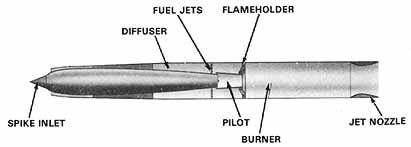
Ramjet Engine Schematic (Source:
Recent advancements in ramjet and scramjet technology are focused particularly on dual-mode ramjets (DMRJs) and rotating detonation combustion (RDC) technology. DMRJs offer the ability to operate across a broader Mach range, while RDC technology provides higher thrust and efficiency in smaller engine sizes.
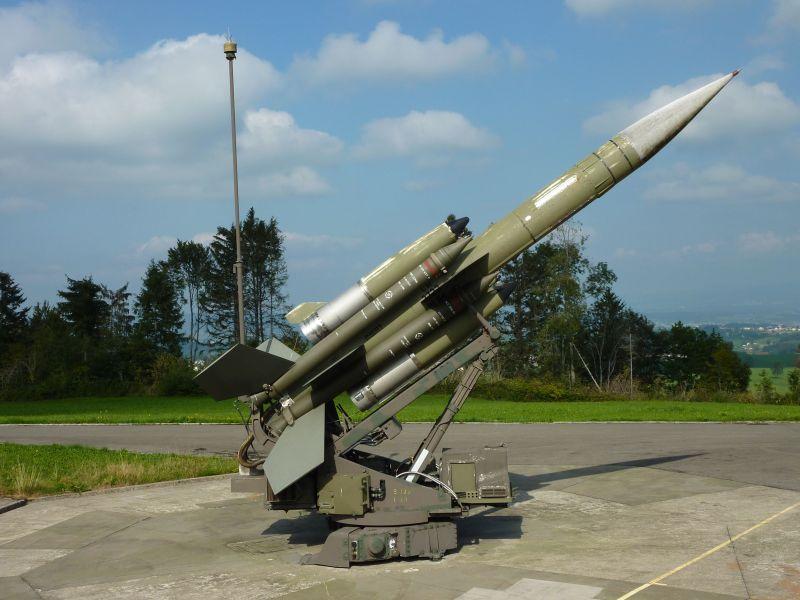
Bloodhound BL 64 (Source: Lucerne Artillery Association)
In the future, ramjet and scramjet engines are expected to be more widely used in areas such as hypersonic passenger aircraft, reusable space launch vehicles, and advanced missile systems. The development of hybrid engines combining ramjet technology with turbojets or rockets is also a significant trend.
Ramjet engines provide a simple and effective propulsion system for high-speed flight applications. Their low number of moving parts, high thrust-to-weight ratios at high speeds, and higher specific impulse compared to rockets have established ramjets as a critical component in aviation and space technologies.
AVL Zuerich. "Bloodhound." Accessed April 22, 2025.Accessed Adresi.
Ananthkrishnan, N. "Conceptual Design of an Aerospace Vehicle Controller Using Axiomatic Theory." Journal of Aircraft 47, no. 6 (November–December 2010): Engineering Notes.
Ausserer, Joseph K. "A Parametric Study of Ramjet Propulsion Systems." California Polytechnic State University, San Luis Obispo, Aerospace Engineering Department, June 1999. Accessed April 21, 2025.Accessed Adresi.
Billig, F. S. "Ramjets with Supersonic Combustion." Applied Physics Laboratory, Johns Hopkins University. Report No. AD0041742. Defense Technical Information Center (DTIC), March 1964. Accessed April 21, 2025.Accessed Adresi.
Choi, Jaeyoung, Youngjin Choi, Sejin Kwon, and In-Seuck Jeung. "A CFD Study of the Aerodynamic Performance of a Ramjet Nozzle with Different Geometric Parameters." *Applied Sciences* 8, no. 4 (2018): 574. MDPI. Accessed April 21, 2025.Accessed Adresi.
Drell, Harry, and Thomas A. Sedgwick. "Turbojet and Turbofan Engine Performance at High Altitudes and Speeds." *Journal of Aircraft* 3, no. 4 (1966): 346-353. AIAA ARC. Accessed April 21, 2025.https://arc.aiaa.org/doi/pdf/10.2514/8.12787.
EBSCO Information Services. "Scramjet (Supersonic Combustion Ramjet)." Research Starters: Engineering. Accessed April 21, 2025.Accessed Adresi.
GE Aerospace. "Need For Speed: GE Aerospace Using Ramjet Technology To Up The Ante On Hypersonic Flight." GE Aerospace News, May 18, 2023. Accessed April 21, 2025.Accessed Adresi
John L. Sloop, *Liquid Hydrogen as a Propulsion Fuel, 1945-1959*, NASA SP-4404 (Washington, DC: NASA Scientific and Technical Information Office, 1978), 280, figure 70,Erişim Adresi.
NASA. "Special Projects Laboratory." Accessed April 22, 2025.
National Aeronautics and Space Administration (NASA) Lewis Research Center. "Ramjet Cycle Analysis." NTRS ID: 19670095387. 1967. Accessed April 21, 2025.
National Aeronautics and Space Administration (NASA) Lewis Research Center. "Ramjet Propulsion Talk." NTRS. 1947. Accessed April 21, 2025.Accessed Adresi.
Patel, Murlidhar. "A Review on Ram Jet Engine." ResearchGate, April 2020. Accessed April 21, 2025.Accessed Adresi.
Shippen, W. B., and E. A. Sanlorenzo. "The Talos Propulsion System." *Johns Hopkins APL Technical Digest* 3, no. 2 (1982): 147–154. Accessed April 21, 2025.Accessed Adresi
Skybrary. "Ramjet." Skybrary Aero. Accessed April 21, 2025.

RAMJET ENGINE
Inventor | René Lorin | ||||||||
|---|---|---|---|---|---|---|---|---|---|
Invention Year | 1908 | ||||||||
Patent Date | 1913 (France, Patent No: 390256) | ||||||||
Fundamentals of Ramjet Engines
History of Ramjet Engines
1900s – Foundational Theoretical Work
1930s – First Applications and Development
1940s – World War II and First Practical Uses
1950–1970 – The Shadow Period and Resurgence of Ramjet Technology
Types of Ramjet Engines
Key Components of a Ramjet Engine
Shock Waves and Ramjet Engines
Comparison with Other Jet Engine Types
Jet Engines and Ramjet Engines
Conventional Jet Engines
Ramjet Engines
Ramjet engines consist of nine key components:
Advantages and Disadvantages of Ramjet Engines
Advantages
Disadvantages
Applications of Ramjet Engines
Recent Developments in Ramjet Technology