


This article was automatically translated from the original Turkish version.
+1 More
Rainstick (yağmur çubuğu) is a traditional percussion instrument that produces a natural sound resembling rainfall when small small stones, seeds, or beads placed inside a hollow tube strike against rods arranged in a spiral pattern along the inner surface, causing the materials to cascade downward. Particularly of South American origin, this instrument is widely used in meditation, meditation, and therapy due to its calming sonic effect. It is predominantly employed for meditative, music therapy, and ritual purposes. The name rainstick derives from the soft, rain-like sound it produces. The stick consists of a hollow tube closed at both ends and can be made from various natural or synthetic materials.
Rainstick, known in Turkish as “yağmur çubuğu,” is a traditional idiophone instrument used for sound production. The sound is generated when small particles inside—such as seeds, stones, or sand—strike fixed obstacles along the inner surface, creating a sound similar to rainfall. This sound continues in a controlled manner as the stick is slowly rotated, producing a natural rain effect.

Rainstick (Yağmur Çubuğu) History and Origin, (Generated by artificial intelligence.)
Although the exact origin of the rainstick is not definitively documented, the generally accepted view is that it originates from South America, particularly among indigenous communities in the Andes Mountains of Chile and surrounding regions. It is known to have been used by indigenous groups such as the Mapuche. Traditionally, the body of the instrument is made from dried cactus stems. The cactus spines are inserted inward in a reverse direction; then various natural materials are added and the ends are sealed. As the particles inside strike the internal obstacles, they produce sound.
The rainstick was not only used as a musical instrument but also for ritual and symbolic purposes. It is believed to have been employed in ritual practices during drought periods to encourage rainfall. In this context, it is an instrument possessing both sonic and symbolic value.
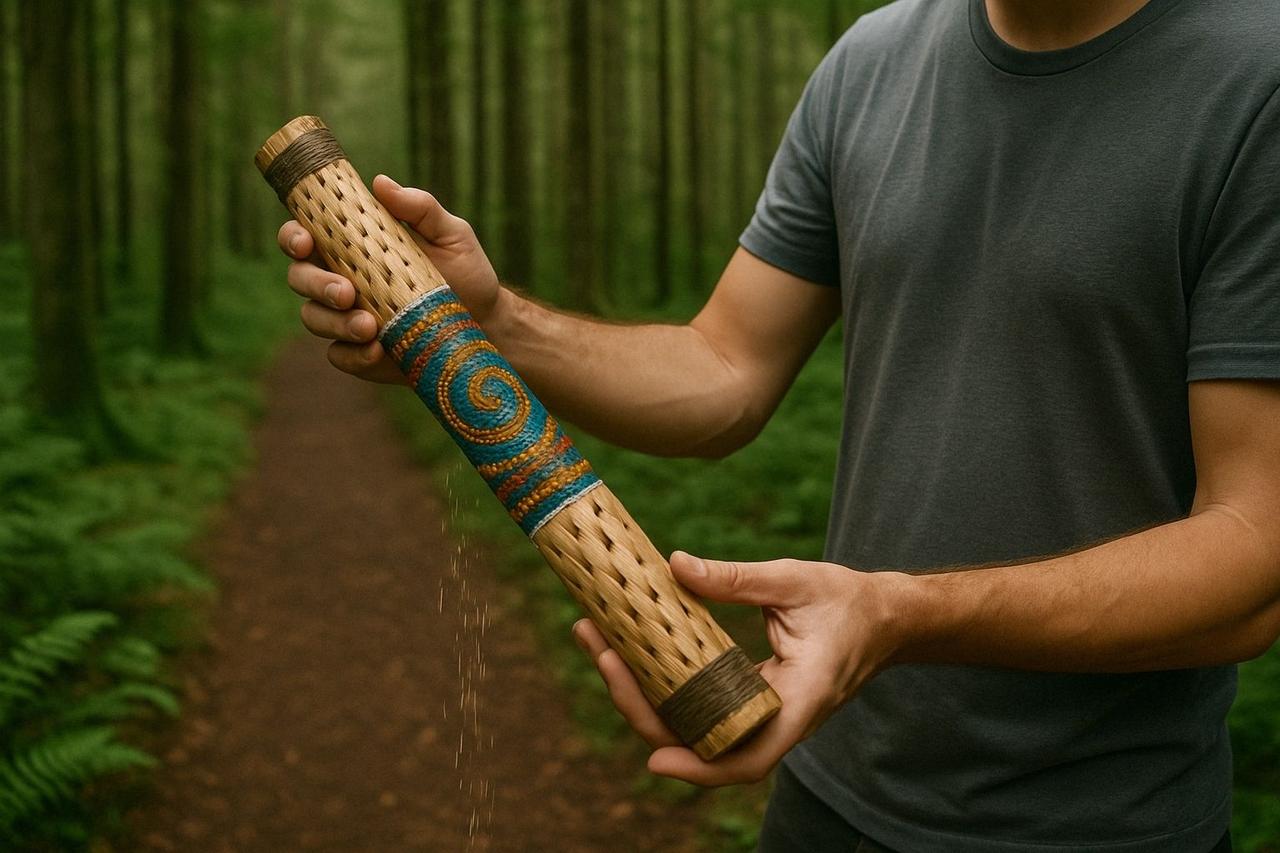
Rainstick (Yağmur Çubuğu) Historical Function and Use, (Generated by artificial intelligence.)
Similar functional instruments have been observed in some indigenous cultures of Africa, Asia, and Australia; however, the rainstick as a specific instrument with defined construction features is considered a culturally unique practice of South America.
Today, the rainstick is widely used in world music, sound therapy, meditation, and education. Alongside traditional versions, modern variations are produced using manufacturing techniques with materials such as bamboo, wood, or plastic.
Materials used in rainstick construction vary regionally. In traditional Latin American examples, particularly those from Chile, the body is traditionally made from dried cactus stems (mostly of the Eulychnia species). The interior is hollowed out and the surface dried. The spines removed from the cactus are reinserted into the inner wall in a spiral or inclined arrangement, forming an internal network. These spines cause the internal particles to strike slowly and produce sound.
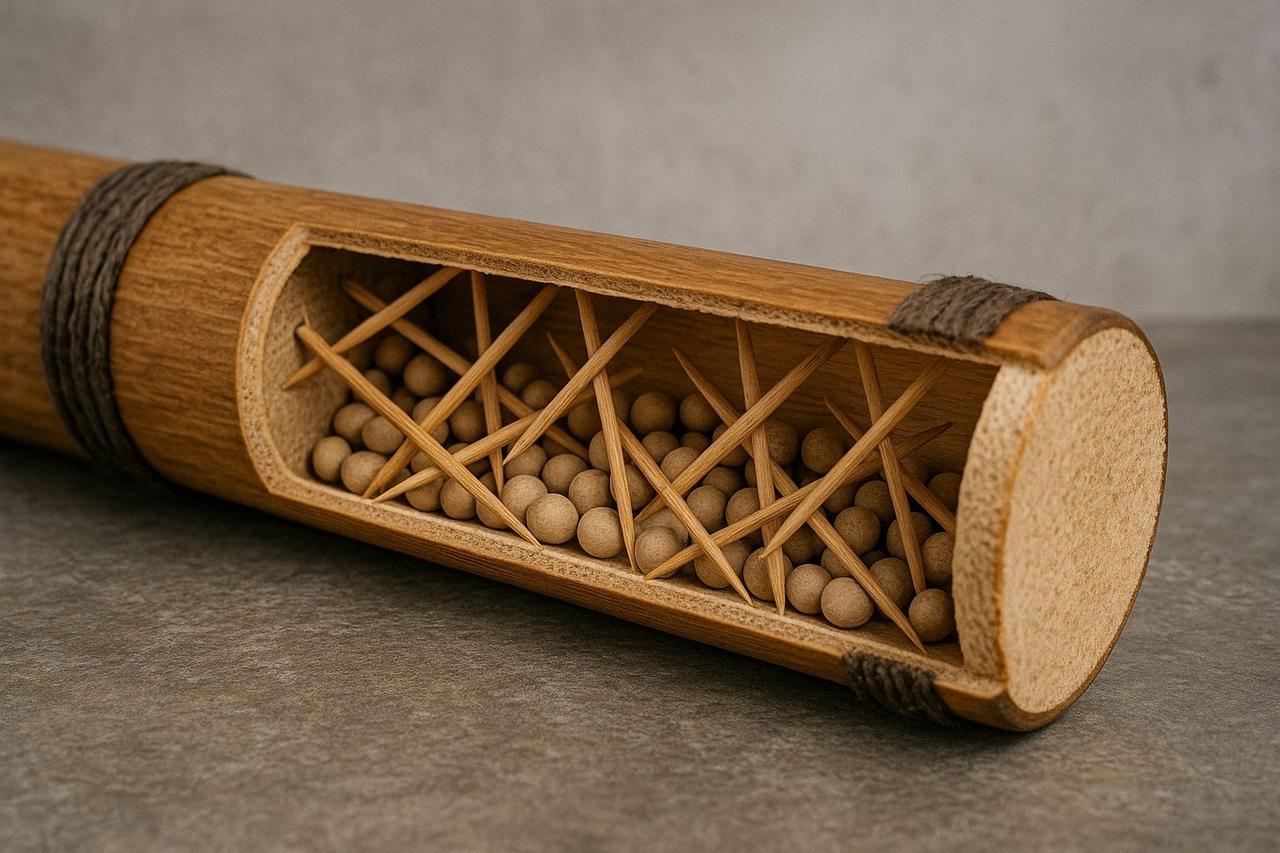
Rainstick (Yağmur Çubuğu) Materials Used, (Generated by artificial intelligence.)
In modern variations, the body may be made from bamboo, PVC, wood, or metal tubes. Inside, small stones, rice, corn kernels, seeds, metal beads, or plastic balls are commonly used. The exterior is often decorated with paints, natural motifs, handcrafted patterns, and cord wrapping.
Both ends of the cylinder are sealed and filled with sound-producing materials:
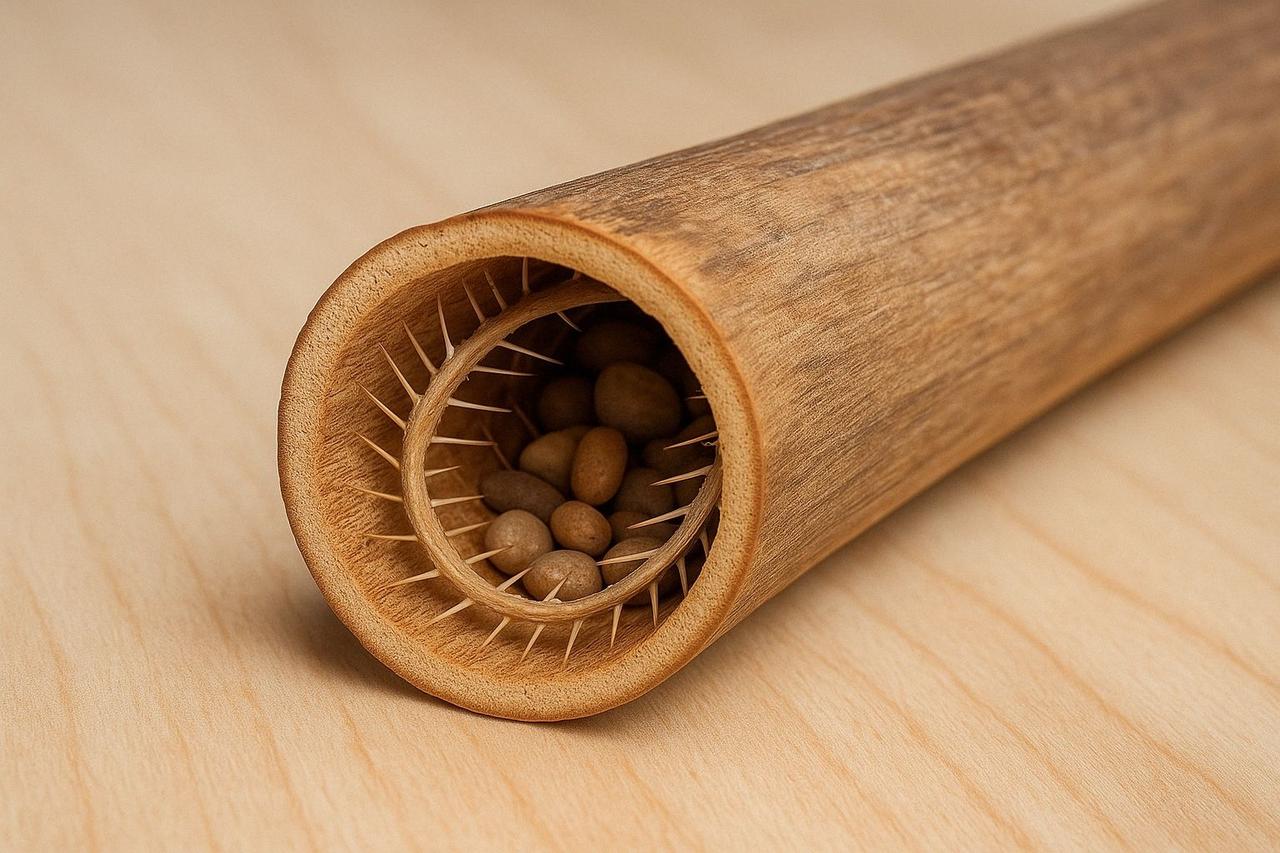
Rainstick (Yağmur Çubuğu) Internal Structure, (Generated by artificial intelligence.)
The internal structure of traditional rainsticks is typically made from finer, more natural materials found in nature.
The mechanism of the rainstick is simple yet acoustically rich. When the instrument is tilted or inverted, the particles inside move under the influence of gravity. These particles strike the inclined spines or rods inside, slowly descending. Each impact produces a short, soft sound. These sounds, occurring in sequence, create the impression of rhythmic rainfall when heard from outside. The length of the cylinder and the angle of internal obstacles directly affect the duration and intensity of the sound. Short rainsticks produce a lighter “rain” sound, while long versions generate deeper and longer-lasting sound waves.
The operation of the rainstick is entirely based on gravity and acoustic resonance:
The rainstick is most commonly found in Latin America, particularly in traditional cultures of Chile, Argentina, and Peru. Indigenous communities around Chile’s Atacama Desert used it symbolically in rain-calling ceremonies. Variants are also found in Africa, especially Western Africa, and among Aboriginal communities in Australia. Each culture has adapted the rainstick according to its own philosophy of nature. In the modern world, the rainstick is primarily used in alternative therapy, education, meditation, and music production.
The rainstick produces frequencies reminiscent of natural sounds and is therefore used in meditation and breathing exercises to enhance mental focus. Its rhythmic sound guides brainwaves into alpha and theta states, inducing a state of mental relaxation. The steady flow of sound distracts the mind and reduces the impact of external stimuli, deepening the experience of mindfulness.
The positive psychological effects of natural sounds, particularly those of water and rainfall, have been scientifically proven. The sounds produced by the rainstick lower cortisol levels, activate the parasympathetic nervous system, and promote physical relaxation. In psychotherapeutic settings or personal use, even brief exposure significantly reduces anxiety levels.
The rainstick supports both auditory perception and motor coordination in child development. It is used to teach children the origins of natural sounds. Additionally, due to its soft and predictable sound, it is frequently chosen in sensory integration therapy for individuals on the autism spectrum.
In music therapy, dance therapy, rehabilitation, and psychodrama, the rainstick is regarded as an effective tool that helps individuals connect with their inner world. Particularly in group settings, collective applications using multiple rainsticks foster group cohesion and rhythmic solidarity. It is also used in theater and cinema to create natural sound effects.
The rainstick is a traditional instrument with historical roots in the indigenous cultures of South America, serving both musical and ritual functions. With its evocative sound resembling rainfall, it continues to function as a practical tool in contemporary music and diverse sonic environments, extending beyond its cultural origins.
Kartomi, Margaret J. "Musical Instruments as Symbolic Objects in Non-Western Societies." The World of Music 32, no. 2 (1990): 3–23.
Loewy, Joanne V. Music Therapy in Pediatric Pain. Cherry Hill, NJ: Jeffrey Books, 2005.
McNeill, William H. Keeping Together in Time: Dance and Drill in Human History. Cambridge, MA: Harvard University Press, 1995.
Smith, Ronald R. "Review of Street Music of Panama: Cumbias, Tamboritos, and Mejoranas, by Michel Blaise." Latin American Music Review / Revista de Música Latinoamericana 12, no. 2 (Autumn-Winter 1991): 216–220.
Sound Healing Center. "The Science of Sound Healing." Accessed April 16, 2025.https://www.soundhealingcenter.com
Thaut, Michael H. Rhythm, Music, and the Brain: Scientific Foundations and Clinical Applications. New York: Routledge, 2005.

History and Origin
Historical Function and Use
Modern Applications
Materials Used
Internal Structure
Body
Interior
Internal material (sound-producing elements)
Uses
Working Mechanism
Common Usage Regions
Benefits and Psychological Effects
1. Mental Relaxation and Meditation:
2. Stress and Anxiety Reduction:
3. Sensory and Educational Use:
4. Therapeutic and Artistic Applications: