


This article was automatically translated from the original Turkish version.
+2 More
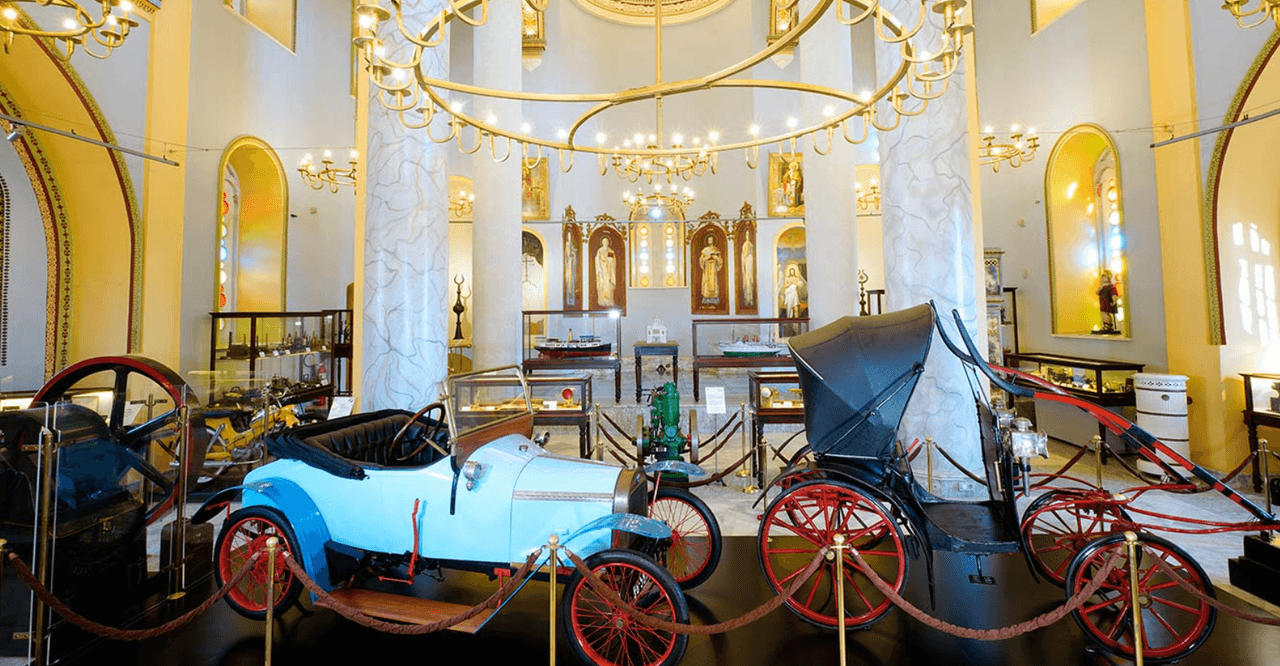
Istanbul Rahmi M. Koç Museum of Industry
Establishment Year | 1994 | ||||||||
|---|---|---|---|---|---|---|---|---|---|
Location | İstanbul Hasköy Türkiye | ||||||||
Museum Area | 27.000 m2 | ||||||||
Award | Council of European Museums Special Award (1996) Culture and Art Grand Prize (2001) | ||||||||
Rahmi M. Koç Museum is located on the shores of the Golden Horn in Istanbul, in a historically and culturally rich area. It is Türkiye's first and only industrial museum. Opened to the public in 1994 based on the private collection of Rahmi M. Koç, the museum has gradually developed into a valuable repository of artifacts related to the history of industry, transportation and communication, aiming to present the evolution of technology and industry in an educational and engaging manner to its visitors. Beyond being merely an exhibition space, the museum stands out as a center where every aspect of the history of industry, science and technology is explored through educational programs and interactive experiences.
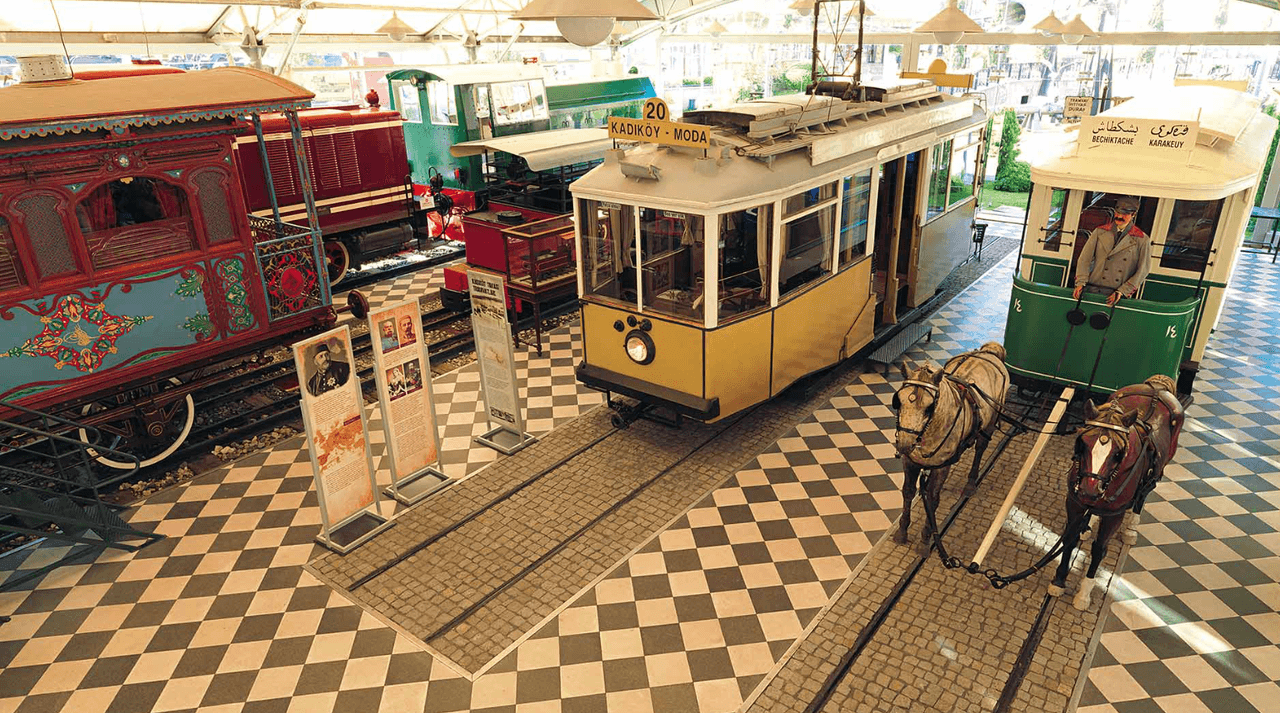
Rahmi Koç Museum, Istanbul (Vehbi Koç Foundation)
The Rahmi M. Koç Museum possesses an extensive collection focused on industry, communication, transportation, aviation and maritime fields. With a rich collection of over 14,000 objects, it serves as an important educational resource showcasing technological advancements across various historical periods. Notably, key exhibits include iconic objects from the Industrial Revolution, classic automobiles, steam engines, railway vehicles and aircraft models related to the history of aviation.
Among the museum’s exhibits are the 1898 Malden Steam Automobile, the 1963 Anadol, a 1384 celestial globe, various telescopes and Edison’s telegraph machine, all of which hold significant historical and scientific value. Additionally, the museum houses large-scale artifacts such as a World War II-era submarine and the historic Fenerbahçe Steamship, one of Istanbul’s iconic symbols.
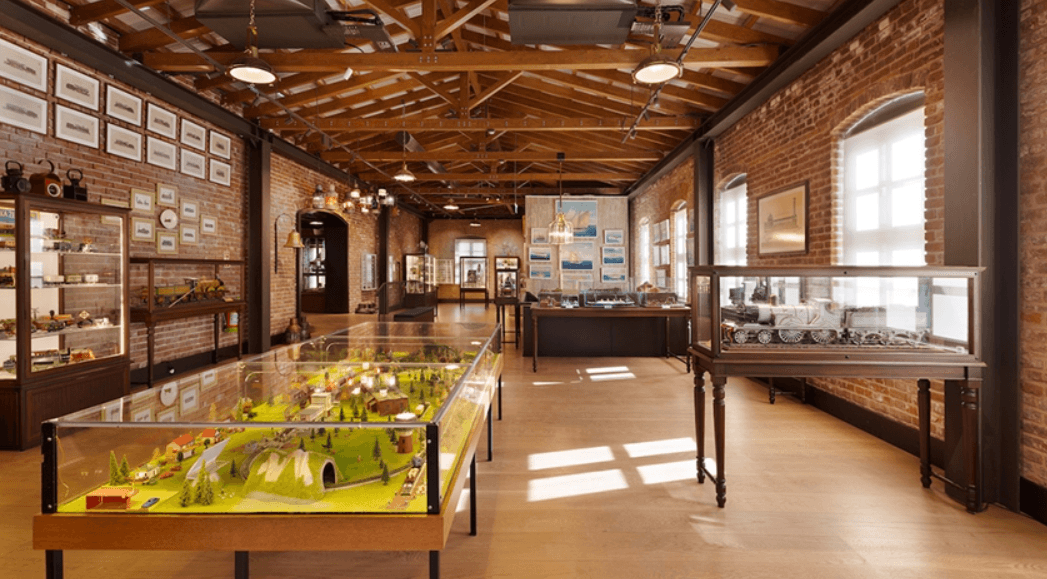
Rahmi Koç Museum (Anadolu Agency)
The Rahmi M. Koç Museum places great importance on educational activities in line with modern museum practices. Since 2002, under the framework of the “Education Program at the Museum,” a variety of workshops and interactive educational activities have been organized for students. These programs enable students to learn history and scientific knowledge not only theoretically but also through direct experience. The museum collaborates with educational institutions to offer specialized educational packages for schools and has also developed accessible educational projects for visitors with visual impairments.
Launched in 2002 to extend museum education, the Müzebüs Project brings the museum’s collection to schools across all regions of Türkiye. The project aims to provide educational opportunities to students in remote areas who are unable to visit Istanbul due to financial constraints or time limitations.
Rahmi Koç Museum Documentary (Youtube)
The Rahmi M. Koç Museum is built on an area of approximately 27,000 square meters and consists of three main sections: the Mustafa V. Koç/Lengerhane Building, the Hasköy Shipyard and the Open-Air Exhibition Area.
The Lengerhane Building, constructed on Byzantine foundations dating back to the 12th century and later used as Ottoman-era shipyard facilities in the 18th century, is the museum’s first exhibition space. Opened to the public in 1994, this building was renamed in 2016 in honor of the late Mustafa V. Koç.
The Hasköy Shipyard, located on the shores of the Golden Horn in Istanbul, is one of the most significant and historically meaningful parts of the Rahmi M. Koç Museum. Established in 1861 by Şirket-i Hayriye for ship maintenance and repair, the shipyard marks a pivotal moment in Turkish industrial history. Particularly during the Ottoman Empire, the Hasköy Shipyard became an essential component of maritime transportation and evolved into a central hub shaping Istanbul’s and the Ottoman Empire’s seaborne connectivity.
Initially operating as a small workshop, the shipyard gradually expanded into a major facility for shipbuilding and repair. By 1910, it was equipped with an electric-powered capstan and played a vital role in the maintenance and construction of ferries for the Istanbul City Lines. The Kocataş and Sarıyer ferries were built here in 1937 and 1938 respectively, establishing the shipyard as a key element of Istanbul’s urban maritime transport system.
Over time, the shipyard underwent various structural modifications and operated under different administrations. It remained actively in use until the 1980s before being abandoned. In 1996, it was acquired by the Rahmi M. Koç Museum and Culture Foundation and underwent extensive restoration, reopening as part of the museum in 2001. Thanks to this restoration, the historical integrity of the shipyard was preserved and integrated into the museum’s exhibition spaces. Today, the Hasköy Shipyard not only illuminates the history of industry but also holds major significance from the perspective of industrial archaeology.
As an integral part of the Rahmi M. Koç Museum, the Hasköy Shipyard serves as a vital educational and exhibition space for studying the Industrial Revolution, transportation and maritime history. The artifacts displayed here enable visitors to learn about technological advancements and progress in maritime engineering during past eras. The museum’s broad collection, which includes submarines, steamships and railways, provides visitors with invaluable insights into industrial history.
Additionally, collections such as “Living Past” and “Maritime” housed in the Hasköy Shipyard offer visitors the opportunity to observe how historic ship engines and motors functioned. This reflects the museum’s interactive approach, encouraging visitors to engage directly with the objects to enhance their learning experience.
This area, stretching from Hasköy Street to the Golden Horn, functions as an open-air museum displaying large-scale artifacts. Classic automobiles, massive machines, aircraft and submarines are exhibited here.
The Rahmi M. Koç Museum has received numerous prestigious awards, including the Council of Europe Museum Prize (1996) and the Culture and Art Grand Prize (2001). These accolades recognize the museum’s pioneering role and significant contributions to museology both in Türkiye and internationally.
Akyüz, Gözde. "Sanayi Müzelerinin Tarih Öğretiminde Kullanım Durumu: Rahmi M. Koç Müzesi Örneği." Master's thesis,Marmara Üniversitesi Institute of Educational Sciences, Istanbul, 2009.https://www.proquest.com/openview/8293af6031926a9040f892c483ad7aeb/1?cbl=2026366&diss=y&pq-origsite=gscholar
Bayam, Emine. "Rahmi M. Koç Müzesi'nde Eğitim." Millî Eğitim 214, Bahar (2017): 419-425.https://dergipark.org.tr/en/download/article-file/441196.
Koç Holding. "Rahmi Koç Müzeleri." Koç Holding. Accessed April 22, 2025.https://www.koc.com.tr/surdurulebilirlik/rahmi-koc-muzeleri.
Ministry of Culture and Tourism, General Directorate of Cultural Heritage and Museums. "Rahmi M. Koç Sanayi Müzesi." General Directorate of Cultural Heritage and Museums. Accessed April 22, 2025.https://kvmgm.ktb.gov.tr/yazdir?F3A1CDE47DD692E03830946A2B0C8EA7.
Rahmi M. Koç Müzesi. "Binalarımızın Tarihçesi." Accessed April 22, 2025.https://rmk-museum.org.tr/istanbul/hakkimizda/binalarimizin-tarihcesi.
Turkish Museums. "Rahmi M. Koç Sanayi Müzesi." Accessed April 22, 2025.https://www.turkishmuseums.com/museum/detail/12315-istanbul-rahmi-m-koc-sanayi-muzesi/12315/1.
YouTube. "Rahmi M. Koç Müzesi Tanıtım Videosu." YouTube video, 2:15, January 10, 2023.https://youtu.be/243XxE1TEWs?si=1I1SRUewoxv8z5Zv

Istanbul Rahmi M. Koç Museum of Industry
Establishment Year | 1994 | ||||||||
|---|---|---|---|---|---|---|---|---|---|
Location | İstanbul Hasköy Türkiye | ||||||||
Museum Area | 27.000 m2 | ||||||||
Award | Council of European Museums Special Award (1996) Culture and Art Grand Prize (2001) | ||||||||
No Discussion Added Yet
Start discussion for "Rahmi M. Koç Museum (Istanbul)" article
Museum Collection and Exhibits
Educational Programs and Workshops
Müzebüs (Mobile Museum) Project
Physical Structure and Sections
Mustafa V. Koç/Lengerhane Building
Hasköy Shipyard
Open-Air Exhibition Area
International Recognition and Awards