This article was automatically translated from the original Turkish version.
+1 More
Type(s) | Museum of Industry and Communication History | ||||||||
|---|---|---|---|---|---|---|---|---|---|
Founder(s) | Malatya Metropolitan Municipality | ||||||||
Collection Content | Approximately 700 artifacts consisting of radios, gramophones, records, microphones, and various broadcasting equipment | ||||||||
Year of Establishment | 2018 | ||||||||
Architectural Feature(s) | Two-story traditional adobe structure | ||||||||
Location | Malatya Yeşilyurt | ||||||||
The Radio and Gramophone Museum is an industrial museum located in Malatya, Türkiye, showcasing the historical development of radio and gramophone technologies. Situated in the Yeşilyurt district, the museum presents the evolution of communication and music technologies in a chronological framework through its collection of radios, gramophones, and related equipment from various periods.
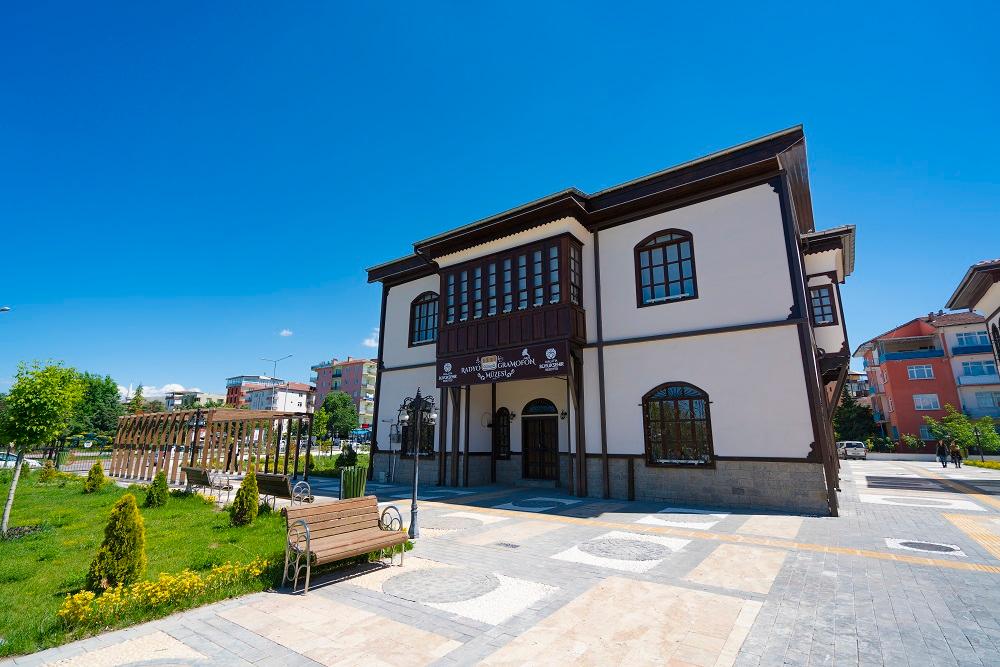
Radio and Gramophone Museum (Government of Malatya, Republic of Türkiye)
The Radio and Gramophone Museum was established in 2018 by the Malatya Metropolitan Municipality. Its founding process was initiated with the aim of preserving and exhibiting early communication and music technologies such as radio and gramophone. To this end, a comprehensive collection was assembled by gathering devices from different eras.
The establishment of the museum was significantly influenced by the recognition of radios and gramophones, once widely used but gradually removed from everyday life, as elements of cultural heritage. Artifacts acquired from various individuals and institutions were classified according to their technical and historical characteristics and integrated into the museum’s collection.
During its establishment, the museum aimed to present not only the technical features of the exhibited materials but also their social and cultural contexts. For this reason, the museum was designed with a chronological and thematic structure to reflect the historical evolution of communication technologies.
Since its opening, the museum has functioned as a center documenting the development of radio broadcasting and music technologies. Local elements related to radio broadcasting, which holds an important place in Malatya’s cultural life, have also been incorporated into the museum’s narrative. In this context, dedicated sections on Malatya Radio and local artists were created to form a memory space dedicated to the city’s communication history.
Following its establishment, the museum has continued efforts to enrich its collection and improve exhibition techniques, expanding its scope through the addition of new artifacts from different periods. This process has contributed to the diversification of the museum’s content both technically and culturally.
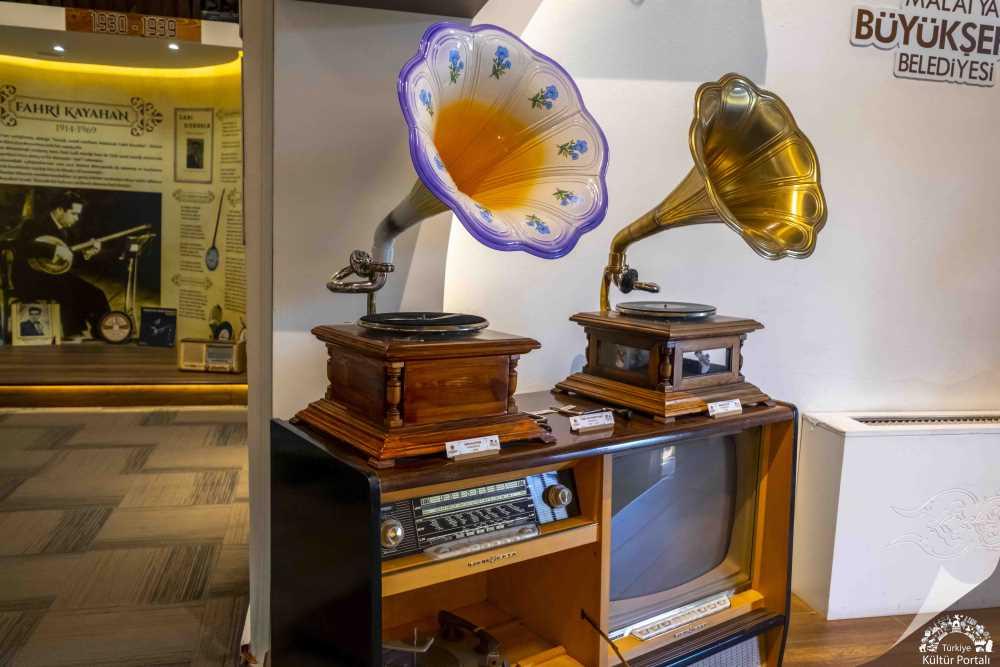
The collection of the Radio and Gramophone Museum has been assembled to reflect the historical development of radio and gramophone technologies and includes a large number of technical instruments from various periods. The museum houses approximately 700 artifacts, including radio receivers, gramophones, records, microphones, and various broadcasting equipment. The collection consists of examples representing different stages in the evolution of communication and music technologies.
One of the notable pieces in the collection is a music box dating to the late 19th century. This artifact represents the early phase of the collection by illustrating the transition from mechanical music production to electrical and electronic systems.
The artifacts on display at the museum are presented in chronological order, enabling visitors to trace the transformations in radio and gramophone technologies over a period of approximately 120 years. The progression, beginning with early mechanical systems and extending through valve radios to more modern devices, is displayed in a step-by-step manner.
In addition to the chronological arrangement, the museum also employs a thematic exhibition approach. Through sections organized around specific themes, visitors are offered a more holistic narrative. These thematic areas reflect not only the technical features of the devices but also their modes of use and social contexts.
The thematic sections within the museum are structured to explore different aspects of radio and gramophone technology. These include a dedicated area for Malatya Radio, a section on early radio broadcasts, an exhibition space examining the relationship between political history and communication, corners devoted to local artists, and a radio repair workshop.
These areas provide visitors with a multifaceted perspective on the historical development and social impact of radio broadcasting. The inclusion of local elements enables the museum to transcend its role as a mere technical exhibition space and function as a cultural memory site.
The museum’s exhibition approach goes beyond merely displaying objects; it constructs a narrative that allows visitors to understand the context in which these objects were used. Accordingly, devices are grouped according to their historical periods and presented within specific thematic frameworks.
The exhibition design seeks to illustrate the relationship between technological continuity and social change. This approach enables visitors to recognize that radio and gramophone technologies were not merely technical tools but integral components of cultural and social life.
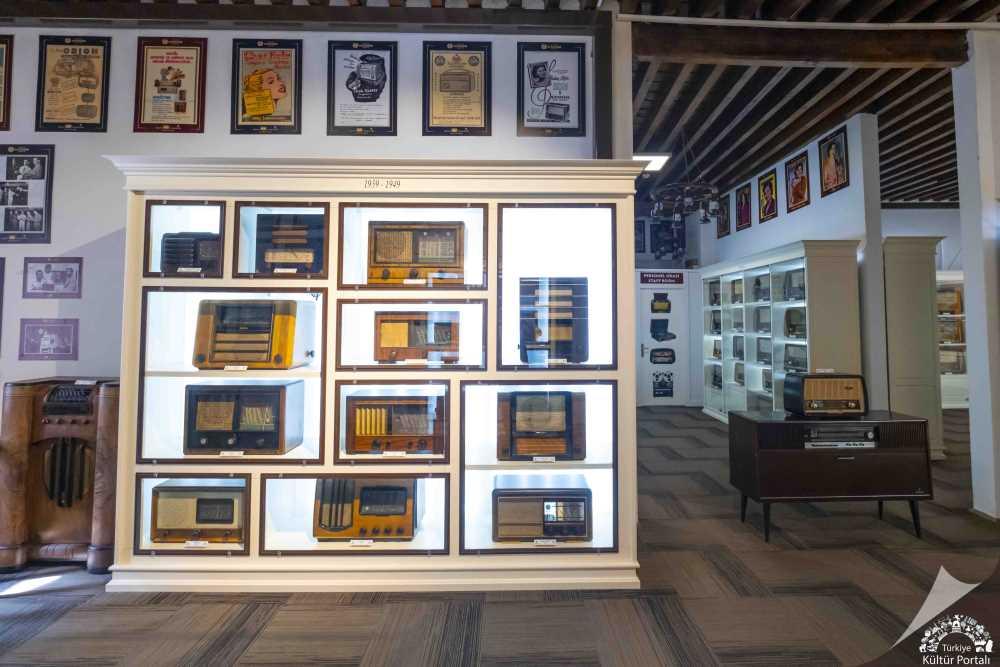
Radio and Gramophone Museum (Culture Portal)
The Radio and Gramophone Museum operates in a two-story adobe building that reflects the local architectural characteristics of Malatya. The use of traditional materials and construction techniques ensures harmony with the surrounding environment. This architectural choice contributes to the museum’s overall coherence, linking its physical structure as much as its collection to the past.
The interior layout of the building is organized on a room-by-room basis. Each room is dedicated to a specific period or theme, shaping the exhibition design accordingly. This spatial arrangement allows visitors to experience different time periods and technological stages in a sequential manner as they move through the museum..
The Radio and Gramophone Museum functions as a cultural institution that documents and presents the historical development of radio and gramophone technologies through tangible artifacts. By bringing together communication and music devices from various eras, the museum systematically reveals the process of technological transformation. In this way, it fulfills the role of making visible the relationship between technical history and social life.
The museum enables visitors to understand radios and gramophones not merely as technical instruments but as integral parts of daily life, entertainment culture, and communication practices. The exhibited materials provide a framework for comprehending the impact these devices had on individuals and society in the past.
Binbaşıoğlu, Hulisi. “Radyo ve Gramofon Müzesi.” Türkiye Turizm Ansiklopedisi. 2020. Accessed April 21, 2026. https://turkiyeturizmansiklopedisi.com/radyo-ve-gramofon-muzesi
Culture Portal. "Radio and Phonograph Museum." Republic of Turkey Ministry of Culture and Tourism. Accessed April 21, 2026. https://www.kulturportali.gov.tr/turkiye/malatya/gezilecekyer/radyo-ve-gramofon-muzesi-
Engin, Hatice. “Nostaljinin Yaşatıldığı Bir Müze: Malatya Radyo Gramofon Müzesi.” Iğdır Üniversitesi Sosyal Bilimler Dergisi, no. 33 (2023): 282–297. Accessed April 21, 2026. https://dergipark.org.tr/tr/pub/igdirsosbilder/article/1248056
T.C.Malatya Valiliği. “Radyo ve Gramofon Müzesi.” Accessed April 21, 2026. https://www.malatya.gov.tr/radyo-ve-gramofon-muzesi

Type(s) | Museum of Industry and Communication History | ||||||||
|---|---|---|---|---|---|---|---|---|---|
Founder(s) | Malatya Metropolitan Municipality | ||||||||
Collection Content | Approximately 700 artifacts consisting of radios, gramophones, records, microphones, and various broadcasting equipment | ||||||||
Year of Establishment | 2018 | ||||||||
Architectural Feature(s) | Two-story traditional adobe structure | ||||||||
Location | Malatya Yeşilyurt | ||||||||
No Discussion Added Yet
Start discussion for "Radio and Gramophone Museum" article
History
Collection and Exhibition
Chronological and Thematic Organization
Thematic Exhibition Areas
Exhibition Approach
Architectural and Spatial Features
Function and Significance