


This article was automatically translated from the original Turkish version.
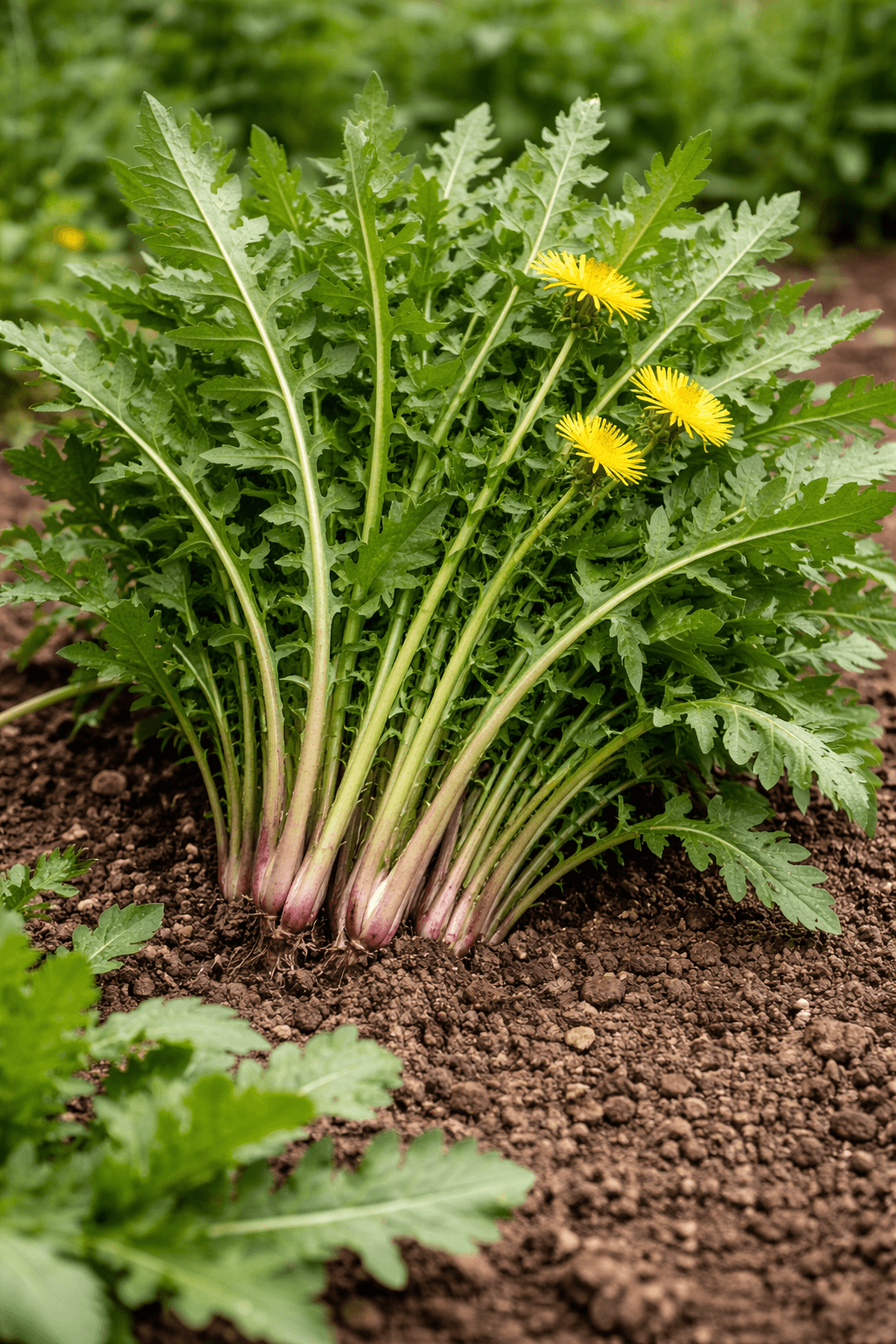
Generated by artificial intelligence.
Radika Otu
Name(s) | Radicchio herb (Wild herb) | ||||||||
|---|---|---|---|---|---|---|---|---|---|
Cultural Significance | Considered a harbinger of spring. | ||||||||
Nutritional and Chemical Content | Subjected to nitrate and nitrite analyses | ||||||||
Common Usage Areas | Aegean and Mediterranean regions | ||||||||
Scientific Type | It is among the widely consumed green leafy herbs in Türkiye. | ||||||||
Gastronomic Use | Salad Garnish Olive oil sauté Boiled | ||||||||
Radika otu is a perennial plant that overlaps with the species Cichorium intybus L., which is naturally distributed especially in the Mediterranean region and commonly known as wild chicory. As an important member of the Asteraceae family, this species holds significant value in both gastronomy and pharmacological research. In Türkiye, radika is widely consumed particularly in the Aegean and Mediterranean regions and is increasingly studied in scientific research due to its culinary role in local cuisine as well as its nutritional and bioactive composition.
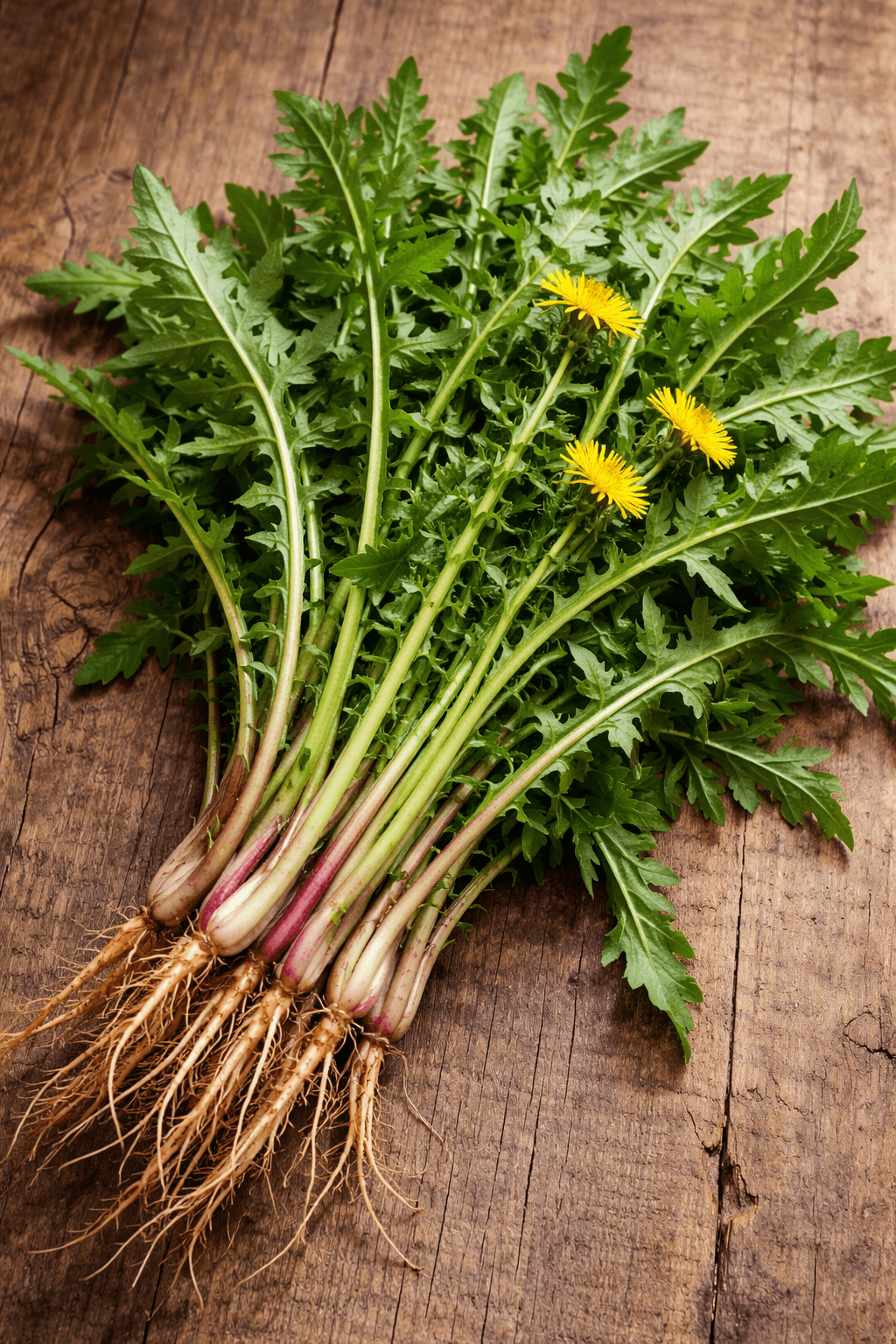
Radika Otu (Generated by artificial intelligence.)
Among studies evaluating edible wild plants in Türkiye, the 10th Food Congress Proceedings categorizes radika among “commonly consumed and analyzable herbs” sold in markets. In this document, radika is included alongside other green leafy herbs such as turnip herb, arapsaçı, mustard herb, and ebegümeci as a sample material for analysis, with nitrate and nitrite levels measured. This indicates that radika is not only a widely used herb in local practice but also recognized as a vegetable requiring monitoring for food safety.
The study included many leafy plant species with high potential for nitrate accumulation, including radika. The primary reason for this is the sensitivity of leafy plants to nitrate uptake from soil and the need for regular monitoring in regions where consumption is high due to public health concerns. In this context, radika is not merely a gastronomic product but also a material whose chemical composition is tracked for food safety purposes.【1】
Nitrate-nitrite analyses reveal that the vegetable group to which radika belongs can sometimes exhibit high nitrate values. When considered alongside its frequency of consumption, such findings gain particular importance, as the conversion of nitrate to nitrite in metabolism and its potential health effects—including the risk of methemoglobinemia in infants—are central concerns in food safety research.
Although no specific numerical data for radika is provided, the documented nitrate profile of radika in Türkiye confirms its status as a vegetable amenable to scientific analysis. This data also demonstrates that radika transcends its perception as a mere “wild herb” and qualifies as a standardized food sample suitable for scientific evaluation.【2】
The Aegean cuisine is among the most intensive in Türkiye in terms of wild herb usage, and radika is identified as one of the most well-known species in this tradition. When regional herbs are categorized, radika stands out as one with a broad range of culinary applications.
In the Aegean region, radika is commonly consumed as:
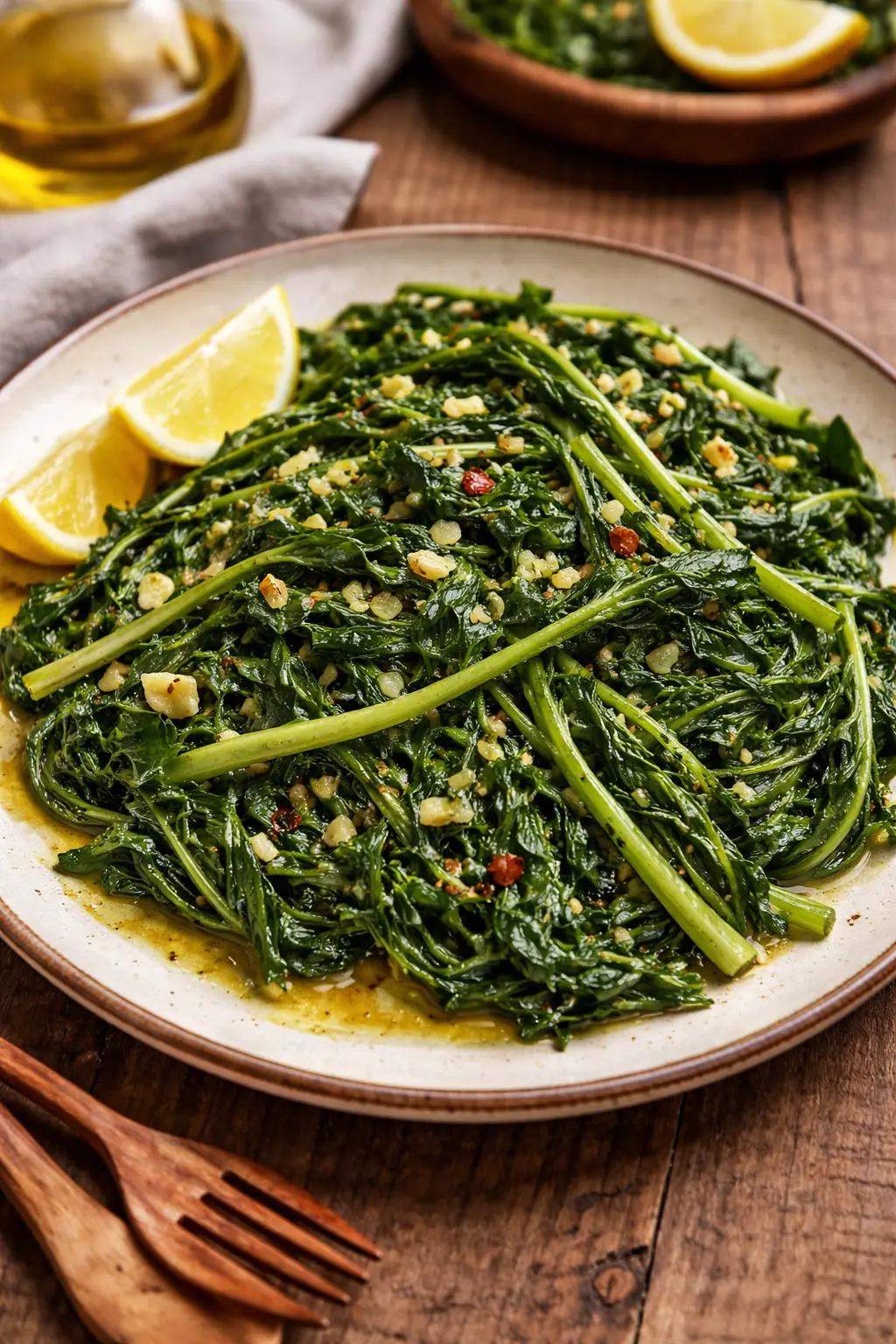
Radika Otu (Generated by artificial intelligence.)
This variety enhances radika’s gastronomic value and reinforces its central position in regional culinary culture.【3】
Radika is not merely a food item but also a component of the cultural knowledge system. Across generations, it has been remembered in communal memory as a harbinger of spring in the coastal areas of the Aegean. As a product typically gathered from nature, it is also an economically accessible food for local communities.
In this regard, radika is a plant that can be evaluated within food studies under the concept of “local food identity” and holds a central position in preserving both the nutritional and cultural continuity of regional cuisine.【4】
Hazarhun, Eda, and Mustafa Tepeci. “Coğrafi İşarete Sahip Olan Yöresel Ürün ve Yemeklerin Manisa’nın Gastronomi Turizminin Gelişimine Katkısı.” Güncel Turizm Araştırmaları Dergisi 2, no. Ek Sayı 1 (2018): 371–389. Online. Accessed April 7, 2026. https://dergipark.org.tr/tr/pub/guntad/article/447968.
Kapucuoğlu, Mustafa İnanç, and Hatice Güçlü Nergiz. “Türk Mutfağının Korunmasında Yerel Yiyecek Kullanımının Şeflerin Algıları Kapsamında İncelenmesi (Investigation of Local Food Use in Protection of Turkish Cuisine within the Scope of Perceptions of Chefs).” Journal of Tourism & Gastronomy Studies 6, no. 4 (2018): 812–832. Accessed April 7, 2026. https://jotags.net/index.php/jotags/article/view/542.
Kök, Alperen, Alper Kurnaz, Hande Akyurt Kurnaz, and Selda Karahan. “Ege Otlarının Yöresel Mutfaklarda Kullanımı.” Journal of Tourism Intelligence and Smartness 3, no. 2 (2020): 152–168. Conference paper, December 28, 2020. PDF/online. Accessed April 7, 2026. https://dergipark.org.tr/en/pub/jtis/article/804809.
Özdestan, Özgül, and Ali Üren. “Ege Bölgesinde Sıklıkla Tüketilen Bazı Otların Nitrat ve Nitrit İçeriklerinin Saptanması.” Presented at: Turkey 10th Food Congress, May 21–23, 2008, Erzurum.Gıda Derneği. Accessed April 7, 2026. https://www.gidadernegi.org/TR/Genel/240934631eb97.pdf
Şeyhanlıoğlu, Hasan Önal, and Ramazan Cengizhan. “Yerel Mutfaklarda Yenilebilir Otlar: Batman Örneği (Edible Herbs in Local Cuisines: The Case of Batman).” Journal of Tourism & Gastronomy Studies 13, no. 2 (2025): 1765–1782. Accessed April 7, 2026. https://jotags.net/index.php/jotags/article/view/2344
[1]
Özgül Özdestan and Ali Üren, “Ege Bölgesinde Sıklıkla Tüketilen Bazı Otların Nitrat ve Nitrit İçeriklerinin Saptanması,” paper presented at Türkiye 10. Gıda Kongresi, Erzurum, May 21–23, 2008, in Türkiye 10. Gıda Kongresi; 21–23 Mayıs 2008, Erzurum (Ege Üniversitesi Mühendislik Fakültesi Gıda Mühendisliği Bölümü, 2008), 41–44, PDF, Association of Food Technology, Turkey, accessed via Gıda Derneği, https://www.gidadernegi.org/TR/Genel/240934631eb97.pdf.
[2]
Özgül Özdestan and Ali Üren, “Ege Bölgesinde Sıklıkla Tüketilen Bazı Otların Nitrat ve Nitrit İçeriklerinin Saptanması,” paper presented at Türkiye 10. Gıda Kongresi, Erzurum, May 21–23, 2008, in Türkiye 10. Gıda Kongresi; 21–23 Mayıs 2008, Erzurum (Ege Üniversitesi Mühendislik Fakültesi Gıda Mühendisliği Bölümü, 2008), 41–44, PDF, Association of Food Technology, Turkey, accessed via Gıda Derneği, https://www.gidadernegi.org/TR/Genel/240934631eb97.pdf.
[3]
Alperen Kök, Alper Kurnaz, Hande Akyurt Kurnaz ve Selda Karahan, “Ege Otlarının Yöresel Mutfaklarda Kullanımı,” Journal of Tourism Intelligence and Smartness 3, no. 2 (2020): 152–68, accessed via DergiPark, https://dergipark.org.tr/tr/pub/jtis/article/804809.
[4]
Alperen Kök, Alper Kurnaz, Hande Akyurt Kurnaz ve Selda Karahan, “Ege Otlarının Yöresel Mutfaklarda Kullanımı,” Journal of Tourism Intelligence and Smartness 3, no. 2 (2020): 152–168, accessed via DergiPark, https://dergipark.org.tr/tr/pub/jtis/article/804809.

Generated by artificial intelligence.
Radika Otu
Name(s) | Radicchio herb (Wild herb) | ||||||||
|---|---|---|---|---|---|---|---|---|---|
Cultural Significance | Considered a harbinger of spring. | ||||||||
Nutritional and Chemical Content | Subjected to nitrate and nitrite analyses | ||||||||
Common Usage Areas | Aegean and Mediterranean regions | ||||||||
Scientific Type | It is among the widely consumed green leafy herbs in Türkiye. | ||||||||
Gastronomic Use | Salad Garnish Olive oil sauté Boiled | ||||||||
Radika Otu from a Food Science Perspective
Classification as an Edible Herb
Assessment of Nitrate/Nitrite Content
Radika Otu in Gastronomy
Its Role in Aegean Cuisine
Local Knowledge and Cultural Memory