


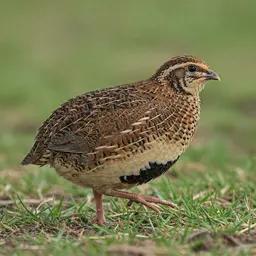
Quail
Order | Galliformes | ||||||||
|---|---|---|---|---|---|---|---|---|---|
Family | Phasianidae | ||||||||
Genus | Coturnix | ||||||||
Average Weight | 120–150 grams | ||||||||
Egg Production | 250–300 Eggs Per Year | ||||||||
Egg Weight | 10–12 grams | ||||||||
Sexual Maturity | 6–7 Weeks | ||||||||
Incubation Period | 16–18 Days | ||||||||
Lifespan | 2–3 Years | ||||||||
The quail (Coturnix coturnix japonica) is a small-bodied bird species belonging to the Phasianidae family of the order Galliformes. This species is commonly found both in natural habitats and in domestic production systems and is particularly important for its meat and egg yield. Quails attract attention with characteristics such as rapid growth, early sexual maturity, and high egg production. These traits make them appealing for both commercial farming and scientific research.
Quails are known for their compact body structure and short beaks. An adult Japanese quail typically weighs between 120 and 150 grams. Males are generally lighter and more colorful than females. Their plumage is usually in shades of brown, though selective breeding has produced variants in white, yellow, and grey tones. The lifespan of quails usually ranges from 2 to 3 years, although this is often shorter in production systems.
Physiologically, quails have a fast metabolism. This trait enables rapid growth and early sexual maturity. Egg laying typically begins at 6–7 weeks of age, and under optimal conditions, they can produce 250–300 eggs per year. The average egg weight is around 10–12 grams. Eggshells are generally speckled, which is one of the distinctive features of the species.
Quail farming is widespread around the world, especially in Asian and European countries. In Turkey as well, interest in quail farming has increased in recent years. This increase is related to the high nutritional value of quail meat and eggs and the relatively low production costs.
Feeds used in quail farming generally have high protein content. Quails consume their feed quickly, contributing to their rapid growth. Various plant-based and animal-based supplements are used as feed additives. For example, some studies have shown that adding rosemary essential oil to quail feed has positive effects on performance and egg quality.
The incubation period usually ranges from 16 to 18 days. During incubation, temperature and humidity control are crucial. Regular turning of the eggs is necessary for embryo development. Some studies have indicated that the frequency of egg turning can affect chick hatch weight and incubation success.
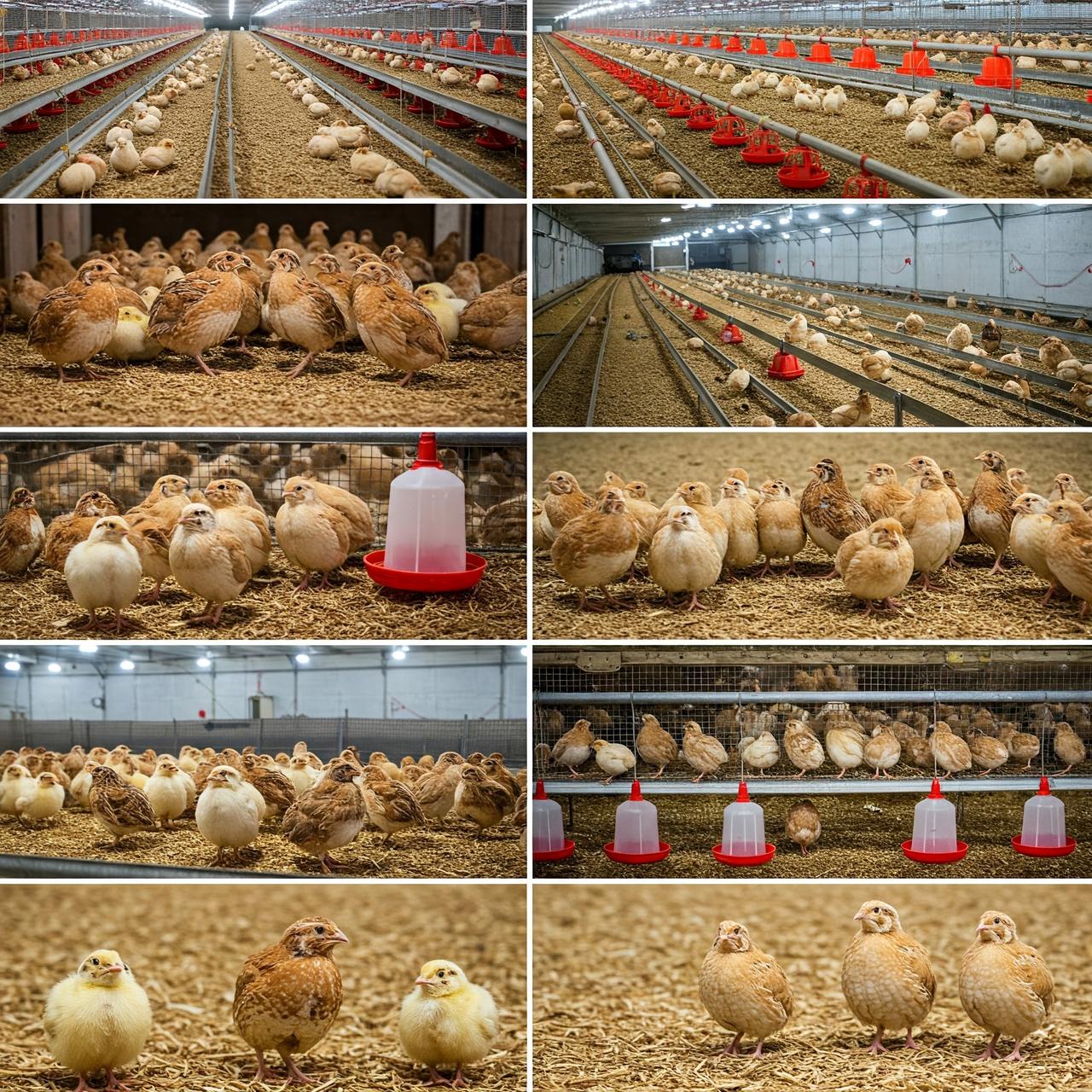
Quail Breeding (Created by Artificial Intelligence)
Quails are generally hardy birds. However, under intensive production conditions, certain health issues may arise. The most common diseases include respiratory infections, digestive disorders, and parasitic diseases. To prevent these conditions, it is important to maintain hygienic conditions, provide appropriate feeding, and conduct regular health checks.
Alkan, S., Karslı, T., Tuna, H. S., Altan, M., Eren, M. G., & Yolcu, H. İ. (2012). Japon Bıldırcını (Coturnix coturnix japonica) yumurtalarına uygulanan farklı çevirme sıklığının kuluçka sonuçlarına ve civciv çıkış ağırlığına etkileri. Akdeniz Üniversitesi Ziraat Fakültesi Dergisi, 25(1), 35-38. Accessed May 24, 2025. https://dergipark.org.tr/tr/pub/akdenizfderg/issue/1566/19408.
Sevim, B., Olgun, O., Kılınç, G., & Yavuz, M. (2023). Yumurtacı Bıldırcın (Coturnix coturnix japonica) Karma Yemlerine Farklı Formlarda Biberiye Esansiyel Yağı İlavesinin Performans, Yumurta Kalitesi ve Yumurta Antioksidan Özellikleri Üzerine Etkisi. Osmaniye Korkut Ata Üniversitesi Fen Bilimleri Enstitüsü Dergisi, 6(2), 1579-1588. Accessed May 24, 2025. https://dergipark.org.tr/tr/pub/okufbed/issue/78780/1241324.
Özüdoğru, Zekeriya, Ramazan İlgün ve Mehmet Can. “Japon Bıldırcınlarında (Coturnix coturnix japonica) Kanatların Arterial Beslenmesi.” Anadolu Çevre ve Hayvancılık Bilimleri Dergisi 6, no. 4 (2021): 555–559. Accessed May 24, 2025. https://doi.org/10.35229/jaes.919954.

Quail
Order | Galliformes | ||||||||
|---|---|---|---|---|---|---|---|---|---|
Family | Phasianidae | ||||||||
Genus | Coturnix | ||||||||
Average Weight | 120–150 grams | ||||||||
Egg Production | 250–300 Eggs Per Year | ||||||||
Egg Weight | 10–12 grams | ||||||||
Sexual Maturity | 6–7 Weeks | ||||||||
Incubation Period | 16–18 Days | ||||||||
Lifespan | 2–3 Years | ||||||||
Morphological and Physiological Characteristics
Production and Farming
Health and Diseases
This article was created with the support of artificial intelligence.