This article was automatically translated from the original Turkish version.
+2 More
Award Name | Pulitzer Prizes | ||||||||
|---|---|---|---|---|---|---|---|---|---|
Founding Date | 1917 | ||||||||
Founder | Joseph Pulitzer | ||||||||
Management | Columbia University, Pulitzer Prize Board | ||||||||
Categories | 14 Journalism, 6 Literature, 1 Music (Total 21) | ||||||||
Initial Awards | 4 Journalism, 4 Literature and Theater, 1 Education, 4 Travel Fellowships | ||||||||
Current Categories | Public Service, Investigative Reporting, Feature Photography, Fiction, Biography, History, General Nonfiction, Poetry, Theater, Music | ||||||||
Important Changes | Online journalism (1999), Expansion of the music category (1998), Digital submission system (2012) | ||||||||
Important Award | Wynton Marsalis (1997) Ornette Coleman (2007) Kendrick Lamar (2018) | ||||||||
Special Awards | George Gershwin (1998), Duke Ellington (1999), Thelonious Monk (2006), John Coltrane (2007), Aretha Franklin (2019) | ||||||||
Discussions | Edward Albee (1963), Ernest Hemingway (1941), Tony Kushner (1993) | ||||||||
Announcement | Each year in April or May | ||||||||
Funding | Joseph Pulitzer's donation of two million dollars to Columbia University | ||||||||
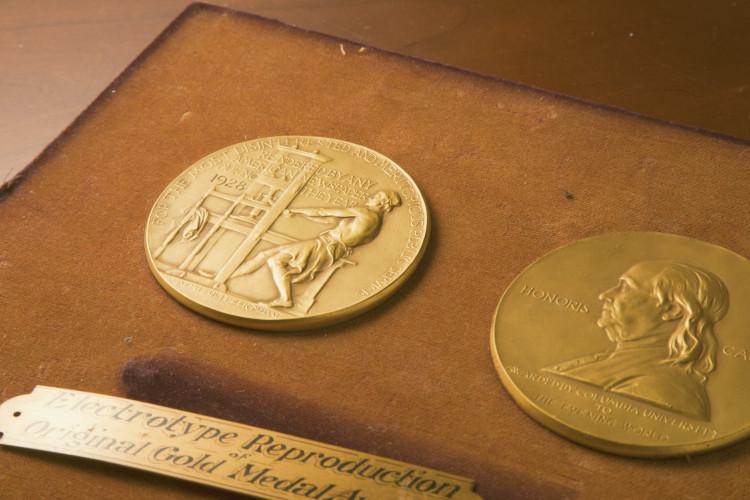
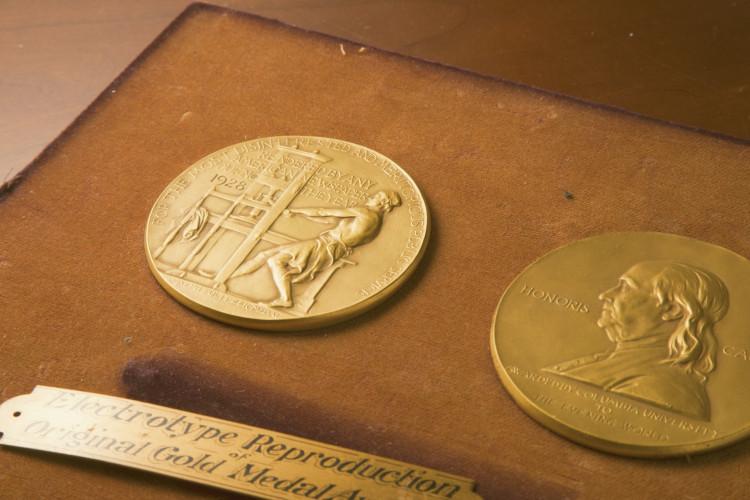
The Pulitzer Prizes are prestigious awards conferred annually by Columbia University to honor outstanding achievements in journalism, literature, and music in the United States. Established through the 1904 will of newspaper publisher Joseph Pulitzer, the prizes have been regularly awarded since 1917.
Pulitzer Ödülü (The Pulitzer)
Joseph Pulitzer was one of the leading figures in American journalism at the end of the 19th century. Of Hungarian descent, Pulitzer reshaped newspaper publishing through the New York World and the St. Louis Post-Dispatch, fought against corrupt administrations, and gained a competitive edge through sensationalist reporting. Pulitzer championed the professionalization of journalism and was among the first to advocate for university-level journalism education. In his 1904 will, he stipulated the creation of the Pulitzer Prizes to encourage excellence in journalism, literature, theater, and education. The will also bequeathed two million dollars to Columbia University to establish a School of Journalism, with one quarter of the endowment designated for prizes and fellowships.
Pulitzer’s will defined four journalism prizes (public service, editorials, reporting, and journalistic history), four literature and theater prizes (American novel, American drama, history of the United States, and American biography), one education prize, and four travel fellowships. However, recognizing the need for adaptability to social change, Pulitzer granted broad authority to a governing advisory board to oversee the prizes. This board could suspend, modify, or add new categories and had the power to withhold awards when works failed to meet quality standards. Beginning in 1917, the prizes expanded under the management of the Pulitzer Prize Board (formerly the Advisory Board) to 23 categories, incorporating fields such as poetry, music, photography, memoir, and audio journalism.
The Pulitzer Prizes began with a limited number of categories but have expanded over time in parallel with societal and technological developments. Today, the prizes are awarded across 21 categories: 14 in journalism, six in literature, and one in music. Additionally, fellowships are awarded. Journalism categories include public service, investigative reporting, feature photography, and editorials; literature categories encompass fiction, biography, history, general nonfiction, poetry, and drama. The music prize, added in 1943, originally recognized only classical compositions but was redefined in 1998 to encompass a broader spectrum of American music.
Key turning points have marked the evolution of the prizes. In 1997, on the 150th anniversary of Pulitzer’s birth, the rise of online journalism was formally recognized, and beginning with the 1999 competition, online presentations were permitted alongside print submissions in the public service category. In 2006, online content was accepted in all journalism categories; in 2009, only online news organizations were eligible to compete; and in 2012, a fully digital submission and evaluation system was adopted. In 2016, both print and digital magazines became eligible for consideration. In music, Wynton Marsalis’s 1997 win for “Blood on the Fields,” which incorporated jazz elements, marked the first time the prize was awarded for a work outside the classical tradition. In 2007, Ornette Coleman’s live jazz recording “Sound Grammar” won the prize, and in 2018, Kendrick Lamar became the first hip-hop artist to receive the award. Special prizes have also been awarded posthumously to figures such as George Gershwin (1998), Duke Ellington (1999), Thelonious Monk (2006), John Coltrane (2007), Hank Williams (2010), and Aretha Franklin (2019).
The Pulitzer Prizes are administered by Columbia University, with final decisions made by an independent Pulitzer Prize Board. The board consists of judges appointed by Columbia University and evaluates recommendations from juries assembled for each category. Pulitzer’s will explicitly grants the board the authority to reject jury recommendations or withhold awards. The prizes are announced each April or May, and the president of Columbia University formally presents them on the board’s recommendation.
The evaluation process adheres strictly to standards of excellence. The board has consistently avoided succumbing to popular trends and has often recognized works outside the mainstream. For example, most Pulitzer-winning books have not appeared on bestseller lists, and drama prizes have frequently been awarded to plays staged outside Broadway or in regional theaters. In journalism, major newspapers such as The New York Times, The Wall Street Journal, and The Washington Post have won numerous awards, but smaller and lesser-known publications have also been frequently honored. For instance, The Virgin Islands Daily News won the public service prize in 1995, Willamette Week received the investigative reporting prize in 2005, and the Bristol Herald Courier won the public service prize in 2010.
The Pulitzer Prizes have occasionally sparked controversy due to their subjective nature. The board’s power to reject jury recommendations or withhold awards has drawn criticism. For example, in 1963, the drama jury recommended Edward Albee’s “Who’s Afraid of Virginia Woolf?” but the board declined to award it, deeming it “not sufficiently uplifting.” In 1993, Tony Kushner’s play “Angels in America: Millennium Approaches,” which addressed AIDS and homosexuality, won the prize, signaling a more liberal stance by the board on matters of taste. In 1941, Ernest Hemingway’s “For Whom the Bell Tolls” was rejected for the fiction prize, but he later won in 1953 for “The Old Man and the Sea.”
The board has embraced confidentiality in its decision-making process and refuses to publicly debate its choices. This approach has preserved the prestige of the prizes but has been criticized by some commentators as lacking transparency. Nevertheless, the Pulitzer Prizes are widely regarded as the most prestigious awards in the United States and are recognized globally as a symbol of excellence in journalism, literature, and music.
The Pulitzer Prizes have played a vital role in promoting excellence in American journalism, literature, and music. In journalism, the prizes have encouraged high standards in public service, investigative reporting, and social responsibility. In literature, the recognition of non-mainstream works has highlighted the diversity and depth of American literary culture. The music category, encompassing everything from classical to jazz and hip-hop, reflects the richness of American musical traditions.
The prizes have also contributed to the professionalization of journalism. Pulitzer’s vision of establishing a School of Journalism at Columbia University helped institutionalize journalism education. The graduate program launched by the Columbia School of Journalism in 1912 popularized specialized training in the field. The prizes have served as an incentive to attract young journalists to the profession and to support the ethical and intellectual development of practicing journalists.
Topping, Seymour, Sig Gissler, and Sean Murphy. “History of ThePulitzer Ödülleri.” Pulitzer Prizes.https://www.pulitzer.org/page/history-pulitzer-prizes.
Topping, Seymour. “History of ThePulitzer Ödülleri.” Pulitzer Prizes.https://web.archive.org/web/20080723153951/https://www.pulitzer.org/historyofprizes.

Award Name | Pulitzer Prizes | ||||||||
|---|---|---|---|---|---|---|---|---|---|
Founding Date | 1917 | ||||||||
Founder | Joseph Pulitzer | ||||||||
Management | Columbia University, Pulitzer Prize Board | ||||||||
Categories | 14 Journalism, 6 Literature, 1 Music (Total 21) | ||||||||
Initial Awards | 4 Journalism, 4 Literature and Theater, 1 Education, 4 Travel Fellowships | ||||||||
Current Categories | Public Service, Investigative Reporting, Feature Photography, Fiction, Biography, History, General Nonfiction, Poetry, Theater, Music | ||||||||
Important Changes | Online journalism (1999), Expansion of the music category (1998), Digital submission system (2012) | ||||||||
Important Award | Wynton Marsalis (1997) Ornette Coleman (2007) Kendrick Lamar (2018) | ||||||||
Special Awards | George Gershwin (1998), Duke Ellington (1999), Thelonious Monk (2006), John Coltrane (2007), Aretha Franklin (2019) | ||||||||
Discussions | Edward Albee (1963), Ernest Hemingway (1941), Tony Kushner (1993) | ||||||||
Announcement | Each year in April or May | ||||||||
Funding | Joseph Pulitzer's donation of two million dollars to Columbia University | ||||||||
Joseph Pulitzer and the Establishment of the Prizes
Prize Categories and Evolution
Administration and Evaluation Process
Controversies and Criticisms
Social Impact and Significance