Psychological war is a method of conflict that aims to influence individuals, groups, or societies and persuade them to support a particular ideology, strategy, or movement, typically without resorting to violence but exerting powerful psychological and emotional effects. Such wars are conducted not only during wartime but also in peacetime to undermine the enemy’s morale, guide public opinion, steer large populations in specific directions, and manipulate the populace. The scope of psychological warfare includes techniques of manipulation, information management, disinformation, and fear creation.
Foundations of Psychological Warfare
Psychological warfare is a strategic approach designed to manipulate the cognitive and emotional processes of an enemy or target population. Unlike direct military or physical confrontation, this form of warfare seeks to generate impact at the mental and emotional level. Its primary objective is to reinforce victories achieved through physical conflict or to weaken the enemy by breaking their morale. Key components include communication, perception management, emotional interaction, and information flow such as elements. These elements form strategies aimed at altering individuals’ thought processes, feelings, and behaviors.
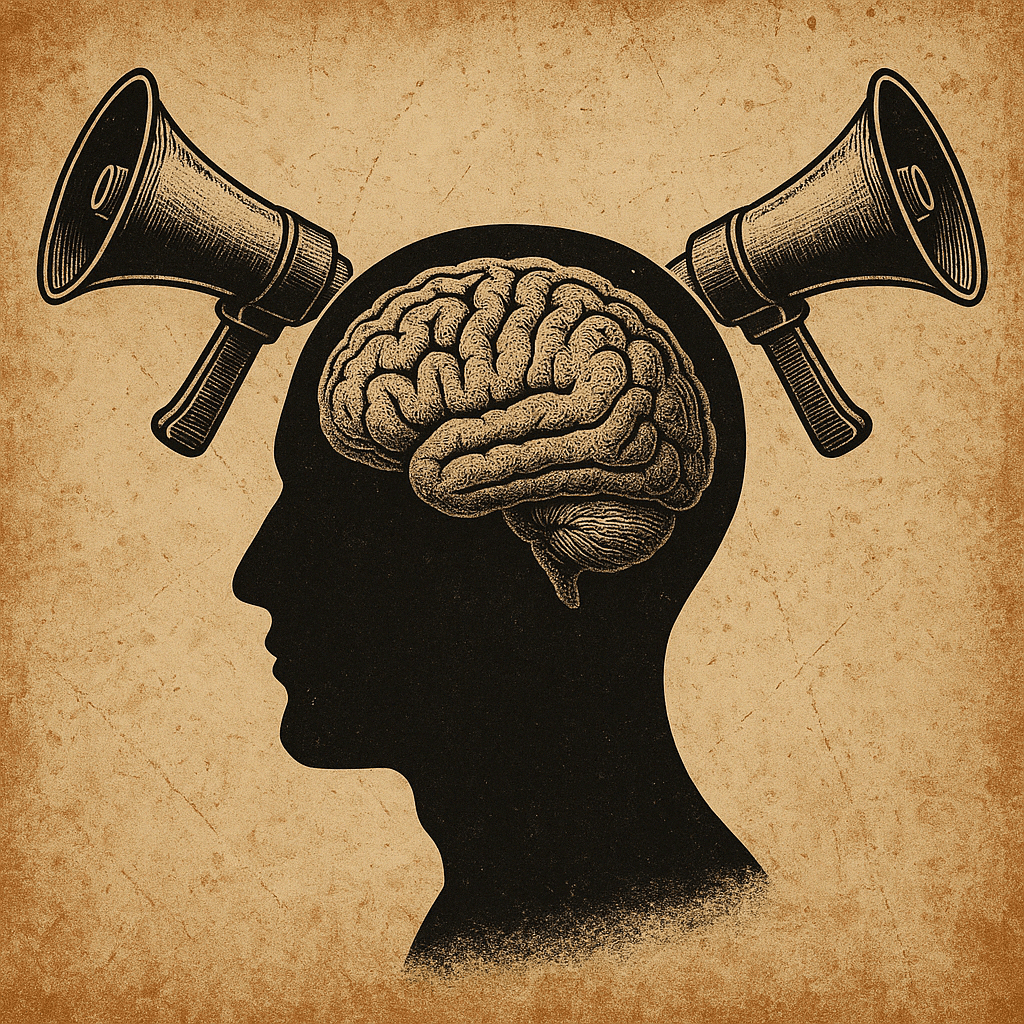
A visual representing the impact of psychological warfare on the individual. (Generated by artificial intelligence.)
Techniques of Psychological Warfare
To be effective, psychological warfare requires the use of various techniques designed to direct target audiences, spread false information, or generate emotional responses.
Perception management refers to strategies aimed at altering how a group, society, or individuals perceive reality. As one of the most important components of psychological warfare, perception management is used to ensure that the target audience interprets events or situations from a specific perspective. The goal here is to manipulate the target’s mental framework by distorting facts directly.
- Misinformation and Distortion of Truth: Perception management is often carried out through the dissemination of false information, disinformation, or distorted facts. A society or individual may come to perceive their own situation or that of the enemy in a radically different light. Such manipulation is used to boost societal morale or create confusion within the enemy ranks.
- Traps and Mixed Messages: Perception management can also be achieved by generating confusion through contradictory messages. Two opposing messages may be presented simultaneously, creating cognitive dissonance in the target audience and making it harder for them to form clear opinions. For example, broadcasting messages that simultaneously emphasize victory and catastrophe can impair the audience’s ability to focus.
Disinformation aims to prevent the target audience from learning the truth by spreading false information. Lies conveyed through fake documents, misleading news, or fabricated stories become powerful tools during wars and political struggles.
- Fake News and Misleading Reports: In psychological warfare, media outlets are frequently exploited. Misleading news, fake videos or photographs, and manipulated imagery undermine trust between governments or groups. Access to accurate information is blocked, and target groups make decisions based on false data.
- Forged Documents and Document Manipulation: Manipulation of documents is a particularly significant technique in military and diplomatic contexts. Forged documents or altered records can lead a group or state to falsely accuse another party or exaggerate an issue. This technique is especially effective in creating internal discord or influencing public opinion.
Fear creation is a potent instrument of psychological warfare. People tend to make emotional rather than rational decisions when confronted with fear and anxiety. Therefore, the goal is to paralyze or weaken the enemy or target group by instilling fear.
- Terrorist Attacks and Forward-Looking Fear Campaigns: Fear creation is not limited to physical attacks; it can also be achieved through the continuous dissemination of threats. This aspect of psychological warfare targets the weaknesses of the enemy or society, deepening feelings of insecurity and anxiety.
- Spreading Fear via Social Media and Digital Platforms: Today, social media serves as a powerful tool for rapidly generating fear. Fake threats, alarming information, and dystopian narratives heighten public concerns about safety and draw people toward specific ideologies or groups.
Morale Destruction and Moral Erosion
Morale destruction is a psychological technique aimed at breaking the will of a group or society to fight or show resistance. This approach focuses the psychological and moral impact of war on the enemy. Morale degradation weakens a group’s or soldier’s determination to continue fighting.
- Undermining Enemy Soldiers: During war, targeting enemy soldiers and leaders individually is a key strategy to break their morale. This involves spreading rumors about them, leaking information designed to amplify their fears, or employing tactics that encourage defection.
- Psychological Pressure on Civil Society: Psychologically exhausting the civilian population also contributes to morale degradation. Especially in areas where fighting continues, civilian anxiety and fear increase. Public support for the war effort diminishes, thereby weakening the enemy’s capacity to sustain combat.
Simulation and Deception (Environmental Manipulation)
Deception involves presenting a situation, event, or location as if it were different from reality. To prevent the enemy from making correct decisions, false information, fake operations, or audiovisual manipulations are employed.
- Fake Military Operations: Fake operations are a technique used to mislead the enemy. The goal is to cause the enemy to concentrate forces in the wrong location or to make them believe that significant military assets are present in hidden areas.
- Environmental Manipulation: Manipulating the environment to influence enemy decision-making is a common tactic. For example, constructing fake military bases can misdirect enemy forces. Additionally, environmental manipulations such as auditory warnings, visual illusions, or deceptive lighting can induce confusion among enemy troops.
Interactive Psychological Operations
Interactive psychological operations are methods designed to directly shape public opinion through media and digital platforms. The role of social media in this field is increasingly growing.
- Manipulation of Social Media: Social media is a vital tool for disseminating information and developing interactive strategies. Manipulations on social media platforms guide public opinion. The use of trolls and bots produces undesirable outcomes but is highly effective in spreading specific ideologies.
- Campaigns and Image Management: Effective campaigns conducted through public relations and media shape the thoughts of societies and individuals. In today’s environment, where news and information spread rapidly, interactive psychological operations hold significant strategic importance.
A visual representing the impact of psychological warfare on the individual. (Source: Pexels)
Historical Examples of Psychological Warfare
The use of psychological warfare spans much of human history and has been widely employed before, during, and after conflicts. Some of the most well-known examples are as follows:
World War II is one of the most prominent and intensive examples of psychological warfare. Both the Allied Powers and the Axis Powers strategically employed propaganda, disinformation, deception, and psychological pressure techniques.
- Allied Propaganda Activities: The Allies used propaganda as a tool of psychological warfare against Nazi Germany. Radio broadcasts, posters, pamphlets, and films portrayed Adolf Hitler and the Nazi Party in a negative light. Hitler was often depicted as “inferior,” and the Nazi regime’s “brutal” aspects were emphasized to undermine German morale and foster resistance among the population.
- Aerial Bombings and Psychological Impact: Nazi Germany aimed to instill fear through bombing raids, particularly on London. However, contrary to expectations, these attacks did not break Londoners’ resolve; instead, they strengthened their resistance and, by the war’s end, reinforced a sense of unity among the population. Here, psychological warfare fueled anger and determination rather than fear.
- German Resistance and Enemy Morale Destruction: Propaganda directed at German soldiers also played a significant role. The Allies issued messages urging German troops to “rise up against the Nazi regime,” aiming to increase internal resistance in Germany as the war neared its end. Additionally, psychological operations emphasized Germany’s inevitable defeat to erode the morale of its soldiers.
The Cold War was a period in which psychological warfare was used extensively at the political and ideological levels. The United States and the Soviet Union employed psychological warfare as a key instrument while attempting to impose their respective ideologies and systems globally.
- Nuclear Fear and Its Psychological Impact: One of the most important strategies of the Cold War was built around nuclear threats. Both sides applied psychological pressure by threatening nuclear attacks, instilling fear in populations and military forces regarding the apocalyptic consequences of nuclear war. This psychological threat was continuously used to highlight the opponent’s formidable nuclear capabilities.
- Media Propaganda: During the Cold War, both sides used media outlets to promote their own ideologies and expose the other’s threatening nature. The United States described the Soviet Union’s dictatorship and totalitarian structure as a “terrifying monster,” while the Soviet Union emphasized the exploitative nature of American capitalism. Hollywood films and Soviet propaganda posters became key instruments of this psychological warfare.
- Psychological Operations (PsyOps): During the Cold War, both sides conducted numerous psychological operations to influence target populations. Particularly in countries in South America, Asia, and Africa, each bloc employed psychological warfare strategies to persuade local populations to adopt their political ideologies. Tactics such as spreading false information, creating fear, and generating confusion were used to win public support.
The Vietnam War is one of the most intense and extensively debated examples of psychological warfare. In this conflict, psychological operations were employed through a series of strategies between the communist forces in North Vietnam and the United States fighting in South Vietnam.
- “Hearts and Minds”: One of the United States’ primary strategies in Vietnam was the “hearts and minds” policy. This was a psychological warfare strategy aimed at gaining the mental and emotional support of the Vietnamese population beyond the physical aspects of the war. The U.S. provided education, healthcare services, and infrastructure projects to support the South Vietnamese civilian population, undermine communist propaganda, and convince locals to support the U.S.-backed government.
- Red Scare: During the Vietnam War, the U.S. government successfully created a “Red Scare” among the public by highlighting the expansionist nature of the communists in North Vietnam (referred to as “Reds” by Americans). This was a strategy not only aimed at Vietnam but also at preventing the global spread of communism.
- Communist Propaganda: North Vietnam conducted an intense psychological warfare campaign to mobilize its own population and civilians in South Vietnam. Using terms such as “comrades” and “freedom fighters,” it sought to galvanize public support for the communist movement. Simultaneously, detailed propaganda highlighted alleged war crimes committed by American soldiers to erode public morale.
The Iraq and Afghanistan Wars
In modern times, psychological warfare strategies have also been employed in the Iraq and Afghanistan wars. These conflicts are notable for demonstrating the impact of digital media and communication tools on psychological warfare.
- The Role of Social Media: In the Iraq and Afghanistan wars, psychological operations conducted via social media and the internet played a significant role. Terrorist groups such as Al-Qaeda and ISIS used social media to spread their ideologies and radicalize youth through videos, writings, and messages. Similarly, the United States and coalition forces used digital platforms to conduct their own propaganda and deliver messages aimed at gaining public support.
- Mind Manipulation and Surveys: American forces in Iraq and Afghanistan subjected local populations to psychological operations designed to undermine morale and shake the support base of the opposing side. Military units disseminated messages highlighting the hardships of war, aiming to generate fatigue and anxiety among the enemy.
- Cultural Psychological Warfare: Cultural manipulations used in conflict zones are strategies aimed at persuading local populations. In particular, targeting a culture’s religious and traditional beliefs can be used to psychologically fragment that society. For example, Western forces in Afghanistan offered aid while emphasizing respect for local cultural structures and traditions.
The Place of Psychological Warfare in the Modern World
Today, psychological warfare is actively employed in both interstate relations and individual struggles. With the advancement of digital technologies, manipulation, false information, and effective campaigns via social media and the internet have become possible. Particularly cyber warfare and manipulations on social media are now among the new-generation methods of psychological warfare.
This non-violent yet extremely effective form of warfare, which has long been a crucial part of human history’s conflicts, social struggles, and even political battles, influences societies, individuals, and states at the mental level, producing long-term consequences. Historical examples of psychological warfare illustrate how its strategies have evolved and how they have been adapted across different eras to achieve diverse objectives.