


This article was automatically translated from the original Turkish version.
In industrial work environments, particularly in sectors such as metal processing, foundries, glass manufacturing, welding, and heat treatment, workers are exposed to various thermal hazard factors. These risks include direct contact with high-temperature surfaces, exposure to flames, molten metal splashes, and prolonged exposure to intense heat. Such hazards can cause severe burns, tissue damage, and long-term permanent loss of workforce capacity. In workplaces where thermal risks are present, the use of appropriate personal protective equipment is a fundamental requirement for occupational health and safety.
Thermal hazard protective gloves are designed using specialized materials to minimize the impact of these dangers. These gloves, manufactured with components such as aluminized outer surfaces, flame-resistant yarns, and insulating inner layers, provide resistance against high temperatures. Protection levels are evaluated according to the EN 407 standard in the European Union. This standard considers criteria such as resistance to ignition, contact heat, convective heat, radiant heat, and resistance to molten metal splashes. Selecting the appropriate gloves not only ensures protection but also serves as a critical factor in enhancing worker productivity and safety.
The materials used in protective gloves developed for thermal hazards play a decisive role in terms of both physical protection level and user ergonomics. In the production of such gloves, multiple material combinations are typically preferred to provide multidirectional protection against different types of risks.
These materials are used either individually or in multilayer constructions depending on the nature and intensity of thermal risks, resulting in a balanced design that ensures both protection level and comfort. Glove performance is assessed according to the EN 407 standard to verify their suitability for occupational safety practices.
Protective gloves against thermal hazards must be manufactured in compliance with specific standards:
Compliance with these standards indicates that the gloves have passed specific tests and meet defined safety criteria.
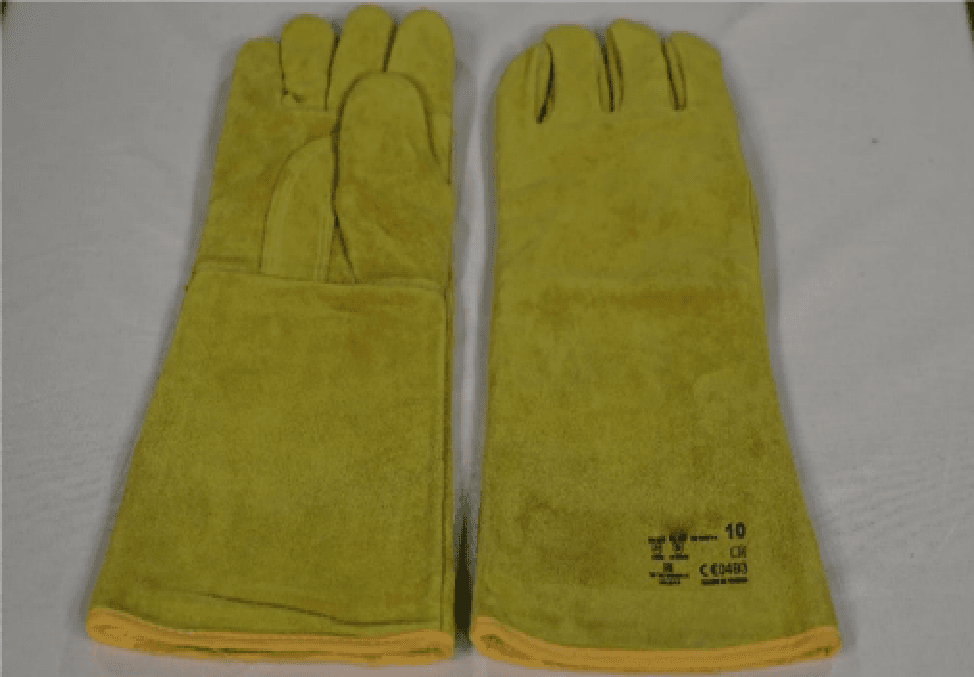
Isıl Risklere Karşı Koruyucu Eldiven
Protective gloves against thermal hazards are mandatory personal protective equipment in many industries where dangers such as high temperatures, flames, radiant heat, and molten material splashes are present. The application areas of these gloves vary according to the nature of the work, requiring different levels of protection.
Thermal protective gloves used in these industries must be selected according to the technical requirements of the job and regularly inspected to ensure they remain functional and effective.
Selecting protective gloves against thermal hazards requires a careful evaluation process aimed at ensuring worker safety and minimizing workplace accidents. During this process, various technical and ergonomic factors must be considered together:
Effective management of thermal hazards depends not only on the presence of protective equipment but also on selecting equipment appropriate to the nature of the risk and using it correctly. Therefore, factors such as material type, intended use, and legal standards must be systematically evaluated during glove selection.
Adana Masası. "Ege Üniversitesi'nde Isı, Alev ve Mekanik Risklere Karşı Koruyucu Eldivenler Geliştirildi." Accessed May 24, 2025.https://www.adanamasasi.com/ege-universitesinde-isi-alev-ve-mekanik-risklere-karsi-koruyucu-eldivenler-gelistirildi/271427/
Ertekin, Mustafa. “Kaplamanın Koruyucu Eldivenlerin Performans Özelliklerine Etkisi.” Tekstil Ve Mühendis 24, no. 107 (September 2017): 172–80.https://dergipark.org.tr/tr/pub/teksmuh/issue/31309/341301
Ministry of Labor and Social Security of the Republic of Türkiye. *Personal Protective Equipment*. Accessed May 24, 2025.https://kkdportal.csgb.gov.tr/media/1023/kkd_kitabi.pdf.

No Discussion Added Yet
Start discussion for "Protective Gloves Against Thermal Hazards" article
Material Selection and Properties
Standards and Certification
Application Areas
Selection Criteria